
China Rejects US 'Operation Economic Outcast' Sanctions on Iran, Setting Stage for Trump-Xi Showdown
China has branded Washington's new sanctions package against Iran "illegal unilateral sanctions" and vowed to protect its interests, with rare earths and Iranian oil emerging as leverage ahead of a high-stakes Trump-Xi summit.
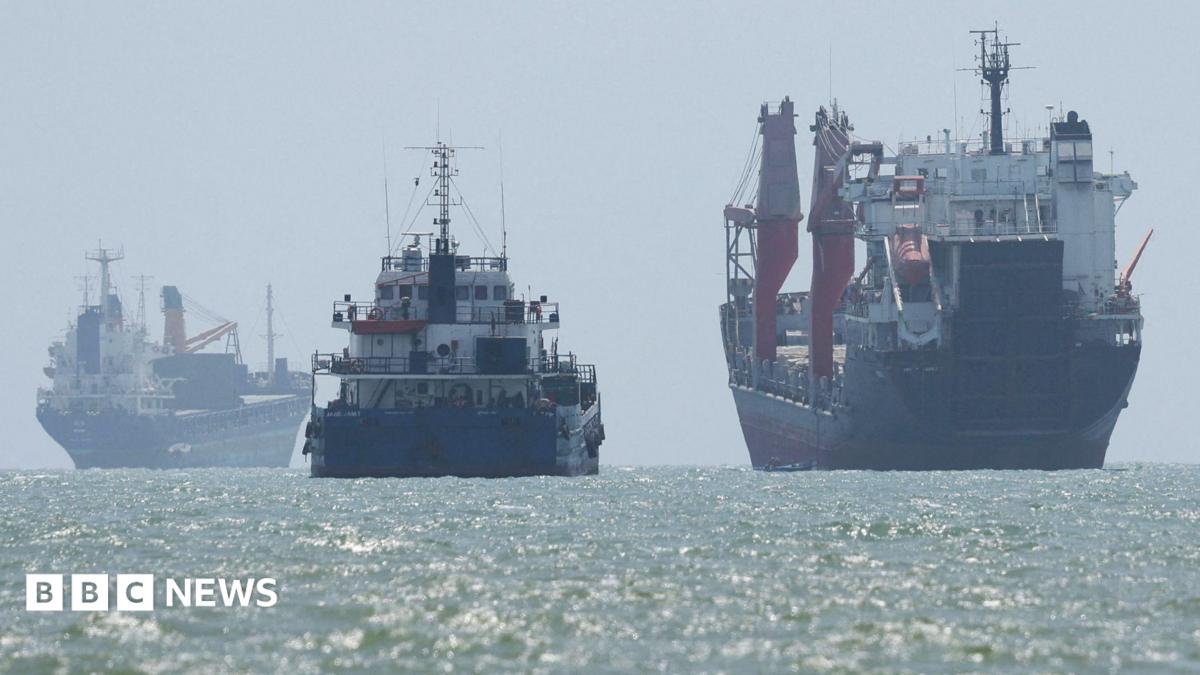
China Rejects US 'Operation Economic Outcast' Sanctions on Iran, Setting Stage for Trump-Xi ShowdownThe Chinese government has publicly and categorically rejected Washington's sweeping new sanctions package against Iran and its trading partners, branding the measures "illegal unilateral sanctions" and vowing to take "all necessary measures" to safeguard its interests. The declaration, made by Foreign Ministry spokesman Lin Jian on Tuesday, transforms the economic warfare track of the six-month-old Iran conflict into a direct Sino-American confrontation, with rare earth export controls and the flow of Iranian crude oil emerging as the principal levers of leverage. The timing is deliberate: the announcement lands weeks before a planned summit between President Donald Trump and Chinese President Xi Jinping, framing the sanctions push not merely as a tool against Tehran, but as a bargaining chip in the broader strategic competition between Washington and Beijing.
A Direct Challenge to US Financial Hegemony
The US Treasury, under Secretary Scott Bessent, unveiled the new measures on Monday, dubbing the campaign "Operation Economic Outcast" and describing it as an "economic D-Day" against Iran. Bessent warned that any nation financially partnering with Tehran would be isolated, declaring the initiative "the single greatest financial offensive ever" against the Islamic Republic. He declined to single out specific nations but made clear that President Trump would be phoning world leaders "with specific requests to cease their interactions with the regime." When pressed on the position of Chinese banks, Bessent was unequivocal: "no one was above the reach of US sanctions."Beijing's response was swift and unyielding. Lin Jian stated that China was firmly opposed to the measures, insisting that "cooperation between China and Iran has always been conducted within the framework of international law and should not be interfered with or disrupted." This formulation is not incidental; it reflects a core tenet of Chinese foreign policy doctrine that rejects the extraterritorial application of US law—what Beijing routinely condemns as "long-arm jurisdiction." For the Ministry of Foreign Affairs, the legitimacy of sanctions derives from multilateral consensus, not unilateral fiat. Washington's approach, by contrast, is seen as an attempt to weaponize the dollar-based financial system to enforce American geopolitical preferences on sovereign states.Rare Earths: Beijing's Counter-Leverage
The strategic calculus in Beijing is heavily influenced by its near-monopoly over the global supply chain for rare earth elements and other critical minerals. China processes the overwhelming majority of the world's rare earths, which are indispensable in the manufacture of advanced electronics, defense systems, and renewable energy technologies. Washington is acutely aware of this vulnerability; Beijing has already tightened export controls on rare earths during previous trade negotiations with the US, demonstrating a willingness to use this dependency as a coercive tool.The threat of further restrictions is now a live option. If the Trump administration proceeds with aggressive enforcement of "Operation Economic Outcast" against Chinese financial institutions, Beijing could respond by restricting rare earth exports to the US, crippling American high-tech manufacturing and defense supply chains. This would escalate the conflict far beyond the Iran file, potentially triggering a full-blown trade war at a moment when global supply chains are already strained by the conflict in the Middle East. The Trump-Xi summit, therefore, becomes a high-stakes negotiation where the price of US sanctions enforcement on Iran may well be measured in the availability of critical minerals for American industry.Iranian Oil: The Energy Security Imperative
At the heart of the Sino-Iranian relationship lies a simple, stark fact: China is the largest buyer of Iranian oil, with roughly 90% of Iran's crude exports flowing to Chinese refineries. This trade has declined under the US naval blockade of Iranian ports, but it remains a vital lifeline for Tehran and a critical component of Beijing's energy security strategy. For China, the survival of the Iranian regime under sanctions is not merely a matter of principle; it is a matter of securing affordable energy supplies for its vast industrial economy, independent of US-controlled shipping lanes and dollar-denominated payment systems.David Oxley, chief climate and commodities economist at Capital Economics, told the BBC that China "has not recognised US sanctions in the past and is unlikely to be cowed this time either." He predicted that the direct impact on Iran's energy revenues would be "somewhat of a damp squib," adding, "We suspect that the new package will have only a limited direct impact on Iranian energy flows in the short term." This assessment underscores the practical limits of US financial power when a major buyer like China is willing to operate outside the dollar-based system, using alternative payment mechanisms and shadow fleets to circumvent sanctions.Tehran's Defiance and Preparedness
Iranian officials have greeted the new sanctions with a mixture of defiance and calculated confidence. Economy Minister Ali Madanizadeh told state television that Tehran was "fully prepared" for the wider measures, which he predicted would lead to "another defeat" for the US. "The government is and was ready and has a two-year plan to manage these events... We also have our own tools and know how to play the game," he said, adding that Tehran had been "waiting for these plans for a long time."This rhetoric reflects a regime that has weathered decades of sanctions and has developed sophisticated mechanisms for evasion, including barter arrangements, cryptocurrency transactions, and the use of third-country intermediaries. Ali Vaez, deputy director of the Middle East and North Africa Program at the International Crisis Group, noted that the Iranian regime is willing to "absorb any pain" and pass it onto the population, making economic pressure an ineffective tool for regime change. "Generally, the Chinese are against unilateral sanctions. They would comply with multilateral or international sanctions, but unilateral sanctions just imposed by the US - they have always seen that as illegitimate," Vaez told the BBC, reinforcing the alignment between Beijing's doctrinal opposition and Tehran's practical needs.The Multipolar Sanctions-Resistant Bloc
The new US measures are not aimed solely at China and Iran. The Treasury has mapped financial channels, facilitators, and networks used by Iran to evade sanctions, imposing restrictions on almost 60 entities, individuals, and vessels. Other trade partners that could be affected include India and Russia, neither of which has yet responded publicly. This broadening of the sanctions net risks consolidating a de facto bloc of nations—China, Russia, Iran, and potentially India—that share a common interest in resisting US financial hegemony and developing alternative mechanisms for trade and settlement.For Moscow, already laboring under extensive Western sanctions, the new measures are unlikely to alter behavior. For New Delhi, the calculus is more complex; India maintains significant trade ties with both the US and Iran, and its energy security is partially dependent on Iranian crude. The US pressure campaign may force India to choose sides, a dilemma that Beijing will watch closely. The emergence of such a bloc, however informal, would represent a significant erosion of the dollar-based international financial order and a validation of the multipolar world order that China has long championed.Failed Diplomacy and the Primacy of Economic Warfare
The sanctions announcement comes almost six months after the start of the Iran war, a conflict that has driven up oil prices worldwide. Tehran has effectively blocked exports through the Strait of Hormuz, a waterway vital to the global economy, while the US has slowed traffic through its own naval blockade. Recent attempts to end the conflict through diplomacy have failed, and a 60-day ceasefire formally expired last week with no sign of a settlement. With the military and diplomatic tracks stalled, the economic warfare dimension has become the primary arena of confrontation.Bessent's claim that America was "no longer managing the Iranian threat, we are ending it" reflects this shift toward maximalist economic pressure. However, the effectiveness of this approach is questionable. The blockade of Hormuz has already disrupted global energy markets, and the new sanctions risk further destabilizing supply chains at a time when the EU and the Global South are struggling with high energy prices. For European nations, caught between their alliance with Washington and their need for stable energy supplies, the sanctions regime presents a profound dilemma. For the Global South, the conflict underscores the vulnerability of nations dependent on imported energy and the imperative of diversifying away from US-dominated financial systems.Strategic Implications for the Trump-Xi Summit and Beyond
The upcoming Trump-Xi summit now carries an outsized geopolitical weight. For Trump, the sanctions package is a demonstration of American resolve, but it also presents an opportunity to extract concessions from Beijing on trade, technology, and perhaps even the Iran file. For Xi, the summit is a chance to assert China's status as a great power that cannot be dictated to, while potentially negotiating relief from the most onerous aspects of the sanctions regime. The outcome will signal whether the US can still enforce its will on the global economy or whether the multipolar order has reached a tipping point.The immediate implications for energy markets are significant. If China continues to purchase Iranian oil at scale, the sanctions will have limited effect on Tehran's revenues, as Oxley suggested. If, however, Washington successfully pressures Chinese banks to cut off financial channels, the impact could be more severe, potentially driving oil prices higher and exacerbating global inflation. The second-order effects for the EU, which is heavily dependent on energy imports, and for emerging economies in Asia and Africa, could be profound. The sanctions regime, in essence, is a test of whether the US can maintain its financial hegemony in a world where major powers like China are increasingly willing and able to operate outside it. The answer, likely to emerge in the coming weeks, will shape the contours of the global order for years to come.By Prof. Marcus Chen, Staff WriterThis article was produced with AI-assisted research and editorial support. Sources: BBC News.
What's Your Reaction?
 Like
0
Like
0
 Dislike
0
Dislike
0
 Love
0
Love
0
 Funny
0
Funny
0
 Wow
0
Wow
0
 Sad
0
Sad
0
 Angry
0
Angry
0

Marcus Chen
World Politics Analyst at Global1.News. Based in Beijing, covering US-China relations, global trade, and geopolitical strategy. Brings deep analytical perspective to the power dynamics shaping international affairs.












Comments (0)