
Chemistry Teacher Convicted of Indecent Assaults on Teenage Pupils
Sally-Anne Bowen, 65, has been found guilty at Harrow Crown Court of seven counts of indecent assault against two teenage pupils at Christ's College, Finchley, in the late 1980s. She is due to be sentenced on November 20.
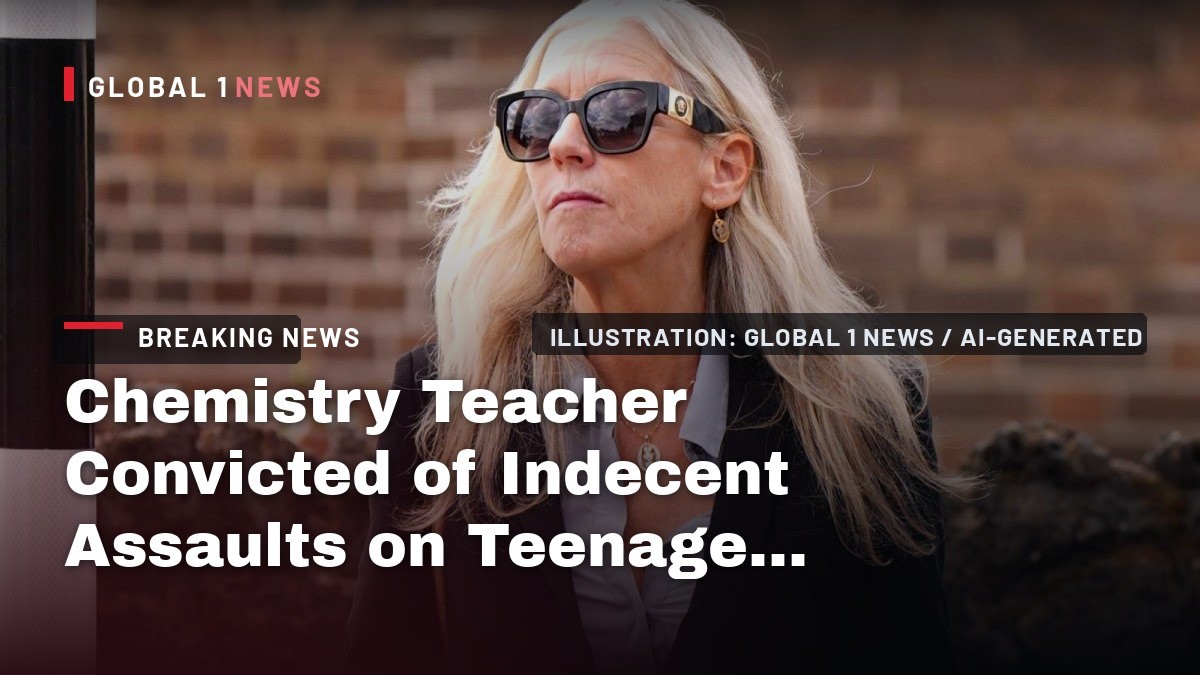
A chemistry teacher has been found guilty of indecently assaulting two teenage boys at an all-boys school in north London in the late 1980s, in a case that has exposed the extent to which a predatory adult could operate unchecked within a classroom environment.
Sally-Anne Bowen, 65, of Hemel Hempstead, Hertfordshire, was convicted by a jury at Harrow Crown Court on Thursday of seven counts of indecent assault relating to pupils at Christ's College in Finchley. The offences took place when Bowen was in her mid-20s and the boys were aged around 14 to 15.
The verdict
The jury returned majority verdicts after six hours and 29 minutes of deliberations. Bowen, dressed in a black skirt, purple shirt and black blazer jacket in the dock, did not appear to show emotion as the verdicts were read out.
The conviction followed a trial that relied heavily on the testimony of two men who were schoolboys at the time of the offences, alongside former pupils and staff who described Bowen's conduct in the classroom.
Bowen is due to be sentenced on November 20.
The offences and the school
Christ's College, an all-boys school in Finchley, north London, was where Bowen taught chemistry in the late 1980s. The court heard that her conduct in the classroom went far beyond the professional boundaries expected of a teacher, with former pupils describing behaviour that was openly sexualised.
Richard Luker, who was head of science at the school during that period, told the court he remembered a complaint from the mother of the first alleged victim. She had expressed concern that her son was planning to travel abroad with Bowen at the end of term. The court heard no evidence of what, if anything, was done in response to those concerns.
The relationship between a teacher and a pupil carries an inherent imbalance of power, and the prosecution's case was built on the argument that Bowen exploited that imbalance for her own gratification. The jury's verdicts suggest they accepted that the complainants' accounts, supported by the recollections of former pupils, painted a truthful picture of what took place more than three decades ago.
The first complainant's evidence
The first complainant, who cannot be named for legal reasons, told jurors that he had sex with Bowen "about 20 or 30 times" over several months. He said he would visit her home, considered her to be his girlfriend and had fallen in love with her.
In evidence, the man said he kept the relationship secret because he felt compelled to "protect" the teacher, who had "drummed it into him" that he was not allowed to tell anyone.
"I never, ever spoke to anyone about it. I was always really aware, she drummed it into me," he told the court. He added: "Years she got to teach because I remained silent."
The remark speaks to a broader pattern familiar to those who work in safeguarding: the grooming of a child often involves the deliberate cultivation of secrecy, and the child's misplaced sense of loyalty can shield an abuser for years.
The second complainant and classroom evidence
The second complainant said he and Bowen kissed once in a cafe when he was "goaded" into it by other boys. The incident, he said, occurred in full view of his peers, suggesting that Bowen's behaviour towards pupils was not discreet.
Jurors were told that Bowen dressed at school in a way that was "sexually provocative". A former pupil, Tobias Oliver, who did not know the two victims, gave evidence that she acted like she was in "a Sabrina Carpenter video" while in the classroom.
"She dressed and behaved more like my teenage female friends than the other teachers," Mr Oliver said. "The topics of conversation in class often strayed away from chemistry and became quite sexual."
Mr Oliver told the court Bowen had no boundaries and "felt more like trying to be one of us, like our friend, than a teacher". He described her as "very flirtatious" in class.
He recounted an occasion when a boy was reading a "sex manual", believed to be the Kama Sutra, and Bowen went through the book and discussed "the merits of different sexual positions" with the students. This was not a "brief incident", Mr Oliver said, but "the focus of the lesson".
On another occasion, Mr Oliver described how Bowen sat on a desk, caught the attention of the class, then slowly opened her legs, revealing her underwear.
The cumulative picture presented to the jury was of a teacher who treated her classroom as a stage, and her pupils as an audience for behaviour that was wholly inappropriate for a professional educator.
The defence case
During the trial, Bowen claimed the allegations were "total fabrication". She told the court she had a medical condition which, in the late 1980s, had not been diagnosed and which made sexual intercourse difficult and painful for her. The jury was not persuaded by her account, returning majority verdicts on all seven counts.
The case raises difficult questions about the culture of schools in the 1980s, when complaints about teacher conduct were often handled informally, if at all. The mother's complaint to the head of science did not, on the evidence heard, result in any meaningful action to protect her son.
Sentencing and wider context
Bowen will be sentenced on November 20. The offences, which took place more than three decades ago, carry significant custodial sentences even in cases where the defendant has no previous convictions.
The case is a reminder that historical abuse allegations can be prosecuted successfully, even when the events in question occurred decades ago. The Crown Prosecution Service has in recent years pursued a number of cases involving teachers who abused pupils in the 1970s and 1980s, often relying on the testimony of complainants who have come forward in adulthood. The Independent Inquiry into Child Sexual Abuse, which published its final report in 2022, examined how institutions including schools failed to protect children and recommended sweeping changes to safeguarding practice.
Police forces maintain specialist teams that review allegations from decades ago, and prosecutors apply the same evidential test as in any other case: whether there is a realistic prospect of conviction and whether a prosecution is in the public interest. Advances in how complainants give evidence, including the availability of special measures in court, have made it easier for survivors of abuse to come forward and see their cases through to trial.
For the two men who gave evidence in this case, the conviction will be seen as a vindication of their decision to speak out. The first complainant's words — "Years she got to teach because I remained silent" — carry a particular weight in the context of a school that failed to act on a mother's concerns.
The case also underscores the importance of safeguarding frameworks that now exist in UK schools, which require teachers to report any concern about a colleague's behaviour towards pupils. Such systems were largely absent in the 1980s, when a teacher's conduct was rarely scrutinised by senior staff.
The conviction of Sally-Anne Bowen is a significant outcome for the complainants, who have waited more than 35 years for the justice that a jury has now delivered.
By Erica Thornton, Staff Writer
This article was produced with AI-assisted research and editorial support. Sources: The Independent (PA Media).
What's Your Reaction?
 Like
0
Like
0
 Dislike
0
Dislike
0
 Love
0
Love
0
 Funny
0
Funny
0
 Wow
0
Wow
0
 Sad
0
Sad
0
 Angry
0
Angry
0

US Politics and Policy Correspondent at Global1.News. Based in Washington DC, covering American politics, policy, elections, and the courts. Knows how the system works and tells you what it actually means.















Comments (0)