
Carney Defies Trump as US-Canada Trade War Escalates
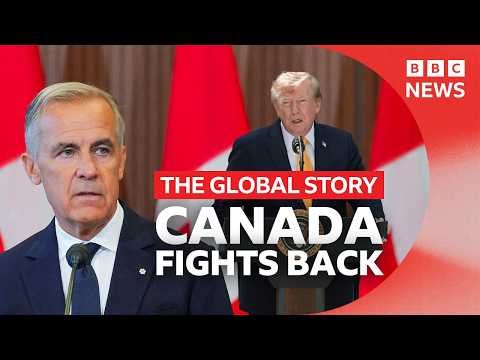
In a recent BBC News report, The Global Story examined how Canadian Prime Minister Mark Carney has emerged as one of the few world leaders willing to stand up to President Donald Trump — and asked whether his defiance, though popular at home, could come at a heavy economic cost. The question at the heart of that report has now been answered in the most definitive way possible.
In a recent BBC News report, The Global Story examined how Canadian Prime Minister Mark Carney has emerged as one of the few world leaders willing to stand up to President Donald Trump — and asked whether his defiance, though popular at home, could come at a heavy economic cost.
The question at the heart of that report has now been answered in the most definitive way possible. After weeks of shuttle diplomacy and quiet negotiations aimed at averting a trade war, Carney walked away from the table. The collapse was sudden, public, and — according to officials in Ottawa — deliberate. The prime minister chose confrontation over capitulation, and in doing so, he has fundamentally redrawn the relationship between the two largest trading partners on Earth.
This is the story of how that decision was made, what it means for the workers and consumers on both sides of the border, and why the fallout from this rupture could reshape the global economic order for years to come.
Carney Defies Trump as US-Canada Trade War Escalates
Ottawa, Canada – 27 August 2026 — Canada is now formally locked in a trade war with its largest ally after Prime Minister Mark Carney walked away from negotiations with the United States hours before a midnight tariff deadline. What began as a dispute over steel and aluminum quotas has become a test of whether a mid-sized economy can stand its ground against the full weight of American economic power — and the answer so far has reshaped politics on both sides of the border.
The Walkaway: How the Talks Collapsed
For weeks, Canadian negotiators had been shuttling between Ottawa and Washington, attempting to hammer out a last-minute deal that would spare Canadian exports from the punitive duties President Donald Trump had threatened to impose. The talks were described by multiple sources as intense and often acrimonious, with the US side pushing for concessions that Canadian officials considered unprecedented in the history of bilateral trade relations.
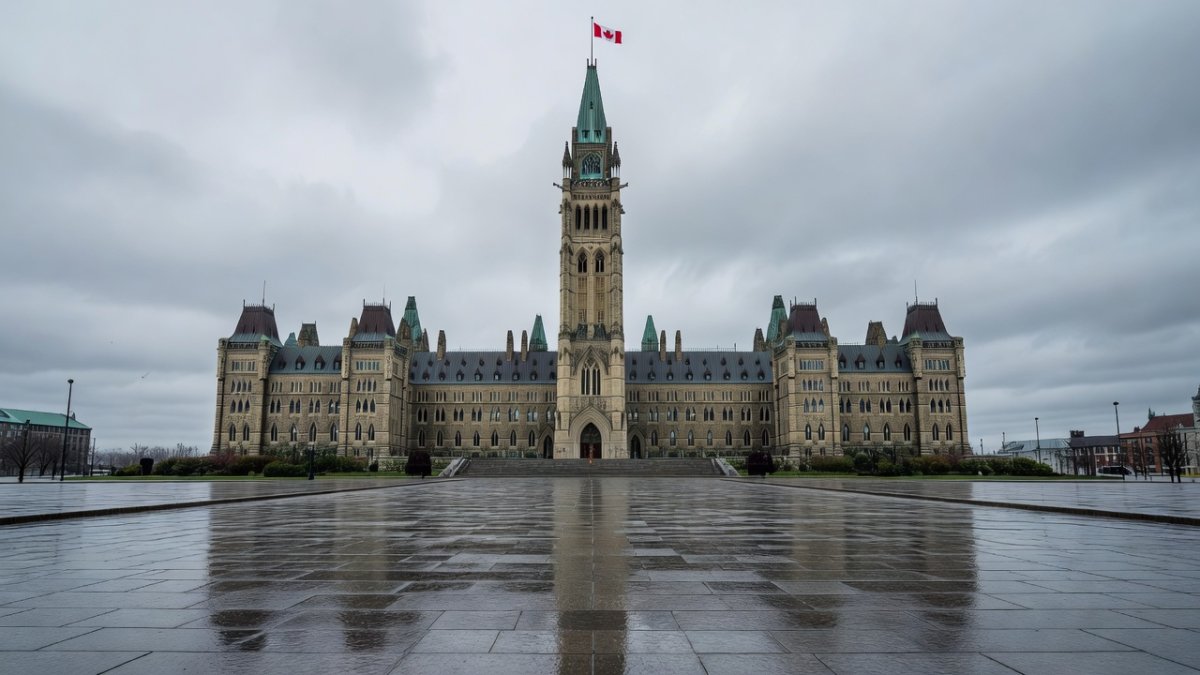
But on Friday, 22 August, just hours before Trump's midnight deadline for a new round of tariffs, Carney walked away. The decision was announced at a press conference in Ottawa, where the prime minister appeared visibly resolute, flanked by members of his cabinet. Canada said the talks collapsed over what it called unreasonable, last-minute demands from the US side, including more favorable terms on steel and aluminum — terms that would have effectively locked Canada into a subordinate position in the North American supply chain.
"We will not allow any nation to determine our future," Carney declared, his voice steady. "We will set our own course to keep building Canada strong for all."
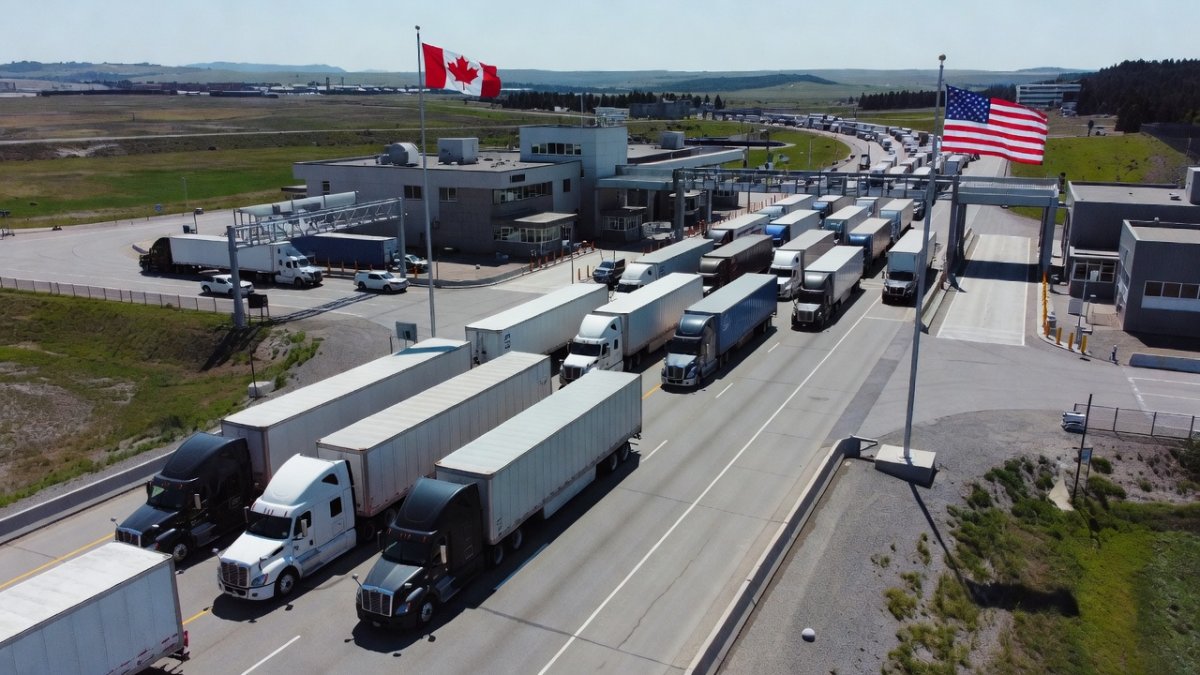
The words were carefully chosen, but the message was unmistakable: Canada would not bend. The prime minister's statement was met with applause from supporters gathered outside Parliament Hill, but it also signaled the beginning of a painful economic chapter. At midnight, Trump's 50% tariffs on roughly $20 billion worth of Canadian goods took effect, covering a broad swath of exports — from hockey sticks and cement to tongue depressors. The inclusion of such mundane items was seen by trade analysts as a deliberate signal from Washington that no sector of the Canadian economy was off-limits.
The timing was brutal. The tariffs hit just as Canadian businesses were preparing for the fall export season, and the suddenness of the collapse left many manufacturers scrambling to understand the implications. For the workers in Quebec's aluminum plants and Ontario's steel mills, the news was a gut punch. For the small businesses that supply hockey equipment to American leagues, it was an existential threat.
Yet Carney's decision was not made in a vacuum. It came after weeks of public pressure from Canadians who had grown weary of what they perceived as bullying from Washington. The prime minister, a former central banker known for his measured demeanor, had clearly concluded that further concessions would be politically untenable — and strategically unwise.
Dollar for Dollar: Canada's Retaliation
Carney did not wait long to respond. On Saturday, just hours after the US tariffs took effect, he announced retaliatory duties on a carefully selected list of American goods. The targets were chosen with precision: steel and dairy products, appliances, and farm equipment. The duties are set to take effect on 8 September, giving Canadian businesses time to adjust and American exporters a clear warning.
"Our government understood before many that America would transform all of its commercial relationships," Carney said, "that it would put a series of tariffs on its closest allies, and use economic integration as a weapon." He pledged that Canada would match US tariffs "dollar for dollar to protect our workers and businesses."
The phrase "dollar for dollar" was a direct challenge to Trump's transactional approach to foreign policy. It signaled that Canada would not be intimidated, and that every American tariff would be met with an equivalent response. The message was reinforced by the actions of Canadian provinces, many of which control alcohol sales and moved swiftly to remove US wine and spirits from their shelves — a highly visible consumer-level response that Canadians could see with their own eyes within days.
But Carney has so far resisted the most potent weapon in his arsenal: energy. Canada supplies the United States with 99% of its natural gas imports, 85% of its electricity imports, and 60% of its crude oil imports. A disruption in any of these flows would send shockwaves through the American economy, spiking prices at the pump and threatening the industrial heartland.
"Canada fuels American growth," Carney said on Saturday, citing those exact statistics. "I don't think they want us to stop sending any of that energy."
The implicit threat was clear. Carney has chosen not to play the energy card — yet. But the fact that he is willing to cite the numbers so openly suggests that he is keeping that option on the table. As he put it on Saturday, in a pointed reference to Washington's approach to its alliances, "We recognize that sometimes its signature was written in pencil."
Washington Strikes Back: Insults and Threats
The response from Washington was swift, personal, and — by the standards of this administration — entirely predictable. Trump called Canada "difficult and unreasonable," dismissed Canadian negotiators as "clowns," and on Tuesday escalated the rhetoric to a level that stunned even seasoned diplomats.
In a rambling statement, Trump threatened to rename Lake Ontario "Lake America," saying the US "doesn't expect to be doing much business with Ontario any longer." The remark was widely interpreted as a jab at Ontario Premier Doug Ford, whom Trump compared unfavorably to his late brother, former Toronto mayor Rob Ford. The comparison was seen as particularly cruel, given the circumstances of Rob Ford's death and the family's private grief.
Days earlier, Trump had claimed a deal with Canada was imminent. The whiplash was dizzying, even by the standards of this administration's chaotic approach to trade policy. But the insults were not limited to the president. Vice President JD Vance, speaking at a Republican rally in Maine, called Canada and China "the two worst countries when it comes to trade policy anywhere in the world."
"Canada is a state," Vance added. "Sorry. Freudian slip."
The comment drew laughter from the crowd, but it was the vice president's next claim that raised eyebrows. Vance asserted that Canada "quite literally would get invaded by a foreign country were it not for the umbrella of protection provided by the United States." The irony was not lost on observers. As The Guardian noted, the only country that has mused about invading Canada is the United States itself — Trump threatened to annex Canada as recently as last year, repeatedly floating the idea of making the G7 nation the 51st US state.
The combination of insults, threats, and historical amnesia was striking. But it also revealed a deeper truth: the Trump administration appears genuinely unable to comprehend why Canada would resist its demands. In Washington's view, Canada is a junior partner that should be grateful for American protection. In Ottawa's view, Canada is a sovereign nation with its own interests, its own resources, and its own pride.
Popular at Home: The Politics of Defiance
If Carney's hard line has infuriated Washington, it has galvanized Canada. A poll published earlier this week found that 56% of Canadians wanted their government to take a "hard line" and make no more concessions to Washington. The numbers represent a remarkable political consensus in a country often divided along regional and linguistic lines.
That consensus extends across the political spectrum. Opposition leader Pierre Poilievre, a conservative who has clashed with Carney on domestic policy, called on Canadians to "stand united to defend our country against these unfair attacks on our jobs and businesses." The Globe and Mail, Canada's newspaper of record, editorialized in favor of Carney's approach, writing: "In the end, Prime Minister Mark Carney took the hint from the Canadian public rather than the bait from the American president."
The roots of this defiance run deep. Since Trump returned to the White House in January 2025, Canada has been in his crosshairs. He has repeatedly said he wants the G7 nation to become the 51st US state, a remark that Canadians — who fought a war to avoid becoming part of the United States — find deeply offensive. Trump was particularly irked by Carney's January speech at the World Economic Forum in Davos, where the prime minister declared a "rupture" in the US-led world order.
That speech, delivered to the world's business and political elite, was a turning point. Carney positioned Canada not as a supplicant but as a leader of a new, more multipolar order. He argued that the era of unquestioning Canadian alignment with American foreign policy was over, and that Canada would chart its own course.
At home, the message resonated. Canadians have rallied around Carney not because they relish a trade war, but because they see this as a fundamental test of sovereignty. The prime minister's approval ratings have surged, and even traditional critics have acknowledged that he has handled the crisis with a steady hand. The politics of defiance, at least for now, are working.
The Real Economic Cost
But the political triumph masks a looming economic reality. The United States is by far Canada's biggest trading partner, with Canadian exports to the US representing about 70% of its total. The new US duties affect roughly 5.5% of Canadian exports — a relatively small slice, but one that is concentrated in politically sensitive industries and regions.
Analysts at the Royal Bank of Canada warned that "the economic cost of the increase is real nonetheless," with Quebec and Ontario — the country's economic powerhouses — expected to feel the pinch. The bank also cautioned that the administration's "unpredictability" is "a weight on business confidence across all trade exposed industries, not just those directly targeted with tariffs."
The numbers are sobering. Trevor Tombe, an economics professor at the University of Calgary, estimated that if the tariffs remain in place over the long run, they could result in the loss of 90,000 Canadian jobs. Canada's central bank has warned that a US withdrawal from the USMCA trade pact — a scenario that Trump has repeatedly threatened — would likely tilt Canada into recession.
The pain will not be confined to Canada. American consumers are already seeing surging prices, including for the most mundane of household goods. Toilet paper, a product that most Americans take for granted, is becoming more expensive. The US accounts for more than 20% of global tissue consumption with only 4% of the world's population, and it relies on lumber-rich Canada for raw materials. When tariffs disrupt that supply chain, the cost is passed directly to consumers.
The paradox is that this trade war is mutually destructive. Canada will lose jobs and economic output. The United States will face higher prices and reduced competitiveness. And yet, neither side appears willing to blink. The stakes, for both leaders, are existential.
Analysis — A New North American Order?
What does Carney's hard line actually signal? On one level, it is a straightforward negotiating tactic — an attempt to establish credibility and force Washington to take Canadian concerns seriously. But on a deeper level, it represents something more profound: a recognition that the post-war alliance between Canada and the United States, built on shared values and mutual trust, has been fundamentally broken.
Carney's pivot toward Europe is telling. He is set to address the European Parliament next month as Canada and the EU seek closer ties amid the split with Washington. This is not merely a symbolic gesture. It is a strategic realignment, an acknowledgment that Canada cannot rely on its southern neighbor and must diversify its economic and political relationships.
The energy interdependence paradox adds another layer of complexity. Canada supplies the US with the vast majority of its energy imports, yet Washington seems willing to jeopardize that relationship. If Carney were to play the energy card — to threaten a disruption in supply — the impact on the American economy would be immediate and severe. But such a move would also hurt Canada, which relies on energy exports for a significant portion of its revenue. It is a double-edged sword, and Carney's reluctance to wield it suggests he understands the risks.
The political calendar adds urgency to the situation. US midterm elections are less than three months away, with Republicans facing an uphill battle. Trump's trade war is unpopular with American consumers, who are feeling the pinch of higher prices. If the economic pain becomes acute, the political backlash could be severe — and Trump may be forced to back down.
But that is a gamble. Trump has shown a remarkable ability to weather political storms, and his base remains loyal. The question is whether the broader American public will tolerate a prolonged trade war with a trusted ally over what many see as a manufactured grievance.
For ordinary Canadians, the implications are clear: the era of easy access to the American market is over. Businesses must adapt, workers must prepare for disruption, and the country must chart a new course. For ordinary Americans, the implications are equally profound: the cost of goods will rise, the reliability of supply chains will be questioned, and the friendship with their northern neighbor — long taken for granted — can no longer be assumed.
This is not a temporary squabble. It is a genuine rupture, one that could define the geopolitical landscape for a generation. Carney has chosen his path. The question now is whether Trump will blink first — or whether both countries will pay the price for a war neither can win.
By Irina Volkov, Staff Writer
This article was produced with AI-assisted research and editorial support. Reporting is based on sources cited in the article.
What's Your Reaction?
 Like
0
Like
0
 Dislike
0
Dislike
0
 Love
0
Love
0
 Funny
0
Funny
0
 Wow
0
Wow
0
 Sad
0
Sad
0
 Angry
0
Angry
0

Russia/Eastern Europe Correspondent at Global1.News. Covering Russian politics, energy, security, and the shifting dynamics of the post-Soviet space. Provides clear-eyed analysis on one of the world's most opaque regions.














Comments (0)