
Caribbean Football's Confederation Joins Revolt Against FIFA President Infantino
The Caribbean's voice in world football has been raised in open rebellion.
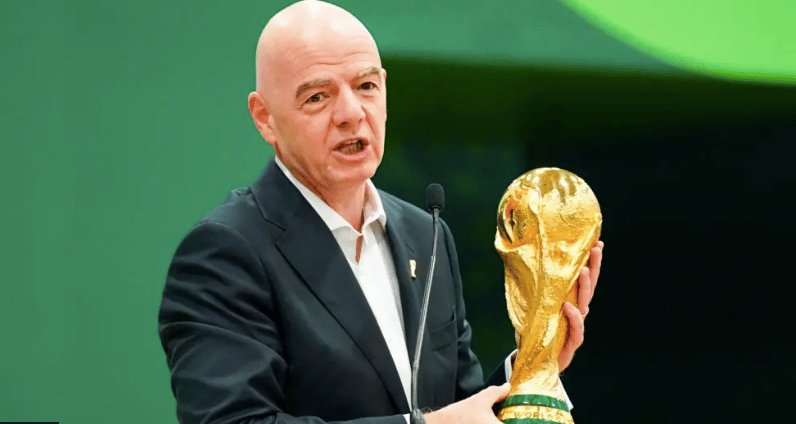
The Caribbean's voice in world football has been raised in open rebellion. Concacaf, the confederation that governs the sport across North and Central America and the Caribbean, has joined forces with European and Asian football bodies in a blistering public attack on FIFA president Gianni Infantino, accusing him of "deception" and a "fundamental breach of trust." For Trinidad and Tobago, a proud Concacaf member, this is not a distant European squabble—it is a direct challenge to the leadership that shapes the very fabric of the game from Port of Spain to Couva.
On Monday, August 10, 2026, three of FIFA's six confederations—UEFA (Europe), the Asian Football Confederation (AFC), and Concacaf—issued a joint open letter to the "football family." The letter, a rare show of unity among regional power blocs, did not mince words in its condemnation of Infantino's conduct during the proposed sale of a stake in World Cup commercial rights. The move signals a growing leadership crisis at the heart of global football, one with profound implications for smaller nations like Trinidad and Tobago that rely on FIFA funding and governance stability.
A Proposal That Shook the Football World
The conflict centres on a controversial plan advanced by Infantino to create a US$20-billion subsidiary, dubbed FIFA Forward Enterprise (FFE), to run the World Cup and other FIFA events. The proposal sought to sell a stake in future World Cup commercial and broadcasting rights to private investors, with reports indicating the plan aimed to raise up to US$4.2 billion by selling a 20% share in the new unit.
What raised alarm bells across the confederations was not just the scale of the financial manoeuvre, but the manner in which it was pushed forward. Infantino had reportedly written to member associations, promising each one a windfall of US$40 million if they agreed to the proposal by September 19. This direct appeal to national associations, bypassing established governance channels, was seen by many as an attempt to buy support for a plan that had not been properly vetted.
The backlash was swift and decisive. On August 1, 2026, Infantino scrapped the stake-sale plan after widespread opposition. But the damage to trust had already been done. Concacaf, in a statement following the collapse of the proposal, made its position clear: "A proposal of this magnitude does not reach that stage by accident." The confederation noted that the plan was advanced outside all established governance processes, with no transparency, consultation or due process.
The Open Letter: A Call for Accountability
The joint open letter from UEFA, AFC, and Concacaf represents an unprecedented public rebuke of a sitting FIFA president. The three confederations together represent the majority of FIFA's six confederations, giving their words significant weight in the corridors of football power.
The letter accused Infantino of "deception" and a "fundamental breach of trust" with the institutions the sport's global governing body serves. It called for "leadership that serves football, not seeks to command it," a pointed critique of what many see as Infantino's increasingly autocratic style.
"Football's strength has always been its unity. We call for that unity to be honoured now," the letter stated. It also lamented: "There is silence where there should be accountability, distance where there should be openness." These words resonate deeply in the Caribbean, where the memory of past FIFA governance scandals remains fresh, and where calls for transparency in sport administration have long been a rallying cry.
The letter further noted that FIFA's own correspondence confirmed only one elected official was present at the leadership meeting in Morocco where the proposal was discussed, and that no FIFA Council members or Member Associations were invited to participate. This revelation underscores the extent to which the decision-making process was concentrated in the hands of a few, far removed from the democratic structures that are supposed to govern world football.
Trinidad and Tobago's Direct Stake in the Fight
For Trinidad and Tobago, this governance battle is not an abstract political drama. The Trinidad and Tobago Football Association (TTFA) and the Soca Warriors sit squarely inside Concacaf, which gives Caribbean nations a direct stake in this fight. When Concacaf speaks, it speaks for the region—and when the region's voice is marginalised, the impact is felt on the ground.
Caribbean players, leagues and national teams feel the effects of FIFA decisions every day. From youth development programmes to World Cup qualifying pathways, from refereeing standards to infrastructure funding, the policies set in Zurich and the governance culture at FIFA's headquarters trickle down to every corner of the region. The promise of US$40 million per association was a tempting offer for cash-strapped federations, but the manner in which it was made raised serious questions about the integrity of the process.
Trinidad and Tobago's football history is deeply intertwined with Concacaf. The Soca Warriors' historic qualification for the 2006 World Cup in Germany remains a defining moment for the nation, a testament to what Caribbean football can achieve with proper support and governance. The current crisis threatens to undermine the very structures that made such achievements possible.
The 2026 World Cup: A Caribbean Success Story Under Threat
The timing of this leadership crisis is particularly poignant given that Concacaf hosted this summer's 2026 World Cup across the United States, Canada and Mexico. The tournament was a showcase for the region, with FIFA banking record World Cup income of about US$12 billion from the event. Caribbean fans travelled in droves to matches, and the region basked in the global spotlight.
Yet the financial success of the tournament has not translated into governance harmony. Sources indicate that the vast majority of Concacaf member associations are losing, or have lost, faith in Infantino. The sense of betrayal is palpable: a confederation that delivered a record-breaking World Cup now finds itself at odds with the very leadership that reaped the financial rewards.
The Caribbean's contribution to the 2026 World Cup went beyond ticket sales and tourism. Caribbean players, coaches and officials were involved at every level of the tournament, from the pitch to the organising committees. The region proved that it could host and deliver world-class football events. Now, the question is whether the governance structures that oversee the sport will reflect that same level of competence and integrity.
Regional Solidarity and the Road Ahead
The alliance between UEFA, AFC and Concacaf is significant not just for its size, but for its symbolism. UEFA president Aleksander Ceferin has been a long-time critic of Infantino, and his willingness to align with Concacaf and the AFC signals a coordinated effort to challenge the FIFA president's authority.
For the Caribbean, this solidarity offers a measure of protection. Small nations often struggle to make their voices heard in global bodies, where larger and wealthier associations dominate. But by standing with UEFA and the AFC, Concacaf ensures that Caribbean concerns are part of a broader movement for reform.
The open letter's call for "unity" is particularly resonant in the Caribbean context. CARICOM nations have long understood the power of collective action, whether in trade negotiations, climate change advocacy or sporting diplomacy. The same principle now applies to football governance. By joining forces with other confederations, Concacaf is demonstrating that the Caribbean will not be sidelined in decisions that affect the future of the sport.
What Happens Next for Caribbean Football
The immediate future remains uncertain. Infantino has scrapped the stake-sale plan, but the underlying tensions have not dissipated. The open letter demands accountability and openness, but whether FIFA's leadership will heed those calls remains to be seen.
For Trinidad and Tobago, the practical implications are clear. The TTFA must navigate this turbulent period while continuing to develop football at the national level. The promise of increased funding, whether from FIFA or other sources, must be balanced against the need for transparent and accountable governance.
The Caribbean's voice in world football matters. From the Soca Warriors to the region's youth academies, from the grassroots leagues to the professional clubs, the decisions made in FIFA's corridors will shape the game for generations to come. The current crisis is an opportunity for the region to assert its values: transparency, fairness and unity.
As the football world watches this leadership battle unfold, the Caribbean stands at a crossroads. The confederation that brought the World Cup to North America and the Caribbean has now taken a stand against the sport's most powerful figure. Whether this marks the beginning of a new era of accountability or simply another chapter in football's ongoing governance struggles, one thing is certain: the Caribbean will not be silent.
By Sharon Sahatoo, Staff Writer
This article was produced with AI-assisted research and editorial support. Sources: Caribbean360, Reuters, AP, BBC Sport, The Guardian.
What's Your Reaction?
 Like
0
Like
0
 Dislike
0
Dislike
0
 Love
0
Love
0
 Funny
0
Funny
0
 Wow
0
Wow
0
 Sad
0
Sad
0
 Angry
0
Angry
0

Caribbean Correspondent at Global1.News. Based in Port of Spain, Trinidad, covering Caribbean politics, economy, energy, climate, and culture. Amplifying the voices and stories of the Caribbean region.











Comments (0)