
Canadian companies betting Trump will buckle ahead of 50% tariff deadline
Canadian companies betting Trump will buckle ahead of 50% tariff deadline OTTAWA — As the clock ticks down to Aug. 19, when a new round of 50 per cent U.S.

Canadian companies betting Trump will buckle ahead of 50% tariff deadline
OTTAWA — As the clock ticks down to Aug. 19, when a new round of 50 per cent U.S. tariffs on nearly US$20 billion worth of Canadian goods is set to take effect, many Canadian businesses are choosing to wait and see rather than rush shipments across the border to beat the buzzer.
Industry insiders say the posture is a marked shift from last summer, when retailers and exporters scrambled to front-load orders ahead of U.S. tariff deadlines. Now, with President Donald Trump's latest trade salvo looming, Canadian shippers appear more desensitized to the tumult — and increasingly convinced the president may blink first.
A new tariff regime with no CUSMA escape hatch
The 50 per cent ad valorem tariff, signed into effect by Trump on July 20, applies to a broad swath of Canadian exports including dairy, honey, paper products, cement, wood products, essential oils, hockey equipment and several alcoholic beverages. Unlike most of Trump's other tariffs, the duties will not exempt goods that comply with the Canada-United States-Mexico Agreement, widely known as CUSMA.
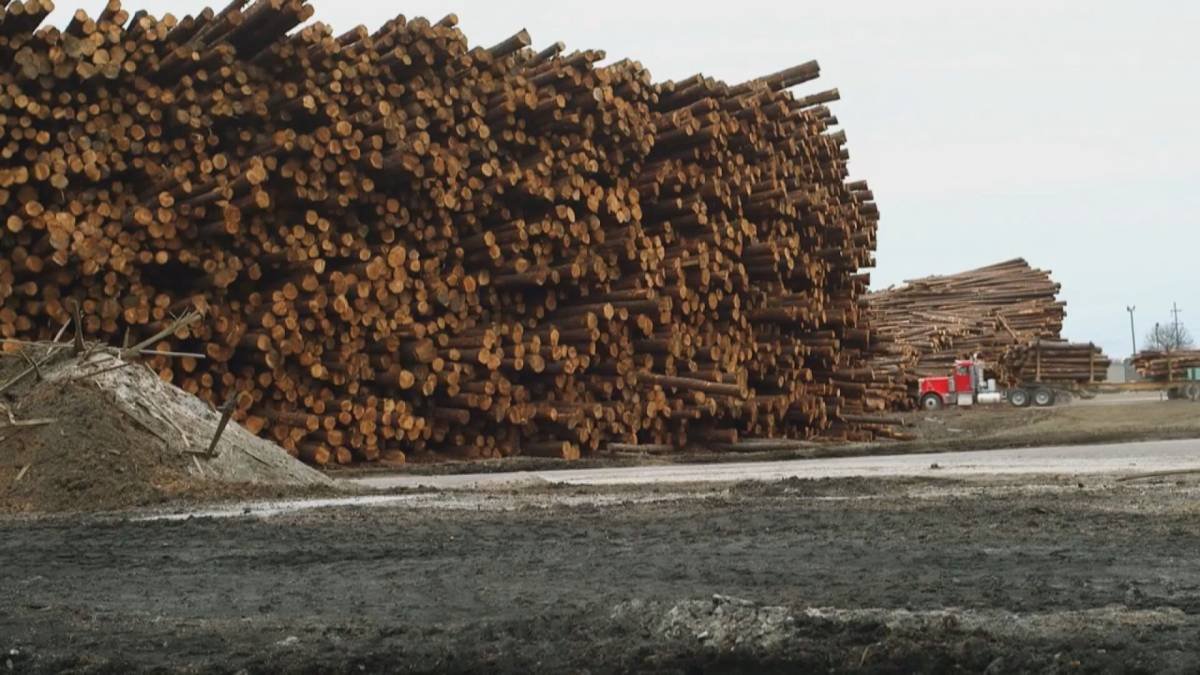
That detail is significant. The new rate is five times higher than the current duty imposed on the small portion of Canada's exports to the U.S. that don't comply with CUSMA's rules of origin regulations. By removing the compliance exemption, the White House has effectively closed the loophole that allowed many Canadian producers to avoid the worst of previous tariff rounds.
The tariffs are being imposed under Section 338 of the U.S. Tariff Act of 1930, which gives the president the power to impose a maximum tariff of 50 per cent on imports from countries deemed to discriminate against U.S. industry. The provision has not been used for this purpose before, which could open the door to a legal challenge.
Notably, the tariffs will not apply to energy, potash, critical minerals, fish, or products already subject to tariffs under Section 232, which covers steel, aluminum, copper and pharmaceuticals.
Canadian businesses adopt 'watchful waiting'
Janine Harker, who heads the Canadian Society of Customs Brokers, says business owners have largely avoided front-loading their shipments and have settled into a posture of "watchful waiting."
"Companies are not rushing to beat the deadline the way they did last summer," Harker said in an interview. "They're watching to see whether the president will live up to his perceived proclivity for bluffing or backing down on his tariff promises."
That sentiment has given way to a new acronym in trade circles: TACO, or "Trump Always Chickens Out." While the phrase is delivered with a measure of gallows humour, it reflects a genuine calculation among Canadian exporters that the president may ultimately relent, as he has in previous trade disputes.
But Harker cautioned that the stakes are higher this time. "The 50 per cent rate is not a rounding error. For many businesses, particularly in the dairy and wood products sectors, this could be existential if it holds."
Ottawa's response: measured but firm
Prime Minister Mark Carney responded to the July 20 proclamations with a statement that framed the tariffs as a violation of CUSMA and a direct challenge to the rules-based trading order.
"This is the latest in a series of unilateral U.S. trade actions that began with the U.S. imposing a series of tariffs in direct violation of the agreement," Carney said. "Canada, as is its right, has merely matched those measures."
Carney also sought to underscore the broader economic consequences of the dispute, noting that "this trade dispute has raised costs for families, particularly in the U.S." He added that "Canada stands ready to engage intensively to address outstanding issues with the U.S. to the mutual benefit of our citizens."
The prime minister's language was carefully calibrated — firm on principle, but leaving the door open for negotiation. That approach mirrors the posture of many Canadian businesses, which are preparing for the worst while hoping for a last-minute reprieve.
Assessing the financial toll
While businesses wait, they are also doing the unglamorous work of assessing the potential financial toll. For exporters in sectors like dairy and wood products, the 50 per cent tariff would effectively price them out of the U.S. market overnight.
Industry observers note that a 50 per cent tariff would be difficult for any producer to absorb and remain competitive in the U.S. market. The added cost would ultimately have to be carried by the Canadian seller, passed on to the U.S. buyer, or absorbed in lost sales — and for many exporters, none of those options is sustainable.
The uncertainty is particularly acute for smaller businesses that lack the resources to redirect supply chains or find alternative markets. Larger firms, by contrast, have been quietly exploring options such as warehousing in the U.S., shifting production south of the border, or diversifying into other export destinations.
But those strategies take time and capital — two things that are in short supply when the tariff deadline is measured in days, not months.
Federal-provincial tensions simmer beneath the surface
The tariff threat also highlights familiar tensions between Ottawa and the provinces. While the federal government has primary jurisdiction over international trade, provinces control key sectors such as dairy supply management and natural resources — both of which sit in the crosshairs of U.S. trade policy. Dairy-dependent regions such as Quebec and forestry communities across the country would feel the impact most acutely, while energy-producing provinces such as Alberta are shielded from the immediate tariffs but remain exposed to broader U.S. trade actions.
The federal government has so far favoured negotiation over retaliatory measures, preferring to keep the door open for talks. That approach has drawn criticism from some opposition voices who argue that a firmer response is needed, but it also reflects the reality that retaliation carries its own costs for Canadian consumers and businesses.
The federal-provincial dynamic adds another layer of complexity to an already fraught situation. With an election cycle looming, the political stakes are high for all parties involved.
What happens next?
The Aug. 19 deadline is now less than a week away, and there is no public indication that the White House is preparing to back down. A senior administration official described the tariffs as "defensive measures" rather than an escalation, telling reporters on a conference call that "this is not a trade war with Canada."
But the use of Section 338 — a rarely invoked provision that has never been used for this purpose — suggests the administration is willing to push the legal and diplomatic envelope. Legal challenges are widely expected, though they would take months to wind through the courts, offering little immediate relief to Canadian exporters.
For now, the mood among Canadian businesses is a mix of resignation and cautious optimism. The TACO acronym captures the hope that Trump will ultimately blink, but it also reflects a recognition that this time, the stakes are higher and the margin for error is thinner.
"We've been through this before," Harker said. "But that doesn't make it any easier. The uncertainty is the hardest part."
As the deadline approaches, Canadian companies are left to do what they have done throughout this trade dispute: prepare for the worst, hope for the best, and keep a close eye on Washington.
Tags: Canada-U.S. trade, tariffs, Donald Trump, Mark Carney, CUSMA, Section 338, dairy, wood products, Canadian Society of Customs Brokers, trade war, exports, Global News
By Alex Thompson, Staff Writer
This article was produced with AI-assisted research and editorial support. Sources: Global News, The Canadian Press, CBC News, National Post.
What's Your Reaction?
 Like
0
Like
0
 Dislike
0
Dislike
0
 Love
0
Love
0
 Funny
0
Funny
0
 Wow
0
Wow
0
 Sad
0
Sad
0
 Angry
0
Angry
0

Canada Correspondent at Global1.News. Based in Toronto, covering Canadian politics, energy, trade, and US-Canada relations. Provides the Canadian perspective on North American and global affairs.












Comments (0)