
Cottage and white cheese shortage nears end as Tnuva, supermarkets restock
After nearly two months of empty shelves, frustrated consumers across Israel can finally breathe a sigh of relief. Over the past two days, retail chains report that white cheese and cottage cheese are once again available even in the evening hours—a stark contrast to re
Cottage and white cheese shortage nears end as Tnuva, supermarkets restock
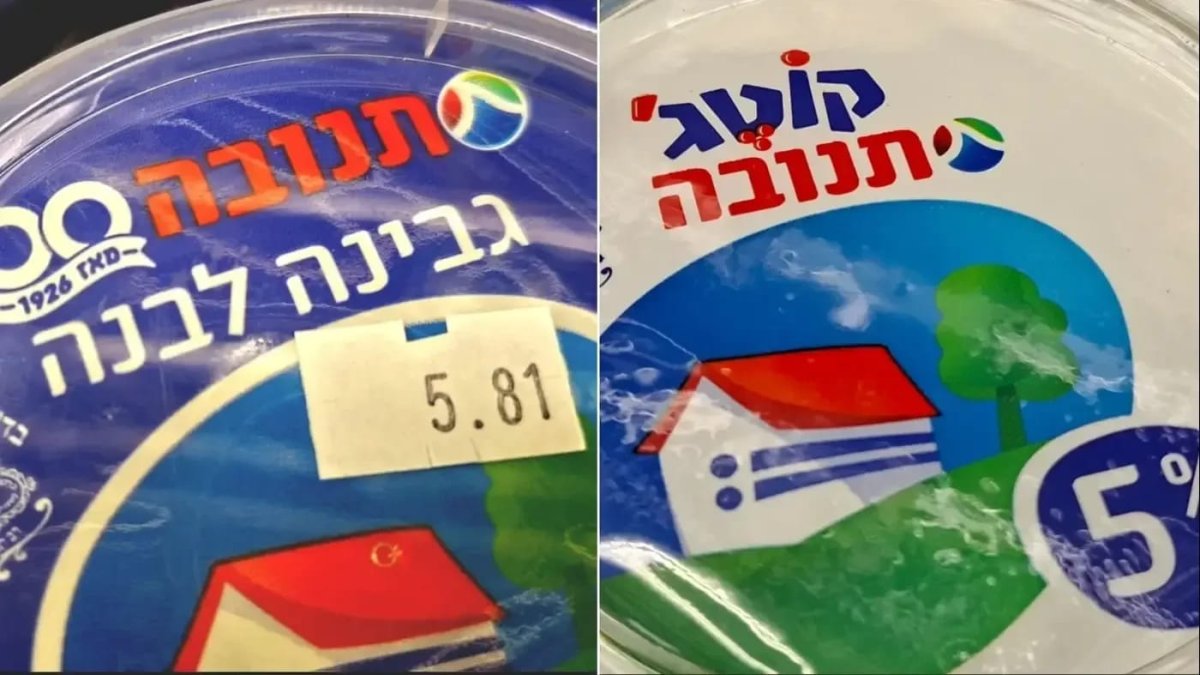
After nearly two months of empty shelves, frustrated consumers across Israel can finally breathe a sigh of relief. Over the past two days, retail chains report that white cheese and cottage cheese are once again available even in the evening hours—a stark contrast to recent weeks when the products were snatched directly from stockers' crates, sometimes before reaching the refrigerators. The crisis, which began with cottage cheese vanishing before Shavuot and escalated into a broader dairy shortage, appears to be drawing to a close.
Over the past two weeks, Tnuva has returned to supplying retail chains with normal quantities. Market sources told Walla that rebuilding inventory and filling the vacuum created during the shortage took considerable time. The change on the ground has only been felt in recent days, with goods remaining on shelves throughout the day and still available in the evening. For Israeli households that have spent weeks planning meals around whatever dairy products happened to be in stock, this marks a significant shift back to normalcy.
The cottage cheese crisis that started it all
The ordeal began with cottage cheese, a staple of the Israeli breakfast table, which vanished from shelves even before Shavuot. For long weeks, retail chains struggled to receive the quantities they ordered from Tnuva, and in some branches, the product disappeared shortly after arrival. The timing could not have been worse—Shavuot is traditionally one of the heaviest dairy consumption periods in Israel, with families stocking up for holiday meals featuring cheesecakes, quiches, and fresh cheeses.
As the shortage persisted, consumers adapted in a predictable way: they turned to white cheese as a substitute. This caused demand for white cheese to surge rapidly. Within a short time, a shortage of white cheese developed as well, and the shelves usually filled with tubs of cottage and white cheese were instead stocked with labneh, sour cream, and other dairy products. What began as a single-product disruption quickly cascaded into a category-wide problem.
A technical failure behind the shortage
The root of the crisis lay in a malfunction in the automated warehouse system at Tnuva's Alon Tavor dairy, located in the Lower Galilee near Afula. As revealed by Walla, the issue was not on the production line. The cottage cheese was produced, packaged, and ready for distribution, but some of it could not leave the dairy and reach distribution trucks due to disruptions in the system managing pallet movement in the warehouse.
This distinction matters. Tnuva's production capacity was never compromised—the dairy was making cheese at full speed. The bottleneck was in the logistics layer, specifically in the automated systems that move pallets from storage to loading docks. The cheese was sitting in the warehouse, packaged and cold, but the machinery designed to bring it out was malfunctioning. For a company that supplies a significant portion of Israel's dairy products, this created an immediate and visible gap in stores across the country.
The German connection: Dematic and the war factor
The automated warehouse system at Alon Tavor is operated by Dematic, a German company specializing in intralogistics and warehouse automation. Under normal circumstances, a technical failure of this nature would have been resolved quickly with an on-site visit from Dematic's technical team. But these are not normal circumstances.
A visit by the team scheduled to arrive at Tnuva during Operation Roaring Lion was canceled due to the war. The security situation in Israel, which has included ongoing military operations and rocket fire in various regions, made it impossible for the German technicians to travel to the country. Instead, Dematic's staff attempted to assist Tnuva's teams remotely via phone and Zoom calls, while Tnuva employees operated part of the system manually.
The manual operation allowed goods to be dispatched, but not at the usual supply pace. This slower throughput meant that even though Tnuva was shipping product, it could not keep up with the orders coming in from retail chains. The gap between what stores ordered and what they received widened daily, and the effects were felt on shelves from Tel Aviv to Beersheba.
Demand dynamics: A 4% surge and fewer trips abroad
Compounding the logistical problem was a roughly 4% increase in demand for dairy products since the beginning of the year. This increase was driven in part by a drop in the number of Israelis traveling abroad due to the security situation. With fewer families flying to Europe, the United States, or Asia for vacations, more Israelis are staying home—and eating at home.
This shift in consumer behavior has had a measurable impact on the dairy market. More people eating at home means more breakfasts, more sandwiches, and more dairy consumption overall. The 4% figure may sound modest, but in a market as concentrated as Israel's dairy sector, even a small percentage increase in demand can strain supply chains that are already operating at near capacity.
High demand and gaps created since Shavuot made restocking difficult. Any additional delay in Tnuva's distribution was felt immediately in retail stores. The combination of a technical malfunction, a war-related cancellation of technical support, and rising demand created a perfect storm that emptied shelves for weeks.
Market structure: Tnuva's dominance and Strauss's position
The shortage was especially noticeable due to the market structure of Israel's dairy industry. Tnuva is Israel's largest producer in the white cheese category, holding a dominant position that gives it significant influence over what appears on store shelves. When Tnuva's distribution falters, the entire market feels it.
Strauss holds about 30% of the market, making it the second-largest player. While Strauss continued to supply its products throughout the crisis, it could not fill the gap left by Tnuva's reduced output. The market simply does not have enough spare capacity to absorb a disruption of this scale from its largest producer.
This market concentration is a double-edged sword. On one hand, it allows for economies of scale and relatively stable prices. On the other hand, it creates vulnerability—when one company's logistics fail, there is no quick alternative source to turn to. The cottage cheese shortage demonstrated this fragility in real time, as consumers found themselves facing empty shelves in a country where dairy products are a dietary cornerstone.
The spillover effect: From cottage to white cheese
The disruption in cottage cheese supply eventually spilled over to white cheese in a textbook example of substitution dynamics. Consumers unable to find cottage cheese switched to white cheese, and the growing demand began clearing those shelves as well. The substitution effect was rapid and pronounced—within days of the cottage cheese shortage becoming acute, white cheese shelves began to thin out.
This spillover created a compounding problem. Tnuva was already struggling to distribute its existing inventory due to the warehouse malfunction. Now it was facing increased demand for a second product category, further straining its ability to keep up. Retail chains, caught between reduced supply and shifting demand patterns, found themselves unable to maintain adequate stock levels for either product.
The shelves usually filled with tubs of cottage and white cheese were instead stocked with labneh, sour cream, and other dairy products. For consumers, this meant adapting their shopping lists and recipes. For retailers, it meant explaining to frustrated customers why their preferred products were unavailable.
What the shortage reveals about Israel's food supply chain
This episode offers a revealing glimpse into the vulnerabilities of Israel's food supply chain. The country's dairy sector is highly centralized, with a handful of major producers controlling the vast majority of supply. This centralization brings efficiency in normal times but creates significant risk when something goes wrong.
The reliance on foreign technical support for critical infrastructure is another vulnerability. When Dematic's team could not travel to Israel due to the war, Tnuva was forced to rely on remote troubleshooting and manual operations. This worked, but at a reduced pace. The episode highlights how dependent Israeli industry has become on global supply chains for even the most basic operational support.
The war itself played a direct role in exacerbating the crisis. Beyond the canceled Dematic visit, the security situation reduced travel abroad, increasing domestic demand for dairy products. It also likely affected workforce availability and logistics operations in various ways. The shortage was not caused by the war, but the war certainly made it worse.
The road to recovery: Two weeks of normal supply
Now, after two weeks of supply at normal levels, the gaps finally appear to be closed. Tnuva has returned to supplying retail chains with the quantities they order, and the inventory that was depleted during the crisis has been rebuilt. The process took time—market sources told Walla that filling the vacuum created during the shortage was not instantaneous.
The change on the ground has been felt only in recent days. Goods are remaining on shelves throughout the day and are still available in the evening. For consumers who have spent weeks checking multiple stores to find cottage cheese, this is a welcome return to normalcy. For retailers, it means fewer customer complaints and less pressure on staff to explain shortages.
The resolution of this crisis offers lessons for both Tnuva and the broader Israeli food industry. Backup plans for critical systems, including alternative arrangements for foreign technical support, will likely be reviewed. The experience may also prompt discussions about whether Israel's dairy market needs more redundancy and flexibility to handle disruptions.
What this means for Israeli consumers going forward
For Israeli consumers, the end of the shortage brings relief, but also a reminder of how fragile the food supply can be. The dairy aisle is a daily destination for most households, and its emptiness was felt acutely across the country. The return of cottage and white cheese to shelves is more than a logistical achievement—it is a restoration of normalcy in daily life.
The crisis also highlighted the importance of the dairy sector to Israel's economy and food security. Tnuva's Alon Tavor dairy is a critical piece of national infrastructure, and its smooth operation is essential for millions of Israelis. The company's ability to work around the warehouse malfunction, even at reduced capacity, prevented the situation from becoming even worse.
As the country moves forward, the question of how to build more resilience into the food supply chain will remain relevant. The 4% increase in demand, driven by security-related changes in consumer behavior, may persist as long as the security situation remains tense. Tnuva and other producers will need to account for this in their planning.
For now, the cottage cheese is back on the shelves, the white cheese is available in the evening, and Israeli consumers can return to their normal shopping routines. The crisis may be over, but its lessons will likely shape how Israel's dairy industry approaches logistics, technical support, and supply chain resilience in the years to come.
This article was produced with AI-assisted research and editorial support. Sources: The Jerusalem Post, Walla.
By Hannah Berg, Staff Writer
What's Your Reaction?
 Like
0
Like
0
 Dislike
0
Dislike
0
 Love
0
Love
0
 Funny
0
Funny
0
 Wow
0
Wow
0
 Sad
0
Sad
0
 Angry
0
Angry
0

Israel Correspondent at Global1.News. Based in Tel Aviv, covering Israeli politics, security, technology, and society. Provides balanced, deeply-sourced reporting on one of the most closely-watched regions in the world.















Comments (0)