
Covenant Industries' 'Anthem' Missile Test in Morocco Signals New Era of Low-Cost Precision Strike
Covenant Industries test-fired its low-cost Anthem cruise missile at the new US-Moroccan AMTEC range in Tan-Tan, marking the first live-fire demonstration at the facility and a milestone toward serial production in 2027.
In a recent i24NEWS English report, the spotlight fell on a secretive US-Israeli defense startup that successfully test-fired a low-cost, long-range cruise missile from the Sahara desert in southern Morocco. The August 6 launch of the "Anthem" missile, engineered by Covenant Industries, marks the first live-fire demonstration at the new Africa Multidomain Training and Experimentation Center (AMTEC), a US-Moroccan facility designed to become a permanent laboratory for advanced warfare technologies. For Israeli defense observers, the event underscores how the post-Abraham Accords landscape is reshaping regional security cooperation, with Tel Aviv's innovation ecosystem increasingly plugged into US-allied networks across North Africa.
Covenant Industries' 'Anthem' Missile Test in Morocco Signals New Era of Low-Cost Precision Strike
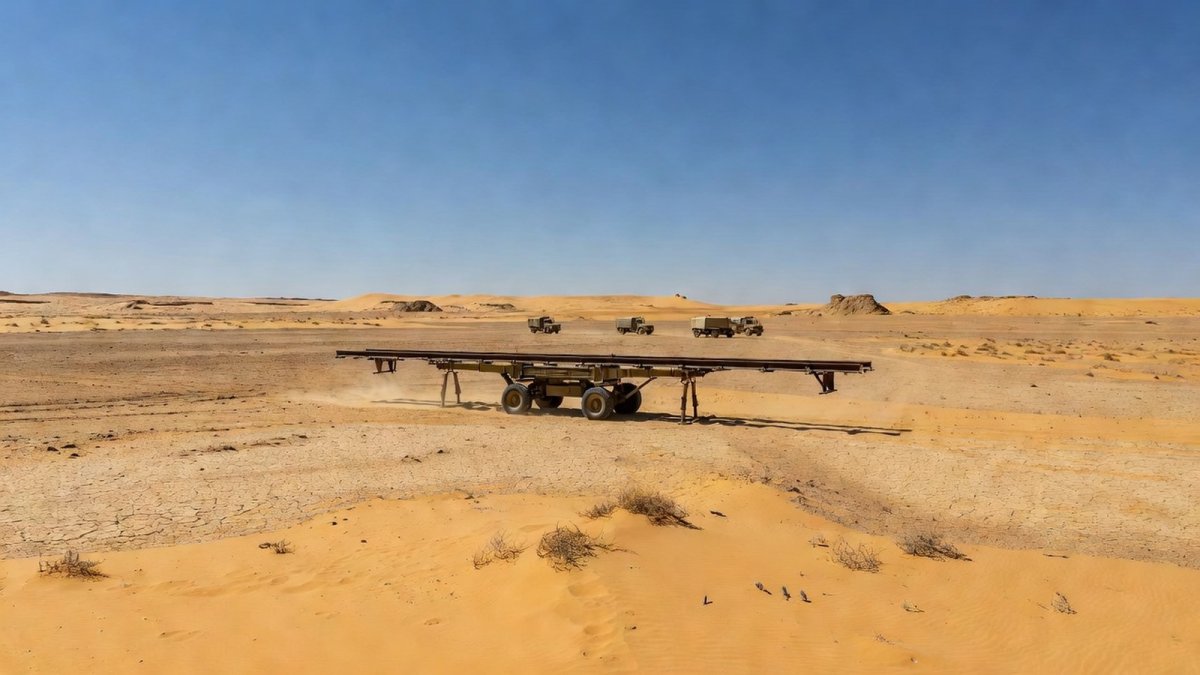
Jerusalem, Israel – This week — The live-fire event near Tan-Tan in southern Morocco was not a full operational deployment but a carefully calibrated data-collection exercise. US and Moroccan forces, alongside Covenant engineers, set up a temporary launch site in the Sahara dunes, testing the missile's communications systems, launch mechanisms, wings, tires, and launch trolley maneuverability while gathering real-time communications, weather, and targeting data. The test represents a critical milestone toward serial production of the Anthem as early as the beginning of 2027, according to the i24NEWS report.
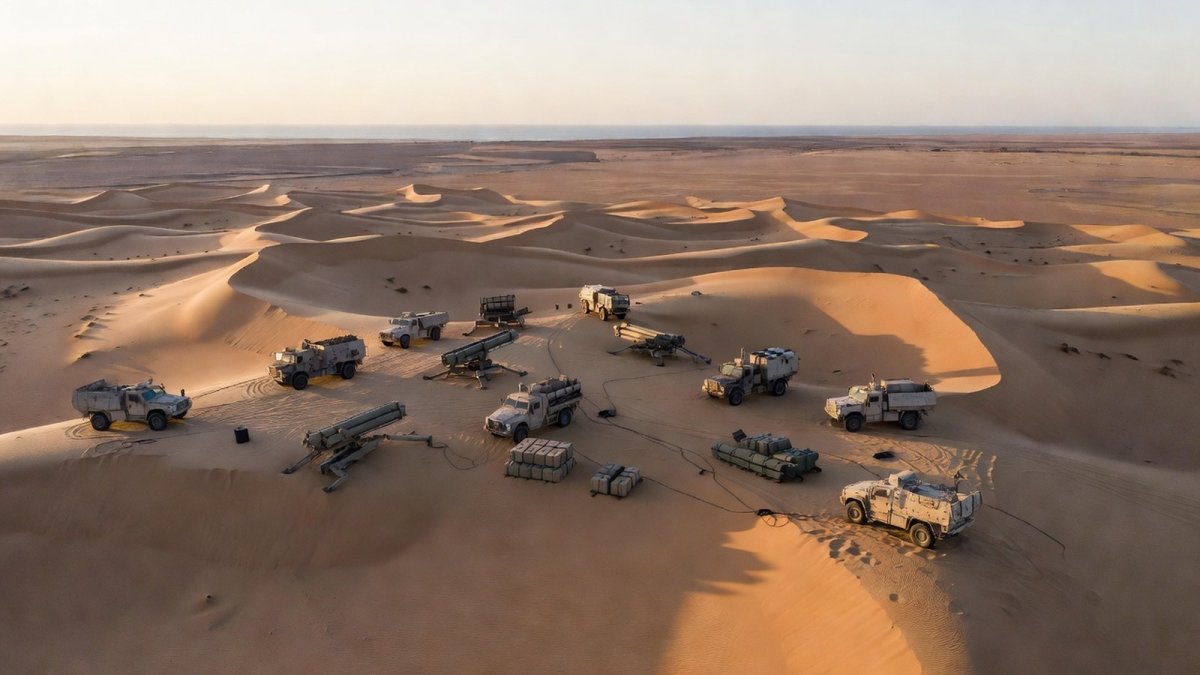
On the Ground: AMTEC's First Live-Fire Milestone
The launch was made possible through an initiative by the office of the US Secretary of the Army, Secretary Dan Driscoll, which allows private technology companies rapid access—within 30 days—to military testing grounds belonging to the US and its allies. Five strategic military test ranges are open through an agile online reservation system, and Covenant was the first company to utilize the initiative. The AMTEC firing site in Tan-Tan is the only facility located outside the sovereign borders of the United States included in the Pentagon catalog, a detail that underscores Morocco's unique position in US defense planning.
Colonel Zouhair El Hamdani, the Royal Armed Forces officer in charge of AMTEC coordination, framed the event in ambitious terms. "The vision is to establish AMTEC as a regional hub for innovation, strategic cooperation and industrial development, as well as a center of excellence dedicated to the experimentation, validation, evaluation and development of advanced technologies," he said. "This first live-fire demonstration marks a significant milestone in turning that vision into reality." AMTEC will eventually encompass three operational pillars in Tan-Tan: a Multidomain Training Area, a specialized Drone Academy, and an Innovation and Experimentation Center, targeting full multidomain development by 2030.
US Army Lieutenant Colonel Corbett W. Baxter, exercise planner for SETAF-AF (US Army Southern European Task Force, Africa), emphasized the practical payoff. "AMTEC is about turning innovation into operational advantage. This demonstration allowed us to evaluate emerging technologies alongside our partners in realistic conditions and rapidly identify what works," he said. "By shortening the path from testing to fielding, we're delivering new capabilities to Warfighters faster."
Israel's Defense-Tech Boom and the Anthem Model
The Anthem test arrives at a moment of unprecedented expansion in Israel's defense-technology sector. Elbit Systems, the country's largest privately owned defense company, has posted record quarterly results amid surging global demand for precision munitions, drones, and electronic warfare systems. But the real story of the past several years has been the emergence of a new wave of Israeli startups—lean, venture-backed, and unencumbered by the bureaucratic inertia that often characterizes legacy defense primes. These companies are targeting a specific vulnerability exposed by recent conflicts: the prohibitive cost of precision strike systems in an era of drone saturation.
The battlefield lessons from Ukraine and the Middle East are unambiguous. Non-state actors and peer competitors alike have flooded the skies with low-cost, asymmetric drones that can overwhelm air defenses and exhaust expensive interceptor stockpiles. Hamas, Hezbollah, and Iran-backed proxies have demonstrated that a $500 quadcopter or a $20,000 loitering munition can tie up multi-million-dollar air defense systems and force conventional militaries into unsustainable expenditure patterns. For Israel, which has faced rocket barrages and drone incursions on multiple fronts since October 7, the need for affordable, mass-producible counter-strike capabilities is not theoretical—it is existential.
Covenant Industries embodies this new model. Founded in 2024 by Michael Kaufman, an American investor and entrepreneur operating out of Israel who previously invested at Thiel Capital, the company has maintained an exceptionally low public profile—it has no official website—yet has raised hundreds of millions of dollars from major Silicon Valley funds, including Founders Fund and Andreessen Horowitz. This is a striking departure from the traditional Israeli defense-industrial base, where companies like Rafael, IAI, and Elbit grew out of government laboratories and state-directed research programs. The new generation of Israeli defense startups is instead being incubated in Tel Aviv's startup ecosystem, funded by American venture capital, and designed from day one for global export markets.
The strategic logic of the Anthem missile fits squarely within this paradigm. Rather than competing with the Tomahawk on performance specifications, Covenant is competing on economics. A cruise missile that costs a fraction of legacy systems and can be produced at scale changes the calculus of deterrence. Instead of husbanding a limited inventory of expensive precision weapons, allied militaries could field thousands of Anthem-class missiles, saturating enemy defenses and maintaining sustained strike pressure without depleting national stockpiles. For Israel, which has long relied on US-supplied precision munitions and its own indigenous systems, the development of low-cost alternatives represents both a strategic hedge and an export opportunity. The Anthem test in Morocco is a proof point that Israeli-linked innovation can be integrated into US-allied defense architectures at speed, bypassing the traditional multi-year procurement cycles that have historically slowed the fielding of new capabilities.
Regional Context: Abraham Accords and North African Defense Alignment
The broader post-2020 normalization environment has reinforced a strategic landscape that encourages cross-border defense-tech engagement and experimentation across North Africa. Institutional US-Morocco military ties predate the Abraham Accords, but the post-Accords environment has expanded security alignment in ways that directly benefit Israeli-linked companies like Covenant. For Jerusalem, the development is a reminder that the defense innovation ecosystem—anchored by companies like Elbit Systems, which has posted record quarterly results amid rising global demand—is increasingly intertwined with US-allied networks stretching from the Mediterranean to the Sahara.
General Dagvin Anderson, commander of US Africa Command (AFRICOM), highlighted the strategic value of the Moroccan venue. "Morocco's partnership provides a crucial venue that accelerates readiness for the U.S. joint force and our African partners," he said. "AMTEC not only strengthens our security cooperation and drives innovation, it demonstrates that trusted partnerships are how we help tackle shared security challenges together." Colonel Michael M. Gacheru, AFRICOM's regional engagement division chief, added that "the AMTEC live-fire demonstrates where multinational training is headed, integrating emerging technologies with partner forces in realistic operational environments."
Diplomatic and International Reactions: Germany's Interest and Pentagon Priorities
The Anthem test has drawn attention beyond Washington and Rabat. In June, Politico reported that Germany's defense ministry was evaluating Covenant as it searched for lower-cost, long-range strike capabilities and alternatives to relying heavily on US-made systems such as the Tomahawk cruise missile. The German interest reflects a broader European concern about stockpile depletion and the need for affordable precision munitions, a lesson driven home by modern conflicts across the Middle East and Eastern Europe, where non-state actors have saturated battlespaces with low-cost asymmetric drones.
The US legislative branch is also moving. Section 1268 of the draft Fiscal Year 2027 National Defense Authorization Act directs the US Department of Defense to formulate a strategy prioritizing Cooperative Security Locations ("lily pads") across Moroccan territory. These lean, scalable operational footprints with minimal permanent presence would provide turnkey access for rotational allied forces, pre-positioned equipment, and rapid multi-domain deployment. For Israeli defense analysts, the NDAA language signals that Morocco is becoming a permanent node in US power projection, with implications for regional balances that extend well beyond the Western Sahara dispute.
Analysis and What This Means for Israel's Defense Ecosystem
Covenant Industries was founded in 2024 by Michael Kaufman, an American investor and entrepreneur operating out of Israel, formerly an investor at Thiel Capital. The company has maintained an exceptionally low public profile—it has no official website—yet has raised hundreds of millions of dollars from major Silicon Valley funds, including Founders Fund and Andreessen Horowitz. The Anthem missile is intended to be Covenant's flagship product: a cheaper alternative that is easier to mass produce than heavy and expensive cruise missiles such as the US Tomahawk, while maintaining long-range capability and precision strike capacity.
The strategic logic is clear. Democratic alliances need cost-effective, high-volume counter-strike capabilities that do not deplete stockpiles of expensive legacy munitions. The Anthem test in Morocco is a proof point that the US military establishment is willing to embrace private-sector innovation at speed, and that allied territories like Morocco can serve as testing grounds for technologies that will eventually find their way into Israeli and allied arsenals. For Israel, the development reinforces the centrality of its defense-tech sector in global supply chains, even as the IDF continues to grapple with the operational demands of multi-front warfare.
The timing is also significant. The missile was launched on August 6, with reports published between August 12 and 14, 2026. The relatively quick public disclosure—despite Covenant's secretive posture—suggests a deliberate effort to signal capability to both allies and adversaries. For Israeli readers, the Anthem test is a reminder that the boundaries between US, Israeli, and allied defense innovation are increasingly porous, and that the Abraham Accords have created a permissive environment for exactly this kind of cross-border experimentation.
What Comes Next: From Desert Test to Production Line
The August 6 demonstration was never intended to be a one-off spectacle. It was a data-collection exercise designed to validate the Anthem's core systems under real desert conditions—communications links, telemetry, launch mechanisms, and climate resilience—while feeding critical information back to Covenant's engineering teams. The company's stated target of serial production as early as the beginning of 2027 suggests that the test met or exceeded expectations, and that the path from prototype to production line is now a matter of manufacturing scale rather than technical feasibility. For an industry accustomed to decade-long development cycles, a three-year journey from founding to serial production would represent a remarkable acceleration.
The AMTEC facility itself is on a parallel trajectory. The vision articulated by Moroccan and US officials is for Tan-Tan to become a permanent hub for testing emerging technologies in realistic desert conditions, with three operational pillars: a Multidomain Training Area, a specialized Drone Academy, and an Innovation and Experimentation Center. The target for full multidomain development is 2030, but the Anthem test has already demonstrated the facility's utility as a live-fire venue. As AMTEC matures, it is likely to attract a growing roster of private defense companies seeking rapid access to allied testing grounds—particularly those that cannot easily secure slots at congested US domestic ranges.
The customer pipeline is already taking shape. Germany's defense ministry evaluation of Covenant, reported by Politico in June, signals that European militaries are actively seeking alternatives to their heavy reliance on US-made systems like the Tomahawk. The Anthem-class missile, with its lower unit cost and mass-production potential, offers a compelling value proposition for European countries rebuilding depleted stockpiles after years of sustained support to Ukraine. Beyond Germany, other NATO members and Gulf states are likely to follow suit, particularly those seeking to diversify their precision-strike inventories without committing to the multi-million-dollar price tags of legacy cruise missiles. For Israel, the export potential is significant: a mass-produced Anthem-class missile could become a staple of allied arsenals across Europe and the Middle East, reinforcing Jerusalem's position as a critical node in Western defense supply chains.
The NDAA Section 1268 "lily pads" framework adds another layer to this evolving picture. By directing the Pentagon to formulate a strategy for Cooperative Security Locations across Moroccan territory, the US Congress is signaling that Morocco is not merely a convenient testing venue but a permanent element of US power projection in Africa and the Mediterranean. These lean, scalable operational footprints—with minimal permanent presence but turnkey access for rotational forces, pre-positioned equipment, and rapid multi-domain deployment—would complement AMTEC's experimentation mission. For Israeli defense planners, the combination of AMTEC's testing infrastructure and the lily pads framework means that Morocco will increasingly serve as a rearward staging area for US and allied operations, with Israeli-linked technologies likely to be embedded in those architectures from the outset.
Looking ahead, the AMTEC facility in Tan-Tan is poised to become a permanent hub for testing emerging technologies in realistic desert conditions, with full multidomain development targeted by 2030. The combination of US funding, Moroccan geography, and Israeli-linked entrepreneurial energy could yield a new generation of low-cost precision weapons that reshape the economics of modern warfare. For Israel, the challenge will be ensuring that its own defense establishment remains at the forefront of these developments, leveraging its unique position as both a US ally and a regional power with direct operational experience against asymmetric threats.
The Anthem test is not merely a corporate milestone; it is a strategic signal. As the IDF and allied forces confront the reality of drone saturation and missile proliferation, the ability to field affordable, mass-producible precision strike systems will define the next decade of regional deterrence. Covenant's Sahara launch may well be remembered as the moment when that new era began.
By Hannah Berg, Staff Writer
This article was produced with AI-assisted research and editorial support. Reporting is based on sources cited in the article.
What's Your Reaction?
 Like
0
Like
0
 Dislike
0
Dislike
0
 Love
0
Love
0
 Funny
0
Funny
0
 Wow
0
Wow
0
 Sad
0
Sad
0
 Angry
0
Angry
0

Israel Correspondent at Global1.News. Based in Tel Aviv, covering Israeli politics, security, technology, and society. Provides balanced, deeply-sourced reporting on one of the most closely-watched regions in the world.















Comments (0)