
Canada’s first ‘kitten college’ opens in Langley, B.C.
Canada’s first “kitten college” is set to open its doors in Langley, British Columbia, marking a novel approach to animal welfare education. Why a specialised programme is needed Newborn kittens, especially those separated from their mothers, require constant attention to survive.
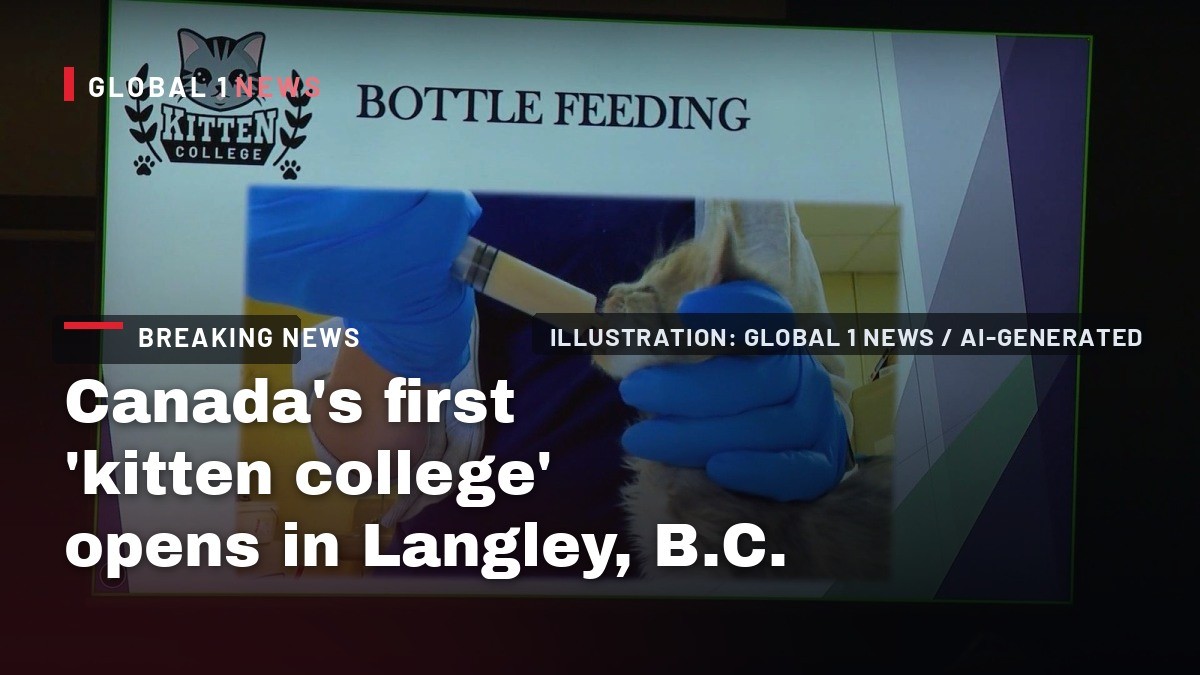
Canada’s first “kitten college” is set to open its doors in Langley, British Columbia, marking a novel approach to animal welfare education. The initiative, spearheaded by the Langley Animal Protection Society (LAPS), aims to equip volunteers and community members with the skills needed to care for neonatal and orphaned kittens – a demographic that, without maternal care, faces extreme vulnerability. By formalising training in a college‑style setting, LAPS hopes to broaden its foster network, reduce reliance on a small number of staff, and ultimately create a more resilient safety net for the province’s countless stray and abandoned felines.
Why a specialised programme is needed
Newborn kittens, especially those separated from their mothers, require constant attention to survive. They depend entirely on caregivers for warmth, nutrition, hygiene and health monitoring. The lack of a mother’s instinctual care means that even a brief lapse in temperature regulation or feeding can prove fatal. LAPS points out that the delicate nature of these infants makes a knowledge gap among potential volunteers a serious barrier to expanding foster programmes.
Sarah Jones, a representative of LAPS, highlighted the practical challenges faced by current volunteers: “I have a litter of kittens in my basement and I’m often up at two in the morning taking care of them just like the rest of my amazing team.” Her remarks underscore the round‑the‑clock commitment required and illustrate why many would‑be foster carers feel hesitant to take on the responsibility without proper guidance.
The concept of a “National Kitten College”
Described by LAPS as Canada’s first National Kitten College, the new centre will operate out of Metro Vancouver’s Langley district. While the term “college” evokes images of academic campuses, the programme is focused on practical, hands‑on training rather than formal accreditation. The sessions are offered free of charge, reflecting LAPS’s commitment to removing financial barriers that might deter community involvement.
Future plans include expanding the curriculum beyond the initial focus on neonatal care. Although specific courses have not yet been detailed, the language used by LAPS suggests an intention to develop a broader suite of modules that could address topics such as long‑term foster placement, behavioural enrichment, and health monitoring for older kittens and cats.
Training content and delivery
The core of the college’s instruction centres on the basics of neonatal kitten care. Participants will learn how to maintain appropriate warmth, typically using heating pads or specialized incubators, and how to administer bottle‑feeding with kitten‑appropriate formula. Hygiene practices, including cleaning the whelping area and monitoring for signs of illness, form another critical component of the syllabus.
In addition to the technical skills, the programme aims to address the emotional and psychological aspects of caregiving. By “taking the fear out of it,” LAPS hopes to demystify the process for the public, encouraging a wider pool of volunteers to step forward. The emphasis on confidence‑building aligns with the organisation’s broader goal of growing its foster programmes and making them more robust.
Community impact and volunteer recruitment
One of the most immediate benefits anticipated from the kitten college is an increase in the number of qualified foster homes. By training volunteers in a structured environment, LAPS expects to reduce the reliance on staff members who currently shoulder much of the direct care workload. This shift could free up resources for other aspects of the society’s mission, such as outreach, adoption events and advocacy work.
Sarah Jones noted that the ultimate aim is “to recruit people, take the fear out of it and help the public be able to help us.” By lowering the perceived barrier to entry, the college could tap into a broader segment of the community, including retirees, students and families who might otherwise feel unequipped to handle the demands of neonatal kitten care.
Linking the initiative to wider animal‑welfare trends in Canada
The launch of the kitten college reflects a growing trend across Canada to professionalise and standardise animal‑welfare practices. While many shelters and rescue groups rely on ad‑hoc training, initiatives like LAPS’s signal a shift toward more formalised education. This mirrors developments in other sectors, such as the increasing use of accredited courses for wildlife rehabilitation and the expansion of veterinary technician programmes.
By positioning itself as a national hub for kitten care training, LAPS may also inspire similar programmes in other provinces. The model of offering free, community‑focused education could be replicated by organisations in Ontario, Alberta or the Atlantic provinces, potentially creating a network of regional kitten colleges that share resources and best practices.
Funding and sustainability considerations
Although the sessions are currently free, the long‑term sustainability of the college will depend on continued funding. LAPS, like many animal‑welfare NGOs, typically relies on a mix of donations, grants and fundraising events. The college’s existence may attract new donors interested in supporting innovative education initiatives, as well as corporate partners seeking community goodwill.
Future expansion of the curriculum will likely require additional resources, such as specialised equipment for neonatal care simulations and dedicated training spaces. By demonstrating measurable outcomes—such as increased foster placement rates or reduced kitten mortality—LAPS can make a compelling case for ongoing financial support from both public and private sectors.
Looking ahead: potential challenges and opportunities
While the kitten college holds promise, it also faces practical challenges. Recruiting qualified instructors, ensuring consistent attendance and maintaining high standards across volunteer cohorts will require careful coordination. Moreover, the emotional toll of caring for fragile neonates can be significant, necessitating support mechanisms for volunteers who may experience stress or burnout.
Opportunities abound, however. The college could serve as a research hub, collecting data on kitten health outcomes and fostering best‑practice guidelines that could be shared nationally. Partnerships with veterinary schools or animal‑science departments could enrich the curriculum and provide pathways for students to gain hands‑on experience. Ultimately, the success of the programme will hinge on its ability to translate training into tangible improvements in kitten survival and placement rates, thereby reinforcing LAPS’s broader mission of protecting vulnerable animals across Canada.
This article was produced with AI-assisted research and editorial support. Reporting is based on the source material cited below. Sources: Global News Canada; globalnews.ca; Global1.News (10 September 2026).
By Alex Thompson, Staff Writer
What's Your Reaction?
 Like
0
Like
0
 Dislike
0
Dislike
0
 Love
0
Love
0
 Funny
0
Funny
0
 Wow
0
Wow
0
 Sad
0
Sad
0
 Angry
0
Angry
0

Canada Correspondent at Global1.News. Based in Toronto, covering Canadian politics, energy, trade, and US-Canada relations. Provides the Canadian perspective on North American and global affairs.















Comments (0)