
Canada-U.S. Trade Talks Intensify as 50 Per Cent Tariff Deadline Nears
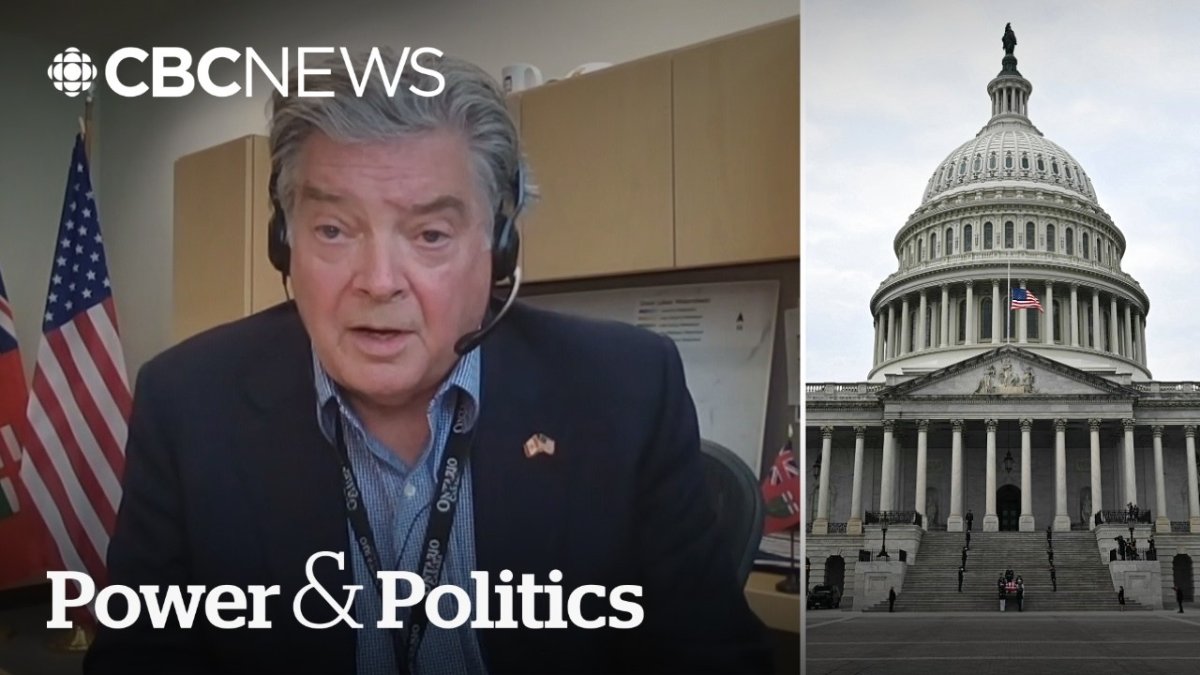
In a recent CBC News report on Power & Politics, guest host Peter Armstrong spoke with David Paterson, Ontario's Representative in Washington, D.C., who said he is relieved to see Canada-U.S. trade talks accelerate as a 50 per cent tariff deadline looms.
In a recent CBC News report on Power & Politics, guest host Peter Armstrong spoke with David Paterson, Ontario's Representative in Washington, D.C., who said he is relieved to see Canada-U.S. trade talks accelerate as a 50 per cent tariff deadline looms. With roughly three weeks remaining before new American levies are scheduled to take effect on Aug. 19, the federal minister responsible for Canada-U.S. trade returned from a trip to Washington this week without a signed deal — but with signs that negotiations are finally moving. For Canadian households, the stakes are immediate: higher prices on beer, dairy and plywood, and potential job losses in the auto and steel sectors that support thousands of families from Ontario to British Columbia.
Canada-U.S. Trade Talks Intensify as 50 Per Cent Tariff Deadline Nears
Ottawa, Ontario – Friday — U.S. President Donald Trump's administration has threatened to levy 50 per cent tariffs on hundreds of Canadian goods worth about $20 billion US — including hockey sticks, beer, dairy, plywood and other products — under Section 338 of the U.S. Tariff Act of 1930, a provision never previously used in trade disputes. Ontario's Representative in Washington, David Paterson, told CBC News the threat shows the administration is taking notice of the effect Canada's retaliatory trade action is having on the American economy, pointing to a fact sheet that cited U.S. auto exports to Canada dropping 22 per cent since April of last year.
Trade Negotiations Advance Under Pressure
Paterson said the shift in U.S. auto exports represents an enormous movement of trade away from American jobs and forms part of the federal government's retaliation. "These things are now being noticed and to me that's a starting point for a good discussion as they go forward," he told the program. Canada continues to maintain retaliatory tariffs on U.S. cars, auto parts, steel and aluminum even after lifting a swath of other levies last summer, and the Trump administration has cited provincial bans on American booze as a central reason for the promised 50 per cent duties.
Paterson brings a business-heavy résumé to the file. During 30 years in the private sector he chaired the board of the Canadian Chamber of Commerce and held senior roles at GM Canada and BlackBerry before Ontario appointed him as its lead liaison in Washington, where he is co-located at the Embassy of Canada. His read on the Section 338 threat is that the never-before-used 1930 authority signals genuine frustration in the office of U.S. Trade Representative Jamieson Greer — and, in Paterson's view, an opening. "It's actually a genuine frustration on the part of Greer and others and this is an opportunity to actually say, 'OK, well could we be partners?'"
The administration's own justification underscores how deeply the retaliation has bitten. U.S. spirit makers describe the provincial bans as devastating to their sales, while American wine sales in Canada plummeted $343 million US in 2025. Those numbers, Paterson argued, are exactly the kind of pressure that brings Washington back to the table.
Canada's countermeasures have been layered and deliberate: retaliatory tariffs on American cars, auto parts, steel and aluminum, provincial liquor bans coordinated through the premiers, and a federal toolkit that remains in reserve. The prime minister has so far ruled out the most dramatic option — Carney said he does not "see the value" in using energy exports as leverage in the talks — a signal that Ottawa wants to calibrate pressure without poisoning the very relationship it is trying to repair. The balancing act reflects a government that must answer to Canadians demanding a firm response and to an economy that cannot afford a prolonged rupture with its largest trading partner.
Federal-Provincial Coordination and USMCA Developments
Prime Minister Mark Carney met with the premiers last week to discuss the tariff threat and possible responses, then spoke directly with Trump after the latest tariff move was announced, with the two leaders agreeing to "intensify" trade talks. Dominic LeBlanc, the federal minister responsible for Canada-U.S. trade, was in Washington this week alongside Janice Charette, Canada's chief negotiator to the United States, and met Greer on Wednesday. LeBlanc posted afterward that the meeting was "comprehensive" and that the two agreed to "remain in close contact and continue working together."

These diplomatic movements come against a difficult backdrop. Trump opted against extending the USMCA on July 1, setting in motion a decade-long wind-down of the trade pact unless the three countries agree on revisions. On Tuesday he told Fox News's "Fox and Friends" program: "I don't care. I mean, I don't really want to. I'd rather be independent. Here's the thing: Mexico and Canada need us. We don't need them. The deal is important for them. It's not important for us." Greer held a third round of formal USMCA talks with Mexico last week that exposed deep differences over regional automotive content rules, while Canada has so far been left out of the formal process. Trump pointed to Toyota's $3.6 billion investment in a Texas truck plant as evidence that his tariff strategy is working, boasting that automakers "have no tariffs if they build their product here."
Effects on Canadian Workers and Households
The threatened tariffs target products central to Canadian supply chains and daily life. Dairy falls under supply management protections that support farmers in Quebec and Ontario, while beer and spirits sales flow through provincial liquor authorities that depend on the revenues. Auto sector workers in Ontario and steel producers in Alberta and Atlantic Canada already face direct exposure from the existing 25 per cent tariffs on vehicles and 50 per cent duties on steel and aluminum imposed on national security grounds. An expansion of those measures would compound the pressure on integrated cross-border supply chains that have taken decades to build.
Hockey sticks among the targeted items carry a particular symbolism, underscoring how broad the American list reaches into everyday Canadian life. Provincial liquor revenues could face further disruption from escalated costs, and the combination of factors raises the risk of higher household expenses on everyday goods at a time when affordability remains a top concern for Canadian families. Economists and trade lawyers have noted that Section 338 was designed for an era of retaliatory trade warfare that the modern USMCA framework was supposed to make obsolete — its first use marks a return to tools not deployed in generations.
Stakeholder Reactions Across Borders
The threatened tariffs have drawn opposition from an unusual quarter: labour unions representing workers on both sides of the border. On Tuesday, the international heads of the United Steelworkers and the International Association of Machinists and Aerospace Workers wrote to Greer urging the administration to hold off on the 50 per cent levies. The letter said the Canada-U.S. trade relationship has been "marked by division" over the past year and warned: "Our priority must be to align our trade policies to address the challenges posed by unfair and predatory trade practices of countries like China, not to drive a further wedge between our nations."
United Steelworkers International President Roxanne Brown went further in a statement, describing the economic integration between the two countries as a strategic asset. "Our two nations share a deep collaboration built on decades of economic integration as well as intelligence and defense cooperation," Brown said. "Rather than imposing further tariffs through Section 338 or any other mechanism, we should instead work together with our Canadian allies to limit illegal trade practices and advance our shared prosperity."
Paterson, for his part, stressed that the accelerated pace of talks is a positive sign, telling CBC's Power & Politics that the two countries, "in the most friendly nations on earth," now have the opportunity to calm the situation. He said he was relieved to see movement after weeks in which the relationship appeared stuck in a cycle of escalation.
What Happens Next
Carney told reporters on Wednesday that the government is preparing responses in case the tariffs come into force on Aug. 19, but that his focus remains on "building towards an agreement" before that date. The intensified talks are expected to continue in the coming days, with LeBlanc and Charette maintaining direct contact with Greer's office. Success would require addressing the specific grievances on the American list — including provincial liquor measures and access to Canada's dairy market — while preserving the retaliatory leverage that brought Washington to the table.
Canada remains excluded from the formal USMCA negotiation process for now, leaving Ottawa to work around the edges of a trilateral review dominated by U.S.-Mexico discussions. One wildcard is the provincial dimension: the liquor bans that so angered Washington were coordinated through the premiers, and any agreement that fails to address them could unravel at the provincial level even if Ottawa and Washington find common ground. A resolution before the deadline would stabilise market access for the listed Canadian products and protect integrated manufacturing operations; failure would extend a period of uncertainty affecting workers and consumers on both sides of the border, and would almost certainly reshape federal-provincial relations as premiers press for a harder line.
The coming weeks will test whether intensified discussions can prevent new costs from reaching Canadian store shelves and factory floors. The outcome will help define not only the price of beer and hockey sticks, but the future of the most deeply integrated trading relationship on earth.
By Alex Thompson, Staff Writer
This article was produced with AI-assisted research and editorial support. Reporting is based on sources cited in the article.
What's Your Reaction?
 Like
0
Like
0
 Dislike
0
Dislike
0
 Love
0
Love
0
 Funny
0
Funny
0
 Wow
0
Wow
0
 Sad
0
Sad
0
 Angry
0
Angry
0

Canada Correspondent at Global1.News. Based in Toronto, covering Canadian politics, energy, trade, and US-Canada relations. Provides the Canadian perspective on North American and global affairs.















Comments (0)