
Trump's $22.5bn Dulles Redesign Reshapes Washington DC
Donald Trump, the developer-president who promised to "make America great again", is now remaking the nation's capital in his own image — a Mar-a-Lago-style transformation that spans a $22.5bn overhaul of Dulles International Airport, a proposed 250-foot "triumphal arch" and a $14.2m repaint of the Lincoln Memorial reflecting pool.
Donald Trump, the developer-president who promised to "make America great again", is now remaking the nation's capital in his own image — a Mar-a-Lago-style transformation that spans a $22.5bn overhaul of Dulles International Airport, a proposed 250-foot "triumphal arch" and a $14.2m repaint of the Lincoln Memorial reflecting pool. For Britons watching across the Atlantic, the spectacle raises a familiar question: what happens when one man's taste becomes public policy?
Trump's $22.5bn Washington DC Remake: Dulles, the 'Arc de Trump' and a Capital Rebuilt in His Own Image
London, UK – 31 July 2026 — The President unveiled plans on Wednesday for a $22.5 billion reconstruction of Washington Dulles International Airport, describing the project as the latest step in his campaign to make the US capital "safe and beautiful again". Speaking at the White House with a laser pointer trained on architectural renderings, Trump promised to scrap the airport's widely disliked "people movers" and replace them with a U-shaped passenger train, a central walking tunnel and new concourses. "We're doing something with Dulles that's going to make it the top anywhere in the world," he said.
The $22.5bn Question: Dulles Airport's Mar-a-Lago-Style Overhaul
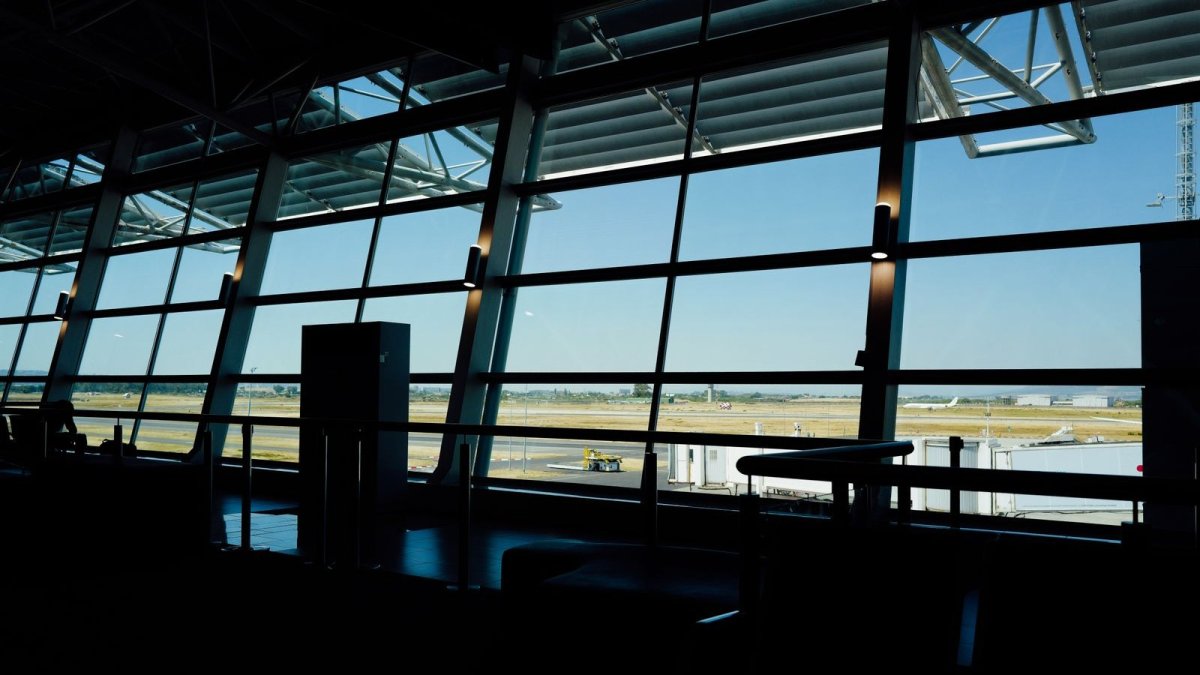
Dulles, which opened in the Virginia exurbs of Washington in 1962 and is celebrated for the sweeping glass terminal designed by the Finnish-American architect Eero Saarinen, served a record 29 million passengers over the past year, according to the Metropolitan Washington Airports Authority. Trump, a former real estate developer, said in December that the airport was "incorrectly designed", and he and Transportation Secretary Sean Duffy say the President reviewed presentations from about 30 architects before settling on the redesign announced this week.
The makeover would retire the Chrysler-designed mobile lounges — the airport operates a fleet of 19, each capable of carrying up to 102 passengers — in favour of a new horseshoe-shaped passenger train, a central walking tunnel, additional moving walkways and new concourses. An above-ground parking garage with space for 32,000 vehicles would rise closer to the main terminal. John Potter, president and chief executive of the authority that operates Dulles, said United Airlines and other carriers had agreed to fund the project through municipal bonds. "This is not requiring federal dollars," Potter said at the Oval Office event. "This is going to be airport-generated dollars, airline contributions, which is phenomenal." Congress would need to approve some aspects of the plan, and construction could begin next spring.
From 'Blue Pool' to Ballroom: A Monumental Makeover
Dulles is only the largest item on a longer list of renovation projects the Republican president is pursuing to leave his mark on the Washington region before his term ends in January 2029. The Lincoln Memorial reflecting pool — the 104-year-old centrepiece of the National Mall — reopened in June after a "beautiful" makeover that began, by Trump's own calculation, at $1.8m and soared past $14.2m. The New York Times reported that Trump steered the no-bid contract to Atlantic Industrial Coatings Ltd, a Virginia company with no history of major public works that previously worked on his golf resort in the state. "I have a guy who's unbelievable at doing swimming pools," Trump said in April. "He called me up. He said: 'Sir, we can do something on it.'"
The result, filled with about 6.8 million gallons of water and filtered by a "state of the art" nanobubbler system purchased by the National Park Service, is a pool painted American-flag blue. Early visitors were underwhelmed, and workers were seen scraping algae from the bottom days after the refill — a residue Katie Martin, a spokesperson for the US Department of the Interior, blamed on supply lines "dormant for eight weeks" during construction. "President Donald J Trump is an expert builder who has fixed the Reflecting Pool for good," said Martin. Kyra Brown, a Washington DC resident, was unconvinced: "It doesn't look that much different, honestly, to me." Alongside the pool, Trump is building a new White House ballroom and installing gilded statues — the trappings, critics say, of a presidency determined to decorate the capital like one of his own resorts.
'Make Federal Architecture Beautiful Again': The Classical Crusade
The aesthetic impulse is now codified. In August 2025, Trump signed an executive order, "Making Federal Architecture Beautiful Again", requiring federal public buildings to "respect regional architectural heritage" and mandating a preference for classical and traditional styles over the modernist and brutalist designs that dominated post-war Washington. The order, which affects federal courthouses and agency headquarters across the country, argues that too many new federal buildings "impress the architectural elite, but not the American people".
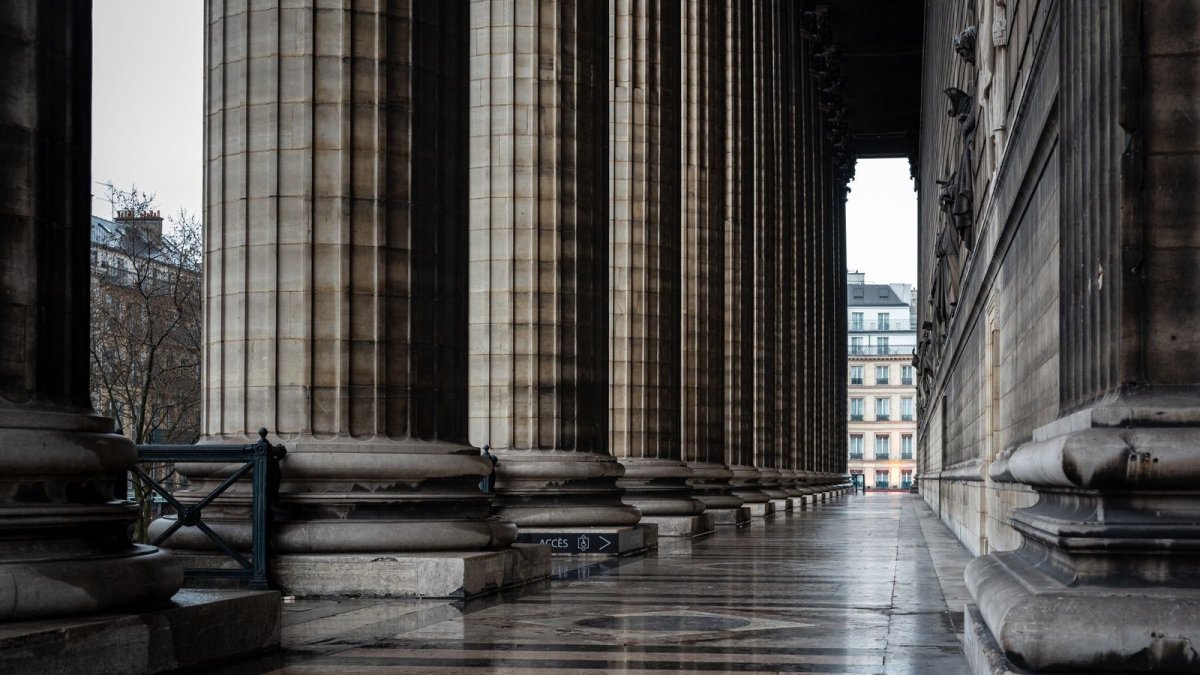
The classical crusade has delighted traditionalists and alarmed modernists in roughly equal measure. American architects warn that mandating columns and pediments will freeze civic architecture in a backward-looking mould; supporters counter that federal buildings should be instantly recognisable as seats of government. The debate will feel familiar to British readers, who have watched their own drawn-out arguments over the place of modernism in the historic built environment — from Prince Charles's famous 1984 "carbuncle" attack on a proposed extension to the National Gallery, to the bitter fights over the demolition of brutalist housing estates in London and beyond. In the United States, the order has already reshaped the early design stages of dozens of federal projects, and it now sits at the centre of the legal battles engulfing the President's building programme.
The 'Arc de Trump': A 250-Foot Statement
No single project better captures the ambition — or the controversy — than the proposed United States Triumphal Arch: a 250-foot granite structure planned for Memorial Circle, on the western bank of the Potomac River between Arlington National Cemetery and the Lincoln Memorial. Renderings released by the National Park Service in April show a colossal gateway crowned with statuary, and the proposal has been the subject of public hearings and mounting opposition since it was first floated. The Atlantic reported this month that Trump is pushing to speed the arch through the federal review process, a move preservation groups describe as an end-run around the very rules designed to protect the capital's historic vistas.
Landscape architects have questioned whether an arch — a form that traditionally marks a threshold or celebrates a victory — makes sense at a site whose meaning is bound up with remembrance. Memorial Bridge, the Lincoln Memorial and the Tomb of the Unknown Soldier together form one of the most symbolically loaded landscapes in the United States, and critics argue that a 250-foot monument crowned with a winged figure would overwhelm rather than honour it. Defenders of the project, including Republican lawmakers who have championed the arch in Congress, argue that great capitals deserve great monuments, and that Washington's monumental core has not seen a major addition of this kind in a century.
What This Means for the UK
For British travellers, Dulles is the front door to Washington — the airport served by British Airways and Virgin Atlantic from London, and the arrival point for thousands of UK visitors to the US capital each year. A construction programme that begins next spring and runs for years will reshape that first impression, whatever the final design. But the deeper significance for the UK is institutional. The National Mall is maintained by the National Park Service, the American cousin of Historic England and the National Trust; the battles now unfolding — over no-bid contracts, expedited review, and the balance between a president's preferences and a nation's heritage — mirror the arguments that periodically convulse Britain's own planning system.
There is also a specifically British thread in the story. The President's golf resorts at Turnberry and Aberdeen have made him a familiar, and contested, presence in Scottish planning disputes for two decades, and his taste for grand gestures is well known to British conservationists. The company handed the reflecting pool contract without competitive tender, Atlantic Industrial Coatings, won its earlier work on Trump's golf resort in Virginia — the kind of connection that British campaigners say should prompt scrutiny on both sides of the Atlantic about how public money and public space are allocated.
The Lawsuits and the Legacy
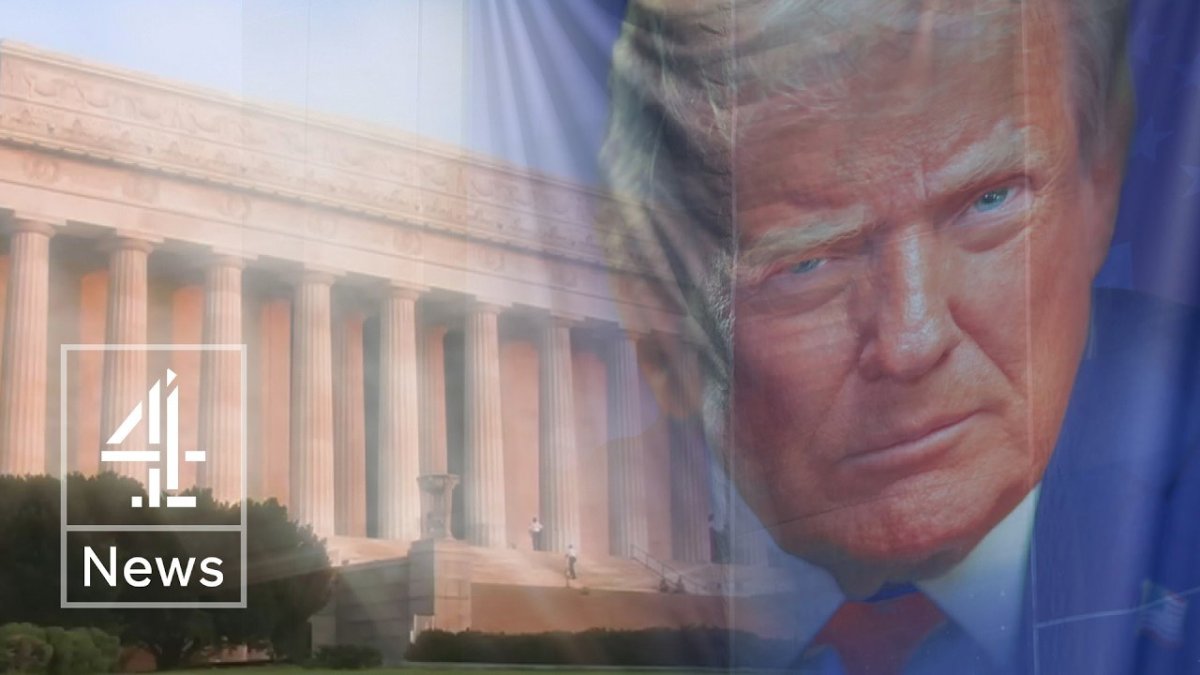
Channel 4 News reports that conservation groups have filed lawsuit after lawsuit against the President's building programme, challenging everything from the reflecting pool contract to the accelerated review of the triumphal arch. The central accusation is not simply aesthetic: it is that the administration is using emergency powers and political pressure to override the normal processes — the National Environmental Policy Act reviews, the historic preservation consultations, the competitive tendering rules — that have governed the capital's development for decades.
The President's team frames the same record as delivery. "This transformation is another step in our ongoing efforts to make Washington, D.C., safe and beautiful again," Trump said at the Dulles announcement, casting himself as the builder-president who finally fixed the city's neglected infrastructure. The question that animates the critics, and that Channel 4 News puts directly: is this about preserving the nation's capital, or preserving his own legacy? With litigation pending on multiple fronts and the review process for the arch still unfinished, the courts — not the renderings — may have the final word on how much of this vision is ever built.
The Bottom Line — What Comes Next
Construction at Dulles could begin next spring, pending congressional approval of the elements that require it, and the airport authority insists the project will be paid for without federal dollars. The reflecting pool is already blue, the White House ballroom is rising, and the triumphal arch remains in review. For UK readers, the watchpoints are clear: the legal challenges working their way through the federal courts, the congressional votes on the airport plan, and the fate of the 250-foot arch that would permanently alter the skyline the world recognises as Washington. If the lawsuits succeed, the President's building spree will be remembered as a footnote; if they fail, the capital of the United States will look, for better or worse, a little more like Mar-a-Lago.
By Erica Thornton, Staff Writer
This article was produced with AI-assisted research and editorial support. Reporting is based on sources cited in the article.
What's Your Reaction?
 Like
0
Like
0
 Dislike
0
Dislike
0
 Love
0
Love
0
 Funny
0
Funny
0
 Wow
0
Wow
0
 Sad
0
Sad
0
 Angry
0
Angry
0

US Politics and Policy Correspondent at Global1.News. Based in Washington DC, covering American politics, policy, elections, and the courts. Knows how the system works and tells you what it actually means.















Comments (0)