
Afcon to return to two-year cycle after Caf U-turn
After a brief but dramatic reversal, the Africa Cup of Nations (Afcon) will once again be staged every two years, restoring the rhythm that has defined African football for decades.
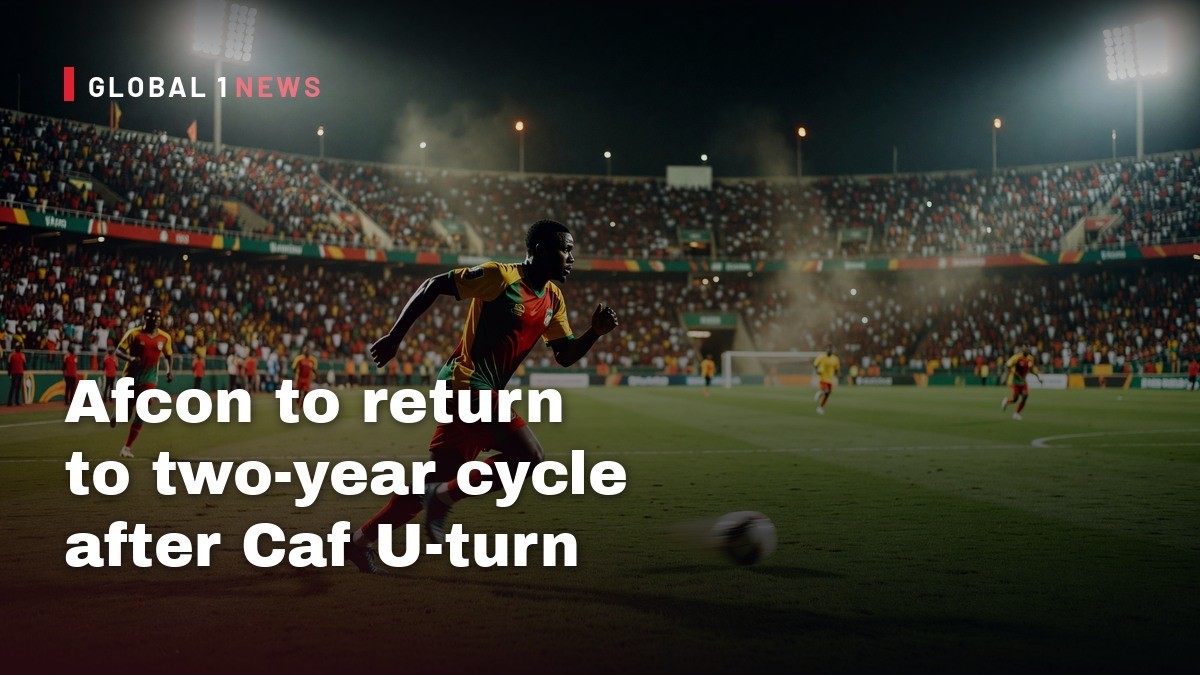
After a brief but dramatic reversal, the Africa Cup of Nations (Afcon) will once again be staged every two years, restoring the rhythm that has defined African football for decades. The decision, announced by the Confederation of African Football (Caf) following a review of its December proclamation to shift the tournament to a four‑year cycle, signals a renewed commitment to the continent’s football calendar, its players, and the 54 member associations that depend on the competition for exposure and revenue.
Why the two‑year cycle matters
The biennial format has long been the heartbeat of African football, offering a regular showcase for talent across the continent. Caf president Patrice Motsepe emphasized that reinstating the two‑year rhythm “aims to advance, protect and promote the interests of African football and the 54 Caf Member Associations, as well as those of African players playing for clubs outside the continent.” This statement underscores the broader stakes: a steady tournament schedule fuels national team development, keeps fans engaged, and provides a reliable platform for African players who ply their trade abroad to return home for a marquee event.
Beyond the symbolic value, the two‑year cycle directly addresses the logistical challenges that have plagued recent editions. Holding Afcon midway through the European club season has forced national teams to call up players at a time when clubs are in the thick of their campaigns, often leading to tension between national federations and European clubs. By keeping the tournament on a predictable biennial timetable, Caf hopes to negotiate more harmonious calendar arrangements, reducing the friction that has occasionally marred player releases and match preparations.
The aborted four‑year plan
In December, Caf announced a shift to a four‑year cycle, a move that would have aligned Afcon with the World Cup’s quadrennial rhythm. The rationale behind the proposal was to introduce an African Nations League that could serve as a new biennial competition, potentially generating additional revenue streams. However, Caf acknowledged that the Nations League would require several years to become financially self‑sufficient, a timeline that did not align with the immediate needs of its member associations.
The abrupt reversal highlights the tension between ambitious long‑term projects and the practical realities of African football economics. While the idea of a Nations League mirrors successful models in Europe and Asia, the continent’s comparatively limited commercial infrastructure means that any new competition must first prove its viability before it can replace a tournament as entrenched as Afcon.
Calendar clashes and the Club World Cup
One of the most persistent headaches for Afcon organizers has been its placement within the global football calendar. Recent tournaments have often been slotted midway through the European club season, a period when many African stars are engaged with clubs in the Premier League, La Liga, Ligue 1 and other top leagues. This timing forces national teams to assemble squads when clubs are reluctant to release key players, leading to weakened line‑ups and, at times, public disputes.
The scheduling dilemma was compounded last year when FIFA’s expanded 32‑team Club World Cup took place in June and July. The Club World Cup’s timing forced Caf to keep Afcon in the same mid‑season window, further crowding an already congested calendar. By reaffirming the two‑year cycle, Caf signals an intention to work more closely with FIFA and other governing bodies to find a less disruptive slot for future editions, though a definitive solution remains to be negotiated.
Kenya, Tanzania and Uganda: a joint hosting experiment
The next Afcon, slated for 2027, will be jointly hosted by Kenya, Tanzania and Uganda. This tri‑nation arrangement reflects a growing trend in African sport to pool resources and share the logistical burden of a major tournament. By collaborating, the three East African countries can leverage existing stadiums, training facilities and transport networks, while also showcasing the region’s cultural diversity to a continent‑wide audience.
Joint hosting also offers a diplomatic benefit, fostering regional cooperation and presenting a united front in negotiations with sponsors and broadcasters. For fans, the arrangement promises a richer experience: the chance to travel across borders, sample different cuisines, and witness the unique footballing styles that each nation brings to the tournament.
Future editions and the World Cup gap
Following the 2027 edition, Afcon will be staged again in 2028, then skip 2030 to avoid clashing with the World Cup, before returning in 2031 and 2033. This pattern respects the global football hierarchy, ensuring that the continent’s premier tournament does not compete directly with the sport’s most watched event. The deliberate pause in 2030 also offers an opportunity for CAF to assess the impact of the two‑year cycle and to make any necessary adjustments before the next World Cup year.
By mapping out a clear schedule that alternates between Afcon and the World Cup, CAF provides national associations with a predictable planning horizon. This predictability is crucial for budgeting, talent development programmes, and securing long‑term sponsorship deals that often hinge on calendar certainty.
The 2025 controversy and its lingering echo
The recent memory of the 2025 Afcon final still looms large over African football. Senegal, fresh from a historic triumph, were crowned champions only to be stripped of the title three months later in favour of Morocco. While the source material does not detail the reasons for the reversal, the episode underscores the fragility of sporting legitimacy on the continent and the importance of transparent governance.
For Senegalese fans, the reversal was a bitter pill, reminding them that on‑field success can be undone by off‑field decisions. For CAF, the incident highlighted the need for robust adjudication mechanisms and clear communication with member associations. Restoring confidence in the tournament’s integrity is essential if Afcon is to retain its status as Africa’s most beloved sporting spectacle.
Looking ahead: opportunities and challenges
The reinstatement of the biennial Afcon opens a window of opportunity for African football to deepen its commercial appeal. Regular tournaments provide consistent content for broadcasters, sponsors and digital platforms, all of which are eager to tap into the continent’s growing fan base. Moreover, the tournament’s timing can be leveraged to align with school holidays and national celebrations, maximizing attendance and community engagement.
Nevertheless, challenges remain. The persistent calendar clash with European club competitions will require ongoing dialogue and perhaps innovative scheduling solutions, such as a condensed tournament window or a shift to a different part of the year. Additionally, the proposed African Nations League, while postponed, remains a long‑term ambition that could complement Afcon by offering more competitive matches for nations that may not qualify for the main tournament.
In the end, the decision to return Afcon to its two‑year rhythm reflects a pragmatic balance between ambition and reality. It honours the tradition that has made the tournament a unifying force across Africa, while acknowledging the practical constraints of a crowded global football calendar. As the continent prepares for the 2027 edition in Kenya, Tanzania and Uganda, fans can look forward to a celebration of African talent that is both familiar and freshly invigorated, a testament to the resilience and passion that define African football.
This article was produced with AI-assisted research and editorial support. Reporting is based on the source material cited below. Sources: BBC News Africa; bbc.co.uk; Global1.News (31 October 2026).
By Amara Diop, Staff Writer
What's Your Reaction?
 Like
0
 Dislike
0
 Love
0
 Funny
0
 Wow
0
 Sad
0
 Angry
0

West Africa/Sahel Correspondent at Global1.News. Dakar-based journalist covering politics, security, climate, and development across Francophone and Anglophone West Africa. Tells the stories of a region undergoing profound transformation.














Comments (0)