
Bomb Threats Close La Salle Manila and a Davao Campus
Bomb threats shut De La Salle University-Manila and a Davao campus on the same Monday, extending a semester of campus scares in which no device has been reported found and at least ten people have been arrested.
Two universities shut their doors on the same Monday, three days after bomb-threat letters emptied a medical building at the University of Santo Tomas and six days after a handwritten note stopped face-to-face classes at the University of the East. At De La Salle University in Manila, police were still sweeping a college building at 3:15 p.m. At the University of Southeastern Philippines in Davao City, the campus went to flexible learning until further notice.
Bomb Threats Close La Salle Manila and a Davao Campus on the Same Monday
MANILA, Philippines — The De La Salle threat arrived by email, sent to faculty of the Brother Andrew College of Education from an address identified by police as [email protected]. The Davao threat arrived with no sender described at all. Both produced the same result before lunch was over: students out of classrooms, security officers on the phone to police, and a school day converted into a security operation.
Two Campuses, One Monday
At De La Salle University in Manila, the email reached BAGCED Associate Dean Philip Rentillo, who relayed it to university security personnel. Security officials Jose Billy O. Aguirre and Colin G. Papa reported the incident to Malate Police Station at around 12:40 p.m.
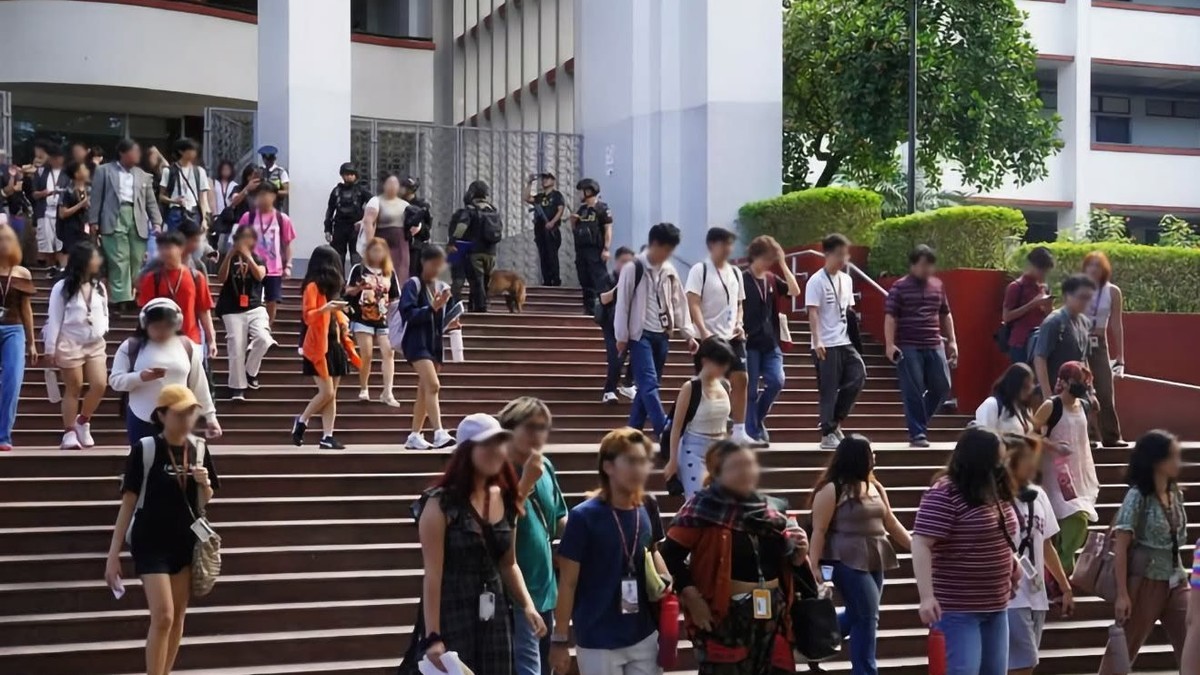
The evacuation began at around 1 p.m. The Office of the Provost suspended in-person and online classes from 1 p.m. to 6 p.m., moved classes from 6 p.m. onward to online modality, and kept the Manila campus closed. The University Student Government said office work was suspended from 1 p.m. and campus access restricted.
In Davao City, USeP's own advisory suspended all onsite transactions at its Obrero Campus effective 26 October "as a precautionary measure following a reported bomb threat." Classes shifted to flexible learning and offices to flexible work arrangements until further notice. The university said it coordinated with the Philippine National Police for the security inspection.
What the Manila Police Actually Said
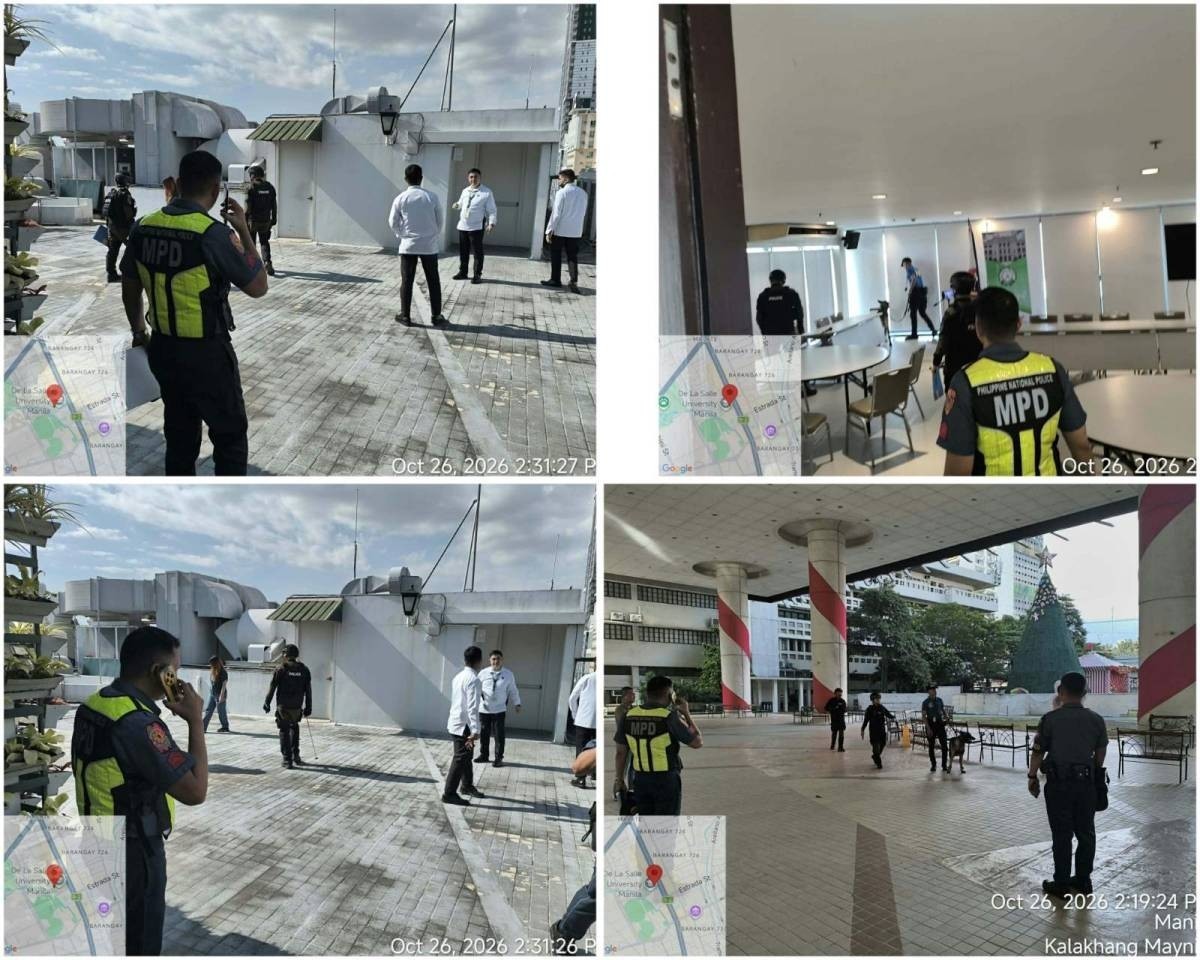
The Manila Police District coordinated with its Anti-Cyber Crime Team for technical assistance on the La Salle email. Its Explosive Ordnance Disposal unit and K9 teams began a bomb sweep and assessment of the premises at around 2 p.m. as a precautionary measure.
By 3:15 p.m., that sweep and threat assessment were still ongoing, according to authorities. No official report of the assessment had been publicised as of the last published account, though evening classes from 6 p.m. had already been shifted online.
That is the whole of the public record on La Salle's Monday: an email, a report, a sweep, and a campus kept closed while the assessment ran. No device has been reported found there. No result has been released.
Six Universities in Under Two Months
The La Salle closure is the sixth campus disruption in Metro Manila inside two months. A threat posted on National University's Facebook page in Pasay City disrupted morning classes 20 days before a 23 September scare called off classes at Far Eastern University in Manila.
On 15 October at UP Diliman, a message from an Instagram account arrived at around 1:54 p.m.: "Maghahasik ng lagim sa buong Palma at Malcolm. Humanda kayong lahat." Palma Hall and Malcolm Hall were evacuated, and Quezon City's disaster office, EOD team and K9 units responded from about 3 p.m.
On 20 October at UE Manila, a handwritten threat on yellow pad paper was found on a toilet tank in the Dalupan Building at around 12:15 p.m. Police inspected and found no explosives or hazardous materials. On 23 October at UST, two letters were found in women's restrooms in the Medicine Building.
The Count, and the Shootings Inside It
The most recent nationwide figure from the Philippine National Police covers 16 June to 19 August 2026 — 64 days that began shortly after School Year 2026–2027 opened on 8 June. In that window, police recorded 50 incidents involving minors in schools nationwide.
Twenty-six of those were bomb threats, the largest category. Twelve were shooting threats, four were stabbing incidents, four involved illegal possession of firearms, two were shooting incidents and two were death threats.
That count stops in August. It does not include FEU, UP Diliman, UE, UST, La Salle or USeP. No updated national total has been released, which leaves the country measuring this semester with a figure that ends in August.
Two fatal school shootings sit inside that same 64-day window, and they are not these cases. On 22 June at San Jose National High School in Tacloban City, three students were killed and 20 others injured; two students aged 14 and 15 were arrested. On 18 August at Ateneo de Zamboanga University Junior High School, a Grade 9 student shot and killed a Grade 10 student and then took his own life.
A Directive Issued the Day Before
On Sunday 25 October, the day before both campuses closed, the National Capital Region Police Office ordered all its units to intensify bomb threat awareness campaigns in Metro Manila schools, emphasising coordinated responses, prompt threat assessments and proper emergency procedures "to protect students, teachers, and school personnel while minimizing class disruptions."
"Every bomb threat must be taken seriously, but our response must also be disciplined, coordinated and guided by established procedures," said NCRPO officer in charge Brig. Gen. Christopher Abrahano.
"We need schools to know exactly whom to contact, how to report threats, when to activate emergency measures and how to work with responding authorities," he said. The directive told units to work with administrators, campus security, local governments and emergency responders, and to instruct schools to preserve evidence and avoid spreading unverified information.
The Letters in the Medicine Building
The UST letters were found by Annalou Seva Mejia, 42, a housekeeping staff member, in restrooms on the second and fourth floors of the Medicine Building in Sampaloc. One sat on top of a fourth-floor toilet tank and warned that explosives had been planted on campus, naming the Medicine Building and St. Raymund's Building as possible targets.
Officials ordered the evacuation at around 5:20 p.m. At 7:55 p.m., police declared the premises clear of explosives and other hazardous devices. No explosives were found. UST also evacuated its Main Building, St. Raymund de Peñafort Building, St. Martin de Porres Building and the Tan Yan Kee Student Center, and suspended in-person classes at all levels on Saturday 24 October.
"We urge people with information to come forward," UST said in a statement. "We also remind everyone that safety is a shared responsibility and collective concern."
When a Bomb Joke Becomes a Third-Level Offense
DepEd Order No. 006, s. 2026 — the Guidelines on Ensuring a Safe and Motivating Learning Environment — was signed by Education Secretary Sonny Angara in March 2026. It classifies bomb threats and bomb jokes as third-level offenses, the highest category, "due to the grave risk they pose to safety and learning continuity."
That category also holds carrying firearms, drug possession, hazing and homicide. A first infraction means non-readmission and referral to government interventions; a second carries exclusion and referral to authorities. Spreading false reports that create confusion is a first-level offense, met with a written reprimand or parent conference.
"We should not allow the learning of our youth to be interrupted because of a bad joke or threats," Angara said. "We need the help of every parent, teacher, and the whole nation to guide and protect our students."
Ten Arrests and Sixteen Devices
As of early August, at least 10 individuals had been arrested by the PNP over school threat hoaxes. In Magalang, Pampanga, seven 15-year-old students were taken before the Office of the Provincial Prosecutor for inquest over a social media post threatening students at Tinajero National High School Annex.
In Jaen, Nueva Ecija, an 18-year-old was arrested for circulating online bomb threats against schools in San Ildefonso, Bulacan. Another 18-year-old in Nueva Ecija admitted posting a hoax to suspend classes at San Felipe Integrated School. In Tanza, Cavite, police served a warrant to search and seize computer data against a woman in Barangay Paradahan I and took 16 digital devices.
Charges referenced include the Anti-Bomb Joke Law, Presidential Decree No. 1727; the Cybercrime Prevention Act of 2012, Republic Act No. 10175; and Article 282 of the Revised Penal Code, Grave Threats.
The Perfume Explanation
At UP Diliman, the Quezon City disaster office declared the incident a false alarm at 3:06 p.m., and students were advised back to class at about 3:10 p.m. No suspicious or hazardous items were found. The university's own security office declared Palma Hall and the Law Complex safe, and classes resumed on 16 October.
The Quezon City Police District said its initial investigation identified the alleged sender as a UP student. "A friend of the student, who was interviewed as part of the investigation, reportedly stated that the message was related to the student's newly purchased perfume, which he intended to use at school," the QCPD said. "This information remains subject to further verification."
That caveat is the police department's own, attached to its own explanation. Eleven days later, La Salle's campus was closed and its building still being swept.
The Question No One Has Answered
No injuries have been reported in any of these episodes. No device has been reported found in any of them. Police have not established a connection between the threats, and no motive has been given for any of them.
So the question stands where the semester leaves it: six Metro Manila universities in under two months, a Davao campus closed the same Monday, a national count that stops in August, and teenagers facing criminal charges. What the country still does not have is an accounting of who is sending these threats, or why.
By Jessica Ali, Staff Writer
This article was produced with AI-assisted research and editorial support. Sources: Manila Times, ABS-CBN News, GMA News Online, Inquirer.net, Daily Tribune, SunStar, Philippine News Agency, Philstar.com, Manila Bulletin, University of the Philippines Diliman, University of Southeastern Philippines. Photographs: Manila Times (De La Salle University-Manila and the police sweep); SINAG, via the UP Diliman Information Office (Palma Hall evacuation).
What's Your Reaction?
 Like
0
 Dislike
0
 Love
0
 Funny
0
 Wow
0
 Sad
0
 Angry
0

Editor-in-Chief at Global1.News. Atlanta-based journalist who cuts through the BS and tells it like it is. Lead anchor, host, and the voice you hear when the spin stops and the truth starts.















Comments (0)