
Bolivia's National Pedestrian Day: 10 Car-Free Hours for Cleaner Air and Health
At 8:00 AM on Sunday, September 6, 2026, the roar of engines that usually defines La Paz fell silent, replaced by the whir of bicycle wheels, the patter of running shoes, and the laughter of children reclaiming the asphalt. For ten hours, the Bolivian capital—and cities across the nation—handed their streets back to the people, not as a symbolic gesture, but as a legally mandated act of environmental and public health defiance.
At 8:00 AM on Sunday, September 6, 2026, the roar of engines that usually defines La Paz fell silent, replaced by the whir of bicycle wheels, the patter of running shoes, and the laughter of children reclaiming the asphalt. For ten hours, the Bolivian capital—and cities across the nation—handed their streets back to the people, not as a symbolic gesture, but as a legally mandated act of environmental and public health defiance.
Bolivia's Día del Peatón: A National Experiment in Clean Air and Community
LA PAZ, Bolivia — Monday, September 7, 2026 — The numbers from Sunday are staggering in their simplicity: 10 hours without private motor vehicles in La Paz, 18 in Cochabamba. When Cochabamba ran its first Pedestrian Day of the year back in June, its municipal monitors recorded a 48% drop in air pollution. This was not a spontaneous street party, but the sixteenth national observance of Ley 150, a law promulgated on July 11, 2011, that declares the first Sunday of September as the Día Nacional del Peatón y del Ciclista en Defensa de la Madre Tierra. It is a day when the constitutional right to a healthy environment supersedes the convenience of the combustion engine, transforming El Prado and other thoroughfares into vast, open-air living rooms for millions of urban residents across the country's major cities.
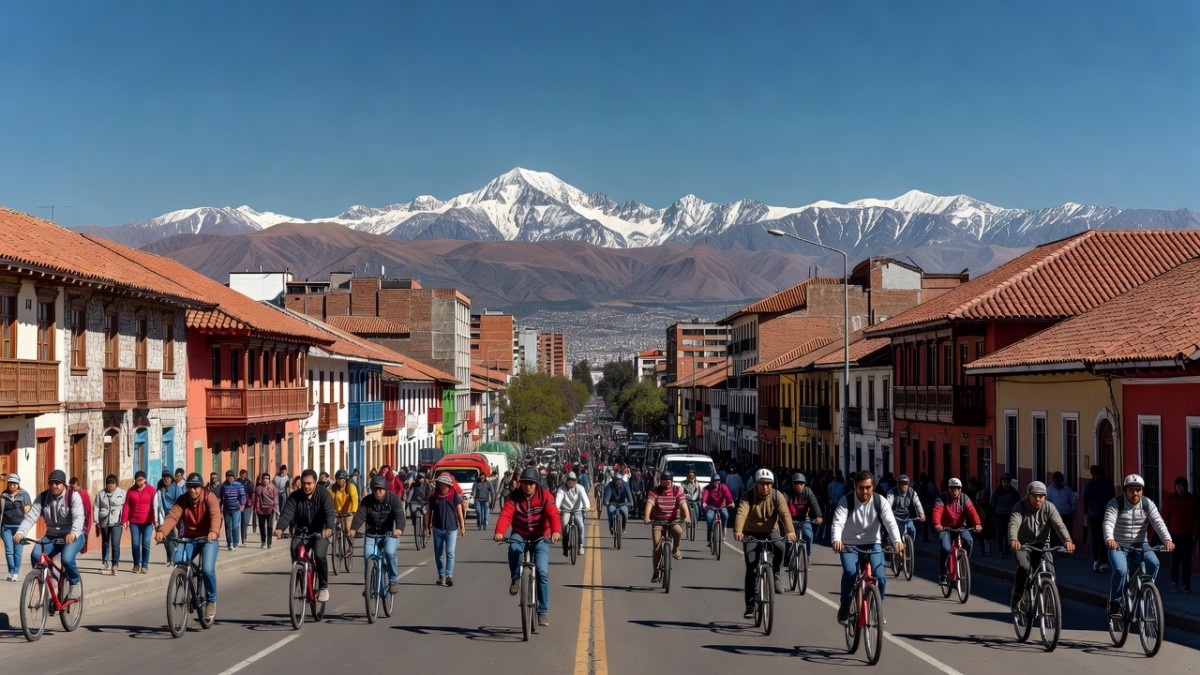
Streets Belong to People Again: Bolivia's 10 Car-Free Hours
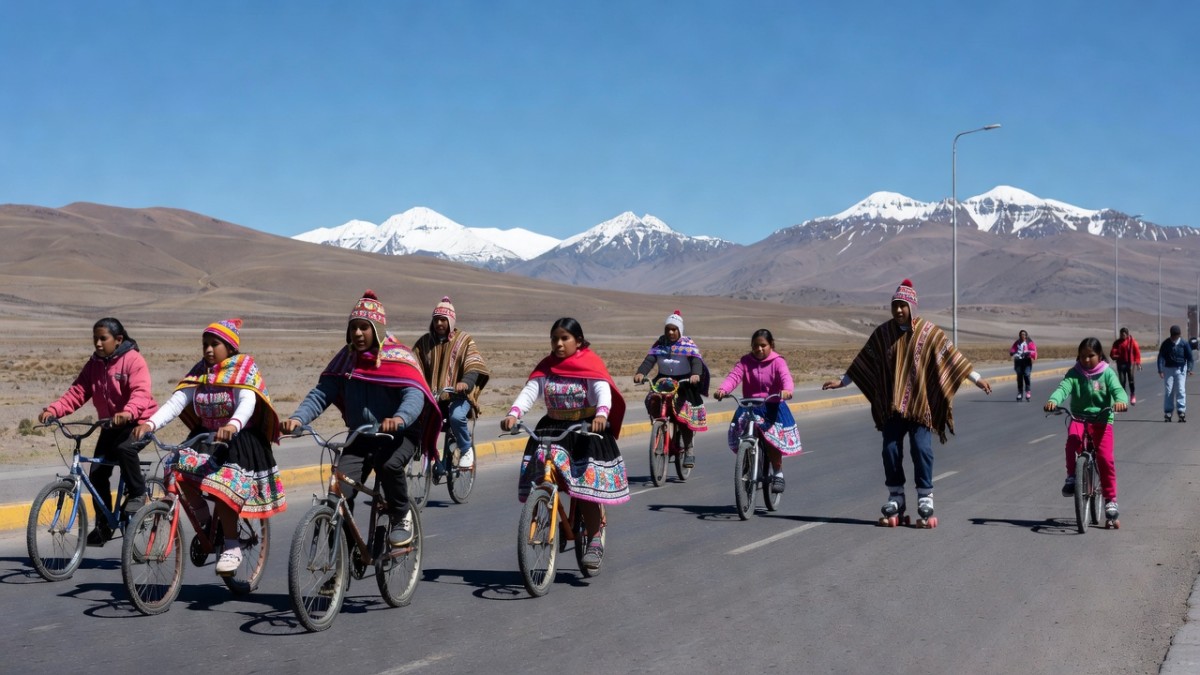
The transformation was visceral. In La Paz, the "La Paz capital del cielo" cycling caravan converged from five distinct starting points, a river of bicycles flowing down the city's steep, canyon-like avenues. Mayor César Dockweiler framed the day's purpose with civic clarity: "This is the day citizens take ownership of public space," he said, watching families with small children navigate intersections that are normally perilous. The prohibition was absolute for private vehicles from 08:00 to 18:00, with authorities enforcing a parallel 24-hour ban on alcohol sales to ensure the atmosphere remained family-oriented. In neighboring El Alto, perched at a breathtaking 4,050 meters, the "Bicicleteada familiar 10K" departed from Calle 2 and Avenida 6 de marzo, with Mayor Eliser Roca emphasizing that the priority was "protecting the environment and families sharing sport, walking, and cycling." Even the city's notoriously strict enforcement regime allowed only 200 exceptional permits for emergencies, urgent medical treatment, and airport transfers, underscoring the seriousness of the mandate.
The scope extended beyond the altiplano. Cochabamba, which began its ban at midnight, hosted an overnight "Bici de Buen Gobierno" ride followed by a 10K pedestrian race from Avenida Blanco Galindo in Colpapirhua. In the tropical lowlands of Santa Cruz, the city closed six blocks surrounding the historic Plaza 24 de Septiembre from 06:00 to 12:00, hosting the "Santa Cruz 6K" race that drew thousands of runners. Sucre opted for organized bike rides through its whitewashed colonial center, while Oruro revived the tradition of soapbox-cart races—cochecitos built on bearings—careening down its main thoroughfares. The message was uniform: for one day, the public space changes owner, and people occupy it instead of vehicles.
Why Bolivia Needs This Day: Pollution at 3,600 Meters
This nationwide mobilization is not merely festive; it is a direct response to a public health crisis exacerbated by geography. Bolivia's Environment and Water Ministry is unequivocal in its assessment: urban air pollution in La Paz, Cochabamba, and Santa Cruz originates primarily from the vehicle fleet—the parque automotor—with industry playing a secondary role. The problem is amplified by altitude. La Paz sits at approximately 3,600 meters above sea level, and El Alto at 4,050 meters, where the thinner air means physical exertion demands faster, deeper breathing — pulling polluted air deeper into the lungs. Scientific studies, including the work of Mardoñez-Balderrama and colleagues on black carbon in the La Paz-El Alto metropolitan corridor, have demonstrated that this increased minute ventilation raises the inhaled dose of pollutants significantly. The research identified the highest black-carbon exposure occurring during microbus commutes, with concentrations reaching 13 micrograms per cubic meter—a figure directly linked to asthma, lung cancer, and cardiac arrest.
The ambient air quality data paints a grim picture. A 2026 commentary in The Lancet Regional Health-Americas, titled "Towards clean air and health for all in the Andes," reports that PM2.5 concentrations in Andean cities frequently surpass 50 to 100 micrograms per cubic meter and can peak above 200 during cooking events. This is staggering when compared to the World Health Organization's annual guideline of just 5 micrograms per cubic meter. IQAir data from 2026 shows La Paz's current PM2.5 levels are approximately 2.3 times the WHO guideline, while Bolivia's national average sits at 1.3 times the recommended limit. The Lancet commentary also notes a critical infrastructure gap: permanent monitoring networks in Bolivia are limited to just four cities—La Paz, Santa Cruz, Cochabamba, and Sucre—leaving vast swaths of the country unmeasured and unaccounted for.
The Measurable Payoff: When the Cars Stop, the Air Clears
While critics might dismiss a single car-free Sunday as a drop in the bucket, the empirical evidence from Bolivia's monitoring stations suggests otherwise. In Cochabamba, the municipal air-quality network MoniCA, coordinated by Fabiola Cáceres, recorded a stunning 48% reduction in air pollution during the city's first Día del Peatón of 2026, held on June 1. The air quality index shifted from "bad" to "good" within hours of the vehicle ban taking effect. This is not an anomaly; monthly PM concentrations in Cochabamba had ranged between 20 and 40 micrograms per cubic meter, spiking to 60 in May, making the dramatic drop on Pedestrian Day all the more significant. Historical studies in Cochabamba have shown contamination drops of up to 80% on previous Pedestrian Days, demonstrating the direct causal link between traffic volume and atmospheric toxicity.
El Alto's data corroborates these findings. On the 2023 Día del Peatón, the city reported an average Atmospheric Contamination Index of 40.7 micrograms per cubic meter—a figure that, while still above WHO guidelines, represents a substantial improvement over typical daily averages. The consistency of these measurements across different years and cities provides a compelling argument that the problem is not intractable. However, experts are quick to caution that the day attenuates but does not solve the problem. The pollution returns with the engines on Monday morning, and the long-term health benefits require sustained intervention. Yet, the data serves as a powerful proof-of-concept: if Bolivian cities can achieve such dramatic improvements in just a few hours, what might be possible with more aggressive, permanent policies?
A Health Laboratory for Latin America
Bolivia's experiment is part of a broader regional movement that has captured the attention of public health researchers worldwide. Bogotá's Ciclovía, which has closed streets to cars every Sunday and holiday since December 15, 1974—when more than 5,000 cyclists protested for road access—now opens approximately 121 kilometers of roads weekly from 07:00 to 14:00. The Colombian capital's program has become a gold standard for urban health interventions. A landmark 2023 study in The Lancet Planetary Health quantified the health impacts of Open Streets programs across 15 Latin American cities, finding that cycling was the most common activity and yielded the largest estimated health benefits. The findings are particularly relevant given that Latin America and the Caribbean has the world's highest prevalence of insufficient physical activity at 43.7%, a risk factor for cardiovascular disease, diabetes, and mental health disorders.
The benefits extend beyond the adults who participate. Studies of Bogotá's Ciclovía have shown that children gain approximately 6 minutes of moderate-to-vigorous physical activity and cut their sedentary time by 19 minutes on program days. In a region where urban design has increasingly prioritized automobiles over pedestrians, these programs represent a reclaiming of public space for health promotion. The WHO links air pollution to a cascade of respiratory and cardiovascular diseases, and the Lancet Regional Health-Americas commentary emphasizes that Andean cities face a double burden: high altitude increases vulnerability, while limited monitoring hampers effective policy responses. Bolivia's Día del Peatón, by providing measurable improvements in air quality and promoting physical activity, offers a replicable model for other high-altitude cities in Peru, Ecuador, and Colombia that face similar challenges.
One Sunday Is Not Enough: Enforcement and the Limits of a Single Day
Despite the successes, the Día del Peatón is not without its challenges and critics. Enforcement remains a significant hurdle, particularly in cities like El Alto where the municipal government has resorted to vehicle retention and fines to ensure compliance. Violators face having their vehicles towed to authorized garages, with the municipal tax administration collecting the associated fees. Reports from 2025 cited fines of 100 UFV (Unidades de Fomento de Vivienda) and 8-hour vehicle retention for those who defy the ban. The strictness of enforcement varies by municipality, and some residents complain that the day inconveniences essential workers and those with limited mobility. The 200 exceptional permits in El Alto—for emergencies, urgent medical treatment, and airport transfers—highlight the tension between environmental goals and practical needs.
Moreover, the day's impact, while measurable, is transient. A 48% reduction in pollution for a single Sunday does not address the underlying issue of a rapidly growing vehicle fleet or the lack of robust public transportation alternatives. Bolivia celebrates at least ten pedestrian days a year across various municipalities—including Potosí, Oruro, Sucre, Cochabamba, and El Alto—but the first Sunday of September remains the only national one. Critics argue that a more effective approach would involve investing in mass transit, promoting electric vehicles, and implementing permanent low-emission zones in city centers. The Lancet commentary echoes this sentiment, calling for expanded monitoring networks and sustained policy commitment. The Día del Peatón is a powerful symbol and a valuable data-gathering opportunity, but it cannot substitute for comprehensive urban planning that prioritizes people over cars every day of the year.
Voices From the Streets: Families, Cyclists and Mayors
On the ground, the human stories illustrate the day's profound social impact. Xinhua news agency reported families walking, dancing, running, and cycling on streets normally choked with cars, capturing the essence of the transformation: "the public space changes owner—people occupy it instead of vehicles." Bolivian media described parents bringing children out on bicycles for the first time, teenagers on roller skates weaving between dance troupes, and older residents settling onto folding chairs in the middle of avenues to play cards under a sky free of diesel haze. In Cochabamba, the overnight "Bici de Buen Gobierno" ride ended at dawn at the monument of Colina San Sebastián, where hundreds of cyclists gathered before the 10K race set off from Avenida Blanco Galindo. The atmosphere was festive, but also quietly political—a demonstration that urban life need not be dominated by automobiles.
Mayors across the political spectrum embraced the day with enthusiasm. Cochabamba authorities called the event "successful," citing the high turnout for the 10K race and the overnight cycling event. Mayor Dockweiler of La Paz emphasized the civic ownership aspect, while El Alto's Mayor Roca framed the day in terms of environmental stewardship and family values. The political consensus is notable in a country often divided along regional and ideological lines. The Día del Peatón has become one of the few national events that unites the highlands of La Paz, the valleys of Cochabamba, and the lowlands of Santa Cruz in a shared purpose. For residents, the day offers a rare opportunity to experience their cities at a human pace, to hear the birds in the plazas, and to smell air that is not tinged with diesel exhaust. It is a reminder that cities are not just economic engines but also homes, and that the quality of life depends on more than just GDP growth.
The Bottom Line: A Model That Deserves More Than One Day
The Día del Peatón is a remarkable achievement—a legally mandated, nationally observed experiment in urban sustainability that provides hard data on the relationship between traffic and air quality. The 48% reduction in pollution in Cochabamba and the consistent improvements in El Alto are not anecdotal; they are measured, verified proof that policy interventions can yield immediate environmental dividends. Yet, the day also exposes the limits of symbolic action. With roughly 80% of Latin America's population living in cities, and the IQAir 2025 World Air Quality Report showing that only 14% of global cities met the WHO annual PM2.5 guideline, the region faces an urgent need for systemic change. In Latin America and the Caribbean, 208 cities recorded decreases in air pollution, but 95 recorded increases—a mixed picture that demands sustained effort.
Bolivia's challenge is to translate the success of one Sunday into a broader vision for sustainable urban mobility. The country's high-altitude cities are uniquely vulnerable to air pollution, and its residents deserve more than a monthly respite from toxic air. The Día del Peatón has proven that Bolivians will embrace car-free streets, that air quality can improve dramatically when vehicles are removed, and that communities thrive when public space is reclaimed. The next step is to build on this foundation—expanding monitoring networks, investing in clean public transit, and creating permanent pedestrian zones in city centers. The law that created this day was a bold statement of values; the challenge now is to make those values a daily reality. For one day each year, Bolivia shows the world what is possible. The question is whether it can find the political will to make every day a little more like the Día del Peatón.
By Elena Vasquez, Staff Writer
This article was produced with AI-assisted research and editorial support. Reporting is based on sources cited in the article.
What's Your Reaction?
 Like
0
Like
0
 Dislike
0
Dislike
0
 Love
0
Love
0
 Funny
0
Funny
0
 Wow
0
Wow
0
 Sad
0
Sad
0
 Angry
0
Angry
0

Latin America Correspondent at Global1.News. Based in Mexico City, covering politics, economics, energy, and culture across the region. Brings an on-the-ground perspective to stories spanning from the Rio Grande to Patagonia.














Comments (0)