
Nazi-Looted Painting to Return to Heir After Argentina Ruling
In a landmark resolution that closes an 80-year odyssey across continents and generations, an Argentine couple has agreed to return a Nazi-looted Baroque masterpiece to the heir of its rightful owner, following a court ruling in the coastal city of Mar del Plata.
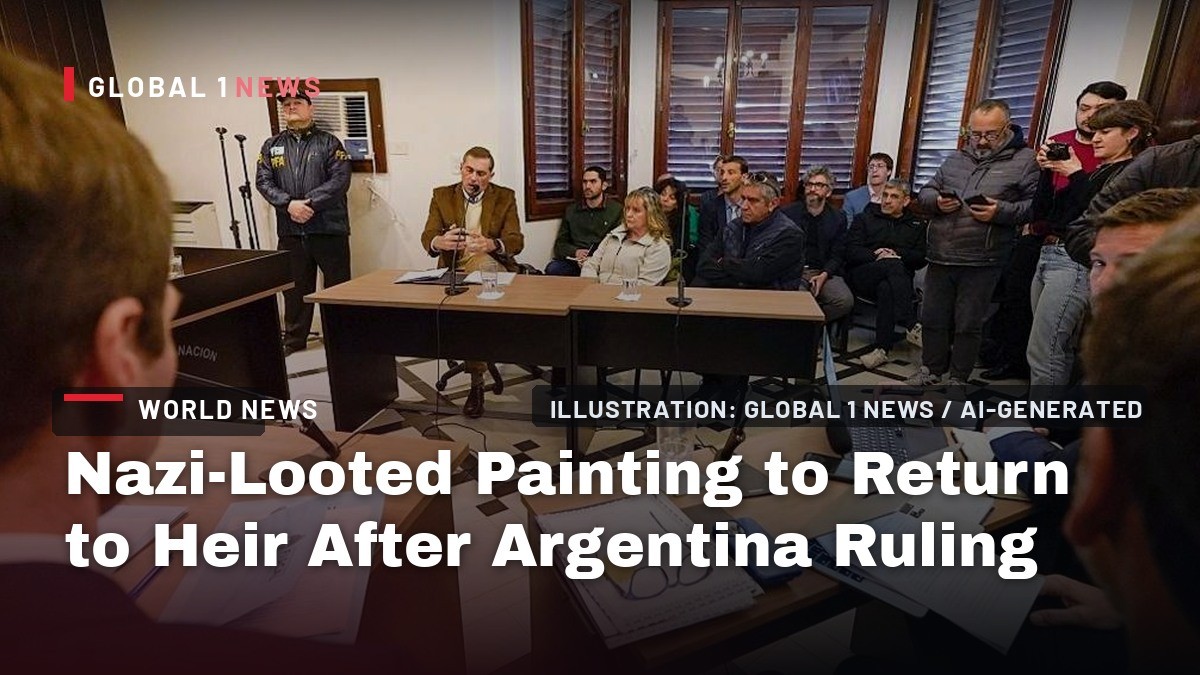
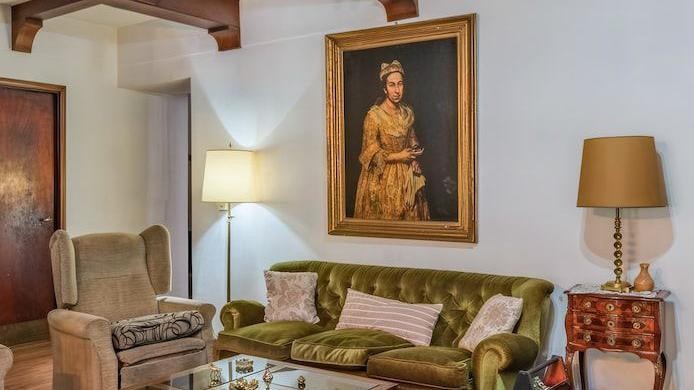
In a landmark resolution that closes an 80-year odyssey across continents and generations, an Argentine couple has agreed to return a Nazi-looted Baroque masterpiece to the heir of its rightful owner, following a court ruling in the coastal city of Mar del Plata. The painting, known as Portrait of a Lady, was discovered last year hanging above a green sofa in a house for sale near Buenos Aires, ending decades of silence about its fate. The agreement, reached on Friday, spares the couple from prosecution while ensuring the artwork’s journey toward public memory and restitution.
Nazi-Looted Painting to Return to Heir After Argentina Ruling
Buenos Aires, Argentina — A late-Baroque portrait stolen by the Nazis and hidden for generations in an Argentine home will be returned to the family of its original owner, after a court in Mar del Plata approved a settlement on Friday. The decision marks a rare victory in Latin America for the long struggle to recover art plundered during the Holocaust, and it sets a precedent for how such cases might be resolved in the region.
A Painting Lost for 80 Years, Found in a Real Estate Listing
The story of Portrait of a Lady, also known as Contessa Colleoni, begins with its theft from the collection of Jacques Goudstikker, a prominent Jewish art dealer in Amsterdam. When the Nazi invasion of the Netherlands swept through the country in May 1940, Goudstikker’s vast collection—more than 1,000 works—was seized by Hermann Göring, Adolf Hitler’s deputy and a voracious plunderer of European art. Goudstikker fled the country but died tragically shortly after, leaving behind a legacy that his family has spent decades trying to reclaim.
The painting vanished from public view for eight decades, its whereabouts unknown to historians and provenance researchers. That changed in August 2025, when the Dutch newspaper Algemeen Dagblad (AD) spotted something remarkable in an online real estate listing. A property in Mar del Plata, a seaside resort town popular with Argentine families, was for sale, and photographs of its living room showed a striking portrait hanging above a green sofa. Experts immediately recognized the work as the long-lost Goudstikker piece.
The house belonged to Patricia Kadgien, whose father, Friedrich Kadgien, had been a top adviser to Göring during the war. Friedrich Kadgien was among a number of high-ranking Nazi officials who fled to Argentina after the conflict, part of a broader migration that made the country a refuge for war criminals in the post-war years. The discovery set off a chain of legal and diplomatic efforts that culminated in Friday’s hearing.
The Court Ruling and the Agreement
At the hearing in Mar del Plata on Friday, all criminal proceedings against Patricia Kadgien and her husband, Juan Carlos Cortegoso, were suspended. The couple had been charged with concealment last September and placed under house arrest after a search of their property initially failed to locate the painting. Under the terms of the agreement reached between the families and prosecutors, Kadgien and Cortegoso will relinquish all rights to the artwork and will donate 4.8 million Argentine pesos—approximately 2,356 pounds or 3,185 US dollars—to local hospitals.
The settlement resolves a case that had drawn international attention, not only because of the painting’s significance but also because of the unusual circumstances of its discovery. The initial search of the Kadgien property in September 2025 did not turn up the artwork, leading to a tense period of uncertainty. It was only after further investigation that the painting was located, and the couple was formally charged.
By agreeing to the return, Kadgien and Cortegoso avoid prosecution for concealing the artwork from authorities. The agreement also allows them to move forward without the shadow of criminal charges, a pragmatic resolution that reflects the complexities of such cases, where the passage of time and the deaths of key figures make criminal prosecution difficult.
The Heir’s Mission: Restoring a Legacy
The painting will now go to Marei von Saher, the daughter-in-law of Jacques Goudstikker and his sole heir. Von Saher has spent years pursuing the return of artworks looted from her family’s collection, which was one of the largest and most important in the Netherlands before the war. In a statement, she has said her family “aims to bring back every single artwork robbed from Jacques’ collection, and to restore his legacy.”
Von Saher’s efforts have been marked by both success and frustration. She has recovered numerous works over the years, but many remain missing or in the hands of collectors and institutions that have resisted restitution claims. The return of Portrait of a Lady is a significant addition to her collection, and she has indicated that she intends for the painting to be exhibited on a temporary loan at the Holocaust Museum of Buenos Aires.
The museum, located in the Argentine capital, is dedicated to preserving the memory of the Holocaust and educating the public about its lessons. The temporary exhibition of the painting there is intended to spread awareness of the issue of Nazi-looted art and the ongoing efforts to return it to its rightful owners. For Argentine audiences, the display will also serve as a reminder of the country’s own complex history with Nazi fugitives and the moral questions that linger decades later.
Art Historical Questions and Provenance Debates
While the legal battle over Portrait of a Lady has been resolved, questions about the painting’s authorship remain a subject of scholarly debate. The work is attributed to Giuseppe Ghislandi, a late-Baroque artist known for his portraits and still lifes. However, some experts have questioned this attribution, suggesting instead that the painting may be the work of Giacomo Ceruti, another Italian artist from the same period, who was known for his depictions of humble subjects and religious scenes.
The uncertainty over attribution is not unusual for works of this era, where stylistic similarities and incomplete records often make definitive identification difficult. For the purposes of the restitution case, however, the question of authorship was secondary to the established fact that the painting was part of Goudstikker’s collection and was looted by the Nazis. The legal proceedings focused on the painting’s provenance and the circumstances of its disappearance, rather than on its artistic pedigree.
Still, the debate adds another layer of interest to the story, as art historians and collectors will likely continue to study the work now that it is set to enter the public sphere. The painting’s journey from a Dutch collection to a Nazi official’s hands, and then to a living room in Mar del Plata, is a testament to the turbulent history of the 20th century and the enduring power of art to carry meaning across borders and generations.
Argentina’s Complex History with Nazi Fugitives
The case has also reignited attention on Argentina’s role as a haven for Nazi war criminals after the Second World War. The country was home to several high-ranking Nazi fugitives, including Adolf Eichmann, who was captured by Israeli agents in Buenos Aires in 1960 and taken to Israel to stand trial. The presence of such figures in Argentina was an open secret for years, and it has been the subject of extensive historical research and public debate.
Friedrich Kadgien, the father of Patricia Kadgien, was part of this broader migration. As a top adviser to Göring, he would have been deeply involved in the Nazi regime’s art looting operations, which stripped Jewish families across Europe of their cultural heritage. His decision to flee to Argentina, and to bring the painting with him, was part of a pattern that saw countless works of art disappear into private collections in South America, often hidden from view for decades.
The discovery of Portrait of a Lady in Mar del Plata is a reminder that the legacy of these crimes is not confined to Europe. It also highlights the ongoing work of provenance researchers, journalists, and legal authorities who continue to uncover the fate of looted art and to seek justice for the families who lost so much. For Argentina, the case offers an opportunity to confront this history and to participate in the global movement for restitution.
A Precedent for Restitution in Latin America
The resolution of this case in Mar del Plata could have broader implications for how similar disputes are handled in Latin America. While European countries have developed extensive legal frameworks for the restitution of Nazi-looted art, the issue has received less attention in South America, where many works are believed to have ended up in the post-war years. The agreement reached in this case, which involved cooperation between the families, prosecutors, and the courts, may serve as a model for future efforts.
The decision to suspend criminal proceedings in exchange for the return of the artwork reflects a pragmatic approach that prioritizes restitution over punishment. This is particularly important in cases where the individuals in possession of looted art are not the original perpetrators but their descendants, who may have inherited the works without full knowledge of their origins. The agreement also includes a financial component, with the couple donating to local hospitals — a form of reparative justice that benefits the broader community.
For Marei von Saher, the return of Portrait of a Lady is another step in a long journey to reclaim her family’s heritage. The painting’s temporary exhibition at the Holocaust Museum of Buenos Aires will ensure that its story is told to a new audience, and that the memory of Jacques Goudstikker and the thousands of other victims of Nazi art looting is preserved. As she has said, the goal is not just to recover individual works but to restore a legacy that was nearly destroyed.
The case also underscores the importance of vigilance and persistence in the fight against the erasure of cultural history. It took a sharp-eyed journalist, a dedicated legal team, and a family’s unwavering commitment to bring this painting back into the light. In doing so, they have not only secured a victory for justice but have also ensured that the story of Portrait of a Lady will be remembered for generations to come.
This article was produced with AI-assisted research and editorial support. Sources: BBC News; Clarin (Argentina).
By Elena Vasquez, Staff Writer
What's Your Reaction?
 Like
0
Like
0
 Dislike
0
Dislike
0
 Love
0
Love
0
 Funny
0
Funny
0
 Wow
0
Wow
0
 Sad
0
Sad
0
 Angry
0
Angry
0

Latin America Correspondent at Global1.News. Based in Mexico City, covering politics, economics, energy, and culture across the region. Brings an on-the-ground perspective to stories spanning from the Rio Grande to Patagonia.














Comments (0)