
BIR Confirms New Taxes to Fund Marcos' Tax Relief Package
In a recent ANC 24/7 report, the Bureau of Internal Revenue confirmed that new consumption taxes will help fund President Ferdinand Marcos Jr.'s tax relief package. The segment highlighted how the Department of Finance plans to offset revenue losses from higher income tax exemptions through measures affecting sweetened beverages, e-cigarettes, and plastic bags sold in sari-sari stores across Manila and Quezon City. BIR Readies Implementation of Marcos Tax Relief Funded by...
In a recent ANC 24/7 report, the Bureau of Internal Revenue confirmed that new consumption taxes will help fund President Ferdinand Marcos Jr.'s tax relief package. The segment highlighted how the Department of Finance plans to offset revenue losses from higher income tax exemptions through measures affecting sweetened beverages, e-cigarettes, and plastic bags sold in sari-sari stores across Manila and Quezon City.
BIR Readies Implementation of Marcos Tax Relief Funded by New Consumption Levies
Manila, Philippines – This week — The Bureau of Internal Revenue stands prepared to implement President Ferdinand Marcos Jr.'s tax reform agenda following Malacañang press briefings on August 4 and August 6, 2026. Palace Press Officer Atty. Claire Castro stated that BIR Commissioner Charlito Martin Mendoza is ready to roll out the changes. The Department of Finance package, called ProGRESS, raises the tax-exempt annual personal income ceiling from P250,000 to P350,000 and removes the 2 percent minimum corporate income tax for qualified micro and small enterprises.

The ProGRESS Package
The Department of Finance estimates the reforms will benefit at least 3.13 million taxpayers and 78,000 micro and small businesses. Revenue impact is projected at P67 billion in 2027, with figures rising in succeeding years. President Marcos first proposed the expanded P350,000 exemption and small business relief during his 2026 State of the Nation Address in late July, citing 6.4 percent inflation and high fuel costs affecting middle-class families in areas such as Davao and Baguio.
These proposals build directly on the TRAIN law of 2018, the first major tax reform package under the Duterte administration that lowered personal income taxes for many workers while introducing new excise measures on fuel and vehicles. The current P250,000 exemption threshold itself took effect only in 2023 as part of phased adjustments, yet rapid inflation has quickly eroded its real value for households. By raising the ceiling now, the Marcos administration seeks to restore purchasing power at a moment when families report stretching every peso further than before.
Analysts note that the ProGRESS package arrives as the Marcos administration looks toward the next national elections, placing added pressure on the administration to demonstrate tangible economic relief. With the administration's record already under scrutiny over persistent price pressures, successful passage could strengthen its narrative of responsive governance. Failure to deliver, however, risks amplifying voter frustration in key battleground districts where cost-of-living concerns dominate conversations.
At the same time, the 6.4 percent inflation figure cited in the SONA underscores why timing matters. Fuel and food costs have hit hardest in provinces far from Metro Manila, where transport expenses compound daily budgets. The proposed relief therefore carries both economic and political weight as the administration positions itself for the coming electoral cycle.
Revenue Offsets Through Consumption Taxes
To cover the shortfall, the Department of Finance proposed at the House Committee on Ways and Means hearing on Tuesday, August 4, to increase the excise tax on sweetened beverages using caloric sweeteners from P6 per liter to P20 per liter. Beverages using high fructose corn syrup would rise from P12 per liter to P40 per liter, with 5 percent annual indexation. The package also removes tax exemptions on 100 percent natural fruit juices, vegetable juices, and edible ices such as ice cream and frozen yogurt.
Additional measures include higher taxes on e-cigarettes and heated tobacco products, equalizing them with traditional cigarettes at P72.93 in 2027 with 5 percent indexation. Novel tobacco products would face P72.93 per 2ML, while e-cigarette devices would carry P150 per unit. Excise tax on distilled spirits per proof liter would increase to P157.21 next year from the current P74.16, with 6 percent indexation. A P150 per kilogram excise tax on plastic sando bags, labo bags, and sachets would apply with 5 percent annual indexation.
The sin tax lineage stretches back through multiple administrations, beginning with early levies on tobacco and alcohol that were later expanded under the 2012 sin tax reform and further adjusted in TRAIN. Those earlier rounds aimed to curb consumption while generating steady revenue streams, yet critics have long warned that indexation can outpace wage growth in lower-income brackets. The current proposals extend this approach to new categories, testing whether the same balance between health goals and revenue needs can hold amid today's higher baseline prices.
The Sweetened Beverage Debate
DOF Undersecretary Karlo Adriano told the committee that many studies show consumption of 100 percent natural fruit juices is as harmful as soda. He noted that more affordable sweetened beverages lead to greater consumption and higher obesity prevalence. Adriano estimated sweetened beverage consumption would drop by around 27.2 percent and carbonated beverages by around 32 percent under the new rates.
Albay 1st District Rep. Cielo Krisel Lagman questioned the exemption of 3-in-1 coffee, pointing out that one sachet contains 4 to 5 teaspoons of sugar, or 32 to 40 percent of the World Health Organization's daily limit. DOF Undersecretary Adriano responded that the Department of Finance remains open to legislative suggestions on the package.
Public health advocates view the rate hikes as a necessary evolution of sin tax principles that previously targeted tobacco and alcohol, arguing that sugar-sweetened drinks now represent a comparable long-term burden on the healthcare system. Yet small vendors worry that abrupt price jumps could simply shift consumers toward unregulated alternatives rather than reduce overall intake. The debate therefore reflects a familiar tension between national policy objectives and the daily realities of neighborhood commerce.
Luxury and Wealth Taxes
The ProGRESS package includes a wealth tax component that raises the tax on automobiles worth at least P8 million from 50 percent to 75 percent. Taxes on aircraft, yachts and vessels for private use, jewelry, and perfume would increase from 20 percent to 25 percent. The motor vehicle user's charge would also adjust based on inflation. DOF estimates the revenue-generating reforms would raise around P112.44 billion in 2027, with P88.10 billion coming from updated taxes on sweetened beverages, sin products, and flexible plastics.
Lawmakers Raise Concerns
House Committee on Ways and Means Chairperson Rep. Miro Quimbo expressed worry that the sando bag tax could burden the poor, noting that only low-income households rely on these items and suggesting a carve-out. He also hesitated on doubling the motor vehicle user's charge, warning against giving tax relief with one hand while imposing new costs with the other. Batangas 6th District Rep. Ryan Recto asked whether the 100 percent increase on alcohol excise tax might encourage smuggling.
These concerns highlight the delicate political calculus facing the Marcos administration as it prepares for the next electoral cycle. Lawmakers must weigh immediate relief for middle-income earners against the risk that new levies on everyday items could be portrayed as regressive by opposition candidates in the coming elections. The administration's economic record, already challenged by inflation hovering at 6.4 percent, leaves little margin for measures that might be perceived as adding pressure on household budgets.
Impact on Filipino Families
Atty. Claire Castro emphasized that the measures target luxury consumption rather than ordinary taxpayers or the middle class. She said the government's goals extend beyond revenue to public health improvements. President Marcos wants the full tax reform package enacted this year. The changes would affect jeepney drivers buying fuel, OFWs sending remittances for household expenses, and families shopping at palengke stalls where sari-sari store prices could rise.
The Road Through Congress
Following the House Committee on Ways and Means hearing, the ProGRESS package must still clear several legislative hurdles before reaching the President's desk. Committee approval is expected to trigger floor deliberations in the House, after which a bicameral conference committee would reconcile any differences with the Senate's counterpart measure. The Senate version is anticipated to undergo parallel hearings, with both chambers aiming for synchronized timelines to meet the administration's target of enactment before the year ends.
Observers point out that the compressed schedule leaves limited room for extended debate, especially with the midterm election calendar already influencing legislative priorities. BIR system readiness, including updates to withholding tax tables and excise collection mechanisms, will also need to align with the final enactment date to avoid implementation delays in early 2027.
Voices From the Ground
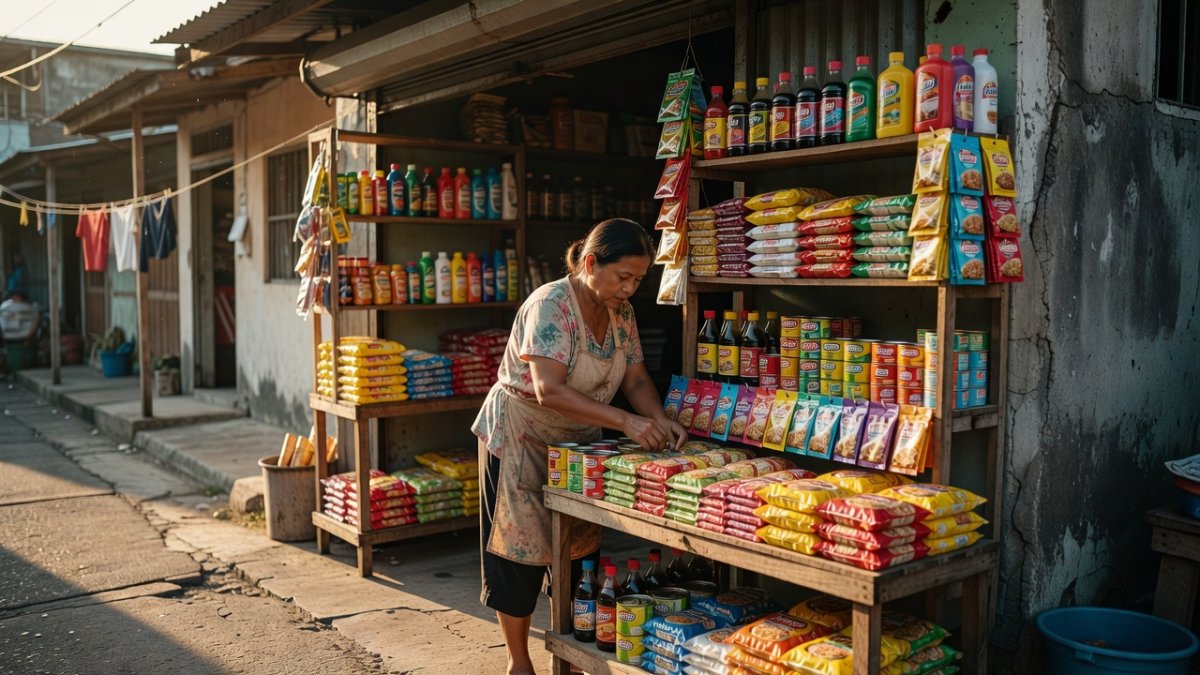
Across Metro Manila and provincial communities, sari-sari store owners have shared concerns that higher taxes on plastic sachets and sweetened beverages could raise their procurement costs, forcing difficult choices between absorbing the increase or passing it on to loyal customers who rely on small daily purchases. Many report already operating on thin margins and worry that reduced sales volume might follow any noticeable price adjustment.
Jeepney drivers, already navigating higher fuel expenses amid 6.4 percent inflation, anticipate that any knock-on effects from broader consumption taxes could further strain household budgets in neighborhoods where public transport remains the primary lifeline. OFW families, who often stretch remittances across multiple needs, have expressed similar caution about potential rises in everyday items, noting that even modest increases accumulate quickly when supporting children’s education and medical costs back home.
Middle-class workers in areas such as Davao and Baguio have welcomed the proposed income tax exemption expansion as meaningful relief, yet they also voice apprehension that new levies on common goods could offset some of those gains. Community sentiment gathered in recent weeks reflects a cautious hope that the balance between relief and new costs will ultimately favor working households rather than add to existing pressures.
What to Watch For
Congress must still approve the ProGRESS package before the BIR can begin implementation. Lawmakers will continue hearings on the sweetened beverage rates, plastic bag levy, and wealth tax adjustments in the coming weeks. The outcome will determine how the administration balances income tax relief for 3.13 million workers with new costs on everyday items in communities from Cebu to Quezon City.
Key milestones include the next Ways and Means committee markup session expected in the coming weeks, followed by House plenary debates later in the year. The Senate is expected to begin its own hearings in the coming months, with a bicameral conference anticipated before the Christmas recess if both chambers move in step. BIR officials have indicated that system updates for new excise rates and withholding tables would need to be completed before implementation, should the measure clear both chambers this year.
By Bella Reyes, Staff WriterThis article was produced with AI-assisted research and editorial support. Reporting is based on sources cited in the article.
What's Your Reaction?
 Like
0
Like
0
 Dislike
0
Dislike
0
 Love
0
Love
0
 Funny
0
Funny
0
 Wow
0
Wow
0
 Sad
0
Sad
0
 Angry
0
Angry
0

Philippines/Southeast Asia Correspondent at Global1.News. Manila-based journalist covering Philippine politics, environment, maritime security, and social issues. Passionate about marine conservation and the communities protecting the Philippines' natural heritage.











Comments (0)