
Gym Heart Attacks, Fake Healthy Food & Toxic Office Air: India's Triple Health Alert
The rising incidence of sudden cardiac arrests among young Indians during intense gym workouts has triggered a critical medical alert, with doctors now recommending mandatory pre-training cardiac screenings. This comes as new data from an AIIMS-ICMR study reveals that 8.1% of all medicolegal autopsies in New Delhi met strict criteria for sudden death, with more than half occurring in individuals aged 18-45 years.
The rising incidence of sudden cardiac arrests among young Indians during intense gym workouts has triggered a critical medical alert, with doctors now recommending mandatory pre-training cardiac screenings. This comes as new data from an AIIMS-ICMR study reveals that 8.1% of all medicolegal autopsies in New Delhi met strict criteria for sudden death, with more than half occurring in individuals aged 18-45 years. The findings were central to the latest episode of India Today's Health 360, hosted by Sneha Mordani, which also exposed deceptive food labelling practices and the invisible threat of toxic indoor air in air-conditioned offices.
Gym Heart Attacks, Fake Healthy Food & Toxic Office Air: The Hidden Health Crises Facing Urban India
New Delhi, Delhi – June 27, 2026 — The intersection of fitness culture, regulatory failure, and environmental neglect is creating a perfect storm for India's urban population. The Health 360 episode, which premiered on June 27, 2026, dissected three interconnected health emergencies: the alarming spike in cardiac events among gym-goers, the systemic deception in the packaged food industry, and the dangerously poor air quality inside India's modern office towers. With the National Capital Territory recording a 42.6% cardiovascular disease share in sudden deaths among young adults, the episode underscored a pressing need for systemic intervention rather than individual vigilance alone.

The Cardiac Crisis in India's Gyms: Why Young Hearts Are Failing
The episode highlighted a disturbing trend: sudden cardiac arrests during intense workouts are rising, particularly among South Asians who carry a genetic predisposition to coronary artery disease. The AIIMS-ICMR study, published in the Indian Journal of Medical Research, analysed 2,214 consecutive medicolegal autopsies conducted at AIIMS, New Delhi, between May 2023 and April 2024. Of these, 180 deaths (8.1%) met the strict criteria for sudden death. Critically, more than half of all sudden death cases occurred in people aged 18-45 years, with men disproportionately affected. The majority of these victims were described by their families as "apparently healthy."
Autopsies revealed advanced coronary artery disease, with critical blockages often exceeding 70% narrowing. The left anterior descending (LAD) artery — often called the "widowmaker" — was the most frequently involved vessel. Doctors on the Health 360 panel strongly recommended that individuals, especially those over 30 or with a family history of heart disease, undergo prior ECGs and CT angiograms before engaging in heavy resistance training or high-intensity interval training (HIIT). The episode stressed that the gym floor has become a frontline for undiagnosed cardiac conditions, where the combination of extreme exertion and undetected arterial blockages can prove fatal.
FSSAI's War on Misleading Labels: The Battle for Consumer Trust
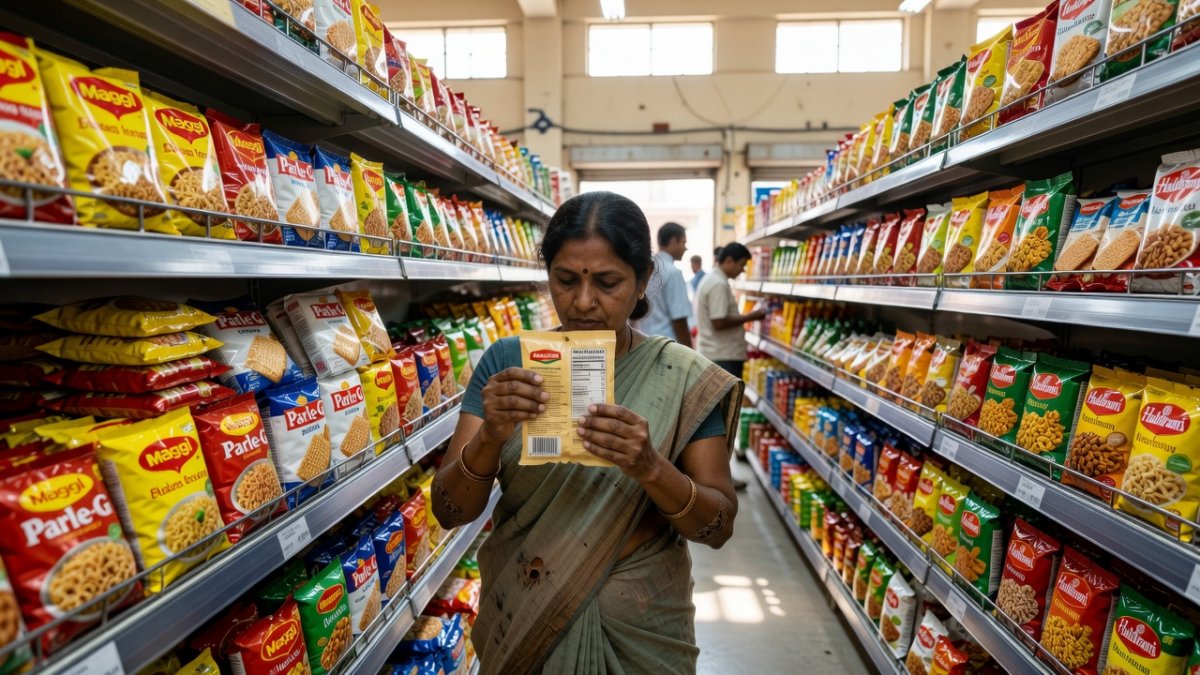
The Health 360 episode coincided with a regulatory crackdown on fourteen processed food brands, exposing how companies use deceptive marketing to sell ultra-processed junk food as healthy alternatives. The show specifically called out products claiming "zero added sugar" or "high protein," which often conceal hidden sugars, unhealthy saturated fats, and excessive sodium. The Food Safety and Standards Authority of India (FSSAI) has been at the centre of this battle, proposing to display the government's recommended daily limits for added sugar, saturated fat, and salt alongside a product's nutrient content per 100 g and its serving size — rather than using the warning symbols demanded by health activists.
The proposal, detailed in a compliance affidavit filed before the Supreme Court last week, marks the latest turn in the front-of-pack labelling (FOPL) debate. In its February 10 order, the Supreme Court explicitly stated it was not satisfied with FSSAI's earlier compliance affidavit and asked the regulator to consider warnings on wrappers or packets. The stakes are enormous: the ICMR-National Institute of Nutrition estimates that nearly 57% of India's disease burden — non-communicable and metabolic disorders such as cardiovascular conditions, diabetes, obesity, and cancers — are linked with poor dietary choices.
What This Means for India: The 57% Disease Burden and the FOPL Debate
The regulatory tug-of-war has profound implications for India's public health trajectory. A study published in World Nutrition in June 2026 tested four front-of-pack formats among 120 adolescents aged 13-18 in Mumbai. The results were stark: 80% of adolescents shown warning labels chose the healthier option, compared with 66.7% for Health Star Rating, 56.7% for Nutri-Score, and just 33.3% in the control group. This data suggests that the FSSAI's preference for nutrient declarations over warning symbols may be less effective in guiding consumer behaviour, particularly among younger demographics who are prime targets for ultra-processed food marketing.
Dr Arun Gupta, convenor of Nutrition Advocacy for Public Interest (NAPi) and former member of the PM's Council on India's Nutrition Challenges, did not mince words, calling the latest proposal "not compliance- but defiance." Dr Sujeet Ranjan, a public nutrition specialist, echoed this sentiment: "The issue in the country is that a large number of people are not aware of the harms attached with UPFs and anything less than direct warning labels on food packets will not suffice." The FSSAI did note on August 16, 2026, that six companies took corrective actions including withdrawal of misleading labels after notices, including Livyor Ventures Pvt Ltd withdrawing its 'vegan and healthy' claims on edamame beans. However, activists argue this piecemeal approach is insufficient against an industry that spends billions on marketing.
The Invisible Threat: Toxic Air in India's Air-Conditioned Offices
The third pillar of the Health 360 episode addressed a silent epidemic: poor indoor air quality in air-conditioned offices. The show highlighted that sealed office environments, designed for energy efficiency, are trapping pollutants and causing a spectrum of health issues including headaches, fatigue, and respiratory problems. Studies in India have found that indoor air pollution in homes and workplaces can be unsafe even with doors shut, with high levels of PM2.5 pollutants. This is particularly concerning given India's outdoor air pollution crisis — 13 of the world's 20 most polluted cities are in India per IQAir-type rankings — meaning office workers face an invisible additional burden indoors.
The episode argued that the modern Indian office, with its recirculated air and inadequate filtration, is becoming a health hazard. Experts recommended the mandatory installation of high-efficiency particulate air (HEPA) purifiers, regular HVAC system maintenance, and improved ventilation protocols. For the millions of Indians who spend 8-10 hours daily in such environments, the cumulative exposure to PM2.5 and volatile organic compounds (VOCs) from office furniture and equipment can exacerbate asthma, trigger cardiovascular stress, and impair cognitive function. The episode called for corporate India to treat indoor air quality as a statutory occupational health requirement, not a discretionary amenity.
Debunking Fitness Myths: Why Crash Diets Fail and Resistance Training Wins
Amidst the alarming data, the Health 360 episode also provided actionable guidance, debunking common fitness misconceptions. Fitness experts on the panel championed resistance training as the cornerstone of sustainable health, emphasising its critical role in building bone density and preventing age-related muscle loss (sarcopenia). The episode systematically dismantled the efficacy of crash diets, which often result in rapid weight regain, metabolic damage, and nutritional deficiencies. Instead, the experts advocated for a balanced approach combining progressive overload training with a protein-sufficient diet, tailored to the Indian palate and lifestyle.
This segment is particularly relevant for India's burgeoning fitness industry, which has seen a proliferation of unregulated influencers promoting extreme dietary protocols. The episode's data-driven approach — linking resistance training to improved insulin sensitivity and reduced visceral fat — provides a counter-narrative to the quick-fix culture prevalent on social media. For Indian youth, who are increasingly adopting gym culture, the message is clear: sustainable fitness is a long-term investment in physiological health, not a short-term aesthetic goal.
The Bottom Line
The Health 360 episode delivered a unified message: India's health crisis is not a series of isolated incidents but a systemic failure across regulatory, environmental, and medical preparedness domains. The AIIMS-ICMR data proves that sudden deaths are rarely "mysterious" — they are often undiagnosed medical conditions waiting to be detected. The 21.3% of sudden deaths that remained unexplained are likely due to inherited electrical disorders of the heart, which can be identified through routine ECGs. The study found no evidence linking sudden deaths to Covid infection or Covid vaccination, shifting the conversation from fear to evidence-based prevention.
For the Indian citizen, the actionable takeaways are clear: undergo cardiac screening before starting intense exercise, read food labels with scepticism and demand regulatory transparency, and advocate for cleaner indoor air in workplaces. For policymakers, the episode serves as a stark reminder that the 57% disease burden linked to poor diet, the rising incidence of young cardiac deaths, and the deteriorating indoor environment require urgent, coordinated action. The window for preventive intervention is narrowing, and the cost of inaction will be measured in lives lost prematurely across Delhi, Mumbai, Bengaluru, and every Indian city in between.
— By Dr. Raj Patel, Staff Writer
This article was produced with AI-assisted research and editorial support. Reporting is based on sources cited in the article.
What's Your Reaction?
 Like
0
Like
0
 Dislike
0
Dislike
0
 Love
0
Love
0
 Funny
0
Funny
0
 Wow
0
Wow
0
 Sad
0
Sad
0
 Angry
0
Angry
0

India/South Asia Correspondent at Global1.News. Analytical voice with a background in science and health journalism. Based in New Delhi, covering Indian politics, education, healthcare, technology, and policy. Breaks down complex data into clear, actionable reporting.















Comments (0)