
Bessent Calls Canada a 'Little Yippy Dog' as Retaliatory Tariffs Loom
Treasury Secretary Scott Bessent on Sunday compared Canada to a "little yippy dog" antagonizing a larger, more powerful neighbor, escalating the rhetorical war between Washington and Ottawa just 48 hours before Canadian retaliatory tariffs are set to slam into American exports.
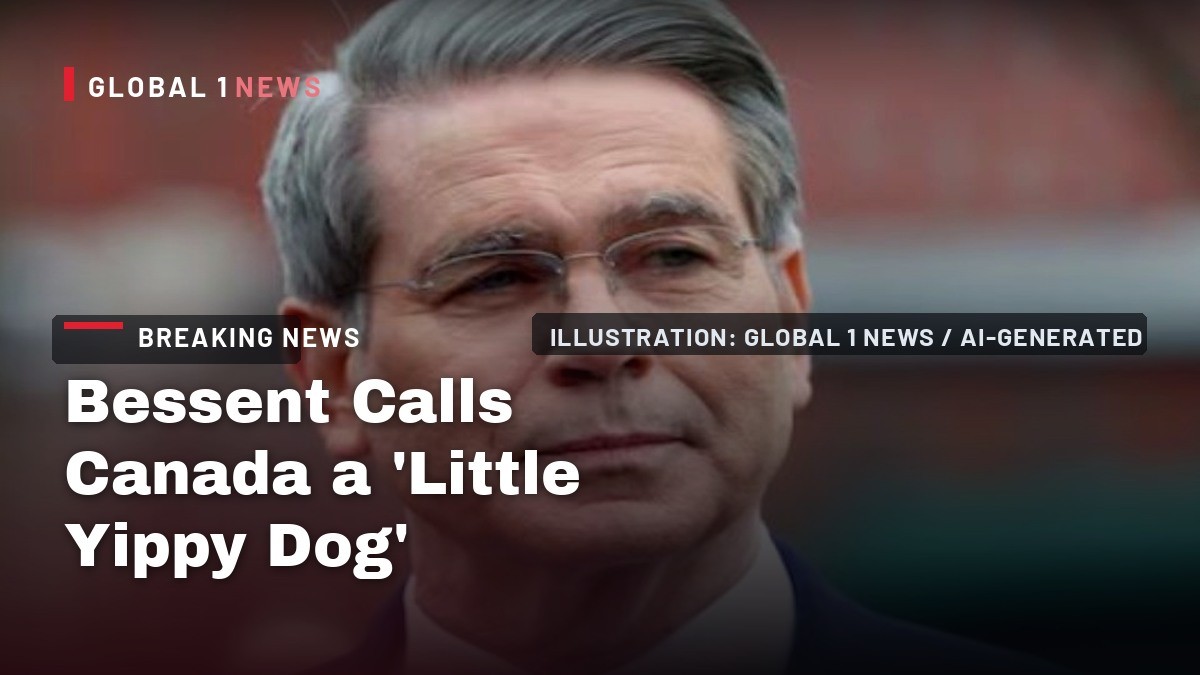
Treasury Secretary Scott Bessent on Sunday compared Canada to a "little yippy dog" antagonizing a larger, more powerful neighbor, escalating the rhetorical war between Washington and Ottawa just 48 hours before Canadian retaliatory tariffs are set to slam into American exports.
In an interview on Fox News, Bessent dismissed the economic threat posed by Canada's upcoming countermeasures and accused Prime Minister Mark Carney of walking away from a lucrative deal for political reasons. The comments mark a sharp new low in relations between the two allies, who are now locked in a trade conflict that analysts warn could raise prices for consumers on both sides of the border.
"I had a German shepherd and there was a Dachshund that used to antagonize her at the playground and it kind of reminds me of that," Bessent said, when asked how he sees the standoff playing out. "This little yippy dog used to bark away and for a long time a 110-pound German shepherd was ignoring the Dachshund and then one day she had enough."
The Treasury Secretary's condescending analogy drew immediate contrast with the high-stakes reality facing American businesses. On Tuesday, September 8, Canada is scheduled to impose dollar-for-dollar retaliatory tariffs on a wide range of US goods, including steel, dairy, appliances, agricultural equipment, pulp and paper, and electronics. The duties are a direct response to the 50 percent tariffs Washington placed on roughly $20 billion of Canadian goods—about 5.5 percent of Canadian exports to the US—after negotiations collapsed on August 22.
What Happens Monday: The Mechanics of Retaliation
The Canadian retaliation, first announced by Carney on August 23, is designed to match Washington's duties dollar for dollar. Canada's Department of Finance published an 893-line retaliatory schedule on August 25, detailing rates of 15, 25, and 50 percent on US products, mirroring the measures Washington imposed under Section 338 and Section 232 of US trade law.
The August 22 US tariffs hit a broad swath of Canadian industries, including wine, furniture, dairy products, cement, clothing, fishing rods, and hockey equipment. Now, American producers of steel, dairy, and agricultural equipment are bracing for the Canadian response, which takes effect in two days.
The stakes are enormous. US-Canada two-way trade exceeds $1.2 trillion a year, with roughly $2.7 billion in goods and services crossing the border daily. Canada sends nearly 70 percent of its exports to the US, making it one of America's most important trading partners. For American border states, the disruption threatens supply chains that have been integrated for decades.
Bessent, however, sought to minimize the impact on American wallets. "I would like someone to show me the statistical significance of the Canadian tariffs on U.S. prices," he said. "I'm happy to debate them." He characterized the trade war's effect on US prices as "negligible."
Why the Talks Collapsed in August
The current crisis traces back to the breakdown of negotiations on August 22. Carney, who had been in talks with US officials, suspended comprehensive trade negotiations and recalled negotiators to Ottawa after Washington imposed its tariffs. The Canadian leader said US negotiators proposed terms that were "uneconomic, unfair and undermined the net benefits for Canada, and called into question the reliability of any deal."
According to Carney, the American demands included curtailing Canada's ability to forge new trade deals with other countries—a red line for Ottawa. He also said US negotiators made unacceptable "threats" to the French language and "Quebec culture." In a statement that captured the depth of the rupture, Carney declared: "We cannot accept what they've offered, and we will not give what they've asked."
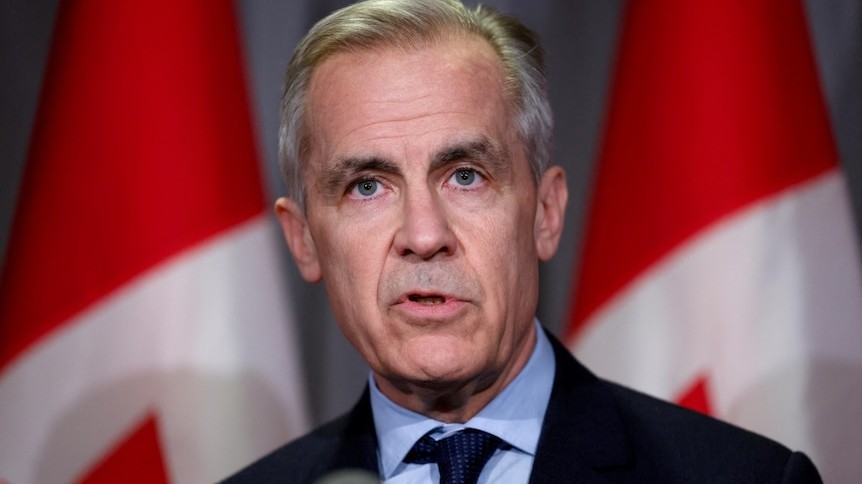
Bessent offered a different version of events on Sunday, blaming Carney for the collapse. "Unfortunately, Prime Minister Carney did walk away," he said. "They were given the opportunity for a great trade deal, and they didn't want it, and it looks like it's for political reasons."
US Trade Representative Jamieson Greer struck a similar tone in the aftermath of the breakdown, telling Fox News on August 23: "We're moving forward with measures that respond to Canadian retaliation. They've always had the best deal, and they still would have an even better deal, but they didn't want that." No new talks were planned as of that date.
The White House has shown little appetite for compromise. Peter Navarro, the White House trade adviser, has previously characterized Canadian negotiators as "backstabbing, double-dealing people that you really couldn't trust." President Donald Trump has also taken symbolic shots at America's northern neighbor, signing an order changing the name of Lake Ontario to "Lake America" in the US. The lake forms a water border between Rochester, New York, and Toronto.
Canadians' Mood: Polls and the By-Election Sweep
While Washington frames Carney as the obstacle to a deal, the Canadian prime minister appears to have public opinion firmly behind him. A Leger poll conducted last week found that 56 percent of Canadians favored a hard line and no more concessions to the United States. Another recent poll found that three-quarters of Canadians approve of Carney's decision to walk away from the negotiating table.
The political signal was unmistakable this past week: Carney's Liberal Party swept three federal by-elections, a strong show of support for his handling of the trade crisis. Pollster David Coletto of Abacus Data said the vast majority of Canadians, including half of Conservative supporters, believe Carney made the right call. He noted that the emotional resolve about Canadian sovereignty gives the government political time to weather the economic storm.
"This has become a divorce, and when you divorce someone you've been with for a long time, there's going to be disruptions and costs associated with it," Coletto said. "But I think increasingly Canadians feel long-term, it is better for us to be less reliant on the United States than more."
Ontario Premier Doug Ford, whose province is home to much of Canada's auto and manufacturing sector, has backed the prime minister's stance. "I'm glad he didn't sign that deal because it was a bad deal. It was a bad deal for Ontario. It was a bad deal for the auto sector, the steel sector, and manufacturing sector," Ford said. He had earlier described Trump as "the type of guy in school that would take your lunch money."
Kory Teneycke, a former communications director for ex-Prime Minister Stephen Harper, was even more blunt about the administration's tactics. "The president's renaming Lake Ontario, Lake America ... [is] worthy of an internet troll, not a president of the United States," he said. Of the proposed deal terms, which included US oversight of Canadian trade agreements and auto tariffs, Teneycke said: "That isn't a deal, that's extortion."
The Price Question for American Consumers
Bessent's claim that Canadian tariffs will have a "negligible" effect on US prices is facing pushback from American business leaders and elected officials. The Business Roundtable, representing 200 CEOs of major US corporations, has warned that the tariffs "risk raising costs for American businesses and families" and has urged both sides to resume talks.
New York Governor Kathy Hochul, whose state shares a border with Ontario and Quebec, posted on X: "Needlessly picking fights with our allies and raising prices here at home. That's Trump's economic policy in a nutshell." Her comments reflect growing anxiety in border-state politics, where governors and mayors are fielding concerns from manufacturers, farmers, and retailers who rely on cross-border supply chains.
Al Jazeera's David Mercer, reporting from Calgary, offered a stark warning about the economic consequences. "Costs are going to go up, prices are going to go up, unemployment is going to go up as well," he said, adding that some small and medium businesses on both sides of the border may face bankruptcy. Carney has pledged support measures for Canadian industries hit by US duties, with assistance that could last years.
Diamond Isinger, a former adviser to ex-Prime Minister Justin Trudeau, acknowledged the pain ahead but defended the Canadian strategy. "It's going to cause pain and challenge for Canadians and Americans alike," she said. "But ultimately this was the way forward; this was the only realistic next step."
For American consumers, the immediate question is whether the September 8 tariffs will translate into higher prices at the grocery store, the hardware store, or the car dealership. Canadian dairy and steel products are key inputs for US food processors and manufacturers. Agricultural equipment made in the US and sold to Canadian farmers will also face new duties, potentially reducing demand and hurting American factory workers.
What Comes Next: USMCA Review and the 'Divorce' Analysis
The broader context for this conflict is the scheduled review of the US-Mexico-Canada Agreement (USMCA), the trade pact that replaced NAFTA. The review, expected to begin in 2026, will determine the future framework of North American trade. The current standoff does not bode well for a smooth process.
Kelly Ann Shaw, who served as deputy assistant for international economic affairs in the first Trump administration, described the current moment as "a high watermark in terms of some of the tensions between the United States and Canada." She noted that "the Canadians and the Americans seem to be living in two alternate realities in terms of what happened" during the failed negotiations.
Despite the acrimony, Shaw expressed confidence that a long-term resolution is possible. "They're going to work it out. It's just a matter of timing," she said.
Carney signaled on September 3 that a deal could still be reached this year. Speaking in Ottawa, he said the US has dropped some positions it held when talks collapsed in August, and that Canada is ready to conclude an agreement in 2026—provided Canadian interests are defended. That conditional language suggests the door remains open, but the window is narrowing as Tuesday's tariffs take effect.
Bessent, for his part, has shown little inclination to soften the administration's stance. He previously dismissed Carney's Davos speech criticizing economic coercion by bigger countries as "virtue-signaling to his globalist friends." On Sunday, he doubled down on the administration's view that Canada should accept US terms.
The coming week will test whether the two sides can step back from the brink. With Canadian tariffs set to take effect in 48 hours, American businesses in the steel, dairy, and manufacturing sectors are bracing for impact. Border-state politicians are hearing from constituents worried about jobs and prices. And the rhetoric from Washington shows no signs of cooling.
For now, the "little yippy dog" has teeth, and it bites on Tuesday.
This article was produced with AI-assisted research and editorial support. Sources: Reuters, Al Jazeera, ABC News (Australia), WION.
By Jessica Ali, Staff Writer
What's Your Reaction?
 Like
0
Like
0
 Dislike
0
Dislike
0
 Love
0
Love
0
 Funny
0
Funny
0
 Wow
0
Wow
0
 Sad
0
Sad
0
 Angry
0
Angry
0

Editor-in-Chief at Global1.News. Atlanta-based journalist who cuts through the BS and tells it like it is. Lead anchor, host, and the voice you hear when the spin stops and the truth starts.











Comments (0)