
Bok Bulldozer Flattens All Black Ferrari: Boks Clinch Series in Joburg Classic
JOHANNESBURG — In the cauldron of FNB Stadium, where the ghosts of 2010 and the echoes of a nation's hopes collide, the Springboks delivered a statement that was less a whisper and more a thunderclap.

Bok Bulldozer Flattens All Black Ferrari: Boks Clinch Series in Joburg Classic
JOHANNESBURG — In the cauldron of FNB Stadium, where the ghosts of 2010 and the echoes of a nation's hopes collide, the Springboks delivered a statement that was less a whisper and more a thunderclap. On a cool Highveld evening, before a sea of green and gold numbering over 85,000, South Africa overpowered the All Blacks 29-24 to take an unassailable 2-1 lead in the 2026 Rugby's Greatest Rivalry series.
This was not merely a victory; it was a reclamation of identity. After two opening Tests where the Boks' famed "Bomb Squad" failed to fire in the final quarter, losing the last 30 minutes of both matches a combined 33-3, Saturday night was a brutal, beautiful correction. The Bok bulldozer, as former coach Nick Mallett so aptly put it, finally ran over the All Black Ferrari.
Tags: Springboks, All Blacks, FNB Stadium, Siya Kolisi, Ethan Hooker, Cheslin Kolbe, Rassie Erasmus, Ardie Savea, Malcolm Marx, Jesse Kriel, Baltimore Test
A First Half of Fury and Frustration
The opening exchanges were a tempest. The All Blacks, with their captain Ardie Savea in inspired, ferocious form, drew first blood. Savea, playing with the desperation of a man who knew the series hung in the balance, crossed for two first-half tries, silencing the 85,976-strong crowd (some reports put it at 85,500) with a masterclass in close-quarter finishing. By the 25th minute, an All Blacks attack that had produced nine tries across the opening two Tests had added two more through their captain Savea, troubling the Boks with long, swirling passes that tested the home defence in the gusty Johannesburg wind.
But the Boks, as they always do, found a way to stem the tide. A penalty try, awarded after the All Blacks scrum "absolutely disintegrated" under their own poles, was a sign of things to come. The set-piece, that great South African religion, was beginning to preach. Kurt-Lee Arendse, ever the opportunist, finished a sublime move initiated by a Damian de Allende hand-off that gave the big centre time to draw the last defender and create a two-on-one. Mallett singled out the Bok centres for physically dominating All Black wing Leroy Carter, with Jesse Kriel bouncing the New Zealander off and running straight past him before crossing for a score of his own. At the break, the scoreboard read 12-12, but the momentum was shifting, tectonic plates grinding beneath the Soweto turf.
The Third-Quarter Surge That Broke the All Blacks
If the first half was a sparring match, the third quarter was a knockout punch. The All Blacks scored first after the restart to lead 17-12, a moment that could have broken lesser sides. But this is a team coached by Rassie Erasmus, a man who understands that Test matches are won in the mind as much as the body. From the 50th to the 78th minute, it was all South Africa. The defensive intensity ratcheted up to an almost inhuman level. The set piece, already dominant, became a weapon of mass destruction.
The defining moment came from a driving maul that marched the All Blacks back a staggering 30 metres. It was a rolling, heaving, unstoppable juggernaut that ended with hooker Malcolm Marx touching down. As Nick Mallett noted on the Talking Boks podcast, Marx "very fittingly banged his hand on the grass because he was so frustrated with his missed opportunity from the first Test." It was a moment of personal redemption, a release of pent-up anger that resonated with every forward in the stadium.
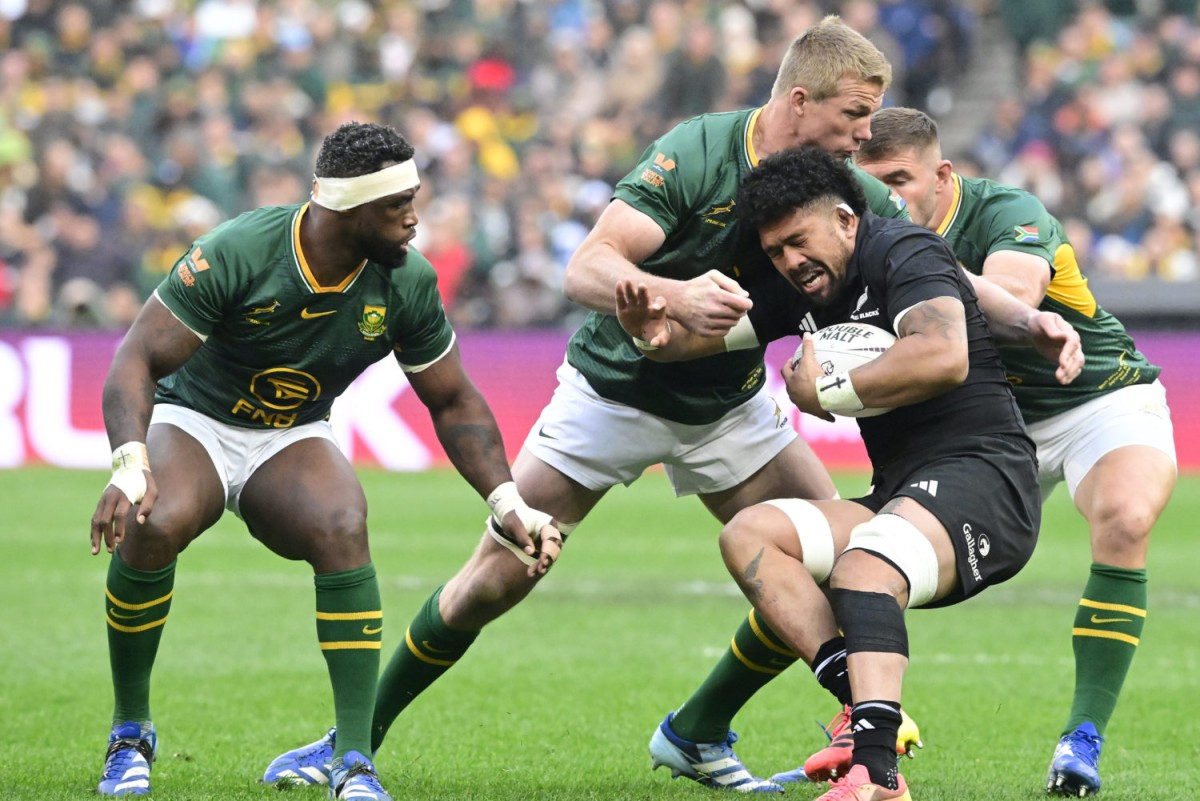 Sacha Feinberg-Mngomezulu, cool as a Cape winter, added the conversion and a long-range penalty, while the Boks' substitutes—the much-maligned Bomb Squad—finally delivered the decisive final-quarter impact that had been missing in the opening two Tests.
Ethan Hooker: The New Prince of the Wing
Amidst the forward carnage, a new star was born. Twenty-one-year-old left wing Ethan Hooker was named official Player of the Match after a display that was irresistible on attack and defence. Hooker, who has been touted as the future of South African rugby, played with the composure of a veteran and the explosiveness of a young bull. He ran hard, tackled harder, and his positioning in the swirling wind was immaculate. In a team of giants, this young man stood tallest. His emergence is a powerful narrative for South African rugby—a reminder that the pipeline of talent, nurtured through the junior ranks and the domestic competitions, is flowing strongly.
The victory was built on the foundations of a dominant scrum and a lineout that functioned with military precision. Referee Nika Amashukeli of Georgia allowed the game to flow, and Mallett was quick to praise his performance: "It was a very even game... I thought the ref was really good—and not just for us... Good officiating made for a great competition between two outstanding teams." It was a sentiment echoed by many neutrals, a welcome change in a rivalry that has often been defined by contentious officiating.
Kolisi's Record and a Human Moment
History was also made in the captain's armband. Siya Kolisi, the pride of Zwide, led the Springboks to their 55th win under his captaincy—a new record for the nation. His leadership, often understated but always profound, was evident in the calmness his side showed when trailing. But it was a moment after the final whistle that truly captured the man. When a Bok fan ran onto the field, security moved in to intercept. Kolisi intervened, ensuring the supporter was not manhandled, and instead posed for a selfie with the overjoyed fan. In that single gesture, Kolisi encapsulated everything that makes this Springbok team special: they are warriors on the field, but they remain men of the people off it.
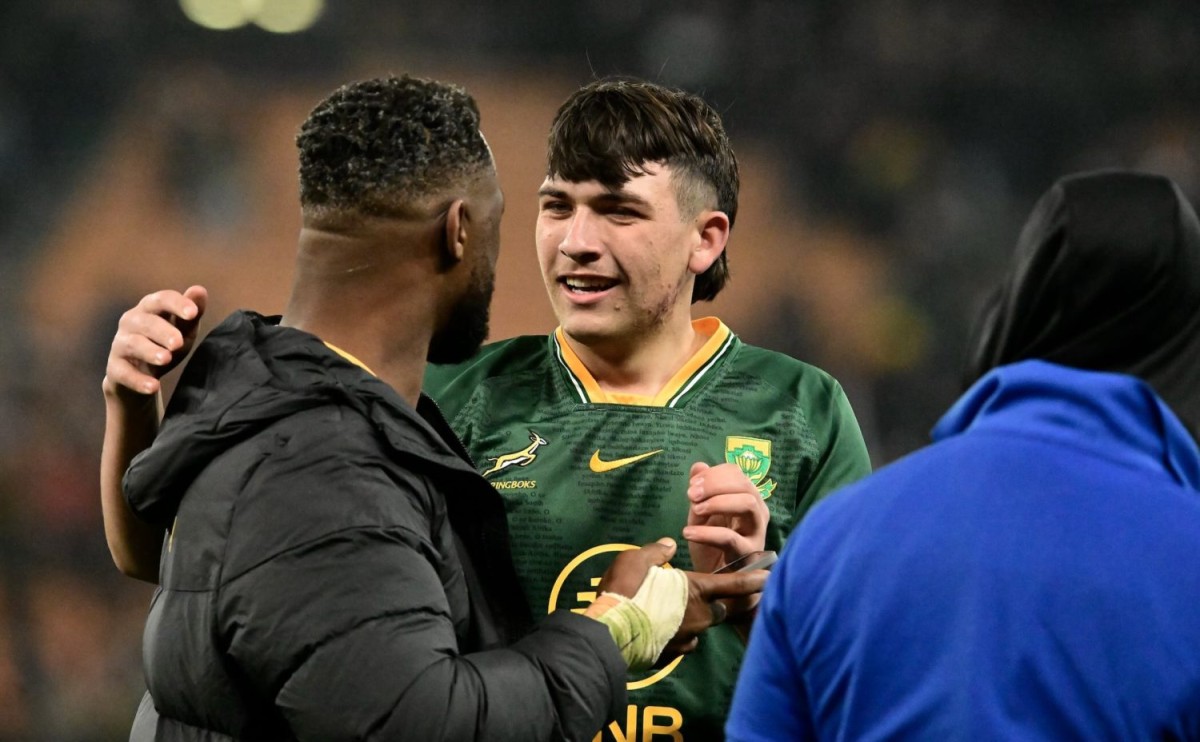
The win also extended South Africa's lead at the top of the World Rugby rankings to 2.43 points (94.33 to New Zealand's 91.90), solidifying their status as the world's number one side. But the joy was tempered by a significant loss. Cheslin Kolbe, the mercurial wizard who had switched to fullback after a hamstring injury ruled out Damian Willemse, broke his jaw during the match. He will not travel to the United States for the fourth and final Test.
The Cost of Victory: Kolbe's Sacrifice and Savea's Exit
"It was intense. It was a seriously good Test match in everything that it means because we were tested to our limits," Erasmus confirmed after the match. "Both teams lost vital players. We lost Cheslin and I'm sorry to tell you that he has broken his jaw, so obviously he won't travel to the USA. They lost their captain, Savea." The All Blacks' inspirational leader, Ardie Savea, who had been a one-man wrecking crew in the first half, saw his tour end in the 32nd minute through injury. His exit coincided with a palpable momentum shift, a testament to his influence on the game.
Kolbe's wife, Layla, took to Instagram to address the concern from fans: "We cannot reply to everyone and answer calls right now. We appreciate your concern and prayers. Giving it all to God. God is in control." It was a poignant reminder that behind the gladiatorial spectacle, these are human beings making immense sacrifices for the jersey. Erasmus also took a moment to praise the All Blacks' style of play, a classy touch from a fierce rival: "They are brilliant in how they handle the ball. None of us can say they don't keep the ball alive; they play to their strengths."
Road to Baltimore: A Neutral Finale
The series may be decided, but the rivalry is not. The fourth and final Test will be played next Saturday at a neutral venue in Baltimore, USA, with a kickoff scheduled for 23:00 SA time. It is a historic occasion, the first time these two giants will meet on American soil. Erasmus, ever the pragmatist, is already looking ahead. "We understand that we have to replicate this in Baltimore," he said, revealing that both teams are on the same flight to the USA—a unique logistical quirk that adds another layer to this storied rivalry.
Sean Fitzpatrick's 1996 All Blacks remain the only New Zealand side to win a series in South Africa, a piece of history that will be preserved for at least another generation. The Boks have won the home series, but the hunger for a 3-1 scoreline will be immense. For the All Blacks, Baltimore is a chance to salvage pride and build momentum towards the next World Cup cycle. For the Springboks, it is an opportunity to prove that this dominance is not just a home-ground phenomenon. The flight to Baltimore will be long, but for South African rugby fans, the journey has never felt sweeter. The bulldozer has been re-oiled, the engine is purring, and the road ahead looks promising.
By Dante Williams, Staff Writer
This article was produced with AI-assisted research and editorial support. Sources: The South African, TimesLIVE, SARugbyMag, SA Rugby.
What's Your Reaction?
 Like
0
Like
0
 Dislike
0
Dislike
0
 Love
0
Love
0
 Funny
0
Funny
0
 Wow
0
Wow
0
 Sad
0
Sad
0
 Angry
0
Angry
0

Breaking News and Investigations Correspondent at Global1.News. Based in London, covering global breaking news, security, and investigative stories. Known for digging deeper and connecting the dots across continents.














Comments (0)