
B.C. Wildfire Risk 'Very Real' as Summerland Returns Home
B.C. Emergency Management Minister Kelly Greene warns wildfire season isn't over, with 126 active fires burning. Summerland's evacuation order has lifted for most residents, but the 214-square-kilometre Bald Range fire remains out of control and about 150 structures were damaged or destroyed.
In a recent CBC News report, B.C. Emergency Management and Climate Readiness Minister Kelly Greene delivered a sobering message to residents hoping the worst of the 2026 wildfire season has passed: it hasn't. With 126 active wildfires currently burning across the province and dry conditions persisting, Greene warned that the risk of new fires igniting remains "very real," even as summer begins to wind down.
The warning comes as the community of Summerland, B.C., begins a painstaking recovery after more than a week of mass evacuation. While the majority of the town's 12,000-plus residents have been cleared to return home, hundreds of properties remain under evacuation order, and the 214-square-kilometre Bald Range wildfire continues to burn out of control.
B.C. Wildfire Risk 'Very Real' as Summerland Residents Return Home
Vancouver, British Columbia – August 18, 2026 — The juxtaposition of relief and ongoing danger defines the current moment in British Columbia's Okanagan Valley, where families are unpacking their belongings while firefighters battle a blaze that has already claimed one life and destroyed or damaged roughly 150 structures.
Minister's Warning Amid 126 Active Fires
Kelly Greene, the NDP MLA for Richmond-Steveston who has served as the public face of the province's wildfire response throughout August, told reporters that provincial officials are preparing for a longer and more intense fire season than historical norms suggest. The minister's comments came as the B.C. Wildfire Service dashboard tracked 126 active blazes, a figure that remains elevated for mid-August.
The minister told CBC News the province cannot afford to let its guard down, pointing to dry conditions across the province that have kept the risk of new ignitions elevated. The minister noted that summers in British Columbia are growing hotter and drier, a trend that has fundamentally altered the province's emergency management calculus. The provincial state of emergency declared by Premier David Eby on Aug. 8 remains in effect, giving the government extraordinary powers to co-ordinate evacuations, deploy resources, and manage public safety.
Greene's warning is not abstract. Environment Canada has re-issued air quality advisories across large swaths of the province, and the B.C. Wildfire Service recently classified about 38 per cent of active fires as out of control. The minister's message to residents in affected regions is unambiguous: remain vigilant, prepare evacuation plans, and heed local authorities.
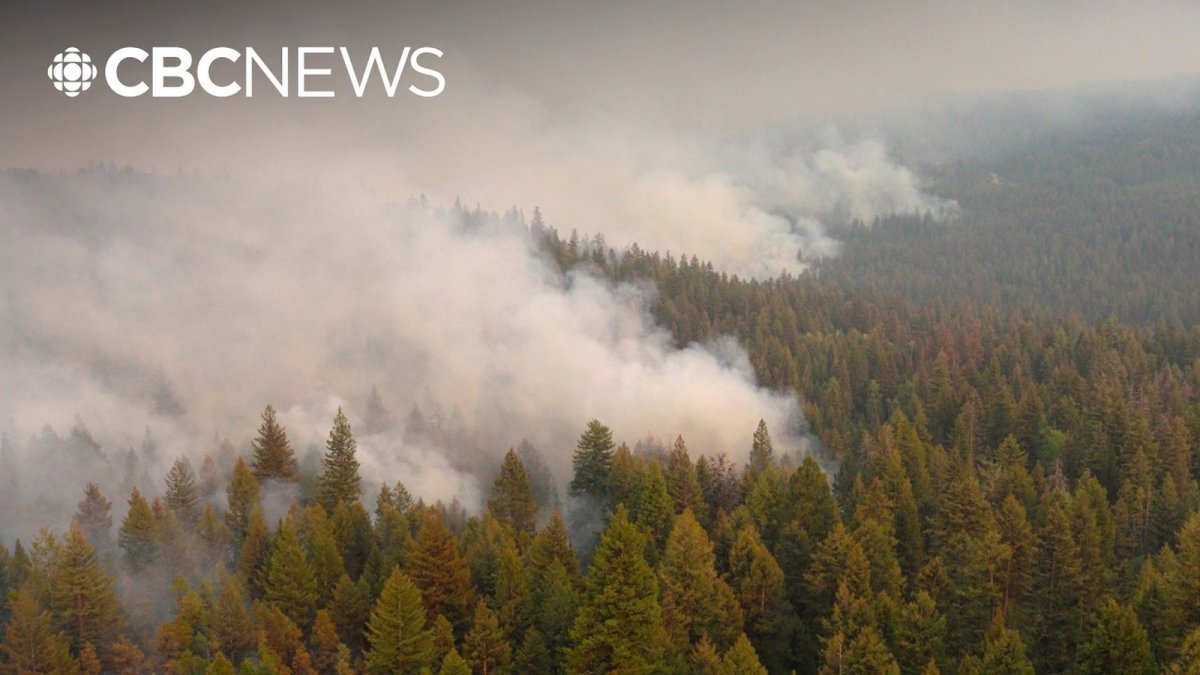
Bald Range Fire and Summerland's Long Road Back
The Bald Range wildfire, which broke out on Aug. 7 near Summerland and grew explosively within days, has become the defining disaster of this year's season. The fire claimed the life of an 80-year-old woman, a tragedy that has weighed heavily on the community as it begins the process of returning home.
On Tuesday at 7 a.m. PT, the Regional District of Okanagan-Similkameen lifted evacuation orders for 3,380 properties — described by officials as "the majority of Summerland." Mayor Doug Holmes called the news "what we've all been waiting for for the last week" in an interview with CBC's Daybreak South. A smaller number of properties had their orders lifted over the weekend, allowing some residents to return earlier.
However, 530 properties remain under evacuation order in the Garnet Valley, Prairie Valley, and Meadow Valley areas. Holmes explained that these zones are not yet safe for habitation, as geotechnical experts must first test slope stability above the communities. Garnet Valley remains without power, and the entire community is under a boil water advisory because the water treatment plant went offline during the evacuation.
The scale of the destruction became clearer on Monday when an initial assessment by the Regional District of Okanagan-Similkameen found that the fire had damaged or destroyed approximately 150 structures, with about 40 of those within Summerland's municipal boundaries. Holmes said that residents who lost property were contacted by social workers and counsellors and given the opportunity to view their homes before the general evacuation order was lifted.
"We just thought it was really important that people were able to go and see their properties, that had lost their homes, before we opened it up to all of their neighbours," Holmes said. The community's landfill is still burning, meaning trash will need to be trucked to a regional district facility until the fire there is extinguished.
Air Quality Warnings and Public Health Guidance
As Summerland residents return to assess the damage, air quality remains a pressing concern across the province. B.C. Provincial Health Officer Dr. Bonnie Henry shared the latest information on wildfire and smoke conditions this week, as Environment Canada re-issued orange-coded air quality warnings on Aug. 17 for areas where wildfire is most prevalent.
The orange warnings cover the South Okanagan from Summerland down to Osoyoos, where the Bald Range fire continues to burn, as well as Highway 1 from Dogwood Valley to Lytton, where the Ainslie Creek and Brunswick Creek wildfires are active. Yellow-coded warnings, indicating moderate risk, have been issued for the rest of the Okanagan region, the Shuswap, the West Kootenays, and the majority of the Cariboo region.
Dr. Henry's guidance for residents under orange warnings is specific: avoid strenuous outdoor activity, stay indoors with cleaner air, and keep windows closed. Vulnerable groups — including people with lung or heart conditions, pregnant individuals, infants and young children, people aged 65 and older, and those with chronic conditions — should take extra precautions. Health officials recommend N95 respirators to reduce exposure, the use of air filters in homes, and checking on neighbours who may be isolated.
HealthLink BC's 8-1-1 phone line remains available for residents seeking advice on smoke-related health concerns. The provincial health officer's update underscores that the public health impacts of this wildfire season extend far beyond the immediate evacuation zones.
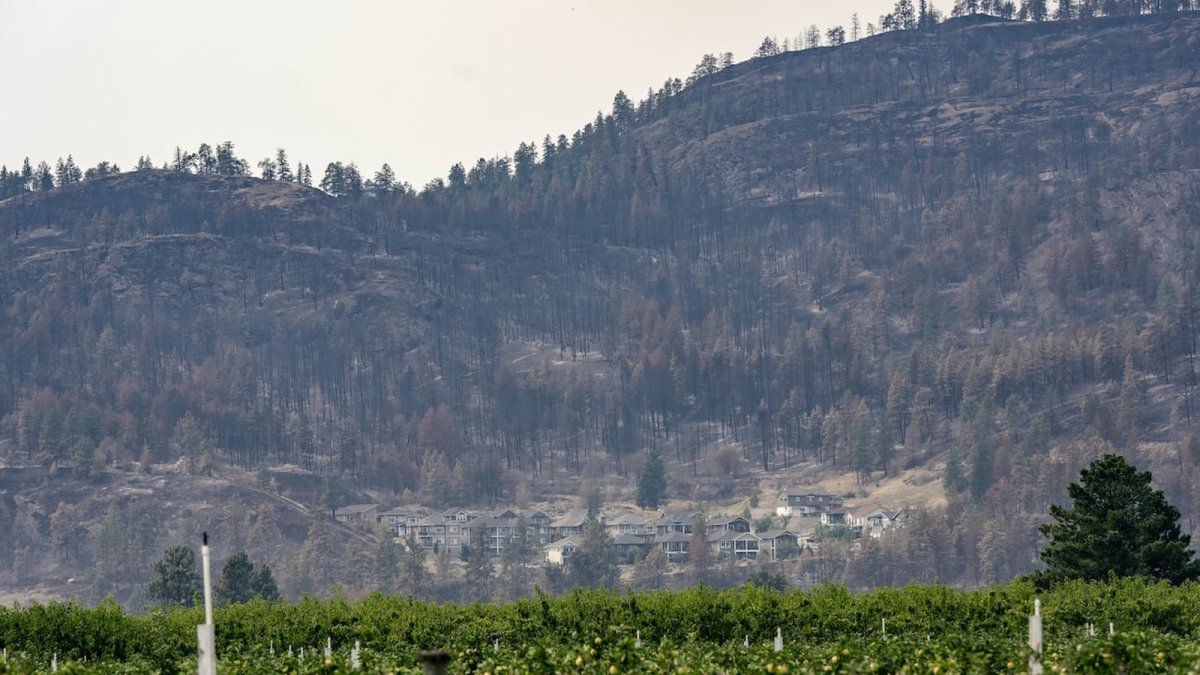
A Season of Extremes: Context and Comparisons
The 2026 wildfire season in British Columbia is unfolding against a backdrop of increasingly destructive recent years. As of Aug. 10, the B.C. Wildfire Service dashboard recorded 901 wildfires started this season, with 388,962 hectares burned. Of those fires, 799 had been extinguished, leaving just over 100 active at that point — a number that has since grown to 126.
The causes of this season's fires break down as follows: lightning ignited 456 fires (51 per cent), human activity caused 416 (46 per cent), and 29 remain undetermined (3 per cent). The province has deployed 1,724 firefighting personnel to combat the blazes.
These numbers, while significant, are actually below British Columbia's 10-year average of about 1,527 wildfires per season. However, the province's recent history demonstrates that fire seasons are becoming more intense. The 2025 season saw more than 1,350 wildfires burn approximately 886,360 hectares. In 2024, 1,697 wildfires consumed about 1.08 million hectares. The 2023 season remains the most destructive on record, with 2,293 wildfires burning roughly 2.84 million hectares — an area of about 29,000 square kilometres.
This year's season has already triggered a provincewide state of emergency, the first since 2023. Premier David Eby made the declaration on Aug. 8 after the Bald Range fire expanded rapidly, forcing more than 20,000 people to evacuate. The fire grew from 20,000 hectares on Aug. 15 to 214 square kilometres (21,400 hectares) by Aug. 18, demonstrating the explosive potential of these fires under current conditions.
Impact on British Columbians: Displacement, Infrastructure, and Recovery
The human cost of this wildfire season extends well beyond the destruction of property. The more than 20,000 people forced to evacuate from Summerland and surrounding areas make this one of the largest evacuation efforts of the 2026 season so far. For those returning this week, the challenges are just beginning.
The boil water advisory affecting all Summerland residents is a stark reminder that returning home does not mean returning to normal. The community's water treatment plant went offline during the evacuation, and officials have not provided a timeline for its restoration. Residents are advised to boil all water for drinking, cooking, and brushing teeth until further notice.
The loss of the community landfill adds another layer of complexity to the recovery effort. With trash now being trucked to a regional district facility, residents face logistical challenges in disposing of spoiled food and debris from damaged properties. The geotechnical testing required before the remaining 530 properties can be reoccupied means that some families will remain displaced for an extended period.
For those who lost homes, the emotional toll is compounded by practical concerns. Holmes noted that social workers and counsellors have been deployed to support affected residents, and the decision to allow property owners to view their homes before the general re-entry was a deliberate effort to provide closure. The economic impact on the community — from lost tourism revenue to property damage — will be felt for years.
What Happens Next: West Flank, Geotechnical Testing, and September Outlook
Firefighters have made significant progress in containing the Bald Range fire, holding it behind control lines on its southern and eastern flanks. However, attention has now turned to the west side of the fire, where it continues to show aggressive behaviour. As of Tuesday, the fire remained classified as out of control, and officials have not provided a timeline for full containment.
The immediate priority for the remaining evacuated areas is geotechnical testing. Slope stability above Garnet Valley, Prairie Valley, and Meadow Valley must be assessed before residents can return, a process that could take days or weeks depending on conditions. The lack of power in Garnet Valley further complicates the situation.
Looking ahead, federal ministers updated stakeholders on the 2026 wildfire season on Aug. 18, reporting 582 active fires and 4.1 million hectares burned across Canada. While fire counts are lower than last year, the hectares burned remain significant, and federal assistance continues for evacuations in both British Columbia and Ontario. Forecasts predict elevated fire danger through September, despite the potential for precipitation relief in some regions.
Minister Greene's warning that the risk of new fires remains "very real" is a reminder that British Columbia's wildfire season typically runs from May through October, with July and August as peak months. The province has learned through devastating experience — from the 2003 season, through the 2017 emergency that was the province's first in 14 years, to the destruction of Lytton in 2021 — that complacency is not an option.
For Summerland, the immediate future involves rebuilding trust in the safety of the land itself. For the rest of British Columbia, the season is far from over. As residents across the province monitor air quality warnings and prepare for the possibility of new evacuations, the message from provincial officials is consistent: the changing climate has made wildfire a year-round consideration, and communities must remain prepared for the worst even as they hope for the best.
This article was produced with AI-assisted research and editorial support. Sources: CBC News, The Canadian Press, Vancouver Sun, 604 Now, Nelson Star.
By Alex Thompson, Staff Writer
What's Your Reaction?
 Like
0
Like
0
 Dislike
0
Dislike
0
 Love
0
Love
0
 Funny
0
Funny
0
 Wow
0
Wow
0
 Sad
0
Sad
0
 Angry
0
Angry
0
Canada Correspondent at Global1.News. Based in Toronto, covering Canadian politics, energy, trade, and US-Canada relations. Provides the Canadian perspective on North American and global affairs.









Comments (0)