
Battle in the Black Sea: Russia's Strikes Strangle Ukraine's Ports
In a recent BBC News report from Odesa, the scale of Russia's campaign to choke Ukraine's maritime trade was laid bare — empty docks, damaged ships, and port workers grieving colleagues killed by missile strikes.
In a recent BBC News report from Odesa, the scale of Russia's campaign to choke Ukraine's maritime trade was laid bare — empty docks, damaged ships, and port workers grieving colleagues killed by missile strikes.
Battle in the Black Sea: Russia's Strikes Strangle Ukraine's Maritime Lifeline
Odesa, Ukraine – 7 August 2026 — Russian missiles and drones are hammering Ukraine's Black Sea ports with an intensity unseen since the full-scale invasion, driving commercial shipping away and threatening the country's grain exports at the height of the summer harvest. From the approaches to Odesa, Chornomorsk and Pivdennyi, the horizon is almost devoid of ships.
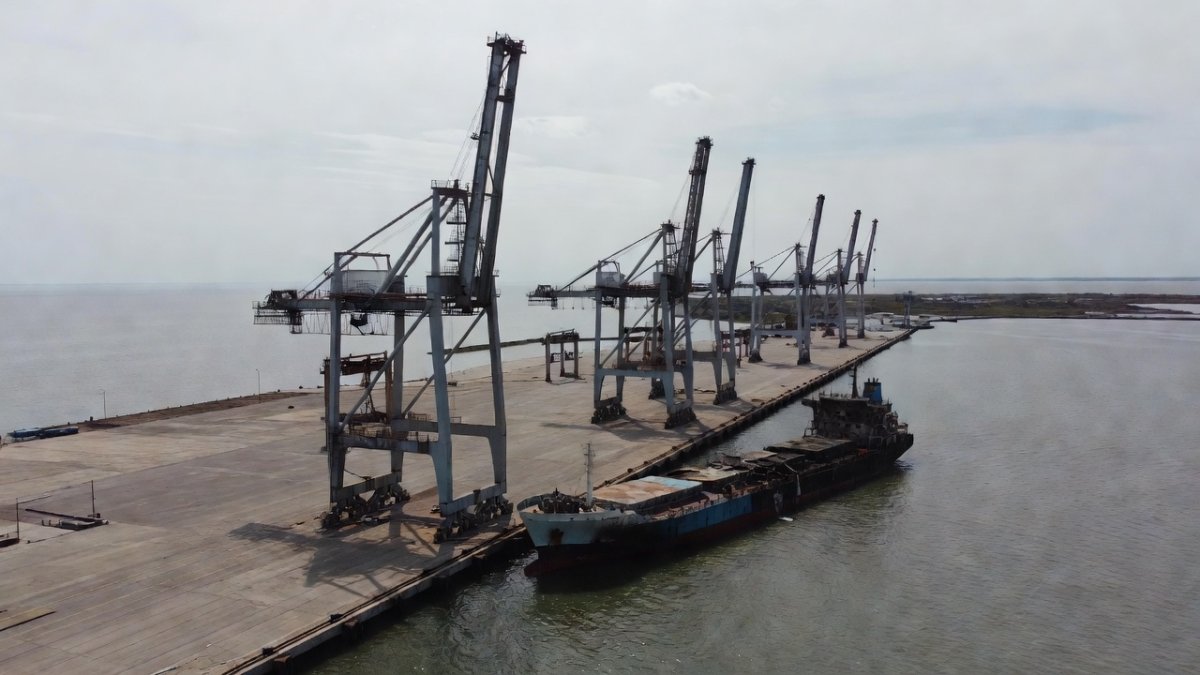
Russia's Renewed Assault on Ukraine's Maritime Lifeline
The campaign is not a return to the naval blockade of 2022, but something more systematic and more deadly. According to Ukraine's port administration, July alone saw 57 Russian attacks on civilian vessels — 22 of them at sea — and a further 67 strikes on port infrastructure. The global shipping journal Lloyd's List now describes the Black Sea as possibly the most dangerous place for shipping in the world, with July the deadliest month for merchant seamen since the invasion began. The UN-brokered Black Sea Grain Initiative of 2022, which established safe maritime corridors, was abandoned by Moscow in mid-2023; a senior port manager told the BBC that Russia "didn't start attacking it until recently. Today they do it systematically." For Ukraine, the corridor is an economic lifeline: last year the Greater Odesa ports handled more than 73 million tonnes of maritime exports, including 38 million tonnes of grain. With the summer harvest now under way, the timing could hardly be worse for the country's farmers and for global food markets that depend on Ukrainian wheat and corn.
The human cost has mounted rapidly. On July 19 the Turkish-owned cargo vessel Golden Leo was struck by three Russian missiles while carrying Ukrainian corn. Nine Indian and Syrian crew members died along with a Ukrainian pilot; the ship sank off Odesa a week later. Oleg Grygoriuk, Chairman of the Marine Transport Workers Union of Ukraine, described the atmosphere in the ports: "A lot of veterans who already served their country literally say that being in the port is more scary than being on the front line." Warning times offer little protection. "A missile flies from Crimea within a minute," Grygoriuk said. "If you are sitting in a crane, you need three and a half minutes to get down and go to the shelter." Port worker Svitlana Halchenko, a warehouse shift manager at Odesa's main port, survived a ballistic missile strike that killed her crane operator and a truck driver five metres from her. She still carries shrapnel in her leg and back.
A City on Edge: Odesa Under the Drone Threat
Odesa lives under constant pressure from the strikes. Port alerts have forced one major facility to shut down for 15 out of 24 hours, according to a senior manager. Andrey Stavnitser, co-owner and CEO of one of the largest ports in the area, said the effect is immediate: "There is barely anybody who wants to call because there is a huge problem with people getting killed. We can see that the whole supply chain is on hold." Yet summer visitors still crowd the beaches and buskers perform on the Potemkin Stairs, a fragile normalcy that masks the underlying strain on daily life and commerce.
Civilian casualties extend beyond the docks. In late June, 26-year-old Daria Kravchenko was killed when shrapnel from an intercepted Russian drone landed on a beach in Odesa. This week an intercepted Ukrainian drone crashed onto a busy beach on Russia's Black Sea coast, where local authorities reported seven people killed, including three children. The incidents illustrate how the war at sea produces accidental victims on both sides. Eighty-three-year-old Andrii Dudik's house near Odesa was wrecked by a drone explosion. He described himself as an accidental victim of Russia's attacks on nearby ports: "Absolutely. And I won't forget it."
Odesa's residents navigate a layered existence where the rhythms of summer persist alongside the interruptions of air-raid sirens and sudden port closures. Families continue to gather along the waterfront even as alerts punctuate the day, a form of adaptation that reflects both resilience and the limits of normalcy under sustained threat. Port workers speak of the cumulative psychological weight, noting that the proximity of strikes to civilian areas leaves little margin for reaction and heightens the sense that everyday routines carry inherent risk. This duality underscores how the conflict at sea reverberates through the city's social fabric without fully halting its seasonal life.
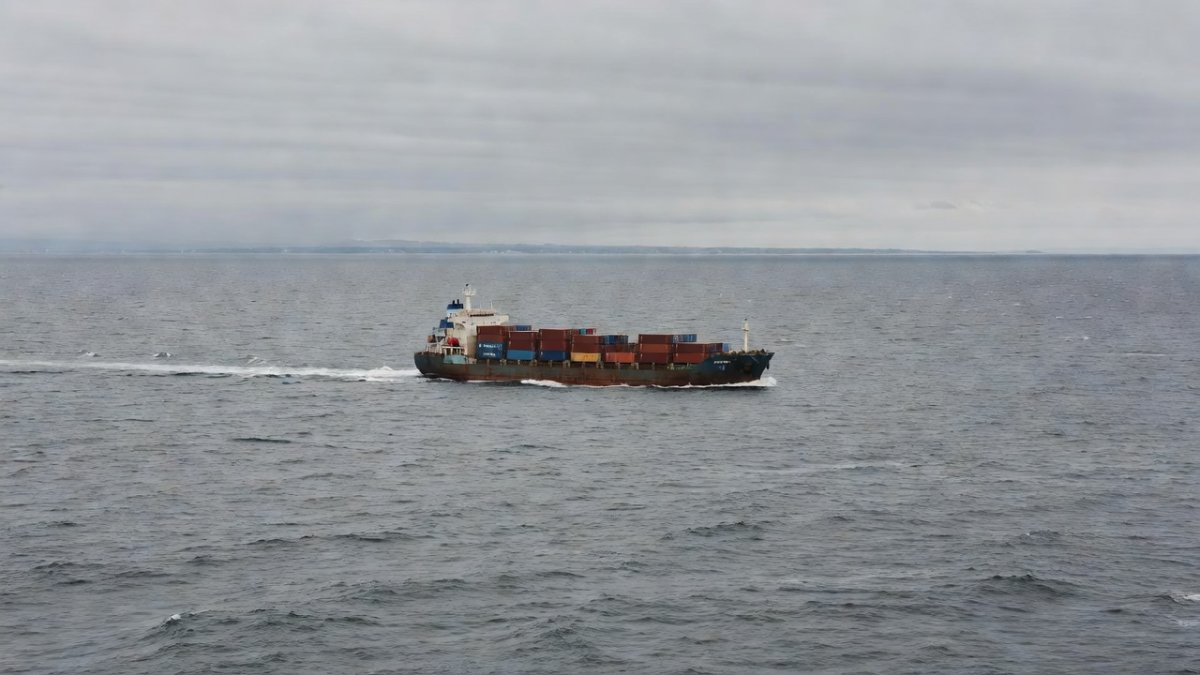
Kyiv's Answer: Operation MoLoChKa and the War on Russian Shipping
Ukraine has responded with its own campaign at sea. Operation MoLoChKa, roughly translated as "Moscow will fall through Crimea," has struck around 200 Russian vessels with drones and brought traffic in the Sea of Azov to a virtual standstill. Port executives and officials believe Russia is retaliating for Ukraine's attacks on sanctioned oil carriers and ships ferrying supplies to occupied Crimea. Ukrainians reject any moral equivalence: Kyiv is attempting to loosen Moscow's grip on occupied territory, while Russia is preventing Ukraine from exporting badly needed grain to the international market.
Acting Foreign Minister Andrii Sybiha has warned that Russia is trying to turn the Black Sea into a "second Strait of Hormuz" and has called for an emergency UN Security Council meeting over the attacks on civilian vessels. He recalled that Russia's 2022 blockade of Black Sea shipping caused the global food price index to surge by 25 percent. The asymmetry in objectives remains central to Ukrainian arguments: one side targets military supply lines to occupied land, the other targets commercial grain exports that feed populations far beyond Ukraine's borders.
Operation MoLoChKa's focus on Russian shipping in the Sea of Azov creates a strategic bottleneck that disrupts the movement of sanctioned oil products and military logistics supporting Crimea. By targeting vessels that sustain occupation infrastructure, Ukraine aims to raise the operational costs for Moscow without direct confrontation on land. Moscow, in turn, frames its strikes on Ukrainian grain routes as defensive retaliation, treating commercial exports as instruments of economic pressure that indirectly bolster Kyiv's war effort. This interpretation allows Russia to justify attacks on civilian maritime traffic as proportionate responses, even as the resulting damage extends to global supply chains. The dynamic reveals how both sides leverage maritime domains to impose asymmetric costs, with Moscow viewing Ukraine's export capacity as a vulnerability worth exploiting to offset losses elsewhere.
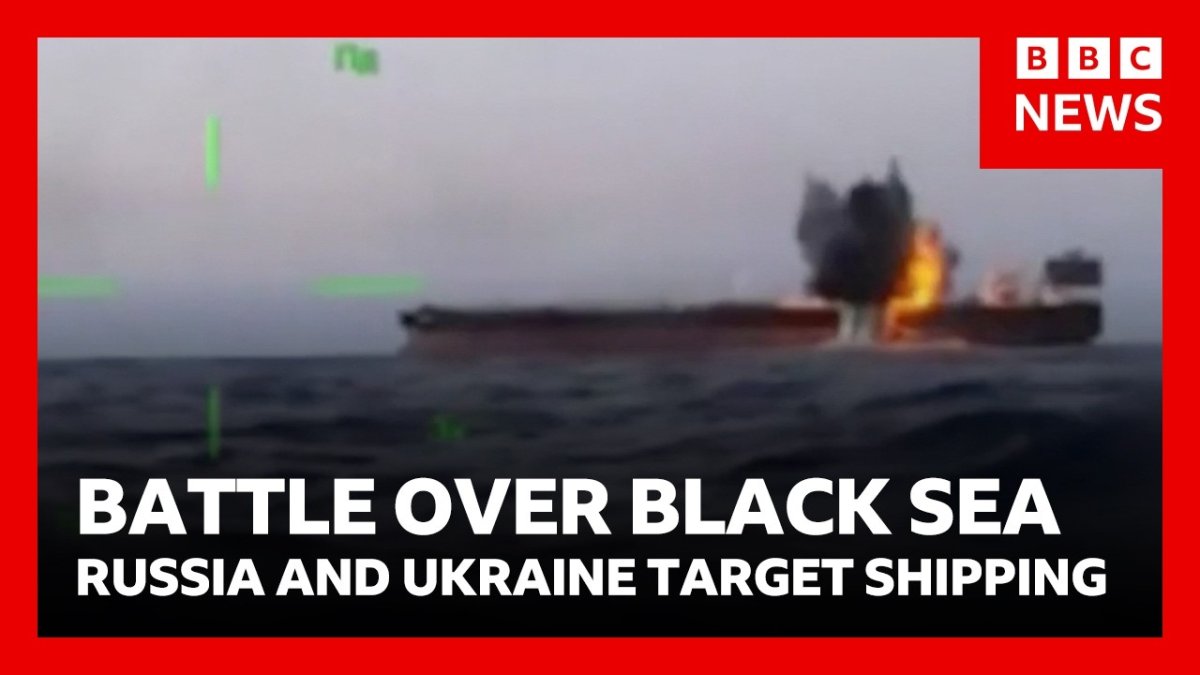
The Grain Harvest at Risk: Global Consequences
The economic stakes are substantial. Ukraine supplied around 6 percent of global wheat exports before the invasion and 10 percent of corn exports. Its export capacity has dropped by at least a third. Volodymyr Slavinskyi, trading director for Nibulon, one of Ukraine's leading grain exporters, said: "I would say we've already lost the ability to deliver to global customers around half a million or 700,000 metric tons of Ukrainian grains and oilseeds." He called the summer harvest "the most sensitive period" because farmers need to harvest, sell, and reinvest in the next production cycle.
Sybiha has reminded international audiences that Russia's earlier blockade pushed the global food price index up 25 percent. A prolonged shutdown of the maritime corridor risks repeating that pressure on food importers in Africa and the Middle East, where Ukrainian grain remains a staple. The loss of reliable export routes directly affects Ukrainian farmers who depend on timely sales to sustain operations through the coming season.
Countries across Africa and the Middle East rely on Ukrainian wheat and corn as affordable staples that stabilize local food supplies and mitigate hunger risks in import-dependent economies. When maritime routes are disrupted, freight and insurance premiums climb sharply for remaining cargoes, raising the landed cost of grain and squeezing budgets in regions already facing currency pressures. A sustained closure of the corridor would likely echo the 2022 surge, when the global food price index rose 25 percent amid the initial blockade, amplifying volatility for buyers who lack alternative suppliers at comparable scale. Over time, such constraints could force importers to seek costlier substitutes or reduce volumes, transmitting instability from the Black Sea to distant markets and underscoring the interconnected nature of wartime disruptions to commercial shipping.
Analysis — A Dangerous New Phase in the War at Sea
The Black Sea has become a mutual attrition zone in which both sides target the other's shipping, yet the objectives differ sharply. Moscow seeks to sever Ukraine's commercial links to the world and weaken its economy through sustained pressure on ports and vessels. Kyiv seeks to loosen Russia's grip on occupied territory and disrupt supply lines to Crimea. Analysts suggest the escalation reflects a broader stalemate on land, pushing both militaries toward economic warfare at sea where each can impose costs without large-scale ground advances.
The implications reach beyond the immediate conflict. Global shipping insurance rates have risen, freight costs for remaining cargoes have increased, and food security concerns have resurfaced for import-dependent regions. The corridor's continued closure deep into the harvest season would compound losses already measured in hundreds of thousands of tonnes. Restoring safe passage would require renewed international guarantees or effective protection measures that both sides accept. The return of the grain-corridor crisis tests whether the international community can again broker arrangements that protect civilian trade while the wider war continues.
By Irina Volkov, Staff Writer
This article was produced with AI-assisted research and editorial support. Reporting is based on sources cited in the article.
What's Your Reaction?
 Like
0
Like
0
 Dislike
0
Dislike
0
 Love
0
Love
0
 Funny
0
Funny
0
 Wow
0
Wow
0
 Sad
0
Sad
0
 Angry
0
Angry
0
Russia/Eastern Europe Correspondent at Global1.News. Covering Russian politics, energy, security, and the shifting dynamics of the post-Soviet space. Provides clear-eyed analysis on one of the world's most opaque regions.









Comments (0)