
UK Expands Sanctions on Russian Financial and Maritime Networks
Britain sanctioned six Russian banks, six shadow-fleet vessels and four rare-metal importers in a 19-target package announced Thursday, stepping up pressure on Moscow's war economy. Ozon Bank, Russia's 18th-largest lender, dismissed the impact, saying it operates only domestically.
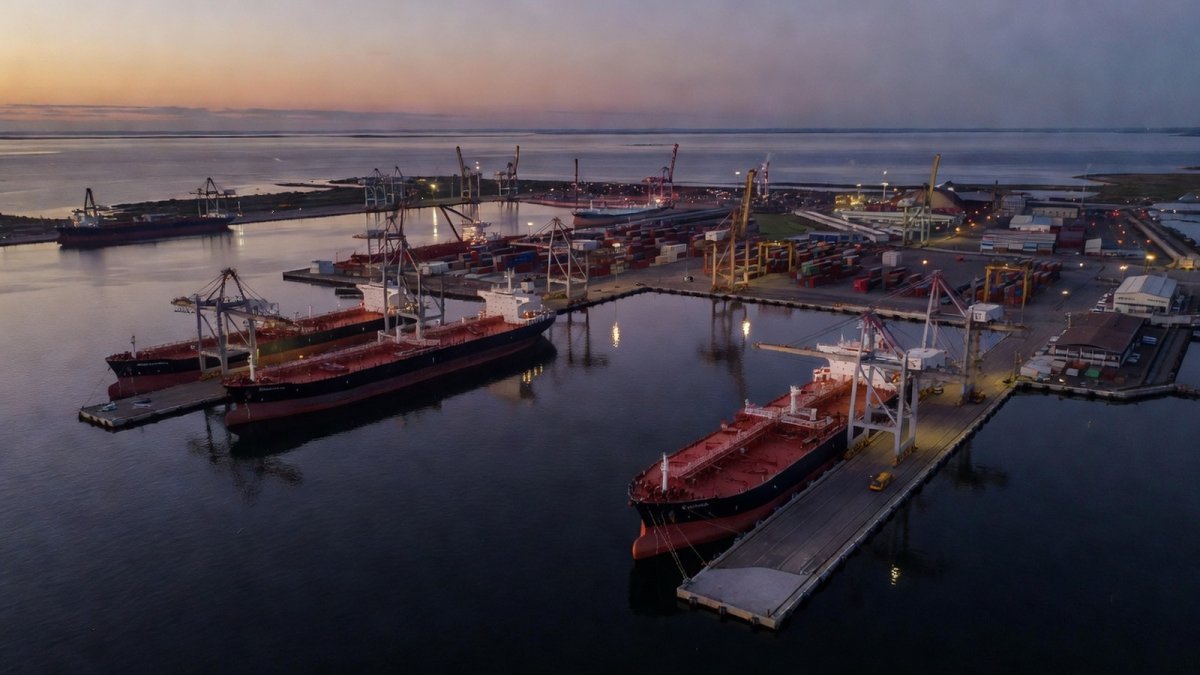
Britain on Thursday unveiled a fresh round of sanctions aimed at Russian financial institutions, vessels in the shadow fleet, and importers of critical metals. The measures target 19 entities and individuals in total as part of efforts to constrain Moscow's ability to fund its military operations. Officials in London described the package as a direct response to Russia's ongoing campaign in Ukraine.
UK Expands Sanctions on Russian Financial and Maritime Networks
Moscow — Britain announced new sanctions on Thursday targeting Russian banks, shadow fleet vessels, and importers of rare metals. The package hits 19 specific targets and forms part of continued Western pressure on Moscow's war economy. Russian institutions and companies now face asset freezes and operational restrictions in the UK.
UK Targets Six Russian Banks
Britain sanctioned six Russian lenders as part of the new measures. The banks include Ozon Bank, the State Specialized Russian Export-Import Bank, PJSC Commercial Bank Center-Invest, JSC Realist Bank, PJSC Bank Stavr, and JSC Teleport Bank. These institutions operate within Russia's strategic financial services sector, according to the UK Foreign Office.
The sanctions impose asset freezes, restrictions on trust services, and director disqualification measures. UK financial institutions are now prohibited from maintaining correspondent banking relationships with the sanctioned banks or processing payments through their accounts. More than 3,400 individuals, entities, and vessels have been sanctioned by Britain since the full-scale invasion began in 2022.
Ozon Bank Responds to Designation
Ozon Bank, the financial arm of the Russian e-commerce giant Ozon and the country's 18th largest bank with 900 billion rubles in assets, was among those designated. The bank stated that the sanctions would not affect its operations because it holds no foreign assets and does not use the SWIFT messaging network.
Ozon Bank conducts business exclusively within Russia, the statement added. The European Union separately sanctioned the same institution, though those measures prohibit EU persons from engaging in transactions rather than imposing full asset freezes.
Ozon operates as Russia's dominant e-commerce platform, connecting several million third-party sellers to consumers across vast regions through an integrated logistics network of fulfillment centers and last-mile delivery hubs. This infrastructure has secured the company a leading share of the domestic online retail market, where digital payments now account for the majority of transactions. Ozon Bank functions as the embedded financial layer, processing seller settlements, consumer financing, and marketplace fees at scale.
The European Union's parallel measures impose transaction monitoring requirements without freezing assets, which has prompted some international payment processors to review their exposure to Ozon-linked flows. Russian consumers and small businesses relying on the platform for cross-border purchases may face added verification steps, though domestic operations remain unaffected.
Designating a purely internal bank nevertheless signals an intent to constrain Russia's retail payment rails even where external connectivity is absent, potentially complicating Ozon's plans to expand its financial services ecosystem further within the country.
Six Vessels Added to Shadow Fleet List
Britain also sanctioned six vessels suspected of belonging to Russia's shadow fleet. The ships face bans on entering UK ports and are subject to detention or redirection. They are barred from receiving technical, crewing, operational, chartering, brokering, or financial services.
One vessel, the Russian-flagged LNG tanker Arctic Express with IMO number 9333591, transported natural gas from Russia to third countries. The remaining five vessels were accused of transporting Russian-origin crude oil or petroleum products to third countries. An India-based firm, Frion Ship Management LLP, was sanctioned for facilitating the sale of the Arctic Express into Russian ownership.
Four Companies Sanctioned Over Rare Metals
Four Russian companies were designated for importing tantalum and niobium, metals critical to manufacturing military equipment used in Ukraine. The firms are Northern Engineering LLC, LLC Metallkomplekt, LLC Promsiz, and LLC TechnoLux.
Russian national Aleksander Aleksandrovich Zhdanov, owner of chemical company Siltron, received personal sanctions that include an asset freeze, travel ban, and director disqualification measures. These designations aim to disrupt supply chains supporting Russia's defense industry.
Tantalum serves as a critical component in high-performance capacitors and specialized aerospace alloys, while niobium strengthens steel used in armored vehicles, naval hulls, and large-diameter pipelines. Russia maintains significant mining output and downstream processing facilities capable of converting raw ores into refined metals and alloys suitable for defense applications. These capabilities reduce reliance on external suppliers for key inputs.
The four designated importers were identified for channeling materials that support Russian military production. By focusing sanctions on these trading entities rather than upstream mines, authorities aim to interrupt the flow of processed metals into defense manufacturing lines without directly targeting extraction sites.
Interpretations of the measure suggest this approach seeks to raise procurement costs and create bottlenecks inside Russia's defense-industrial base, where alternative sourcing routes remain limited and time-consuming to establish.
UK Officials Outline Strategic Goals
Foreign Secretary Ed Miliband said Ukraine's fight is Britain's fight and that sanctions would continue until a just and lasting peace is reached. He described the package as demonstrating the UK's unwavering commitment to supporting Ukraine and bearing down on those propping up the Kremlin's aggression.
Chancellor John Healey stated that Britain's commitment to stand with the Ukrainian people is absolute. The new sanctions target funds that fuel Putin's illegal war and focus on his shadow fleet. This marks Miliband's first major Russia sanctions package.
Recent Diplomacy Precedes Sanctions
The announcement follows a week of intensive diplomacy. Prime Minister Keir Starmer and Foreign Secretary Miliband hosted President Zelenskyy in Portsmouth. Miliband also met US Secretary of State Marco Rubio in Washington DC.
Britain has imposed sanctions on over 500 individuals, entities, and ships under its Russia sanctions regime this year alone. The measures build on existing restrictions applied since 2022.
Russian Banks Face Liquidity Pressures
Russian banks are struggling with a shortage of ruble liquidity needed to purchase federal government bonds. The Finance Ministry relies on these purchases to finance the Kremlin's widening budget deficit, which reached 5.7 trillion rubles in the first half of the year, largely due to defense spending.
Analysts suggest the sanctions could intensify existing strains on Russia's domestic financial system. The measures limit access to international banking channels while domestic funding needs remain high.
Russia's Finance Ministry has increasingly depended on domestic banks to absorb federal bond issuances as a primary means of covering expenditure shortfalls. When banks face ruble liquidity constraints, their capacity to purchase additional OFZ securities diminishes, narrowing the government's main domestic financing channel.
Continued designations of financial institutions add friction to interbank lending and reserve management, further limiting the pool of available capital for bond purchases. This dynamic compounds existing pressures on the banking sector's ability to intermediate between state borrowing needs and private-sector liquidity.
Analysts interpret the interplay of elevated military outlays and restricted external finance as likely to compel the Kremlin toward harder trade-offs between defense priorities and other budgetary commitments in the coming fiscal periods.
Shadow Fleet Role in Oil Trade
Western governments accuse the shadow fleet of circumventing oil price caps and trade restrictions. The sanctioned vessels have been used to transport Russian energy products to third countries despite existing limits.
By restricting services to these ships, Britain aims to raise the cost and risk of such operations. This approach targets a key mechanism Russia uses to sustain energy revenues amid broader sanctions.
The shadow fleet comprises older tankers frequently lacking Western insurance coverage and operating under shifting flags or opaque ownership structures to move Russian crude, refined products, and LNG beyond the reach of the G7 price cap. These vessels often conduct ship-to-ship transfers in international waters to obscure cargo origins before delivering to buyers in Asia and elsewhere.
UK port bans and prohibitions on technical assistance, crewing, and financial services have forced operators to seek alternative repair facilities and insurance arrangements in non-aligned jurisdictions. Recent actions against the Arctic Express LNG carrier and the India-based Frion Ship Management highlight efforts to disrupt specific facilitation networks supporting these voyages.
Observers note that tightening restrictions prompt rapid adaptation through new intermediary companies and flag changes, sustaining a cycle in which enforcement measures and evasion tactics evolve in tandem.
By Irina Volkov, Staff Writer
This article was produced with AI-assisted research and editorial support. Reporting is based on sources cited in the article.
What's Your Reaction?
 Like
0
Like
0
 Dislike
0
Dislike
0
 Love
0
Love
0
 Funny
0
Funny
0
 Wow
0
Wow
0
 Sad
0
Sad
0
 Angry
0
Angry
0
Russia/Eastern Europe Correspondent at Global1.News. Covering Russian politics, energy, security, and the shifting dynamics of the post-Soviet space. Provides clear-eyed analysis on one of the world's most opaque regions.













Comments (0)