
Bank of England holds interest rates at 3.75% in 6-3 vote
The Bank of England's decision to hold interest rates steady at 3.75 per cent on 30 July 2026 arrives at a critical juncture for UK households already navigating volatile energy costs and the early weeks of a new government. With the Monetary Policy Committee splitting 6-3 and three members voting for an immediate hike, the outcome signals deeper divisions over how long the Middle East conflict will keep inflation above target.
The Bank of England's decision to hold interest rates steady at 3.75 per cent on 30 July 2026 arrives at a critical juncture for UK households already navigating volatile energy costs and the early weeks of a new government. With the Monetary Policy Committee splitting 6-3 and three members voting for an immediate hike, the outcome signals deeper divisions over how long the Middle East conflict will keep inflation above target.
Bank of England MPC Splits 6-3 to Hold Rates at 3.75 Per Cent as Energy Volatility Persists
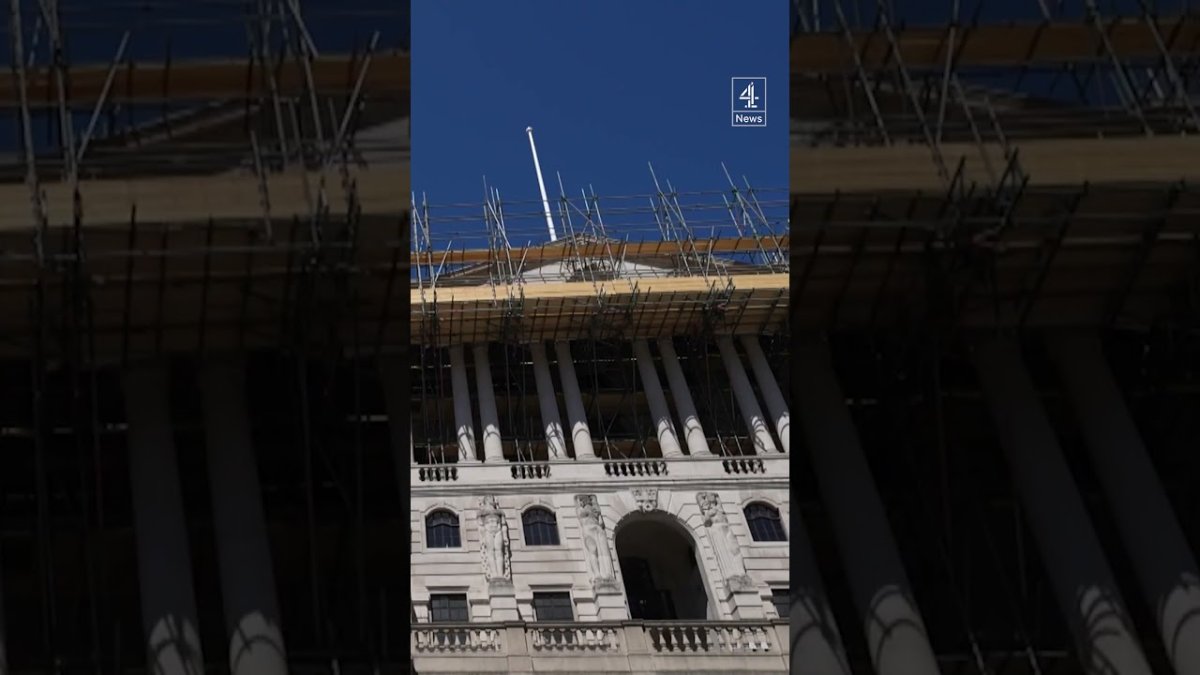
London, UK – 30 July 2026 — The Monetary Policy Committee voted 6-3 on Thursday to maintain Bank Rate at 3.75 per cent, marking the fifth consecutive hold since the pause began earlier this year.
The 6-3 Split and Surprise Hawkish Tilt
The three dissenters — Catherine Mann, Megan Greene and Huw Pill — each voted for an immediate 0.25 percentage point increase to 4 per cent. This marked the first occasion in the current cycle that three MPC members dissented in favour of a hike, and the split was wider than the City expected. Reuters polling had pointed to a 7-2 outcome, so the actual result proved more hawkish than markets anticipated.
The hold extends a pause that began in early 2026, when the outbreak of the Middle East conflict drove energy prices sharply higher and brought the Bank's easing cycle to an end. Rate-setters made clear they stood "ready to act as necessary" to prevent inflationary pressures from becoming entrenched, a warning aimed squarely at households and businesses hoping for relief later in the year.
Middle East Conflict and the Inflation Outlook
The Bank's Monetary Policy Report projects CPI inflation peaking at 3.2 per cent in the fourth quarter of 2026, a renewed rise that reflects the shock of war. In an adverse scenario where the Iran conflict drags on and oil remains above 100 dollars a barrel, inflation could reach 4.5 per cent by mid-2027 — a level that would re-open the cost-of-living wounds of recent years.
The conflict, which began in February 2026 and escalated with renewed American strikes in late July, has kept crude and refined energy prices higher and more volatile than before the war. The Bank noted that conditions before the conflict were more "benign" than those preceding previous global shocks, including the Covid pandemic and Russia's 2022 invasion of Ukraine. That comparison cuts both ways: the economy entered this crisis in better shape, but the energy channel is transmitting the shock to British bills with unusual speed.
Washington's "heavy wave" of strikes against Iranian targets on 29 and 30 July — launched in response to an attempted attack on American troops — underscored how quickly the conflict can re-ignite energy price fears. Every escalation feeds directly into the Bank's modelling, which is why the committee's central projection of a 3.2 per cent peak later this year carries such a wide margin of uncertainty.
Governor Bailey's Clear Message on Future Policy
Governor Andrew Bailey moved swiftly to damp down speculation that Threadneedle Street was edging towards a rise. "Please do not leave this room thinking that the Bank of England is edging towards a hike because, frankly, there's nothing in what I said, and I think any of us have said, along those lines," he told journalists after the decision, in remarks that cut against the mood among City traders.
Bailey's message was consistent with the Bank's central forecast: inflation has fallen faster than expected, but the conflict in the Middle East will push it higher again later this year. "However the conflict unfolds, our job is to make sure any increase in inflation is temporary and that it comes back to our 2 per cent target," he said. His comments followed his Mansion House address to the City earlier in July, where he set out the Bank's approach to a more volatile global outlook.
ONS Data Shows Inflation at 15-Month Low
The Office for National Statistics reported that UK CPI inflation eased to 2.6 per cent in June 2026, down from a peak of 3.8 per cent last year and falling more than expected. Before the outbreak of the Iran war, inflation had been on track to fall close to the Bank's 2 per cent target; the conflict interrupted that path and pushed energy costs back to the centre of the policy debate.
Officials argue that a loose labour market and higher borrowing costs for households and businesses compared with before the war will exert further downward pressure on prices over time. The Bank also cited an AI-driven memory chip shortage as an additional factor likely to push inflation higher in coming quarters, a reminder that the pressures on British prices now arrive from several directions at once.
First Decision Under Prime Minister Andy Burnham
This was the first monetary policy announcement since Andy Burnham became Prime Minister around 20 July 2026, and the hold is expected to give the new government a boost in its push to lower the cost of living. Burnham's first-week household support package includes the removal of VAT from electricity bills across Great Britain, delivering an average saving of £45 a year from October, alongside a £2 cap on bus fares in England.
The Bank estimates those measures will reduce headline inflation by 0.1 percentage points. The interaction between fiscal choices and monetary policy will be watched closely in the months ahead, as the Treasury and Threadneedle Street calibrate their responses to the same energy shock. For households in Scotland, Wales and Northern Ireland, where elements of the package are administered differently, the immediate relief is more uneven — a reminder that the cost-of-living picture varies by nation as well as by income.
Household Impacts Across Regions and Income Groups
Mortgage holders in London and the South East face continued pressure from elevated borrowing costs, while renters in northern cities such as Manchester and Leeds contend with landlords passing on higher finance charges. Savers in Scotland and Wales see modest gains from unchanged rates, yet energy bills remain a dominant concern for lower-income households in the Midlands and Northern Ireland.
The pause offers little comfort to those coming off fixed-rate deals, whose monthly payments are set by the level of rates at renewal rather than the direction of the last vote. Small businesses, from hospitality venues in Brighton to manufacturers in the West Midlands, continue to price in borrowing costs well above those of the pre-war period, even as the Bank insists the growth outlook remains weak enough to keep further tightening off the table.
For younger households in particular, the combination of elevated mortgage costs, high rents and energy bills has made the Bank's every move a matter of daily budgeting rather than abstract economics. The Bank's own argument — that a loose labour market and higher borrowing costs compared with before the war will bear down on prices — offers cold comfort to those for whom those same borrowing costs are the immediate problem.

ICAEW Economist Warns of Knife-Edge Policy Path
Suren Thiru, chief economist at the Institute of Chartered Accountants in England and Wales, said a September rate rise remains "on the table" after the Bank's latest decision. He argued that the tighter vote split confirms a further hawkish shift within the committee, with inflation worries outweighing concerns over the economy.
"Interest rates remain on a knife edge. Policy could stay unchanged for the rest of the year, with rate-setters relying on tough talk rather than higher rates to contain inflation," Thiru said. "But the longer the Iran conflict persists, the greater the risk that the committee's patience finally snaps." His assessment reflects a broader nervousness among economists that the Bank's guidance and its voting behaviour are moving in opposite directions.
The Bottom Line — What Comes Next
The MPC stated it stands ready to act as necessary to prevent inflationary pressures becoming entrenched, and the next test arrives in September. Fresh data on energy prices, the labour market and the path of the Iran conflict will determine whether the 3.75 per cent rate holds or whether the three dissenting voices gain further support.
For British households, the immediate message is one of stability: no rise this month, and no guarantee of one next month either. The Bank's own projections show inflation climbing back towards 3.2 per cent by the end of the year, and every escalation in the Middle East makes the adverse scenario harder to dismiss. The era of cheap money is not returning; the era of watching Threadneedle Street nervously has barely begun.
By Erica Thornton, Staff Writer
This article was produced with AI-assisted research and editorial support. Reporting is based on sources cited in the article.
What's Your Reaction?
 Like
0
Like
0
 Dislike
0
Dislike
0
 Love
0
Love
0
 Funny
0
Funny
0
 Wow
0
Wow
0
 Sad
0
Sad
0
 Angry
0
Angry
0

US Politics and Policy Correspondent at Global1.News. Based in Washington DC, covering American politics, policy, elections, and the courts. Knows how the system works and tells you what it actually means.















Comments (0)