
Bank of Canada Decides Tomorrow Whether to Raise Rates for the First Time in a Year
The Bank of Canada announces its rate decision on Wednesday 28 October with economists split on whether it will raise the overnight rate to 2.50 per cent for the first time in a year, as inflation sits at 3.1 per cent.
The Bank of Canada announces its next overnight rate target on Wednesday 28 October 2026, and for the first time in a year the decision is genuinely open. Economists are split, markets have repriced sharply, and inflation has pushed back above the Bank's own ceiling. A quarter-point increase would lift the target to 2.50 per cent. Another hold would leave it at 2.25 per cent.
Bank of Canada Decides Tomorrow Whether to Raise Rates for the First Time in a Year
Ottawa, Canada — The Bank of Canada will announce its next target for the overnight rate at 9:45 a.m. Eastern on Wednesday 28 October 2026, alongside its quarterly Monetary Policy Report. Governor Tiff Macklem and Senior Deputy Governor Carolyn Rogers hold a press conference at approximately 10:30 a.m. Eastern. The current target stands at 2.25 per cent, with the Bank Rate at 2.50 per cent and the deposit rate at 2.20 per cent.
The Decision Lands Wednesday Morning
The Bank of Canada sets the policy rate on eight fixed dates a year, and Wednesday's is the one that matters. The target has sat at 2.25 per cent since 29 October 2025, when it was cut by 25 basis points. Seven consecutive holds have followed: 10 December 2025; 28 January 2026; 18 March 2026; 29 April 2026; 10 June 2026; 15 July 2026; and 2 September 2026. The next scheduled announcement after this one falls on 9 December 2026.
Reuters describes a move on 28 October as the Bank's "first move in a year." The Wall Street Journal, reporting the same consensus, describes a hike as the first increase in "more than three years." The two descriptions cover different ground: one a change to the rate, the other an increase to it. The Bank's inflation-control target remains the 2 per cent midpoint of a 1 per cent to 3 per cent band, the framework against which every argument now being made will be judged.
Why the Hike Case Turned Real
Statistics Canada reported on Monday 19 October 2026 that annual inflation rose to 3.1 per cent in September, from 3.0 per cent in August. The consumer price index was up 0.1 per cent month over month. Gasoline prices were up 27.8 per cent year over year in September, after a 22.8 per cent annualized increase in August. Fuel oil rose 57.8 per cent year over year. Reuters reported that inflation rose above the Bank of Canada's upper limit "once again after three months."
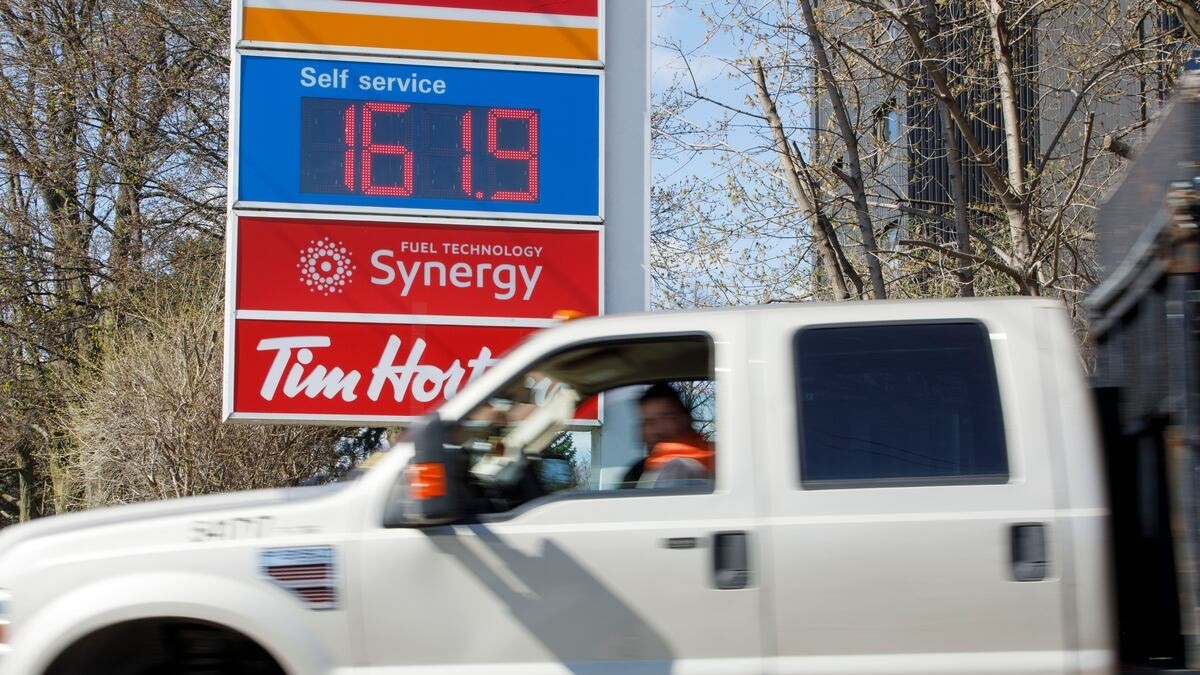
Kalibrate pump-price data put the average price for a litre of regular gasoline across the country at $1.824 as of Friday, up nearly 33 per cent from a year earlier. Diesel prices are up nearly 80 per cent over the past year. Oil hit US$117 a barrel on Friday, according to the Reuters poll report. The consumer price index report said the war in the Middle East pushed benchmark oil prices to their highest level since May.
What Macklem Said in Bangkok
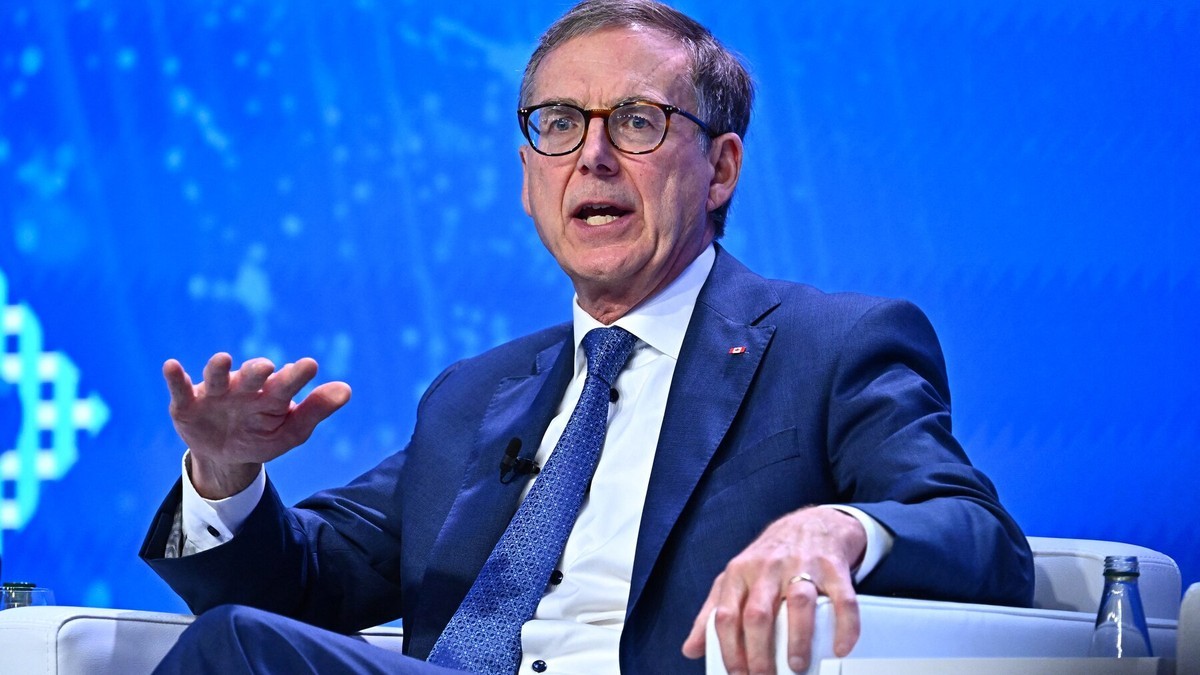
On the sidelines of an International Monetary Fund meeting in Bangkok, Macklem told Canadian reporters the Bank's pending fourth-quarter forecast will show the inflation outlook to be "quite a bit higher" versus the prior quarter. He framed the governing question directly: "Will inflation likely come back down towards our target on its own, or are we going to have to raise interest rates to influence the path?"
CBC reported that Macklem "recently warned that persistently high global energy prices due to ongoing conflict in the Middle East could drive up the central bank's inflation outlook ahead of its Oct. 28 rate announcement." The Bangkok remarks preceded the Reuters poll report of 23 October. The Bank's own September statement had already flagged that "upside risks to the Bank's inflation forecast have increased," warning that the longer high oil prices and elevated refinery margins persist, the greater the risk of spillover.
The Data Points the Other Way
Excluding gasoline, consumer prices rose 2.2 per cent year over year in September. Shelter prices rose 1.8 per cent year over year, up from 1.5 per cent in August. Grocery prices rose 1.7 per cent year over year, down from 2.8 per cent in August, the smallest yearly increase since May 2024, driven by cheaper fresh vegetables and a decline in the "sugar and confectionary" category. Core inflation measures eased slightly on a monthly basis.
Statistics Canada cautioned that "Despite the year-over-year slowdown in prices for groceries, prices have increased 33.0 per cent since September 2020." The labour market also cut against tightening. Canada lost about 68,000 jobs in September, the worst month of 2026, and the unemployment rate rose to 6.5 per cent. The Bank's September statement had noted the unemployment rate edging down to 6.4 per cent in July, while warning that demand for labour remains subdued. Growth is the third strand. The Reuters poll suggests the economy slowed to 1.9 per cent in the third quarter, with 1.3 per cent expected in the current quarter.
What the Markets Already Priced
Reuters reported that the market-implied probability of an October hike rose from about 30 per cent to roughly 75 per cent. MoneySense, citing Reuters, put the odds at about 80 per cent. Reuters attributed the shift chiefly to inflation, and reported that the swing toward an increase picked up steam after Macklem's remarks in Bangkok. On that pricing, a decision to leave the rate unchanged would surprise most traders.
The Bank's September statement noted that financial conditions had tightened since July, with long-term bond yields moving up globally, including in Canada, and the Canadian dollar appreciating slightly on US-dollar weakness. Fixed mortgage rates are driven by those bond yields rather than the policy rate, which means part of the tightening has already been delivered without a single basis point of change to the overnight target.
Two Polls, One Split
Reuters polled 34 economists between 21 and 23 October 2026. 19 of the 34, or 56 per cent, expect a quarter-point increase to 2.50 per cent. The poll's median forecast also calls for one more increase before the end of March 2027, taking the rate to 2.75 per cent. In the previous poll, 80 per cent of respondents expected the Bank to hold at 2.25 per cent through the end of 2026, and two-thirds expected a hold until the end of March 2027.
A separate Wall Street Journal survey found 11 of 15 economists expecting a quarter-point increase to 2.50 per cent, with four expecting another hold. The two surveys point the same direction but not with the same weight. The Reuters report notes that, if correct, the projected path would be the shortest Bank of Canada tightening campaign in 30 years, a detail that underscores how unusual this moment is.
A New Model and the Rebound It Will Judge
The Bank will use a new forecasting model, called Prima, for the first time at this meeting. Mortgage Professional America reported the model places mortgage renewals at the centre of rate-setting. Mathieu Laberge, chief economist at the Canada Mortgage and Housing Corp., said renewal risk remains in existing mortgage portfolios. The model has not yet produced a published forecast, and its debut adds an unusual variable to the same release.
The Bank's September statement set out the assessment framework Governing Council will apply: "Governing Council will assess the sustainability of the economic rebound and the outlook for inflation, and is prepared to adjust monetary policy as needed." Second-quarter 2026 GDP rose 3.3 per cent, following very weak growth in the first quarter, with consumption showing solid gains, some rebound in housing activity, and exports and business investment up sharply.
What a Quarter Point Costs
A hike would be felt first in variable-rate mortgages and lines of credit. Ratehub data cited by MoneySense show the lowest five-year variable rate at 3.43 per cent, which a quarter-point increase would push to about 3.7 per cent. Three- and five-year fixed rates start at about 4.34 per cent and are driven by bond yields rather than the policy rate. On a $618,480 mortgage with a 3.45 per cent variable rate and 25-year amortization, Ratehub puts the monthly payment at $3,072.
The two products behave differently. Where the rate floats, the policy decision passes straight through. Where it is fixed for a term, the effect arrives at renewal, which is the channel the new model is designed to capture. The same quarter point therefore reaches the two groups at different speeds, and the gap between them is where most of the household-level argument sits.
The Trade File Nobody Can Price
The Bank's September statement was explicit: "The continuing conflict in the Middle East is keeping energy prices high. As well, new US tariffs and Canadian counter-measures have been announced following the breakdown of trade talks between Canada and the United States. Both situations remain fluid." It added that new US tariffs and Canadian counter-tariffs "will also raise costs for some businesses and could feed into consumer prices over time."
Douglas Porter of BMO Capital Markets has called a 2026 hike a "very long shot," citing a struggling economy and uncertainty over the Canada-United States-Mexico trade agreement. Clay Jarvis, a mortgage expert at Ratehub.ca, told MoneySense he expects a hold: "It's hard to see a clear path to a rate increase at this point," pointing to rising unemployment, weak growth and the trade war with the United States as more pressing concerns than inflation.
What to Watch After 9:45
The Monetary Policy Report lands with the decision, and its fourth-quarter inflation projection is the document to read first. The press conference at approximately 10:30 a.m. Eastern gives the Governor and Senior Deputy Governor Carolyn Rogers a second venue to shape the path. Then attention turns to 9 December 2026, the next scheduled announcement, and the question that will follow any move: whether it is a one-off correction or the opening of a campaign.
The forecasters are not aligned. Avery Shenfeld, chief economist at CIBC, told CBC News: "We have inflation in gasoline prices, which every Canadian already knew, but we don't have a lot of inflation anywhere else." Andrew Kelvin, head of Canada rates strategy at TD Securities, said: "We think an October hike would be reckless. Not necessarily wrong, but a needless risk." Royce Mendes of Desjardins said the survey responses suggest "there are more serious inflationary pressures coming."
By Jessica Ali, Staff Writer
This article was produced with AI-assisted research and editorial support. Sources: the Bank of Canada, Reuters, Statistics Canada, CBC News, MoneySense, Ratehub.ca, the Wall Street Journal and Mortgage Professional America. Photographs: The Canadian Press/Adrian Wyld; Lillian Suwanrumpha/AFP via Getty Images, published by The Globe and Mail; Oksana Shtohryn/CBC.
What's Your Reaction?
 Like
0
 Dislike
0
 Love
0
 Funny
0
 Wow
0
 Sad
0
 Angry
0

Editor-in-Chief at Global1.News. Atlanta-based journalist who cuts through the BS and tells it like it is. Lead anchor, host, and the voice you hear when the spin stops and the truth starts.















Comments (0)