
At least 21 killed after vehicle loaded with explosives rams Pakistan mosque
On Friday, 13:15 local time (08:15 GMT), a car packed with explosives smashed into the entrance of a mosque situated within a police compound in Kohat, Khyber Pakhtunkhwa.
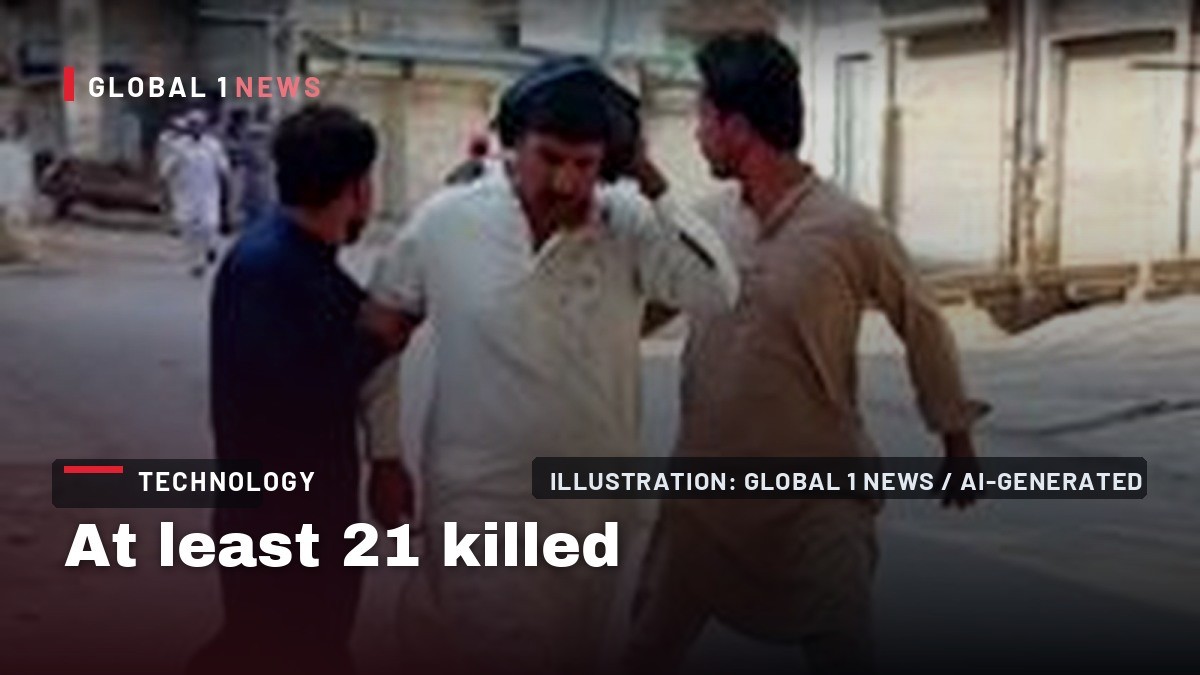
On Friday, 13:15 local time (08:15 GMT), a car packed with explosives smashed into the entrance of a mosque situated within a police compound in Kohat, Khyber Pakhtunkhwa. The blast, followed by an exchange of gunfire, left at least 21 dead and injured more than 100, according to officials. Among the dead were fifteen police officers and a four‑year‑old child, underscoring the indiscriminate nature of the attack on a site that combined a place of worship with a security installation.
Details of the attack
The vehicle, laden with explosives, rammed the mosque entrance as Friday prayers were underway, creating a massive explosion that devastated the interior and surrounding police facilities. Video obtained by BBC Verify shows the site littered with rubble, with rescuers and by‑standers attending to the wounded amid a chaotic scene.
Police reports indicate that at least six of the attackers were killed in the blast and the subsequent gun battle. The assault also involved gunmen who opened fire on the police compound after the explosion, intensifying the violence and complicating the emergency response.
Responsibility claimed by the Pakistani Taliban
Khyber Pakhtunkhwa Police have attributed the attack to a faction of the Tehrik‑e‑Taliban Pakistan (TTP), commonly referred to as the Pakistani Taliban. In a post on X, the police force stated its determination to thwart the “nefarious designs of Fitna‑al‑Khawarij,” the label used by officials for the TTP.
The TTP, established in 2007 to enforce a strict interpretation of Islamic law, maintains alliances with al‑Qaeda and the Afghan Taliban. The group has a history of targeting security forces and civilian sites, a pattern that aligns with the tactics observed in this latest assault.
Government and international reactions
President Asif Ali Zardari expressed his best wishes for the swift recovery of the injured and called for the “complete elimination” of foreign‑backed terrorists. His statement reflects the broader governmental stance that frames the TTP as a proxy for external influences.
The United Nations also condemned the attack. A UN spokesman relayed Secretary‑General António Guterres’s condemnation, describing attacks on civilians and places of worship as “unacceptable.” The UN’s response underscores the international community’s concern over the escalating violence in Pakistan’s border regions.
Pattern of recent violence in Khyber Pakhtunkhwa
Governor Faisal Karim Kundi highlighted the province’s “immense sacrifices” in the fight against terrorism, a sentiment echoed by security officials who note a sharp rise in militancy in recent months. Armed groups have increasingly targeted both military and police installations, reflecting a strategic shift toward high‑profile, soft‑target attacks that maximize civilian casualties.
Earlier this year, officials linked the TTP to a series of attacks, including a suicide bombing of a Shia mosque in Islamabad that killed more than 30 people. The Kohat incident follows that pattern, demonstrating the group’s capacity to coordinate complex operations that combine vehicle‑borne IEDs with small‑arms fire.
Cross‑border dynamics and accusations
Pakistan’s security establishment repeatedly accuses militants of using Afghanistan as a safe haven for training and planning attacks. Islamabad asserts that the porous border enables the TTP and affiliated groups to regroup, acquire weapons, and launch operations across the frontier.
The Taliban‑led Afghan government, however, denies these allegations, characterising the militant threat as a domestic Pakistani problem. This diplomatic friction complicates regional counter‑terrorism efforts, as both sides trade accusations without a mutually recognised mechanism for joint action.
Implications for regional security
The Kohat attack illustrates the evolving threat landscape in the Afghanistan‑Pakistan border area. The combination of a vehicle‑borne bomb and coordinated gunfire indicates a tactical sophistication that challenges conventional security protocols at police compounds and religious sites.
For Japan and other external partners with interests in South‑Asian stability, the incident signals heightened risk for any involvement in development or humanitarian projects in the region. Companies and NGOs operating near conflict‑prone zones must reassess security arrangements, while diplomatic missions may need to deepen coordination with Pakistani authorities to monitor militant movements.
Future outlook and policy considerations
Pakistan’s response will likely focus on intensified military and police operations in Khyber Pakhtunkhwa, aiming to dismantle TTP networks and deny them sanctuary. The government’s rhetoric of “complete elimination” suggests a hardline approach, potentially involving cross‑border raids or increased cooperation with international partners.
Nonetheless, the persistent claims of foreign backing for the TTP raise the prospect of broader geopolitical entanglements. If Pakistan successfully attributes the attacks to external actors, it may seek greater assistance from allies, including intelligence sharing and capacity‑building for counter‑terrorism forces.
In the immediate term, the priority remains humanitarian: providing medical care to the injured, supporting the families of the deceased, and restoring the damaged mosque. The resilience of the local community, as witnessed in the aftermath, will be a crucial factor in countering the terror narrative that the TTP seeks to propagate.
This article was produced with AI-assisted research and editorial support. Reporting is based on the source material cited below. Sources: BBC News Asia; bbc.co.uk; Global1.News (20 September 2026).
By Kenji Tanaka, Staff Writer
What's Your Reaction?
 Like
0
Like
0
 Dislike
0
Dislike
0
 Love
0
Love
0
 Funny
0
Funny
0
 Wow
0
Wow
0
 Sad
0
Sad
0
 Angry
0
Angry
0

Japan Correspondent at Global1.News. Tokyo-based voice covering Japanese politics, technology, economy, and culture. Tracks the intersection of tradition and innovation in one of the world's most dynamic societies.














Comments (0)