
Around 800 teachers withdraw from BARMM poll duties
As the nation prepares for the September 14 elections in the Bangsamoro Autonomous Region in Muslim Mindanao (BARMM), a wave of apprehension has rippled through the education sector.
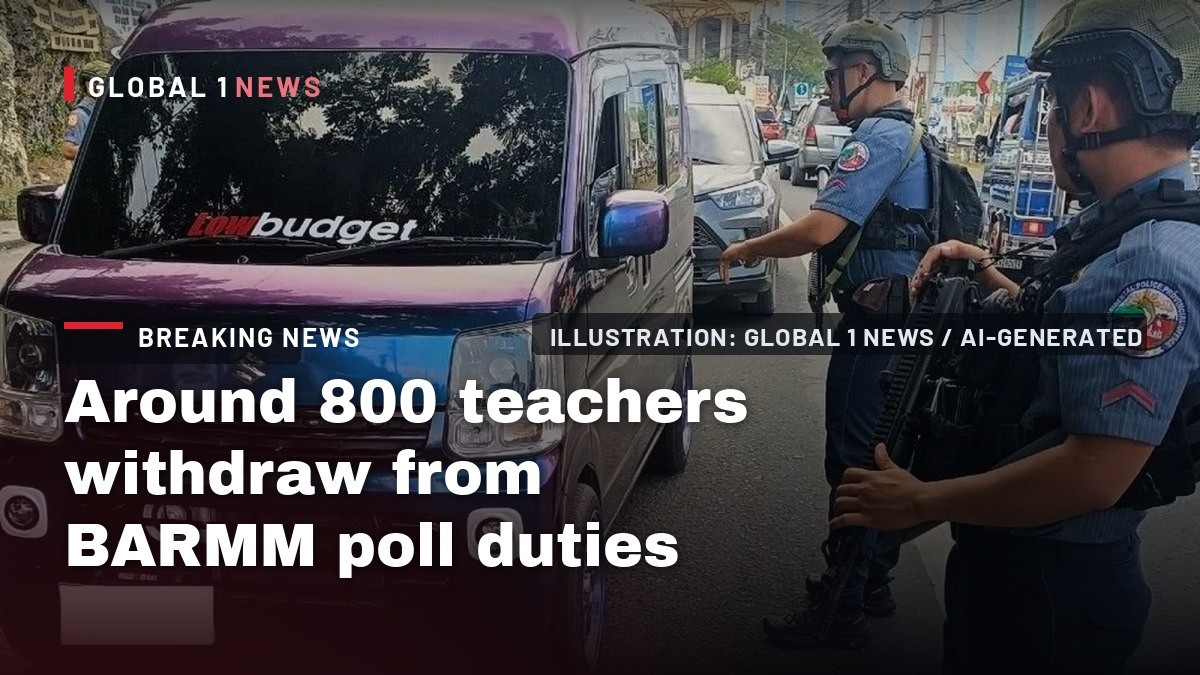
As the nation prepares for the September 14 elections in the Bangsamoro Autonomous Region in Muslim Mindanao (BARMM), a wave of apprehension has rippled through the education sector. According to reports from Catholic radio station DXMS in Cotabato City, a total of 839 teachers have withdrawn from their poll duties, citing security concerns in areas where they are stationed. The withdrawal, confirmed by Commission on Elections (COMELEC) Chairman George Erwin Garcia, underscores the lingering tension in parts of the region and raises questions about the capacity to ensure a peaceful, credible vote.
Scope of the teacher withdrawals
The 839 teachers who have stepped back from election assignments are spread across three key locations: Lanao del Sur, Tawi‑Tawi and Maguindanao del Sur, as well as the Bangsamoro Special Geographic Area (BSGA) and Cotabato City. These areas are part of the broader BARMM map that includes the provinces of Maguindanao del Sur, Maguindanao del Norte, Lanao del Sur, Basilan and Tawi‑Tawi, along with the cities of Lamitan, Marawi and Cotabato.
In addition to the 839 teachers, DXMS reported that 137 teachers from various schools in Cotabato City have formally requested exemption from poll duties. While the exact reasons for each request were not detailed, the collective action reflects a palpable fear of potential hostilities that could arise on election day.
Security concerns behind the pull‑back
The decision by teachers to withdraw is rooted in the security landscape of BARMM, where some towns in Maguindanao del Sur and Lanao del Sur are home to communities linked to the Moro Islamic Liberation Front (MILF) and are also affected by violent clan feuds. These feuds involve armed groups, some of which have reportedly thrown their support behind rival aspirants for seats in the 80‑member Bangsamoro Parliament.
Such dynamics create a volatile environment for election officials and poll workers, who may become unintended targets or be caught in the crossfire of local disputes. The teachers’ apprehension mirrors broader community anxieties, especially in barangays where the presence of armed factions is a daily reality.
Government response and security assurances
In response to the heightened concerns, senior military and police officials have publicly pledged to secure polling sites across the region. Maj. Gen. Jose Vladimir Cagara, acting commander of the Western Mindanao Command, Brig. Gen. Ricky Bunayog, acting commander of the Army’s 6th Infantry Division, and Police Brig. Gen. Christopher Abecia, director of the Police Regional Office‑Bangsamoro Autonomous Region, each assured the public that their respective units are prepared to protect the integrity of the vote.
These assurances aim to reassure not only the teachers who have stepped back but also the broader electorate that the state is committed to providing a safe environment for the exercise of their democratic rights. However, the effectiveness of these security measures will be closely watched by civil society groups and election watchdogs.
Impact on the electoral process
The withdrawal of nearly 800 teachers—many of whom serve as poll workers or election assistants—poses logistical challenges for COMELEC. Teachers often fill critical gaps in staffing, especially in remote barangays where other qualified personnel are scarce. Their absence could strain the already limited pool of poll officials, potentially leading to longer waiting times for voters or the need to reassign duties to less experienced volunteers.
Moreover, the concentration of withdrawals in specific provinces may affect the distribution of election resources. COMELEC may need to re‑allocate personnel from less volatile areas to ensure that polling stations in Lanao del Sur, Tawi‑Tawi and Maguindanao del Sur remain adequately staffed.
Community reaction and the spirit of bayanihan
Local communities have expressed a mixture of concern and solidarity. In barangays where teachers have withdrawn, parents and local leaders are stepping forward to fill the gaps, invoking the Filipino tradition of bayanihan—mutual aid and collective effort. While not all volunteers possess the same training as teachers, the willingness to help reflects the deep-rooted desire for a peaceful election.
Meanwhile, some sari‑sari store owners and small business operators in Cotabato City have reported a slowdown in foot traffic, fearing that any unrest could disrupt daily commerce. The ripple effect of the teachers’ withdrawal extends beyond the ballot box, touching the livelihoods of ordinary Filipinos who rely on stable market conditions.
Historical context of elections in BARMM
The Bangsamoro region has a unique electoral history, shaped by the peace process that led to the creation of the autonomous entity. The Bangsamoro Special Geographic Area, consisting of eight municipalities formed from 63 former barangays of Cotabato province, voted to join BARMM after a series of plebiscites. This background underscores the delicate balance between autonomy and security that continues to influence electoral dynamics.
Past elections in the region have faced similar challenges, with armed groups sometimes attempting to sway outcomes or intimidate voters. The current situation, however, is notable for the scale of the teacher withdrawals, indicating a heightened sense of vulnerability among public servants tasked with supporting the democratic process.
Looking ahead: safeguarding the vote
As the September 14 elections draw near, the convergence of security concerns, teacher withdrawals and government assurances will shape the overall atmosphere on election day. Stakeholders—including COMELEC, the Armed Forces of the Philippines, the Philippine National Police and civil society groups—must coordinate closely to mitigate risks and ensure that every eligible voter can cast a ballot without fear.
For ordinary Filipinos in BARMM, the stakes are personal. A peaceful election means not only the selection of representatives for the Bangsamoro Parliament but also the continuation of community stability, the safety of schools, and the preservation of daily life in barangays across the region. The collective hope is that the spirit of democracy, bolstered by the resilience of the Filipino people, will prevail over the shadows of conflict.
This article was produced with AI-assisted research and editorial support. Reporting is based on the source material cited below. Sources: Philstar.com; Global1.News (14 September 2026).
By Bella Reyes, Staff Writer
What's Your Reaction?
 Like
0
Like
0
 Dislike
0
Dislike
0
 Love
0
Love
0
 Funny
0
Funny
0
 Wow
0
Wow
0
 Sad
0
Sad
0
 Angry
0
Angry
0

Philippines/Southeast Asia Correspondent at Global1.News. Manila-based journalist covering Philippine politics, environment, maritime security, and social issues. Passionate about marine conservation and the communities protecting the Philippines' natural heritage.











Comments (0)