
France Confirms First Human Case of Shamonda Virus After Patient Dies in Lyon
French authorities have confirmed the first documented human infection with Shamonda virus, in a severely immunocompromised patient in Lyon who died in early October, as the cattle virus spreads across western Europe.
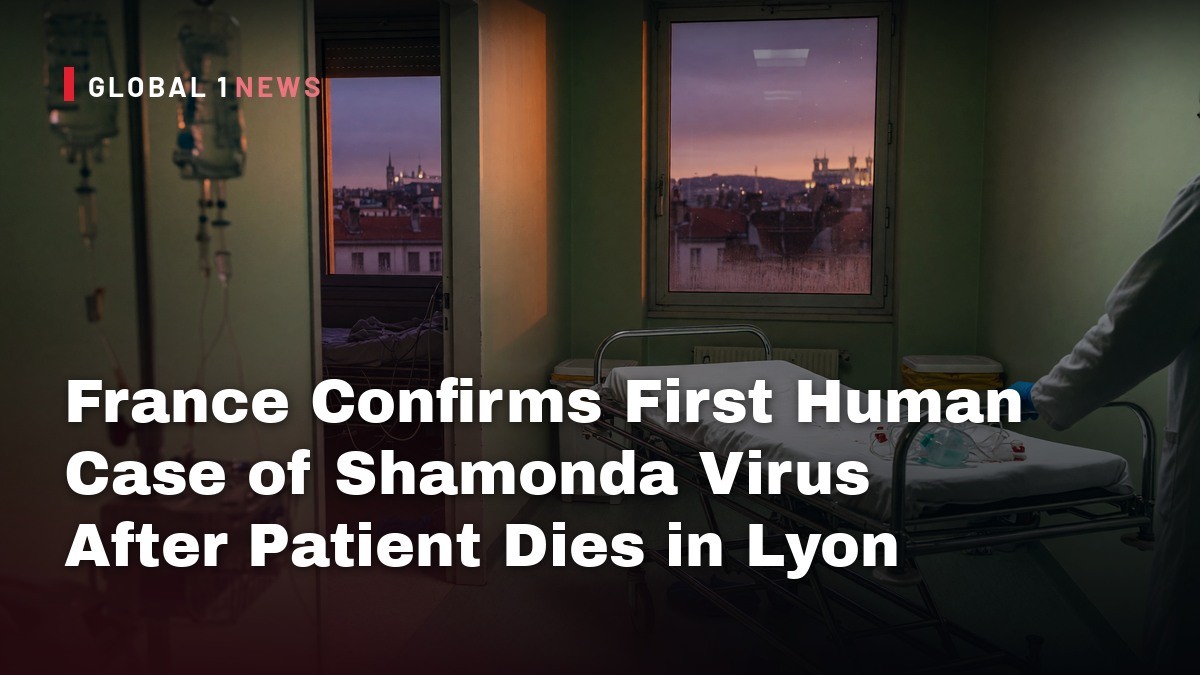
French authorities confirmed on Thursday 22 October 2026 the first known human infection with Shamonda virus, a pathogen that had circulated in animals for six decades without a single documented human case. The patient, a severely immunocompromised man in his 60s from the Lyon area, died in early October. The announcement matters because it breaks a long-held assumption about the virus, and because it lands in the middle of an animal outbreak that has spread across western Europe since the summer.
France Confirms First Human Case of Shamonda Virus After Patient Dies in Lyon
Paris — The statement came jointly from the Ministry of Agriculture, Food and Food Sovereignty and the health ministry, and was notified to the World Health Organization and the European Centre for Disease Prevention and Control. The patient had been treated at the Hospices Civils de Lyon for a serious illness. The ministry called the case "exceptional".
What France Announced on Thursday
The French announcement was precise and narrow. A single human infection with Shamonda virus had been documented, in a patient whose immune system was already severely compromised. "This is therefore an exceptional case involving a severely immunocompromised patient," the ministry said. Officials described it as "the first documented and reported detection of the virus in a human." The ministry said clinical, biological and epidemiological investigations were continuing under a "One Health" approach drawing on human, animal and environmental health expertise. It also stated, twice and in bold in the French release: "Based on the knowledge available regarding this virus, no health risk to the general population has been identified to date." The working hypothesis for how the man became infected is a bite from a Culicoides midge in eastern France, a region that has reported animal circulation of the virus since spring. The ministry said the brain complications seen in the patient before death were "very likely linked" to the infection.
The Patient at the Hospices Civils de Lyon
The man was in his 60s and lived in the Lyon area, according to the local newspaper Le Progres. He was receiving treatment at the Hospices Civils de Lyon for a serious illness that had left him severely immunodepressed. He died in early October 2026. French authorities have not named him, and no cause has been given for the underlying illness that brought him into care. The ministry's statement frames the infection as opportunistic: a virus that had never been shown to reach humans found a patient whose defences could not stop it. The European Centre for Disease Prevention and Control described the same patient in similar terms, noting that he was "receiving treatment for a serious illness that made them more susceptible to infection and complications than the general population."

Two Official Accounts of the Death
The French ministry and the ECDC do not describe the death in identical terms, and the gap between them is the most important unresolved question in this case. The ministry said the brain complications observed in the immunocompromised patient before death were "very likely linked to the Shamonda virus infection." The ECDC, in its own statement, said: "Investigations into whether the virus caused or contributed to the patient's death and how the infection was acquired are ongoing." The World Organisation for Animal Health struck the same cautious note, saying further investigations are required to understand if the virus caused or contributed to the death. So the record is not settled. French officials lean toward a link. European and international agencies say the question is still open. Both accounts are on the public record, and neither has been withdrawn.
What Shamonda Virus Actually Is
Shamonda virus belongs to the genus Orthobunyavirus, family Peribunyaviridae, within the Simbu serogroup, according to the World Organisation for Animal Health. That serogroup also includes Schmallenberg virus, the pathogen that hit European livestock in 2011. Shamonda was first isolated from cattle in Nigeria in 1965. From the early 2000s it was identified in other regions of Africa and Asia, and it was first identified in Europe in 2026. The 2026 European outbreaks are caused by two different variants, designated Shamonda virus Europe 1 and Shamonda virus Europe 2. Transmission is understood to occur through the bites of Culicoides midges. "There is currently no evidence of direct animal-to-animal transmission, however vertical transmission has been reported," the World Organisation for Animal Health said. Cattle are most commonly affected, though horses, alpaca, sheep and goats are also susceptible. There are no commercially available vaccines.
A Virus That Arrived in Europe This Summer
The animal outbreak did not begin in October. In June 2026, veterinarians in the departments of Doubs and Ain began reporting clusters of acute diarrhoea, transient fever, lethargy and marked but reversible drops in milk yield in dairy cattle, according to a peer-reviewed report from the INRAE-ENVT team. In July the same signs appeared in Savoie and Haute-Savoie. Initial investigations looked at heat stress, nutritional disorders and known infectious causes; Schmallenberg-specific tests came back negative. On 31 July the responsible agent was formally identified, with Switzerland and Germany identifying the same agent at the same time, soon followed by the Netherlands and Belgium. The Friedrich-Loeffler-Institut said it identified a new orthobunyavirus from the Simbu serogroup in cattle in southern Germany in early August. The virus has since been found in Switzerland and France, and in farm animals in Austria, Belgium, Ireland, Italy, Liechtenstein, Luxembourg, Portugal, Spain and Jersey.
The Toll on Cattle: Milk, Diarrhoea and Abortion
The published figures on milk loss do not agree, and the disagreement is worth stating plainly. A study of nine initially affected French dairy herds recorded bulk milk production declines of 15% to 75%, with the proportion of cows with diarrhoea ranging from 8% to 100% between herds of 25 to 275 cows. Reuters reported that the same study found milk production fell by up to 75%. Web-agri gave the same 15% to 75% range. Beacon Bio, in a situation report dated 23 September, described "documented milk-production reductions of approximately 30% in individual herds" — a different measure, taken at a different level, and not reconcilable with the range above. On reproduction, the picture is consistent and grim. Abortions and major foetal malformations have been reported, and viral RNA has been found in placenta and foetal organs including spleen and brain. The ministry says the impact is currently judged low on affected farms, and no cattle mortality has been reported.
Why the Midge Decides This Story
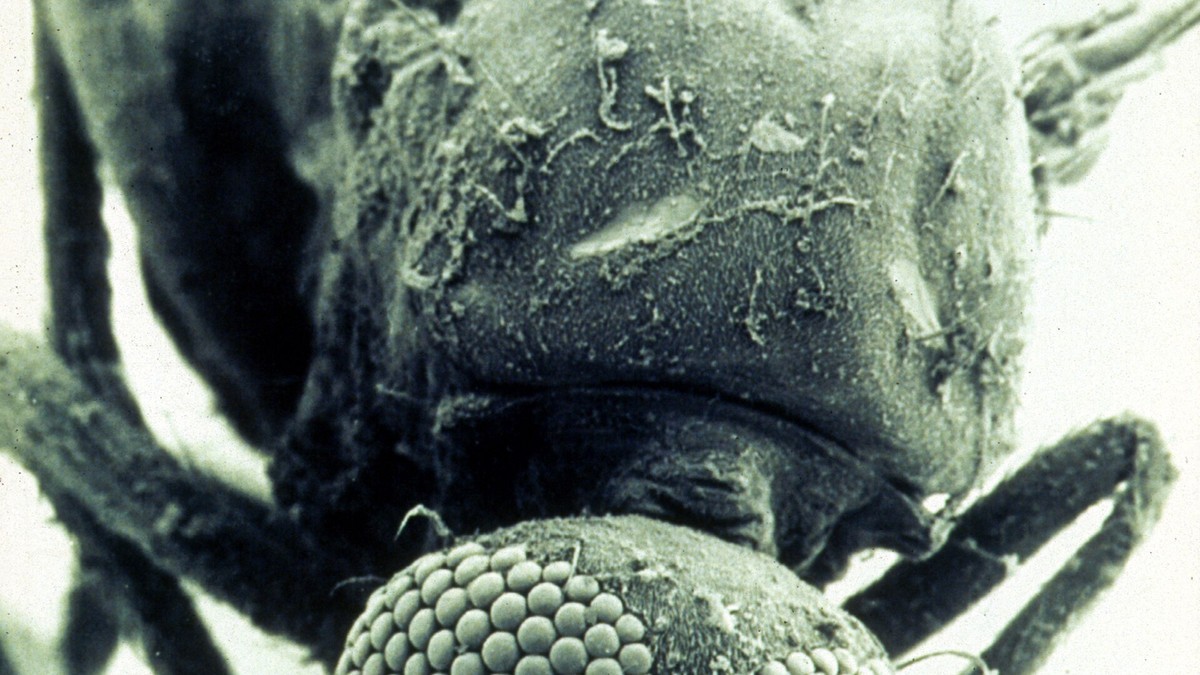
Every question about where this goes runs through a small biting insect. Culicoides midges transmit Shamonda virus, and they also carry bluetongue and epizootic haemorrhagic disease. The French ministry notes the shared vector explicitly. The ECDC said the specific midge species involved in the human case is still unknown. It also said biting midges in Europe are generally most active from spring to autumn, with patterns varying by species, location and weather, and that "given the cooling temperatures, the activity of most biting midge species is declining in Europe." That is a seasonal observation, not an all-clear. The Friedrich-Loeffler-Institut put the control problem bluntly: "It is transmitted by midges, which makes implementing prevention and control measures difficult." French guidance to farmers is vector control — eliminating breeding sites such as liquid effluent and stagnant water, and insecticide treatment of transport. No vaccine exists. No virucidal treatment exists.
The Schmallenberg Precedent
The comparison officials keep reaching for is Schmallenberg, and they reach for it because it fits. The clinical presentation of the acute syndrome in European dairy cattle resembles what accompanied the emergence of Schmallenberg virus in 2011. Both viruses sit in the Simbu serogroup. Both arrive via midges. Both produce a transient adult illness followed, in pregnant animals, by abortion and foetal malformation. The Friedrich-Loeffler-Institut warned that "there appears to be little cross-protection from existing immunity to Schmallenberg virus," adding that the potential impact of that finding is unknown. The institute also said it is not yet possible to assess how far infections in pregnant animals could damage foetuses as Schmallenberg did, and urged that miscarriages, stillbirths and malformed calves or lambs be examined with particular care. The World Organisation for Animal Health said the European variants' full teratogenic effects remain unknown.
What Nobody Can Say Yet
Several things cannot be said, and the agencies have been careful not to say them. No second human case has been reported anywhere. No human case has been reported outside France. There is no evidence of person-to-person transmission and no evidence the virus is airborne. No case fatality rate for humans has been published, and none should be inferred from a single infection in a patient who was already severely ill. The route and timing of the virus's introduction into Europe remain unknown, according to the INRAE-ENVT team. The total number of affected farms in France or Europe has not been given by any source. The World Health Organization said: "Based on current information and knowledge of the transmission of closely related viruses, this is an isolated human case and it is unlikely to lead to wider spread at this time." The ministry says "the situation is evolving."
A Count That Keeps Moving, and Rules That Do Not
The French count of affected departments has moved repeatedly, and the figures in circulation are dated differently. End of August: circulating in 18 French departments, per Science et Vie. 7 September: detected in 37 departments, per the European animal-health surveillance platform as reported by Web-agri. 23 September: cattle outbreaks confirmed by RT-PCR in 46 departments, including six newly affected, per a Beacon Bio situation report. That 46 is the latest dated figure. A separate Science et Vie reference to 22 departments comes from a different date again. None of these should be averaged. Internationally, the ECDC is in contact with French authorities and European partners, and is working with the European Commission and the European Food Safety Authority. The World Organisation for Animal Health is working with the WHO and its scientific network. Shamonda is not a WOAH listed disease and is not regulated under EU animal health law, so reporting is voluntary. The ministry says no scientific data documents transmission through meat, milk or derived products, and products from sick animals are excluded from consumption in any case.
By Jessica Ali, Staff Writer
This article was produced with AI-assisted research and editorial support. Sources: Ministry of Agriculture, Food and Food Sovereignty (France); European Centre for Disease Prevention and Control; World Health Organization; World Organisation for Animal Health; Friedrich-Loeffler-Institut; INRAE-ENVT peer-reviewed report PMC13498902; Reuters; Le Progres; Science et Vie; Web-agri; Beacon Bio. Photographs: Joel Sage / The Irish Times (cattle herd); Electron Microscopy Unit, AAHL, CSIRO via Wikimedia Commons, CC BY 3.0 (biting midge); Benoit Prieur via Wikimedia Commons, CC0 (Croix-Rousse hospital).
What's Your Reaction?
 Like
0
 Dislike
0
 Love
0
 Funny
0
 Wow
0
 Sad
0
 Angry
0

Editor-in-Chief at Global1.News. Atlanta-based journalist who cuts through the BS and tells it like it is. Lead anchor, host, and the voice you hear when the spin stops and the truth starts.















Comments (0)