
Argentina Bars Child Support Debtors from Stadiums Nationwide
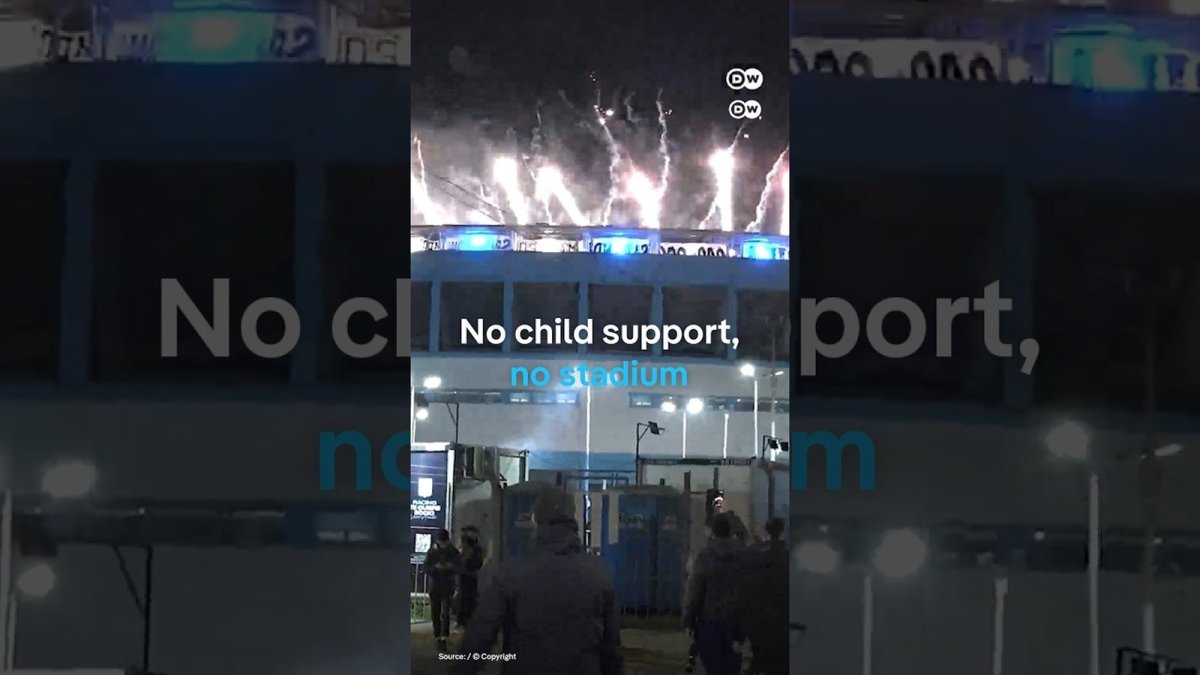
In a recent DW News report, a new reality is taking shape at Argentine football stadiums: parents who owe child support — known locally as cuota alimentaria — are being turned away at the gates. The measure, which began in Buenos Aires City in March 2025, has now expanded nationwide through the federal government's "Safe Stands" program, known in Spanish as Tribuna Segura .
In a recent DW News report, a new reality is taking shape at Argentine football stadiums: parents who owe child support — known locally as cuota alimentaria — are being turned away at the gates. The measure, which began in Buenos Aires City in March 2025, has now expanded nationwide through the federal government's "Safe Stands" program, known in Spanish as Tribuna Segura. What started as a local initiative under Mayor Jorge Macri now carries the weight of a national security resolution, and it is changing the way families, courts, and fans across Latin America think about accountability.
Argentina Bars Child Support Debtors from Stadiums Nationwide
Buenos Aires, Argentina — The enforcement is not symbolic. Around 30 debtors are banned every weekend in Buenos Aires province alone, where 8,500 people are currently registered as owing child support. Nationally, the numbers are far larger, and the consequences are immediate: if your name appears in the Public Registry of Delinquent Alimony Providers — the Registro Público de Alimentantes Morosos, or RPAM — or in any provincial variant, you do not enter the stadium. Even if you already bought your ticket, the ban applies. It is indefinite until the debt is settled and the legal situation is resolved.
From Local Decree to National Policy
The journey to nationwide enforcement began in March 2025, when Buenos Aires City Mayor Jorge Macri signed a measure covering football stadiums and also concerts and mass shows. At the time, Macri framed it as a matter of basic decency. "If they don't comply with their children, they don't go on the court either," he said. "Those who do not fulfill such a basic obligation as feeding their children must have consequences." The city's registry quickly became a reference point for other jurisdictions.
In May 2026, the national government signed a cooperation agreement to extend the stadium bans across the entire country through the Tribuna Segura program. That agreement was formalized in Resolution No. 429/2026 of Argentina's National Security Ministry, which now prohibits stadium entry for all people registered in the RPAM or its provincial equivalents. National Security Minister Alejandra Monteoliva was blunt in her announcement: "Delinquent alimony debtors no longer enter the stadiums. Those who don't fulfill their obligations to their children, out."
The decision to use Tribuna Segura as the enforcement vehicle is significant. The program was created in 2016 and has been applied at stadium gates since 2017, originally designed to block people with records of violence at sporting events — many from the barras bravas, the organized fan groups with a history of clashes — as well as drug smugglers during matches, fugitives, and people with pending criminal cases. Child support debtors are now an independent exclusion category, sitting alongside those with violent records. That placement sends a clear message about how the state views the failure to provide for one's children.
How the System Works at the Gate
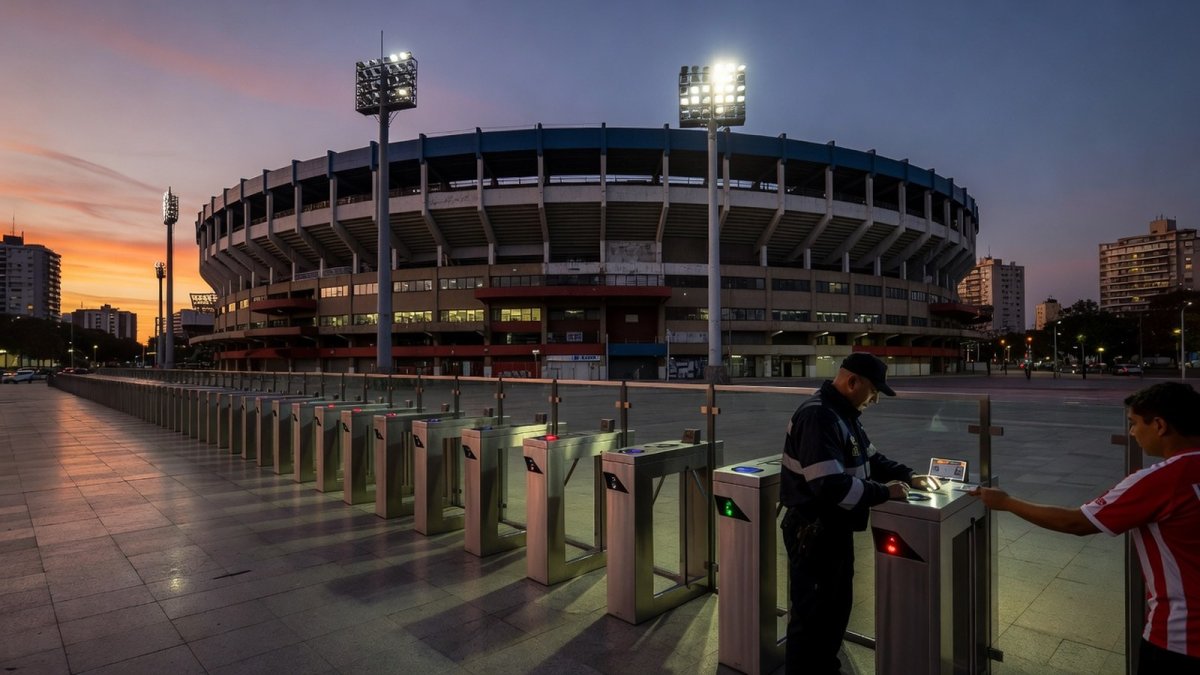
For fans attending matches in Argentina, the process is now routine. At the turnstiles, security personnel check identification against the Tribuna Segura database, which is synchronized with the RPAM and provincial registries. If a match is found, the person is denied entry on the spot. There is no appeal at the gate, no negotiation, and no refund for the ticket already purchased. The ban remains in force until the debtor pays what they owe and resolves their legal situation in court.
The system has been operational for months in Buenos Aires province, where the numbers are most visible. Every weekend, approximately 30 people are turned away from stadiums across the province. For many, the shock of being blocked at the entrance is the first time they have faced a direct, public consequence for unpaid child support. For the children and families waiting for that money, the measure represents a form of justice that family courts have struggled to deliver.
The reach of the program extends beyond domestic matches. For the 2026 World Cup held this summer in the United States, Mexico, and Canada, Argentine authorities shared a list of 13,000 nationals — the vast majority fathers — with US authorities. Those on the list were barred from World Cup venues even if they had purchased tickets. The international coordination marked a new chapter in cross-border enforcement of family obligations, and it put the issue squarely in front of a global audience.
Human Impact: The Families Behind the Numbers
Behind the statistics are real families, many of them headed by single mothers who have spent years fighting for the pensión alimenticia that their children are legally entitled to receive. In Argentina, as in Mexico, the burden of raising children often falls disproportionately on women, many of whom work informal jobs in colonias and barrios where every peso counts. For them, the stadium ban is not about punishment — it is about visibility.
For families who have waited years for court orders to be enforced, the turnstile has become a place where an obligation to a child can no longer be ignored. The practical effect, supporters of the measure argue, is speed: a consequence that arrives the same weekend a father wants to enjoy a match can do what months of court paperwork could not. When a ticket already purchased is at stake, the decision to pay what is owed often comes quickly.
There are also grandparents raising grandchildren, a reality familiar to many Mexican families. In Argentina, the abuelos who step in when parents fail often find themselves with no legal recourse beyond the same courts that have been slow to act. The stadium ban, while limited in scope, has given them a new sense that the state is paying attention. It is a small measure, but for families living on the edge, it is a signal that the system can work.
Latin American Context: Mexico's Own Registries
For Mexican readers, the Argentine measure resonates deeply. Several Mexican states maintain their own registries of delinquent alimony payers — the Registro de Deudores Alimentarios Morosos — and family courts across the country enforce pensión alimenticia as a constitutional right of children. The Supreme Court of Justice of the Nation (SCJN) has repeatedly ruled that child support is a fundamental obligation that cannot be waived or ignored. Yet enforcement remains inconsistent, and many mothers in Mexico report years of legal battles with little result.
The Argentine approach has sparked debate across Latin America about the best way to enforce child support obligations. Some legal experts argue that public shaming measures, like stadium bans, are effective because they target something debtors value: their leisure time and social status. Others worry about due process, noting that registries can sometimes include errors or outdated information. But for many advocates, the core principle is simple: if a parent can afford a ticket to a football match, they can afford to feed their children.
The debate is particularly relevant in Mexico, where the mañanera press conferences and public discourse often highlight the struggles of single mothers. The idea of linking child support enforcement to access to public events has been floated in some Mexican states, though no formal measure has been adopted. The Argentine example, now backed by national law and international cooperation, provides a concrete model that Mexican legislators and family court judges are watching closely.
Analysis: Consequences, Not Just Punishment
The Argentine measure represents a shift in how the state approaches family law enforcement. Traditionally, the consequences for unpaid child support have been legal and financial: fines, wage garnishment, even jail time in extreme cases. But these measures are often slow, bureaucratic, and easy to evade. The stadium ban is different because it is immediate, public, and tied to something the debtor actively wants to do.
Critics argue that the ban is symbolic rather than substantive, since it does not directly recover the money owed. But supporters counter that the goal is not just collection — it is changing behavior. By making the failure to pay child support a visible, socially stigmatized act, the state is sending a message that goes beyond the individual case. It is saying that the obligation to provide for one's children is not a private matter between parents, but a public priority.
There are also practical benefits. The registry system, already in place for security purposes, required no new infrastructure. The integration of child support debtors into Tribuna Segura was a matter of administrative coordination, not new spending. And the results, at least in Buenos Aires province, have been measurable: every weekend, dozens of debtors are forced to confront their obligations at the stadium gate, and many choose to resolve their debts rather than miss the match.
What Comes Next
The Argentine government has signaled that the stadium ban is just the beginning. The city of Buenos Aires has applied the same registry to concerts and mass entertainment events since its 2025 measure, and national officials have signaled that the model could be extended further. The World Cup coordination with US authorities showed how far the registry can travel, though no formal decision on additional restrictions has been announced.
For now, the focus remains on football, the sport that unites Argentina and much of Latin America. The image of a father being turned away at the turnstile, his ticket in hand, his children's names on a registry, is a powerful one. It is a reminder that in the stands, as in life, there are rules — and that the most basic rule of all is to take care of your own.
As the measure continues to evolve, families across the region are watching. In Mexico, where the Registro de Deudores Alimentarios Morosos exists in several states but lacks the enforcement teeth of Argentina's Tribuna Segura, the question is whether similar measures could take root. For the mothers, grandmothers, and children who have waited years for justice, the answer is clear: if a stadium ban can make a father pay, then let the gates close.
By Rosa Martinez, Staff Writer
This article was produced with AI-assisted research and editorial support. Reporting is based on sources cited in the article.
What's Your Reaction?
 Like
0
Like
0
 Dislike
0
Dislike
0
 Love
0
Love
0
 Funny
0
Funny
0
 Wow
0
Wow
0
 Sad
0
Sad
0
 Angry
0
Angry
0

Latin America/Andes Correspondent at Global1.News. Based in Bogota, covering politics, environment, energy, and social movements across the Andean region. Passionate about environmental journalism and communities protecting their land.












Comments (0)