
'This star is for Africa' - Angélique Kidjo on making Hollywood Walk of Fame history
The Hollywood Walk of Fame has a new star, and for the first time in its history, that star belongs to an African musician. Five-time Grammy Award winner Angélique Kidjo was honored this week in a ceremony that celebrated not just her extraordinary career, but the entire continent that shaped her.
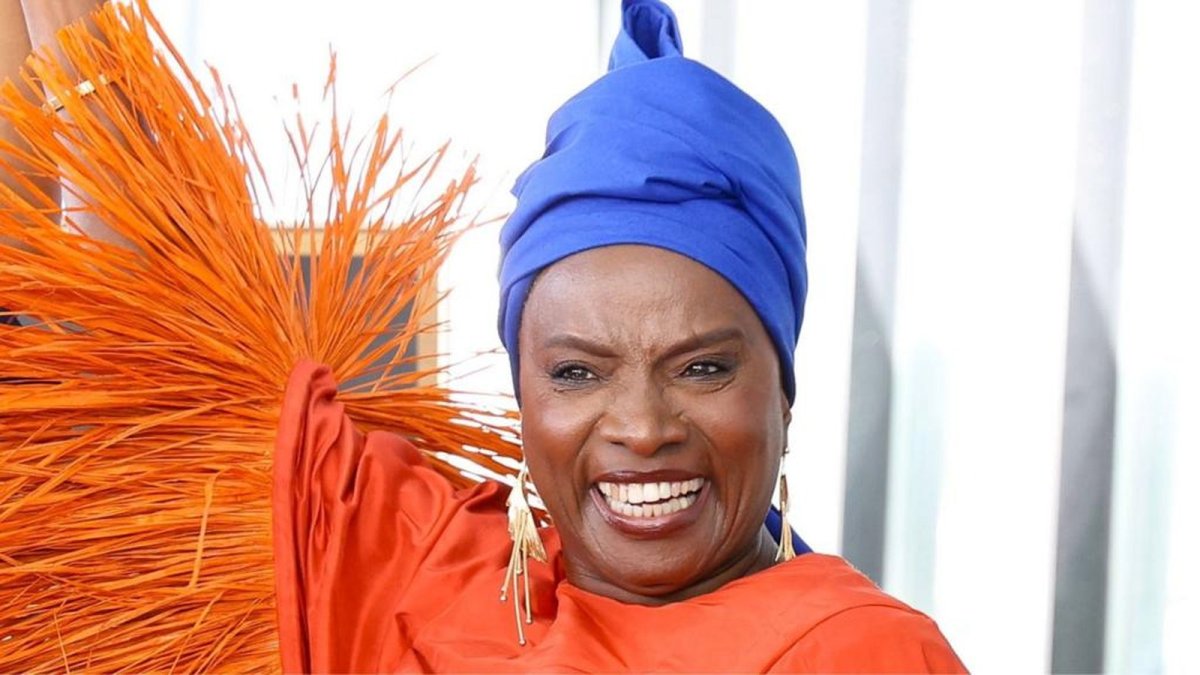
The Hollywood Walk of Fame has a new star, and for the first time in its history, that star belongs to an African musician. Five-time Grammy Award winner Angélique Kidjo was honored this week in a ceremony that celebrated not just her extraordinary career, but the entire continent that shaped her. The 66-year-old Beninese icon, wiping away tears as she accepted the accolade, made it clear this moment was never just about her.
A Star for Africa
"This star is for all the continent of Africa. Because if I was not African, would I be here?" Kidjo told the BBC shortly after the ceremony. The question was rhetorical, but the sentiment was profound. Standing on Hollywood Boulevard, surrounded by actors Willem Dafoe and Djimon Hounsou—the latter also from Benin—and Nigerian musician Adekunle Gold, Kidjo transformed a personal milestone into a continental celebration.
The ceremony was emotional for the singer, who has spent four decades bridging cultures through music. "At that moment, I'm like, dad, mum, I wish you were here with me to see [this]. I couldn't take the emotion. They were not here to taste the fruit of what they've created. How they have nurtured my curiosity, my love for music," she said, her voice catching as she remembered her parents.
Kidjo joins Charlize Theron, the white South African actress, as the only African honorees on the Walk of Fame, which now comprises more than 2,800 stars. But Kidjo's star carries particular weight—it represents a musical lineage that traces back to the continent in ways the industry has often failed to acknowledge.
'All of It Comes From Africa'
In her BBC interview, Kidjo used the platform to deliver a history lesson that cut to the core of global music. "Without the blues brought by the slaves in America, there's no R&B, there's no rock and roll, there's no soul music, there's no jazz. All of it comes from Africa," she said, her tone firm but patient, as if explaining something that should have been obvious decades ago.
This is not a new argument from Kidjo, who has spent years advocating for greater recognition of African musical roots. But hearing it on the eve of her Walk of Fame induction gave the message a sharper edge. Here was a woman who had conquered the global music industry on her own terms, using the moment to redirect credit to where she believes it belongs.
Her point extends beyond historical acknowledgment. Kidjo argues that Africans themselves need to understand and value what they have given the world. "Let's celebrate our artists in their own right on the continent. Let's give them visibility, strength, because music creates economy," she told BBC Focus on Africa TV. The statement was a call to action, not just for governments and industry executives, but for African audiences who often look abroad before looking home.
From Benin to the World Stage
Kidjo's journey to this moment began in Benin, where she grew up surrounded by music and curiosity. At age 23, she left for Paris, citing oppression from the country's then-communist government. The move was difficult but necessary—Paris offered the freedom and opportunity that her homeland could not provide at the time.
In Paris, Kidjo's talent quickly found recognition. But it was her signing with Island Records founder Chris Blackwell in the 1990s that launched her breakthrough album, Logozo. The relationship with Blackwell, who also produced Bob Marley, proved pivotal. Kidjo recalled the phone call she received from him this week amid the flood of congratulations: "Yesterday I received the call of the president of Benin. Today I received the call of Chris Blackwell, the founder of Island Records, the producer of Bob Marley."
Their conversation brought back memories of a crucial moment early in her career. Kidjo told Blackwell she needed reassurance: "Can I do the music I want to do and keep my cultural identity without anyone imposing any other music on my shoulder?" His response was immediate and unwavering: "It's no brainer." That freedom became the foundation of her artistic identity.
Keeping Her Cultural Identity
That insistence on cultural authenticity has defined Kidjo's career. She has released 18 albums, been nominated for 17 Grammy Awards, and won five. Her collaborations read like a who's who of global music: Burna Boy, John Legend, Bono, Alicia Keys. Her latest album, HOPE!!, released earlier this year, features production from Pharrell Williams and collaborations with Ayra Starr, Quavo, Nile Rodgers, and Diane Warren.
Yet despite the star-studded partnerships, Kidjo has never diluted her sound. Her music remains rooted in the rhythms and languages of West Africa, even as it incorporates elements from across the globe. This balance—between accessibility and authenticity—has made her a singular figure in world music.
Willem Dafoe, who spoke at the ceremony, captured her unique energy. "She is without a doubt the hardest working woman in showbusiness," he said, likening her drive to that of James Brown. "She's not only an incredible performer... songwriter and musician, but also an incredibly kind and giving person and a real deal activist."
More Than Music: Activism and Advocacy
Dafoe's words point to a dimension of Kidjo that extends far beyond recording studios and concert stages. She serves as a goodwill ambassador for both UNICEF and Oxfam, and co-founded the Batonga Foundation, which supports vulnerable young girls and women in Benin. Her activism is not performative—it is woven into the fabric of her life and work.
Harvey Mason Jr., CEO of the Recording Academy, emphasized the unifying power of her music. "She's connected cultures, she's crossed borders, she's reminded audiences everywhere that while we may come from different backgrounds, her music unites in a way that few other things can," he said.
This recognition from the head of the organization behind the Grammy Awards underscores Kidjo's standing not just as an artist, but as an institution. She has won the 2023 Polar Music Prize and been named one of Time's 100 Most Influential People. But her advocacy work suggests she measures success differently—not in awards, but in impact.
The Royalty Problem African Artists Face
Kidjo's celebration comes at a moment when the economics of African music are under scrutiny. Most African artists—beyond the mega-stars with global fanbases—struggle to make a living, often going unpaid for work that generates significant revenue elsewhere. Royalties that should flow back to the continent frequently do not.
"We need to recognise our artists and create a system for them to make money on their continent and also to participate in creating jobs," Kidjo said. Her words carry weight because she has navigated this system successfully for decades, yet she knows her experience is the exception, not the rule.
The problem is structural. Streaming platforms, copyright enforcement, and royalty collection mechanisms remain underdeveloped in many African markets. Artists who achieve success abroad often find that their international earnings do not translate into sustainable livelihoods at home. Kidjo's call for systemic change is a recognition that individual success stories, including her own, are not enough.
A Continent Celebrates
Across Africa, the news of Kidjo's star was met with pride and celebration. The president of Benin called her personally. Nigerian artists and fans flooded social media with congratulations. For many, her achievement felt collective—a validation of African music's global significance.
The ceremony itself reflected this continental spirit. Djimon Hounsou, the Beninese actor who has carved out his own Hollywood career, stood alongside Kidjo as a symbol of what African talent can achieve. Adekunle Gold's presence connected the moment to the vibrant Nigerian music scene that has taken the world by storm in recent years.
Kidjo's message to the continent was clear: celebrate your own. "Let's celebrate our artists in their own right on the continent," she urged. The statement was both a plea and a challenge—a reminder that African excellence deserves recognition at home, not just when it is validated abroad.
'Changes That Last Take Time'
Asked about the significance of becoming the first African musician to receive a Walk of Fame star, Kidjo offered a response that was both philosophical and pragmatic: "Changes that last take time."
The statement captures her approach to both her career and her advocacy. She has spent decades building bridges, breaking barriers, and opening doors—not just for herself, but for the generations of African artists following in her footsteps. The star on Hollywood Boulevard is a milestone, but Kidjo sees it as part of a longer journey.
Her phone has not stopped ringing since the ceremony. Presidents, producers, and fellow musicians have all reached out. But Kidjo's focus remains on the work ahead: nurturing talent on the continent, building systems that support artists economically, and ensuring that the next generation of African musicians has more opportunities than she did.
For now, the star shines. It sits on a sidewalk in Los Angeles, but its light points home. As Kidjo said, this star belongs to Africa. And Africa, in turn, has given the world music that changed everything.
By Amara Diop, Staff Writer
This article was produced with AI-assisted research and editorial support. Sources: BBC Africa.
What's Your Reaction?
 Like
0
Like
0
 Dislike
0
Dislike
0
 Love
0
Love
0
 Funny
0
Funny
0
 Wow
0
Wow
0
 Sad
0
Sad
0
 Angry
0
Angry
0

West Africa/Sahel Correspondent at Global1.News. Dakar-based journalist covering politics, security, climate, and development across Francophone and Anglophone West Africa. Tells the stories of a region undergoing profound transformation.














Comments (0)