
Amazon Rivers Drop Fast as El Niño Worsens
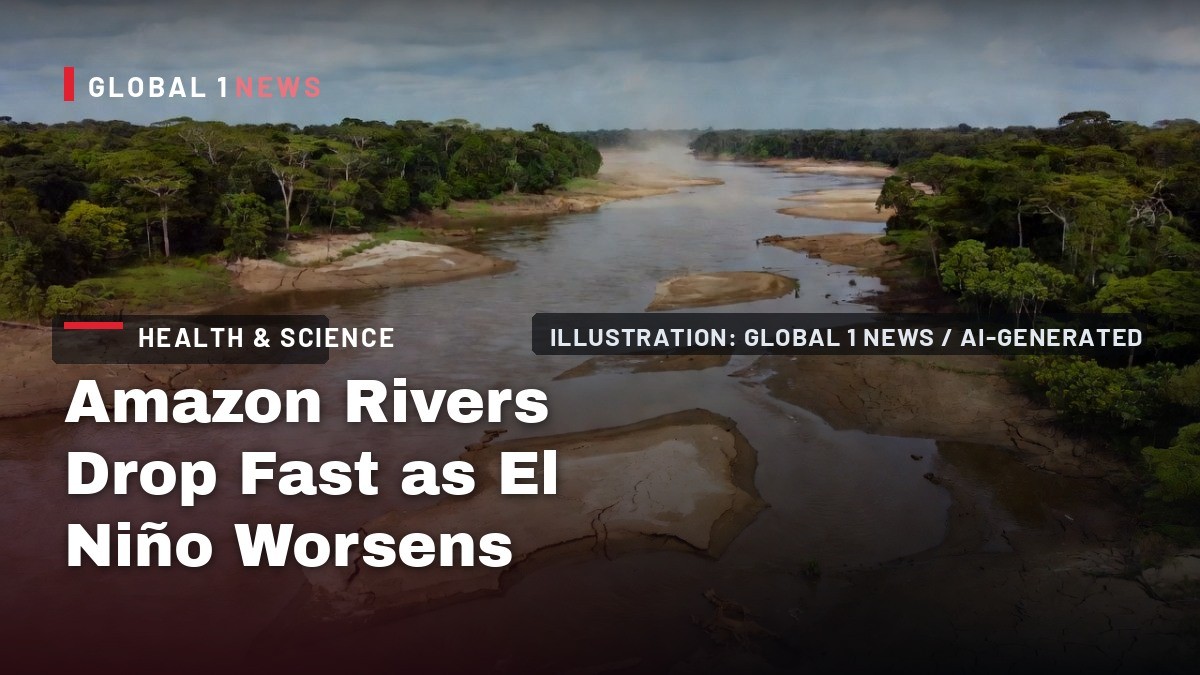
The brown waters of the Rio Negro are receding at a pace that alarms even the most seasoned river traders in Manaus. Sandbars that were underwater last month are now visible, baking in the equatorial sun, as the great water highway that sustains millions of people across the.
Amazon Rivers Drop Fast as El Niño Worsens
Manaus, Brazil — The Negro River near this Amazonian capital of more than 2 million people fell nearly 23 inches during the first ten days of August, according to local monitoring data reported by BNC. That decline is roughly 9.4 inches greater than the same period last year, signaling an unusually rapid drop that is now threatening navigation and supply chains across the region.
Rapid Decline in Loreto Raises Alarm
Peru’s National Service of Meteorology and Hydrology (Senamhi) reported on Thursday that water levels in the main Amazon rivers in the Loreto region are declining progressively and rapidly. The agency is closely monitoring the Amazon, Marañón, Ucayali, and Huallaga rivers, where water levels are now well below historical averages for this time of year. Senamhi experts warn that the lack of rainfall is causing water levels to fall by several centimeters per day—a condition typically seen toward the end of the year, but arriving significantly earlier due to unusually warm Pacific Ocean temperatures.
The forecast offers little comfort. Senamhi stated that water levels will continue to decline progressively until mid-September, before fluctuating and beginning a tentative recovery in November and December. However, the agency cautioned that levels will likely remain predominantly below normal for the rest of the year. For the riverside communities that depend on these waterways as their only link to the outside world, this extended period of low water threatens to sever access to essential goods.
Supply Chains at Risk in Iquitos and Beyond
The effects are already being felt in the local economy. Emerging sandbars are making navigation increasingly difficult for large vessels that supply Iquitos, Peru’s largest Amazon city, which is reachable mainly by river or air. Across the Amazon, rivers serve as the transportation arteries for communities, municipalities, and entire supply chains. When water levels fall too low, the transportation of passengers, food, medicine, and fuel becomes perilous or impossible.
In Brazil, authorities have focused on logistical and economic preparations to prevent the accelerated decline of Amazon tributaries from isolating thousands of riverside communities well before the peak of the dry season. Water levels fell more rapidly this week in several rivers, dropping by as much as 5 1/2 inches in a single 24-hour period, according to BNC. The urgency is palpable in Manaus, where the confluence of the Negro and Amazon rivers creates a bustling port that is now facing the prospect of reduced cargo capacity.
Shipping Surcharges Threaten Consumer Prices
Brazil’s National Waterway Transportation Agency has stated that conditions so far do not indicate that 2026 will match or surpass the historic droughts of 2023 and 2024, which brought record lows to some of the world’s greatest rivers. However, the declining levels have already prompted shipping companies to announce surcharges on cargo traveling to or from the port of Manaus. Portal A Crítica reported that such increases typically affect local supply chains and can raise prices for essential consumer goods, including cleaning products, bottled water, and meat.
For the 2 million residents of Manaus, this translates into a direct hit on household budgets. The city, an industrial hub in the heart of the rainforest, relies heavily on river transport for both its industrial inputs and its daily consumer goods. If the surcharges stick, the cost of living in the Amazon’s largest city is expected to rise just as the region braces for the peak of the dry season.
Indigenous Communities Face Isolation
The human cost of the falling rivers is most acute for the region’s most vulnerable populations. A vulnerability study of the Amazon basin published in the journal Nature found that more than 1,300 Indigenous villages and 1,800 rural communities in Brazil are located more than 3 miles from any road but within 3 miles of a river. When water levels fall sharply, these communities can become completely isolated from food and medical supplies.
Official statistics show that 51 Indigenous peoples live in Peru’s Amazon region, organized across more than 2,700 officially recognized Indigenous communities. For these groups, the river is not just a transportation route; it is the source of drinking water, fish, and the cultural lifeline that connects villages. The rapid drop in water levels is forcing families to travel further to find potable water and is threatening the fish populations that form the basis of their diet.
El Niño’s Grip and the Ghost of 2023
The current crisis is a direct consequence of a strengthening El Niño in the Pacific, which is forecast to peak around the end of this year. This climate anomaly is reducing rainfall across the western Amazon, leading to the rapid decline in river levels. The situation is reminiscent of the severe 2023-24 drought, which left some of the world’s greatest rivers at record lows. Scientists and Indigenous residents say the Amazon is still struggling to recover from that event, making the current decline even more concerning.
In Brazil, the government has taken preemptive measures. Federal authorities have boosted wildfire spending and hired a record number of federal firefighters in anticipation of extreme drought conditions. This is a lesson learned from the 2023-24 season, which showed that fire and ecological damage can increase even as deforestation area declines. Notably, Amazon deforestation alerts in 2026 have fallen to their lowest level since 2013, according to Brazilian data, but the dry conditions threaten to undo conservation gains through uncontrolled wildfires.
Economic Toll and Regional Preparedness
The broader economic impact of these climate extremes is staggering. In the first half of 2026, droughts, landslides, and floods in Brazil caused financial losses of R$6.6 billion, according to an AON report. With El Niño expected to intensify damage in the second half of the year, that figure is likely to rise. The river crisis is not just an environmental story; it is a fiscal and social emergency that tests the resilience of Latin American infrastructure.
In Peru, Senamhi’s monitoring is critical for early warning, but the agency’s ability to predict the exact severity of the dry season is limited. The agency has stated that conditions will fluctuate, but the overall trend points to a prolonged period of below-normal water levels. For the port authorities in Iquitos and Manaus, this means planning for a longer period of restricted navigation and higher logistics costs.
A Region on the Brink
As the rivers fall, the specter of 2023 looms large. That year, the Negro River near Manaus hit its lowest level in over a century, stranding communities and causing a humanitarian crisis. While the National Waterway Transportation Agency says 2026 is not yet on track to match those records, the rapid pace of the current decline is a stark warning. The Amazon basin is entering the most critical phase of its hydrological cycle, and the margin for error is shrinking.
For the people of Loreto and Amazonas, the immediate future is one of adaptation. Boats are being loaded with lighter cargo, communities are stockpiling supplies, and families are preparing for the possibility of isolation. The river, which gives life, is also taking it away—one centimeter at a time. The coming weeks will reveal whether the preparations are enough to prevent a full-blown crisis.
This article was produced with AI-assisted research and editorial support. Sources: UPI, Senamhi, BNC, Portal A Crítica, Nature.
By Elena Vasquez, Staff Writer
What's Your Reaction?
 Like
0
Like
0
 Dislike
0
Dislike
0
 Love
0
Love
0
 Funny
0
Funny
0
 Wow
0
Wow
0
 Sad
0
Sad
0
 Angry
0
Angry
0

Latin America Correspondent at Global1.News. Based in Mexico City, covering politics, economics, energy, and culture across the region. Brings an on-the-ground perspective to stories spanning from the Rio Grande to Patagonia.














Comments (0)