
After 500,000 tutoring lessons in Israel, Limud Naim expands to the U.S. with Tutorela
The Israeli private tutoring marketplace Limud Naim, which has facilitated more than 500,000 lessons since its founding twelve years ago, is taking its model across the Atlantic. This week, the company announced the U.S.
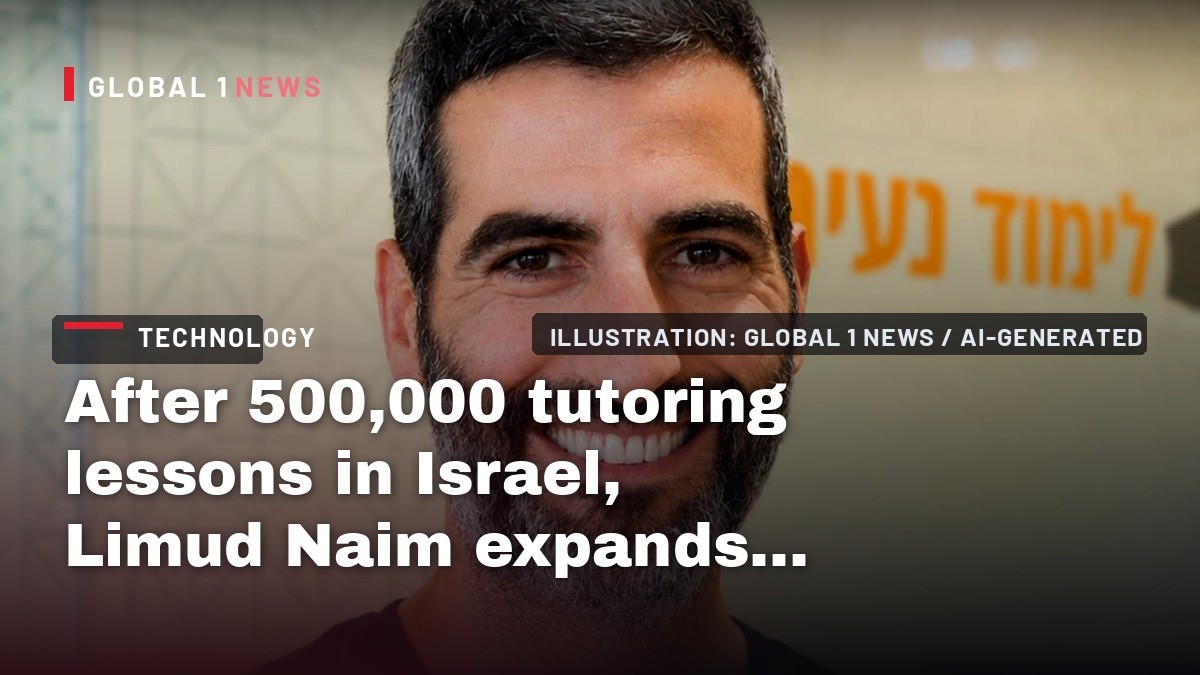
The Israeli private tutoring marketplace Limud Naim, which has facilitated more than 500,000 lessons since its founding twelve years ago, is taking its model across the Atlantic. This week, the company announced the U.S. launch of Tutorela, an international platform that pairs live one-on-one tutoring with continuous AI-driven practice between sessions.
After 500,000 tutoring lessons in Israel, Limud Naim expands to the U.S. with Tutorela
Tel Aviv, Israel — The expansion marks a significant step for one of Israel’s most established education-technology players, moving from a domestic market of roughly 15,000 registered tutors to the far larger and more fragmented American tutoring landscape. Tutorela was founded by Roee Naim and Yaakov Yarmolovsky, the team behind Limud Naim, bringing over a decade of operational experience in Israel’s competitive private tutoring sector to the United States.
From Israeli classrooms to the American market
Limud Naim has been a fixture in Israeli education for over a decade, connecting families with private tutors across subjects ranging from mathematics and English to bagrut exam preparation. The company reports more than 15,000 registered tutors and 50,000 student reviews accumulated over its twelve years of operation. Those numbers, while modest compared to global edtech giants, represent a deep understanding of the local tutoring ecosystem — one that the founders believe translates well to the U.S. market.
The move comes at a time when Israeli startups across sectors are increasingly looking abroad for growth, with the U.S. remaining the primary destination for expansion. For education technology specifically, the American market offers both opportunity and challenge: high demand for personalized learning, but also intense competition from established players and well-funded newcomers.
Tutorela’s pitch is distinct. Rather than positioning itself purely as an AI tutor or purely as a human tutoring marketplace, the platform emphasizes a hybrid model. Students learn with a human tutor in live sessions, then practice with AI tools throughout the week, track their progress, and return to the next session better prepared. The company describes this as a continuous learning loop: Learn with a tutor, practice with AI, track progress, and improve.
The problem of the gap between lessons
The core problem Tutorela aims to solve is one familiar to anyone who has tutored or been tutored: the loss of momentum between weekly sessions. A student meets a tutor once a week, perhaps for an hour. In the six days that follow, much of what was covered can fade, and the tutor enters the next session without clear visibility into where the student struggled or succeeded.
“The right tutor is essential, but effective learning often requires continuity throughout the week,” said Roee Naim, co-founder of Tutorela and Limud Naim, in a statement provided to the press. “Our platform uses technology to support students between lessons while maintaining the human relationship that makes tutoring impactful.”
That statement frames the company’s approach: technology as a support structure, not a replacement for the human educator. In Tutorela’s model, human tutors provide subject mastery, mentorship, and guidance — the relational elements that make tutoring effective. AI handles the repetitive work: practice problems, homework feedback, and review between sessions. It also gives tutors insight into student activity during the week, allowing them to tailor the next session to actual gaps rather than assumptions.
Human and AI, not human or AI
Naim’s vision is explicit about the division of labor. “The future of learning isn’t just human or AI, it’s human and AI working together,” he said. This positioning reflects a broader debate in education technology about the role of artificial intelligence. While some platforms have moved toward fully automated tutoring, Tutorela is betting that parents and students still value the human connection — and that AI can enhance, rather than replace, that relationship.
The company’s early traction in the U.S. suggests there is appetite for this approach. In less than a month since launching, nearly 100 tutors have registered with Tutorela across a range of subjects, according to company figures. That number, while early, indicates that the platform is attracting educators who see value in the hybrid model.
What the expansion says about Israel’s edtech sector
The launch of Tutorela is more than a single company’s growth story. It reflects a broader trend in Israel’s education technology sector, which has matured significantly over the past decade. Israeli edtech companies have moved beyond local solutions to address global challenges, particularly in personalized learning and assessment.
Israel’s education system, with its centralized structure and high-stakes bagrut exams, has long been a testing ground for tutoring platforms. Limud Naim’s success domestically demonstrated that there is a viable market for marketplace-based tutoring, connecting supply and demand in a fragmented sector. The question now is whether that model can scale internationally.
The U.S. tutoring market is substantially larger but also more complex. It includes a mix of private tutoring companies, franchise operations, online platforms, and school-based interventions. Tutorela enters this landscape with a differentiated value proposition: the integration of AI practice between human sessions, which addresses a known weakness in traditional tutoring models.
The role of AI in education: a shifting landscape
The timing of Tutorela’s U.S. launch is notable. Artificial intelligence has moved from experimental to operational in many classrooms, and parents are increasingly aware of both its potential and its limitations. The debate over AI in education has shifted from whether to use it to how to use it effectively.
Tutorela’s approach — using AI for practice and feedback while keeping humans at the center of instruction — aligns with a growing consensus among educators that technology should augment, not replace, teachers and tutors. The company’s emphasis on giving tutors visibility into student activity during the week addresses a practical pain point: the lack of data that has historically made tutoring a somewhat blind process.
For Israeli startups, this moment represents both an opportunity and a test. The global demand for personalized learning is high, and Israeli companies have demonstrated technical sophistication in AI and data. But the education market is notoriously slow to adopt new models, and success requires not just good technology but also trust from parents, students, and educators.
Company statements and the need for scrutiny
It is worth noting that the figures and claims in this report come from company materials and statements provided by Limud Naim and Tutorela. The 500,000 lessons, 15,000 tutors, and 50,000 reviews are company-reported metrics, not independently verified. Similarly, the nearly 100 U.S. tutors registered in the first month is a company figure. As with any startup expansion, early traction should be viewed with appropriate caution.
That said, the underlying trend is clear. Israeli education technology companies are increasingly looking beyond the domestic market, and the hybrid human-AI model is gaining traction as a pragmatic approach to personalized learning. Tutorela’s bet is that the combination of a proven marketplace model from Israel and new AI capabilities will resonate with American families.
Broader context: Israeli startups expanding abroad
Tutorela joins a long list of Israeli companies that have successfully expanded to the U.S. market. From cybersecurity to fintech to health tech, Israeli startups have consistently demonstrated an ability to build for local needs and then scale globally. The education sector has been slower to follow this pattern, but that may be changing.
The U.S. market offers several advantages for Israeli edtech companies: a large English-speaking population, high spending on private tutoring, and a fragmented market where no single player dominates. At the same time, the market is competitive, with established players like Chegg, Varsity Tutors, and a host of AI-native startups vying for attention.
Tutorela’s differentiation lies in its focus on the continuity problem. By providing AI practice between human sessions, the platform aims to keep students engaged throughout the week, not just during the hour they spend with a tutor. This is a value proposition that resonates with parents who worry about the effectiveness of weekly tutoring sessions.
What this means for the future of tutoring
The expansion of Limud Naim into the U.S. under the Tutorela brand is a signal that the Israeli tutoring market has reached a level of maturity that supports international growth. It also reflects a broader shift in how tutoring is delivered: from purely human, in-person sessions to a hybrid model that leverages technology for practice, feedback, and data.
For the Israeli education system, the success of companies like Limud Naim has already had an impact, normalizing the use of private tutoring and creating a marketplace that connects families with educators. The question now is whether that model can translate to a market with different dynamics, different expectations, and different regulatory environments.
Looking ahead: challenges and opportunities
The road ahead for Tutorela is not without challenges. Building trust with American parents will take time, and the company will need to demonstrate that its hybrid model delivers measurable results. Competition is fierce, and the AI education space is crowded with well-funded players.
But the company’s founders bring a decade of experience in a market that, while smaller, has similar dynamics. The Israeli tutoring market is competitive, price-sensitive, and demanding — qualities that have forced Limud Naim to build an efficient, effective platform. If that efficiency translates to the U.S., Tutorela could carve out a meaningful niche.
The broader lesson for Israel’s tech sector is that education technology, long seen as a laggard compared to cybersecurity or fintech, is now a serious export category. Companies like Limud Naim, Tutorela, and others are proving that Israeli innovation can address global educational challenges, not just local ones.
A measured outlook
As Tutorela begins its U.S. journey, the company’s early numbers are encouraging but not definitive. The real test will come over the next year, as the platform seeks to grow its tutor base, attract students, and demonstrate that the hybrid human-AI model delivers better outcomes than traditional tutoring alone.
For now, the expansion represents a vote of confidence in the Israeli approach to education technology: practical, data-driven, and focused on outcomes. Whether that approach resonates with American families remains to be seen, but the early signs are promising.
This article was produced with AI-assisted research and editorial support. Sources: The Jerusalem Post, Limud Naim/Tutorela company materials.
By Hannah Berg, Staff Writer
What's Your Reaction?
 Like
0
Like
0
 Dislike
0
Dislike
0
 Love
0
Love
0
 Funny
0
Funny
0
 Wow
0
Wow
0
 Sad
0
Sad
0
 Angry
0
Angry
0

Israel Correspondent at Global1.News. Based in Tel Aviv, covering Israeli politics, security, technology, and society. Provides balanced, deeply-sourced reporting on one of the most closely-watched regions in the world.













Comments (0)