
AI Servers Overtake Cars as Mexico's Top US Export
AI Servers Overtake Cars as Mexico's Top Export to the United States For the first time in Mexico's modern trade history, the machines that power artificial intelligence have displaced the automobiles that long defined our industrial identity. Between January and May 2026, Mexico's exports of AI infrastructure — computers, servers, data processing units, electronic boards, specialized cabling, transformers, and connectors — reached a record US$105.8 billion, growing 84.5% year over year.
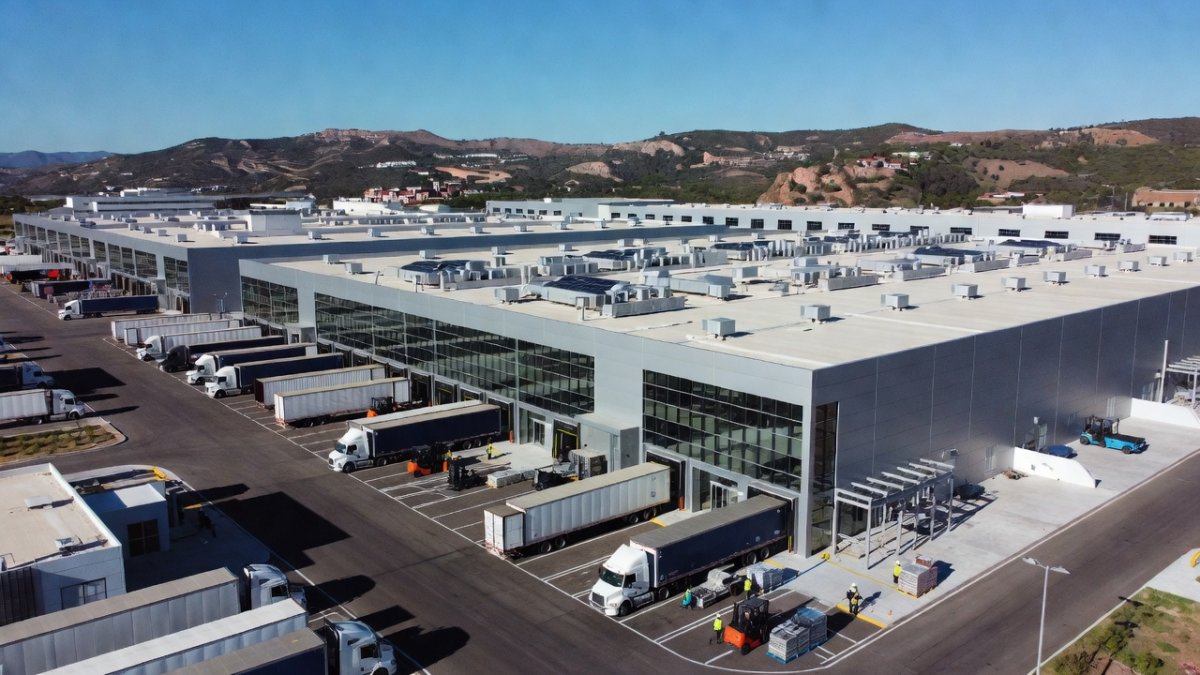
AI Servers Overtake Cars as Mexico's Top Export to the United States
For the first time in Mexico's modern trade history, the machines that power artificial intelligence have displaced the automobiles that long defined our industrial identity. Between January and May 2026, Mexico's exports of AI infrastructure — computers, servers, data processing units, electronic boards, specialized cabling, transformers, and connectors — reached a record US$105.8 billion, growing 84.5% year over year. During that same period, vehicle exports totaled US$60.5 billion, representing 19% of total exports, down from 23.7% a year earlier.
The numbers, reported by Banco de México and cited by Milenio, mark a historic pivot for a nation whose modern economy was built on the hum of assembly lines and the roar of engines. AI infrastructure products now account for 33.3% of Mexico's total exports in the first five months of the year, helping total foreign sales reach a historic US$317.2 billion. Vehicle shipments, meanwhile, declined 1.5% year over year amid pressure from the 25% tariffs imposed by US President Donald Trump.
This is not a small adjustment. This is a structural transformation of what Mexico makes and sells to its northern neighbor. Mexico now supplies roughly 40% of all US server imports for AI data centers, according to Financial Times reporting, placing it just behind Taiwan as the leading source of enterprise servers sold into the United States. Through the first five months of the year, Mexico sold US$46.9 billion in enterprise servers to the US, compared to Taiwan's US$53.5 billion — though Mexico actually edged ahead of Taiwan on a monthly basis in May.
Servers and related hardware now account for almost one-fifth of Mexico's total exports for the January-May period, more than double what the same category generated a year earlier. Rio Times reported computer exports reached US$82.9 billion in the first half of 2026, up 172%, while car exports grew just 1% under US tariffs. The message from the data is unmistakable: the engine of Mexican exports has changed.
Tags: AI servers Mexico, Mexico exports US, Foxconn Guadalajara, Jalisco electronics, Chihuahua manufacturing, nearshoring Mexico, USMCA trade, Banco de México data, AI infrastructure, Mexican economy, maquiladoras jobs, Taiwan Mexico trade, peso exchange rate, data centers, Mexican workers
Who Is Building the Servers: Foxconn, Jalisco, and Chihuahua
Walk through the industrial parks of Guadalajara today and you will hear a different kind of factory hum. Foxconn operates one of the world's largest AI server campuses near the city, assembling servers and networking equipment for Dell, HP, and direct cloud-provider orders. Jalisco now accounts for roughly a quarter of Mexico's total electronics exports, and the state has emerged as one of the country's most important electronics clusters, concentrating about 70% of the semiconductor companies and 23% of its software developers, according to government data.
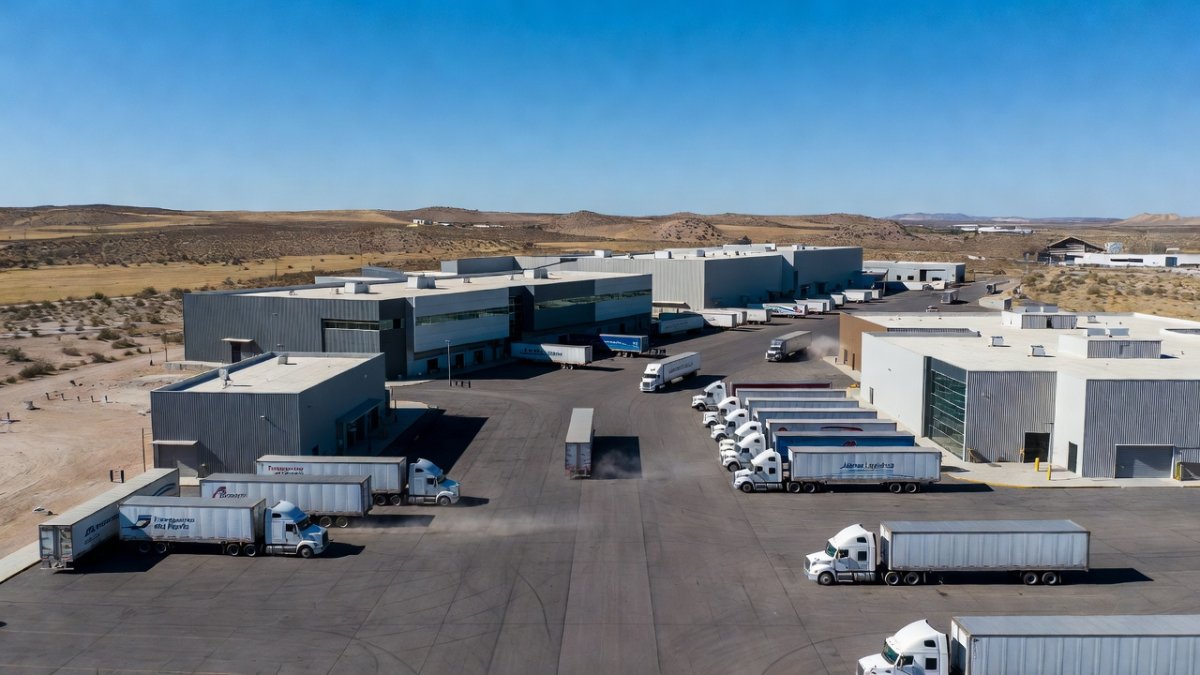
The shift is driven by Taiwanese contract manufacturers relocating assembly operations to Mexican industrial parks. Flex, Jabil, Sanmina, and other original design manufacturers — including Quanta, Pegatron, Inventec, and Wiwynn — have built or expanded comparable operations, with Ciudad Juárez in Chihuahua serving as a second major hub. These global manufacturers assemble hardware and components that ultimately support the world's largest technology companies serving the US market.
Rather than manufacturing advanced semiconductors, Mexico has strengthened its position in the production and assembly of the broader infrastructure needed to deploy AI at scale. The manufacturing footprint spans several industrial states. Jalisco and Chihuahua remain leading production centers, while Baja California, Nuevo Leon, Coahuila, and Tamaulipas have expanded their roles in assembling servers, electronic boards, electrical systems, and specialized cabling for North American supply chains.
Taiwan has become Mexico's third-largest trading partner, up from eighth as recently as 2022, after Taiwanese firms poured more than US$1.6 billion into Mexican factories since 2020. This is not abstract trade data — it is concrete investment in buildings, equipment, and jobs across Mexican states that have long depended on manufacturing for their economic survival.
What This Means for Mexican Workers and Communities
For the workers of Jalisco and Chihuahua, this shift means new opportunities and new demands. The maquiladoras that once assembled televisions and car parts are now training workers to handle delicate electronic boards, cooling systems, and data processing units. The jobs are different — often cleaner, sometimes better paid, but requiring more technical skill than the traditional assembly line work that defined previous generations of Mexican manufacturing.
In Guadalajara's tech corridors, young engineers and technicians are finding careers that did not exist a decade ago. The city has become a magnet for software developers and hardware specialists, with 23% of the country's software developers concentrated in Jalisco. For families in colonias across the metropolitan area, this means sons and daughters can build careers in technology without leaving home for the United States or migrating to Mexico City.
In Ciudad Juárez, the story is similar. The city that was once synonymous with the violence of the drug war has reinvented itself as a hub for high-tech manufacturing. Workers who once assembled car stereos now handle server components bound for data centers in Texas and California. The wages are modest by US standards but competitive within Mexico, and the demand for skilled labor is growing faster than the local training programs can supply it.
Yet there is a cautionary note. The boom is concentrated in specific industrial corridors, and not all Mexican states are sharing equally in the gains. Communities in the south, where poverty rates remain highest, have seen little of this investment. The challenge for Mexican policymakers is to ensure that the benefits of this historic shift reach beyond the northern border states and into the regions that have been left behind by previous waves of industrialization.
The Nearshoring and USMCA Trade Picture
The mechanics of this trade shift are elegant in their simplicity. A server assembled in Mexico can be trucked directly across the border to US data centers, rather than completing a full transpacific shipment from Asia. Finished systems move north under the USMCA trade framework, giving American hyperscale cloud operators a production base physically close to where the hardware is ultimately installed.
Banco de México had already identified the emerging trend in its July-September 2025 Quarterly Report, noting that US imports were increasingly weighted toward computer equipment and related components, driven by investments associated with AI adoption. The central bank saw this coming, and the data now confirms that the trend has become a defining feature of Mexican trade.
Mexico is participating in the AI expansion by producing and exporting data processing units, graphics processing units, cooling systems, and other electronic components required to build AI infrastructure in the United States. This is not the semiconductor fabrication that dominates headlines about Taiwan and Arizona — it is the assembly, testing, and integration of the systems that make AI work at scale.
The USMCA framework has been essential to this growth. The trade agreement provides the legal certainty that Taiwanese manufacturers need to invest billions in Mexican facilities, knowing that their products will cross the border without facing tariffs or other barriers. The agreement has also created a three-way dynamic in which Taiwan provides the design and core components, Mexico provides the assembly and proximity, and the United States provides the demand and final market.
Challenges and Limits: Dependence, Competition, and Infrastructure
For all the celebration of this historic shift, there are real challenges that Mexican workers and businesses must confront. The most obvious is dependence on US AI demand. If the artificial intelligence bubble bursts, or if US companies slow their data center construction, Mexico's newest export engine could stall as quickly as it accelerated. The automotive sector learned this lesson painfully in past downturns, and the AI sector offers no guarantee of immunity.
Competition with Taiwan remains intense. While Mexico edged ahead on a monthly basis in May, Taiwan still leads on a cumulative basis for the January-May period. Taiwanese manufacturers have deep expertise, established supply chains, and government support that Mexico cannot easily match. The question is whether Mexico can move beyond assembly into higher-value activities like design, testing, and software integration.
Infrastructure is another constraint. The industrial parks of Jalisco and Chihuahua are straining under the weight of new investment. Power supplies, water systems, and transportation networks need upgrades to support the energy-hungry server assembly operations. Mexican states and the federal government will need to invest heavily in infrastructure to sustain the growth, and that investment will take time to materialize.
Skills development is perhaps the most pressing challenge. The workers who assemble AI servers need different training than those who built cars. Mexico's education system, particularly its technical and vocational schools, must adapt quickly to produce the technicians and engineers that the new economy demands. The private sector is already partnering with local universities, but the scale of the need far exceeds current capacity.
What to Watch For Next
The AI hardware boom is arriving at a useful moment for Mexico's broader economy, which has otherwise faced trade friction with the US, including tariffs on autos and threats of tariffs on other goods. The peso has been trading around 17 to the US dollar, strengthening in recent weeks as investors bet on Mexico's continued role in the AI supply chain.
Industry analysts say the rise of AI infrastructure exports should not be viewed as replacing Mexico's automotive sector but rather as changing the composition of the country's export portfolio. Cars are not disappearing from Mexican factories — they are simply sharing the stage with servers, and for the first time, the servers are taking the lead role.
In the coming months, watch for continued investment announcements from Taiwanese manufacturers, expansion of industrial parks in Jalisco and Chihuahua, and efforts by the Mexican government to extend the benefits to other states. Watch also for how the US trade relationship evolves — the tariffs that hurt the auto sector could easily be extended to electronics if political winds shift in Washington.
For Mexican families, the immediate question is whether this boom translates into stable, well-paying jobs that can support communities and build futures. The early signs are encouraging, but the long-term test is whether Mexico can move up the value chain and capture more of the economic benefit from the AI revolution. The servers are leaving Mexican factories by the truckload — the question is whether the prosperity stays behind.
By Rosa Martinez, Staff Writer
This article was produced with AI-assisted research and editorial support. Sources: Mexico News Daily, Mexico Business News, Sociedad Media, Rio Times, Milenio, Banco de México, Financial Times.
What's Your Reaction?
 Like
0
Like
0
 Dislike
0
Dislike
0
 Love
0
Love
0
 Funny
0
Funny
0
 Wow
0
Wow
0
 Sad
0
Sad
0
 Angry
0
Angry
0

Latin America/Andes Correspondent at Global1.News. Based in Bogota, covering politics, environment, energy, and social movements across the Andean region. Passionate about environmental journalism and communities protecting their land.














Comments (0)