
Screenless GPS: Slate Auto says, "Remember the road atlas"
Slate Auto’s newest electric truck is a study in stripped‑down pragmatism, and the “Screenless GPS” gimmick is the latest flashpoint in the ongoing debate over how much tech belongs in a vehicle.
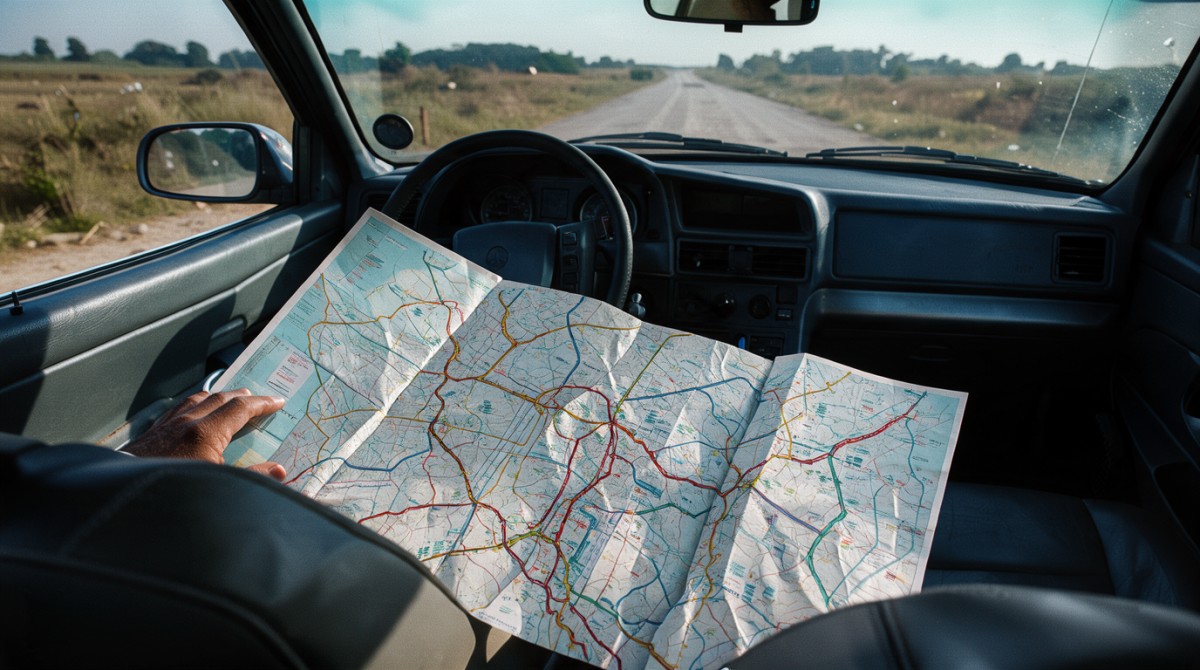
Slate Auto’s newest electric truck is a study in stripped‑down pragmatism, and the “Screenless GPS” gimmick is the latest flashpoint in the ongoing debate over how much tech belongs in a vehicle. The startup markets the truck at a sub‑$25,000 starting price, promising an affordable electric rig that leaves everything else to the owner’s DIY instincts. In practice, that means no embedded infotainment, no built‑in connectivity beyond two power‑only USB‑C ports, and a reliance on a good‑old spiral‑bound road atlas for navigation. For a founder who’s spent a decade wrestling with production servers and the endless upgrades demanded by hyperscalers, the move feels both refreshing and a little reckless.
Why Slate Ditches the Infotainment Screen
Slate’s decision to strip out an infotainment system is a direct response to the cost creep that plagues most EV projects. The small digital display that shows speed, range, and even the backup camera is the only screen on the dash, and the USB‑C ports are deliberately limited to power delivery only. By avoiding the “connected car” stack, Slate sidesteps the massive licensing fees and ongoing OTA update obligations that choke many independent manufacturers.
From a risk perspective, fewer software components mean fewer attack surfaces. In my own operations, a single OTA failure can cascade into a full‑scale outage, forcing costly rollbacks. Slate’s approach eliminates that class of risk, but it also forces owners to adopt a manual navigation method that feels anachronistic in a world of live traffic feeds.
The Atlas as Navigation Tool
The “Screenless GPS” is nothing more than a Rand McNally 2027 Road Atlas, a 154‑page spiral‑bound book covering the United States, Canada, and Mexico. Slate frames it as a nostalgic nod to the devices drivers “know and love,” arguing that maps have worked for generations and should still work today. The atlas is full‑color and portable, and because it’s paper‑based, there are no OTA updates—any changes must be applied manually, a process the article likens to sticking a Post‑it note on the pages.
While the atlas lacks the rich data layers of modern digital maps—live traffic, road conditions, and the precision needed for assisted driving—it does deliver a baseline level of navigation that any driver can read. For a truck priced under $25,000, the trade‑off is arguably acceptable, especially for customers who are comfortable with a DIY mindset.
Vehicle‑Agnostic Simplicity
Slate’s screenless system is deliberately vehicle‑agnostic. The article notes that the atlas can be used just as easily in a Ford, Ferrari, or Fisker as in a Slate truck. This universality is a subtle but powerful advantage: the same low‑cost navigation solution can be bundled across a range of platforms without additional integration work.
From a founder’s angle, that means you can sell the same accessory to multiple OEMs, leveraging economies of scale without the complexity of customizing software stacks for each brand. It’s a classic “one‑size‑fits‑all” play that cuts development overhead and sidesteps the endless compatibility testing that keeps many startups chained to a single hardware partner.
The Cost of Going Digital
Modern automotive navigation systems are built on data streams from companies that charge per‑device, per‑month fees for live updates and map licensing. Those costs quickly balloon, especially when you factor in the need for OTA infrastructure, secure boot, and compliance with evolving safety standards. Slate’s avoidance of these fees is a direct challenge to the hyperscaler model that dominates the industry.
In practice, the savings are reflected in the sub‑$25,000 price tag. For independent providers, that price point is a competitive lever. However, the trade‑off is the loss of real‑time data that can improve route efficiency and driver safety. The decision to forego that data is a gamble that hinges on the target market’s tolerance for manual navigation.
Risk Management for Independent Builders
Running a production fleet of servers teaches you that every added feature is a potential point of failure. Slate’s minimalist approach mirrors that philosophy: fewer moving parts, fewer bugs, and a reduced attack surface. The article’s description of the atlas as “not quite as detailed” as automotive‑grade maps underscores the gap in data richness, but also highlights the reduced complexity.
For founders, the lesson is clear: if you can deliver a functional product at a lower cost by stripping out non‑essential services, you mitigate both financial and operational risk. The downside is the customer experience—some will balk at the idea of a paper map in an electric truck. Yet for a segment that values affordability and DIY freedom, the risk is acceptable.
Market Reception and Real‑World Viability
The review notes that the screenless GPS system is being offered as a limited‑time add‑on in Slate’s store, with a sticker pack and the atlas itself slated for a charity drive. This limited rollout suggests Slate is testing market appetite before committing to a broader launch. Early adopters who are comfortable with a paper map will likely appreciate the low entry price, while others may see it as a step backward.
From a business‑risk standpoint, the limited release allows Slate to gauge demand without over‑investing in inventory. It also provides a clear data point: if the atlas sells out quickly, there’s a niche market for ultra‑basic EVs. If not, Slate may need to reconsider the balance between cost savings and feature expectations.
Actionable Takeaways for Founders
First, question every software layer you add. Slate’s model shows that you can shave tens of thousands off a vehicle’s price by eliminating infotainment and live‑map services. Second, leverage existing, low‑cost solutions—like a road atlas—to meet baseline needs while you focus on core differentiators. Third, use limited‑time offers to test market appetite before scaling production. Finally, communicate the trade‑offs clearly: tell customers they’re getting an affordable EV at the cost of manual navigation, and let them decide if that’s a fair exchange.
In a world where VC‑funded hype pushes ever‑more features into every car, Slate Auto’s “Screenless GPS” is a reminder that simplicity can be a competitive advantage—provided you understand the risk and manage expectations. Stay lean, stay focused, and let the market tell you what you can afford to cut.
This article was produced with AI-assisted research and editorial support. Reporting is based on the source material cited below. Sources: Ars Technica; arstechnica.com; Global1.News (15 November 2026).
By Allan Ali, Global1.News
What's Your Reaction?
 Like
0
 Dislike
0
 Love
0
 Funny
0
 Wow
0
 Sad
0
 Angry
0

Publisher of Global1.News. Automation architect, systems builder, and the guy making sure the truth gets published.















Comments (0)