
1 Dead After Plane Makes Emergency Landing on Busy B.C. Road
In a recent CBC News report on Hanomansing Tonight, Canadians learned of a devastating and rare incident in Prince George, British Columbia, where a twin-engine aircraft was forced to make an emergency landing on a busy city arterial road, resulting in at least one fatality. The crash, which occurred on Thursday afternoon, has left the northern B.C. community in shock and prompted a full-scale investigation by the Transportation Safety Board of Canada (TSB).
In a recent CBC News report on Hanomansing Tonight, Canadians learned of a devastating and rare incident in Prince George, British Columbia, where a twin-engine aircraft was forced to make an emergency landing on a busy city arterial road, resulting in at least one fatality. The crash, which occurred on Thursday afternoon, has left the northern B.C. community in shock and prompted a full-scale investigation by the Transportation Safety Board of Canada (TSB). The incident raises profound questions about aviation safety, emergency response protocols, and the inherent risks when aircraft are forced down in populated areas.
1 Dead After Plane Makes Emergency Landing on Busy B.C. Road, Striking Vehicles
Prince George, B.C. — A twin-engine Beech King Air 200 aircraft crash-landed on Foothills Boulevard in Prince George on Thursday afternoon, slamming into multiple vehicles and killing one person, according to RCMP. The emergency landing, which occurred around 2:20 p.m. local time, scattered debris across the roadway, including a propeller. Social media photos show a man at the scene with visible injuries, though police said the full extent of injuries to others on the ground or in the aircraft remained unknown.
Prince George RCMP confirmed the fatality in a news release Thursday evening, stating, "Police are saddened to confirm that there has been one fatality in this incident, an occupant of one of the vehicles." The release noted that the potential for other injuries to individuals on the ground or within the aircraft remained unknown as of Thursday night, as investigators worked to piece together the sequence of events.
The Incident: A Routine Afternoon Turned Deadly
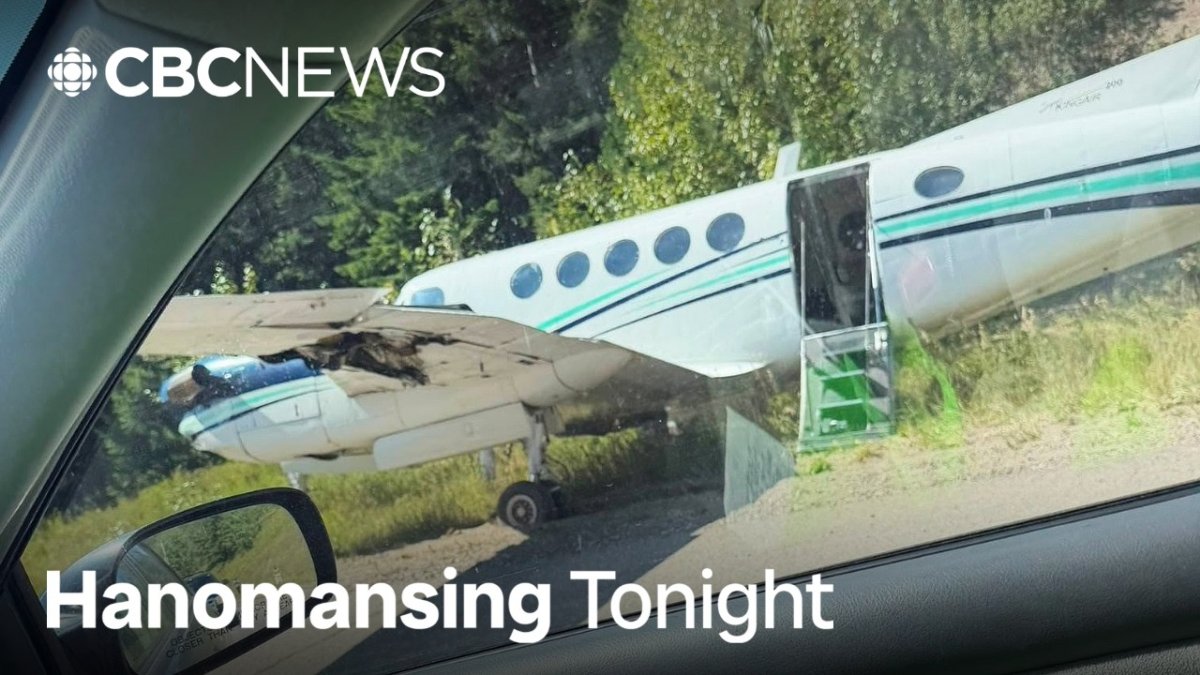
Foothills Boulevard, a major north-south thoroughfare in Prince George, was bustling with typical afternoon traffic when the King Air 200 came down without warning. Social media images circulating shortly after the crash depict a harrowing scene: what appears to be aircraft wreckage speared through the windscreen of a pickup truck, with a man standing nearby, blood running down his face. Another vehicle is pictured in a ditch adjacent to the plane, which came to rest with its door open and a wing damaged, sitting perilously close to overhead hydro lines.
The aircraft, a Beech King Air 200, is a common twin-turboprop workhorse in Canadian aviation, frequently used for charter flights, medevac operations, and corporate transport. Its presence in Prince George, a regional hub for forestry, resource industries, and air travel roughly 500 kilometres north of Vancouver, is not unusual. However, the decision to attempt a landing on a public road—rather than a field or the nearby airport—suggests the pilots were facing a critical, time-sensitive emergency.
The RCMP has not confirmed what prompted the pilot to attempt the landing or the condition of the aircraft before it came down. Investigators will work to determine whether mechanical failure, fuel exhaustion, or pilot decision-making played a role. The plane came to rest alongside the roadway with its door open and a wing damaged, close to the overhead hydro lines that run along the corridor.
The Investigation: TSB Deploys Team to Prince George
The Transportation Safety Board of Canada (TSB) confirmed late Thursday that investigators had been deployed to Prince George to lead the probe into the crash. The TSB, an independent agency that investigates air, marine, pipeline, and rail transportation occurrences, will focus on determining the probable cause of the emergency landing and the subsequent collision. Investigators were expected to arrive on site Friday morning to begin the meticulous process of examining the wreckage, interviewing witnesses, and retrieving the aircraft's flight data and cockpit voice recorders, if equipped.
RCMP Cpl. Jennifer Cooper emphasized the importance of preserving the integrity of the investigation scene. "Investigators would like to remind the public that this is an active investigation and that they need to stay away from the area," Cooper said in a statement. "It removes valuable police resources from this investigation as well as the regular calls for service if RCMP must station police officers at every access point to Foothills Boulevard to keep the curious onlookers away, of which there have already been too many."
The TSB's investigation will likely examine several key factors: pilot decision-making under duress, the mechanical condition of the King Air 200, weather conditions at the time of the incident, and the aircraft's maintenance history. Emergency landings on roads are rare but not unprecedented in Canada; the TSB has investigated similar occurrences in the past, often citing engine failure, fuel exhaustion, or pilot error as contributing factors.
Canadian Context: The Beech King Air 200 and Northern Aviation
The Beech King Air 200 holds a storied place in Canadian aviation history. Introduced in the 1970s, this twin-turboprop has become a staple for operators serving remote and northern communities, where its reliability and performance on short runways are highly valued. In British Columbia, King Airs are frequently used for medevac flights, transporting patients from rural clinics to larger hospitals in Prince George, Kelowna, or Vancouver. They are also popular among corporate fleets and charter operators catering to the resource sector.
However, the aircraft's ubiquity also means that incidents involving it resonate deeply within the aviation community. The TSB's decision to deploy a full investigation team underscores the seriousness of Thursday's crash, which resulted in a ground fatality—a relatively rare outcome in general aviation accidents, where deaths are more commonly confined to those aboard the aircraft.
This incident also reignites conversations about aviation safety oversight in Canada. Transport Canada, the federal regulator, sets stringent standards for pilot training, aircraft maintenance, and operational procedures. Yet, the sheer vastness of Canadian airspace and the reliance on small aircraft for essential services in remote regions create unique challenges. The TSB has long advocated for improved safety management systems and better emergency training for pilots operating in challenging environments.

Impact on Canadians: Road Closures and Community Response
For residents of Prince George, the immediate impact of the crash is tangible. Foothills Boulevard, a key arterial route connecting the city's south end to the rest of Prince George, remained closed to traffic overnight and into Friday, according to police. The closure has forced commuters to seek alternate routes, causing significant delays and disruptions to daily life in a city that relies heavily on road transport for its economic activities.
The closure also affects emergency services, which must navigate around the crash site to respond to other calls. Prince George RCMP have urged the public to avoid the area entirely, not only to preserve the investigation but also to ensure that first responders can operate efficiently. The sight of a downed aircraft on a major road has understandably rattled local residents, many of whom took to social media to express their shock and offer condolences to the victim's family.
Community members in Prince George have begun to rally, offering support to those affected by the tragedy, and officials have urged the public to avoid the area while the investigation continues. First responders from Prince George RCMP, fire services, and paramedics attended the scene Thursday afternoon, and the full extent of injuries remained unclear as of Thursday evening, police said.
Reactions and Analysis: A Rare but Grave Reminder
Aviation safety observers note that while emergency landings on roads are rare, they are a sobering reminder of the risks inherent in flight, particularly in a country like Canada where vast distances and challenging terrain make air travel essential. When an aircraft is forced down over a populated area, the options are inherently limited: a road may seem viable from the air, but it carries enormous risks for people on the ground, as Thursday's crash demonstrated.
The fact that the King Air 200 struck multiple vehicles and killed an occupant of one of them highlights the potential for catastrophic outcomes when an aircraft is forced down in an urban environment. The TSB's investigation will likely scrutinize whether the pilots had alternative options, such as a nearby field or the Prince George Airport, and whether the decision to land on Foothills Boulevard was the best course of action given the circumstances.
This incident also comes amid a broader conversation about aviation safety in British Columbia, which has seen a series of small-aircraft incidents in recent years. While the province's mountainous terrain and unpredictable weather present inherent challenges, Transport Canada and the TSB have repeatedly emphasized the importance of rigorous pilot training and adherence to emergency procedures. Thursday's crash serves as a grim reminder that even the most experienced pilots can face situations where every second counts.
What Happens Next: Investigation and Recovery
The TSB investigation is expected to take months, with a preliminary report likely to be released in the coming weeks. Investigators will examine the aircraft's maintenance logs, pilot records, and weather data, as well as conduct a thorough examination of the wreckage. The RCMP will continue to lead the ground investigation, working to identify the deceased and notify next of kin.
Foothills Boulevard is expected to remain closed for an extended period as investigators document the scene and crews work to remove the wreckage. The cleanup operation will be complex, involving the careful extraction of the aircraft from the roadway and the repair of any damage to infrastructure, including the hydro lines near the crash site.
For the community of Prince George, the road to recovery will be long. The loss of life in such a sudden and violent manner is a tragedy that will resonate for years. As the investigation unfolds, Canadians will be watching closely, seeking answers to the questions that linger in the wake of this devastating event.
The crash on Foothills Boulevard is a stark reminder of the fragility of life and the unpredictable nature of aviation. While the TSB works to uncover the facts, the people of Prince George—and indeed all Canadians—mourn the loss of a fellow citizen and hope for a thorough and transparent investigation that can help prevent such tragedies in the future.
By Alex Thompson, Staff Writer
This article was produced with AI-assisted research and editorial support. Reporting is based on sources cited in the article.
What's Your Reaction?
 Like
0
Like
0
 Dislike
0
Dislike
0
 Love
0
Love
0
 Funny
0
Funny
0
 Wow
0
Wow
0
 Sad
0
Sad
0
 Angry
0
Angry
0

Canada Correspondent at Global1.News. Based in Toronto, covering Canadian politics, energy, trade, and US-Canada relations. Provides the Canadian perspective on North American and global affairs.














Comments (0)