
Zabaikalsky Region Declares Emergency After Three Flood Waves Batter Far East District
Zabaikalsky region declares a state of emergency after three flood waves and rainfall up to 250% of seasonal averages damage 95 homes and key infrastructure. Governor Alexander Osipov moves to speed federal compensation as the Far East faces more downpours.
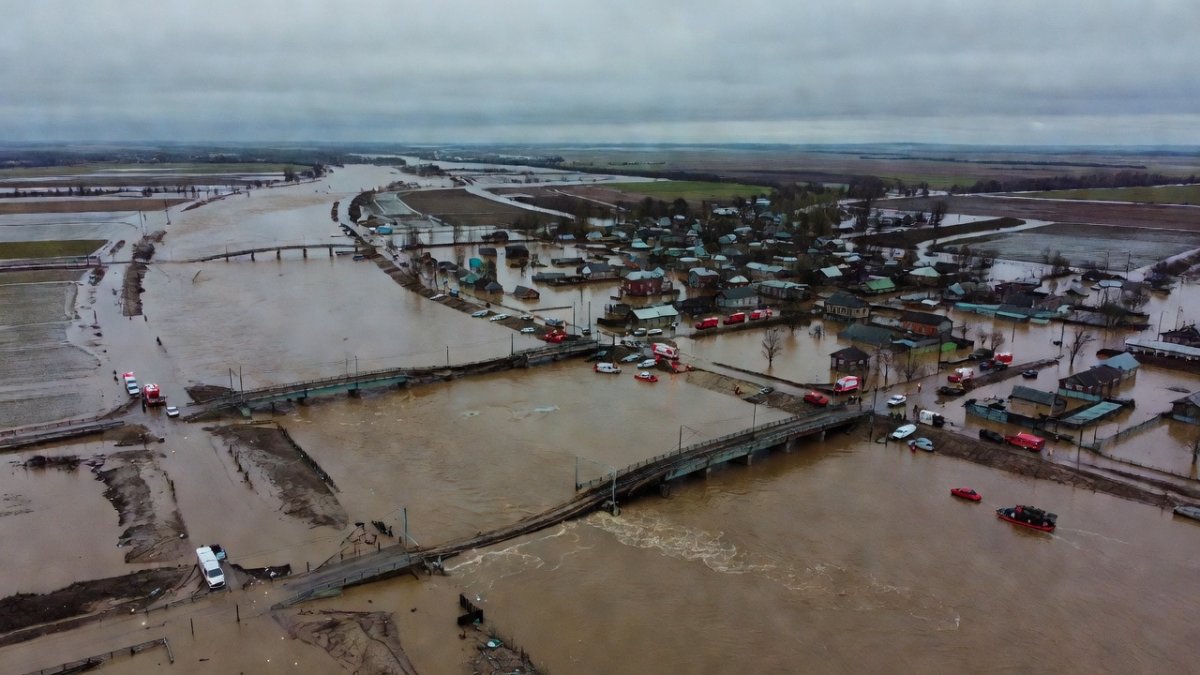
Authorities in Russia's Zabaikalsky region declared a state of emergency on Thursday after a summer of torrential rainfall and three consecutive flood waves battered nine municipal districts, prompting urgent financial aid measures for affected residents. Governor Alexander Osipov confirmed on Friday that while no active floodwaters remained inside homes, 95 residential properties sustained damage from the intense rainfall, with preliminary estimates placing damage to roads and bridges at more than 350 million rubles ($4.1 million). The emergency declaration is designed to expedite federal compensation payments and accelerate repairs to critical infrastructure across the region, which sits roughly 4,700 kilometers (2,900 miles) east of Moscow along the Chinese border.
Zabaikalsky Region Declares Emergency After Three Flood Waves Batter Far East District
Moscow, Russia — The Zabaikalsky region, one of Russia's poorest and most geographically isolated territories, is grappling with the aftermath of an unusually destructive flood season that has pushed local infrastructure to its limits. Governor Alexander Osipov, who has led the region since 2018, said the emergency declaration was necessary to speed up financial aid to residents and repair damaged roads, bridges, and public facilities. The announcement came after regional forecasters issued a fresh weather warning for heavy downpours through the weekend, threatening further water level spikes across local rivers.
A Summer of Record Rainfall
Rainfall across the Zabaikalsky region reached up to 250% of seasonal averages this summer, according to regional emergency officials. The deluge triggered five separate storm warnings as three distinct flood waves moved through the territory, affecting nine municipal districts. Governor Osipov described the situation in a post on Telegram, writing simply: "It's been a tough summer." Despite the severity of the flooding, officials confirmed no reports of injuries or deaths as a result of the disaster, a fact that Osipov attributed to early warning systems and the rapid response of emergency services.
The region's deputy chief of administration, Igor Smirnov, said Monday that initial financial aid payouts to flood victims had already begun. Smirnov did not specify the exact number of households that have received compensation so far, but he confirmed that the payout process is underway and that additional funds will be distributed as damage assessments are completed. The emergency declaration allows the regional government to access federal disaster relief funds more quickly, a mechanism routinely used by Russian regions to unlock compensation for disaster victims.
Damage Assessment and Infrastructure Strain
By Friday, Governor Osipov confirmed that no active floodwaters remained inside homes, but the damage was already done. Ninety-five residential properties sustained damage from the intense rainfall, ranging from flooded basements to structural damage to roofs and walls. The governor estimated damage to roads and bridges at more than 350 million rubles ($4.1 million), a significant burden for a region that relies heavily on federal transfers to balance its budget. The Trans-Baikal Railway, the critical freight artery connecting Siberia to the Russian Far East and China, remained operational through the flooding, though officials said they were assessing the condition of sections running through affected districts.
The scale of this year's flooding is smaller than the catastrophic floods of 2018 and 2021, which submerged more than 1,000 homes in the region. However, local officials warn that the current situation remains fluid, with forecasters predicting additional heavy rainfall through the weekend. Water levels across the Argun and Shilka rivers — which trace the border with China's Inner Mongolia and Heilongjiang provinces — as well as the Ingoda River, which runs through the regional capital of Chita, were being closely watched.
Flood Defense Investments Under Scrutiny
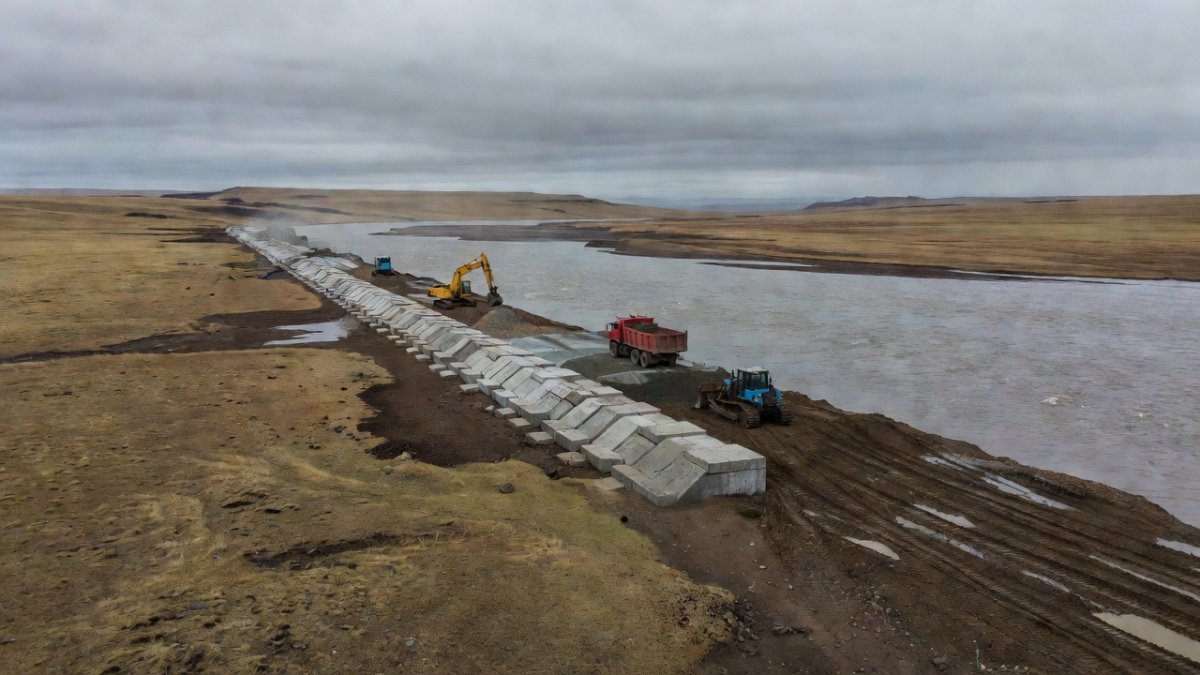
The repeated flooding has intensified scrutiny of the region's flood defense infrastructure. This year, funding for flood defense increased to 2 billion rubles ($23.8 million), a substantial rise from previous years. Work is currently underway on a 45-kilometer (28 miles) dam network intended to protect 45,000 residents once completed next year. The project, funded through federal flood-defense programs under the national "Safe and High-Quality Roads" agenda and regional infrastructure initiatives, is designed to reinforce riverbanks and prevent the kind of widespread inundation seen in 2018 and 2021.
However, the pace of construction has drawn questions from local residents, who have watched three flood waves arrive this summer before the dam network is complete. Climate analysts note that Russia's Far East is experiencing more frequent extreme precipitation in recent years, a trend that some scientists attribute to broader climate shifts affecting monsoon patterns in the region. The Zabaikalsky region, with its vast territory and relatively sparse population, faces particular challenges in maintaining and expanding protective infrastructure across remote districts.
Regional Economic Vulnerability
Zabaikalsky Krai is one of Russia's poorest regions, heavily dependent on federal transfers for its budget. Its economy relies on rail transport, mining, and agriculture, sectors that are particularly vulnerable to flooding and infrastructure damage. The Trans-Baikal Railway, a key component of the region's economic lifeline, runs through flood-prone river valleys, and damage to roads and bridges can ripple through supply chains and passenger travel alike. Agricultural lands along the region's river valleys have also been impacted, though officials have not yet released a full assessment of crop damage.
The region's economic fragility is compounded by its geographic isolation. Located more than 4,700 kilometers east of Moscow, Zabaikalsky Krai borders China's Inner Mongolia and Heilongjiang provinces, making cross-border trade an important part of the local economy. Flooding that damages roads and bridges can disrupt this trade, further straining the region's finances. The federal government has historically stepped in with emergency funding during major disasters, but local officials say the cumulative cost of repeated flooding is becoming increasingly difficult to manage.
Federal Response and Compensation Mechanisms
The state of emergency declaration is the first step in a well-established process for accessing federal disaster relief. Under Russian law, regional governments declare emergencies to unlock compensation funds from the federal budget, which are then distributed to affected residents and used to repair damaged infrastructure. Governor Osipov said the declaration would allow the region to expedite these payments, which are typically processed through the Ministry of Emergency Situations and regional social protection agencies.
Deputy chief of administration Igor Smirnov confirmed Monday that initial payouts have begun, though he did not disclose the total amount distributed so far. Residents affected by the flooding are entitled to compensation for damaged property, temporary housing assistance, and, in some cases, funds for rebuilding. The process, however, has historically been slow, with some residents in previous flood events waiting months for full compensation. Local officials have promised to expedite the process this time, but the sheer scale of damage across nine municipal districts presents a significant logistical challenge.
Broader Far East Flooding Crisis
The Zabaikalsky region is not alone in facing flood-related emergencies this summer. On August 11, the city of Khabarovsk, another Far East population center, introduced an emergency regime due to flooding on the Amur River, with Mayor Sergey Kravchuk signing the decree. Summer 2026 has seen extensive flooding across Russia's Far East and Siberia amid unusually heavy monsoon-driven rainfall, stretching federal and regional resources. The Amur River basin, which includes the Zabaikalsky region's rivers, has been particularly affected, with water levels in some areas approaching or exceeding historical highs.
The simultaneous flooding across multiple regions has raised questions about the adequacy of federal flood-defense funding and the preparedness of local authorities. While the federal government has allocated significant resources to dam construction and riverbank reinforcement, climate analysts argue that the pace of infrastructure development is not keeping up with the increasing frequency and intensity of extreme weather events. The Zabaikalsky region's 45-kilometer dam network, once completed, is expected to provide substantial protection, but it will not cover all vulnerable areas.
Analysis and Implications
The current flooding in Zabaikalsky Krai highlights a broader challenge facing Russia's Far East: the region's infrastructure is struggling to cope with a changing climate. Analysts suggest this signals a need for more sustained investment in flood defense and disaster preparedness, rather than reactive emergency responses. The region's reliance on federal transfers makes it particularly dependent on Moscow's willingness to fund long-term infrastructure projects, a political calculation that can be influenced by the visibility of disasters and the effectiveness of regional governors in advocating for their territories.
Governor Osipov, a United Russia politician who has led the region since 2018, has been vocal in seeking federal support for flood defense. His political standing may depend on how effectively he manages the current crisis and secures adequate compensation for affected residents. The coming weeks will be critical, as forecasters predict continued rainfall and the region works to repair damaged infrastructure before the onset of winter. For the 45,000 residents expected to benefit from the new dam network, the completion of that project next year cannot come soon enough.
This article was produced with AI-assisted research and editorial support. Sources: The Moscow Times.
By Irina Volkov, Staff Writer
What's Your Reaction?
 Like
0
Like
0
 Dislike
0
Dislike
0
 Love
0
Love
0
 Funny
0
Funny
0
 Wow
0
Wow
0
 Sad
0
Sad
0
 Angry
0
Angry
0

Russia/Eastern Europe Correspondent at Global1.News. Covering Russian politics, energy, security, and the shifting dynamics of the post-Soviet space. Provides clear-eyed analysis on one of the world's most opaque regions.















Comments (0)