
Polish Pilgrim Bus Crash in Hungary Kills 12, Driver Suspected of Falling Asleep
A Polish pilgrim bus returning from Medjugorje crashed on Hungary's M3 motorway near Mezőkeresztes on Aug 16, 2026, killing 12 and injuring 47. Police suspect driver fatigue. Polish and Hungarian leaders offered condolences; enhanced bus safety checks ordered.
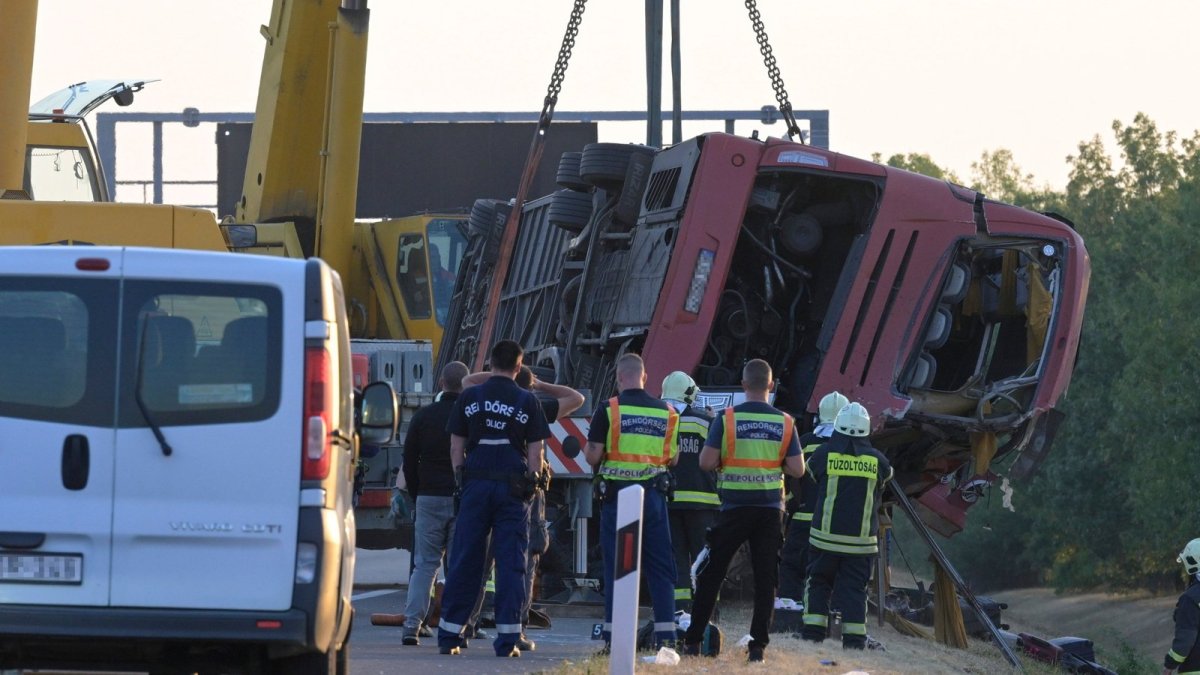
A devastating early-morning crash on Hungary's M3 motorway has claimed the lives of 12 Polish Catholic pilgrims returning from a religious site in Bosnia and Herzegovina, according to police and government officials. The single-vehicle accident, which occurred around 1:00 a.m. local time on Sunday, August 16, 2026, near the town of Mezőkeresztes, roughly 140 kilometers (87 miles) east of Budapest, has triggered an outpouring of grief from Warsaw to Kyiv and launched a cross-border investigation into the cause.
Hungarian police preliminary findings suggest the driver of the Polish-registered coach likely fell asleep at the wheel, causing the bus to veer off a straight stretch of roadway into a ditch and overturn. The driver survived the crash and has been taken into custody by Hungarian authorities, though no formal charges have been announced at this time. The bus was carrying 57 passengers and two drivers, all returning from a pilgrimage to the Catholic shrine at Međugorje in southern Bosnia and Herzegovina.
Fatalities Confirmed as Rescue Teams Battle Wreckage
Hungarian Prime Minister Péter Magyar confirmed the death toll in a public statement, expressing "sincere condolences to the families of the victims" and thanking rescue workers for their efforts. The final count stands at 12 dead, with 11 declared dead at the scene and one additional victim succumbing to injuries in a hospital. The Hungarian ambulance service reported that 10 people suffered serious injuries, while 37 others sustained minor injuries, bringing the total number of injured to 47.
Rescue operations were complicated by the severity of the rollover, with emergency workers forced to extract some passengers through shattered windows because they were trapped inside the mangled bus. The crash site, located on a major artery linking Budapest with northeastern Hungary toward the Ukrainian border, remained closed for hours as investigators documented the scene and recovery teams worked through the wreckage. Local hospitals in Eger, Debrecen, and Miskolc received the bulk of the injured, with Polish foreign ministry spokesman Maciej Wewiór confirming that "virtually all" passengers were transferred to these medical facilities.
Pilgrims from Podkarpackie Region Identified
The victims and survivors were identified as members of a parish group from the Strzyżów area in the Podkarpackie region of southeastern Poland, a region known for its strong Catholic traditions and close-knit communities. Teresa Kubas-Hul, the head of the Podkarpackie regional authorities, confirmed the pilgrims' origin, noting that the group had been traveling home from Međugorje, a site associated with reported visions of the Virgin Mary since 1981 and a popular summer destination for Polish Catholics.
The timing of the return journey is notable, coming just after the Assumption of Mary celebrations on Saturday, which included the unveiling in Poland of Europe's tallest statue of Mary. The pilgrimage route to Međugorje has been a fixture of Polish Catholic life for decades, but it has also been marked by tragedy. In 2022, 12 people died and 30 were injured when a bus carrying Polish pilgrims to the same shrine crashed in Croatia, and in 2002, 20 Polish pilgrims died in a bus crash in Hungary, underscoring the risks of long-distance religious travel.
Polish Leadership Responds with Grief and Action
Polish President Karol Nawrocki issued a somber statement from Warsaw, saying, "It is with deep sorrow that I received the tragic news of the Polish bus accident in Hungary, in which so many of our compatriots died... In the face of this unimaginable tragedy, which has touched us all, I join in prayer and profound compassion with the families and loved ones of the victims." Prime Minister Donald Tusk echoed those sentiments, expressing "deepest condolences to the families and loved ones of the victims" and thanking Hungarian emergency services for their rapid response.
Polish Foreign Minister Radosław Sikorski moved quickly to activate consular support, posting on X that "The consular service is operational. We are in contact with the Hungarian authorities. The Ministry of Foreign Affairs will provide verified information." The ministry established a dedicated helpline for families seeking information about loved ones, and Polish prosecutors from Krosno have been assigned to lead the investigation on the Polish side, working in coordination with Hungarian authorities.
Driver's Fatigue Eyed as Primary Cause
The preliminary police statement painted a stark picture of the incident: "A Polish-registered bus travelling on the M3 motorway towards Nyiregyhaza... veered off the straight stretch of road into a ditch and overturned. Preliminary information suggests the driver likely fell asleep." The fact that the bus left the road on a straight section, with no other vehicles involved, has led investigators to focus on driver fatigue as the most probable explanation, though they caution that a full analysis of the vehicle's telematics and the drivers' schedules is still underway.
The transport company that owned the coach pushed back against immediate assumptions of negligence, with the owner telling Business Insider Polska that the vehicle "was driven by two experienced drivers." The presence of a second driver is standard practice for long-haul pilgrimages, which often involve journeys of more than 1,000 kilometers across multiple countries. However, the overnight timing of the crash, at approximately 1:00 a.m., aligns with patterns of circadian fatigue that have been implicated in numerous commercial vehicle accidents across Europe.
Enhanced Safety Checks Ordered Across Poland
In the immediate aftermath, Poland's Infrastructure Minister Dariusz Klimczak announced that the General Inspectorate of Road Transport would conduct enhanced checks on all buses and drivers' working hours, a direct response to the tragedy. The move signals a broader review of pilgrimage transport safety, particularly for routes to Međugorje and other distant shrines that require extended driving periods. Klimczak's directive aims to verify compliance with EU regulations on driver rest periods and vehicle maintenance standards.
Hungary's government, under Prime Minister Magyar, has prioritized road safety after years of deadly highway crashes, and the M3 motorway has been a particular focus of infrastructure improvements. The crash is the deadliest road accident in Hungary since 2003, when a train struck a German tourist bus at Siófok, killing 33 people. That comparison underscores the severity of Sunday's event and is likely to intensify scrutiny on both the regulatory environment for foreign carriers and the enforcement of driving-time rules across the European Union.
International Solidarity and Condolences
The tragedy resonated well beyond Poland and Hungary, drawing messages of support from across the region. Ukraine's Foreign Minister Andrii Sybiha offered "heartfelt condolences" and stated that "Ukraine stands in solidarity with the friendly Polish people," a sentiment that carries particular weight given the strong bilateral ties forged since Russia's full-scale invasion of Ukraine in 2022. The M3 motorway itself serves as a critical logistical link toward Ukraine, making the crash site a point of shared regional significance.
Hungarian Prime Minister Magyar personally thanked the rescue workers who responded to the scene, praising their efforts in what he described as a difficult and heartbreaking operation. The Hungarian ambulance service coordinated a mass-casualty response, dispatching multiple units to the remote stretch of highway and arranging for the distribution of the injured across three hospital networks. The efficiency of that response has been credited with preventing a higher death toll, though the loss of 12 lives remains a profound shock to both nations.
Investigation to Probe Driver Schedules and Vehicle Records
The investigation, now jointly led by Polish prosecutors from Krosno and Hungarian authorities, will examine the bus's tachograph data, the drivers' rest schedules, and the vehicle's maintenance history. The two drivers on board were reportedly experienced, but investigators will seek to determine whether they had adequate rest before the journey and whether the company's scheduling practices complied with EU regulations. The driver who survived is in custody, and his testimony will be central to establishing the sequence of events leading up to the crash.
For the families of the victims, the coming days will bring the grim task of identifying loved ones and arranging repatriation. The Polish foreign ministry has pledged to provide verified information and consular assistance, while the Podkarpackie regional government has begun coordinating support for the affected parishes. The crash has cast a pall over the Assumption holiday weekend, transforming what should have been a spiritual homecoming into a national tragedy, and it raises urgent questions about the safety of long-distance religious travel that Polish authorities are now moving swiftly to address.
This article was produced with AI-assisted research and editorial support. Sources: Reuters, Al Jazeera, The Guardian, Notes from Poland, DW.
By Jessica Ali, Staff WriterWhat's Your Reaction?
 Like
0
Like
0
 Dislike
0
Dislike
0
 Love
0
Love
0
 Funny
0
Funny
0
 Wow
0
Wow
0
 Sad
0
Sad
0
 Angry
0
Angry
0

Editor-in-Chief at Global1.News. Atlanta-based journalist who cuts through the BS and tells it like it is. Lead anchor, host, and the voice you hear when the spin stops and the truth starts.










Comments (0)