
DRC Ebola Outbreak Now Second-Largest on Record as Cases Pass 4,000
The World Health Organization Director-General Tedros Adhanom Ghebreyesus landed in Kinshasa late Tuesday night, stepping straight into the middle of a crisis that has now become the second-largest Ebola outbreak ever recorded.
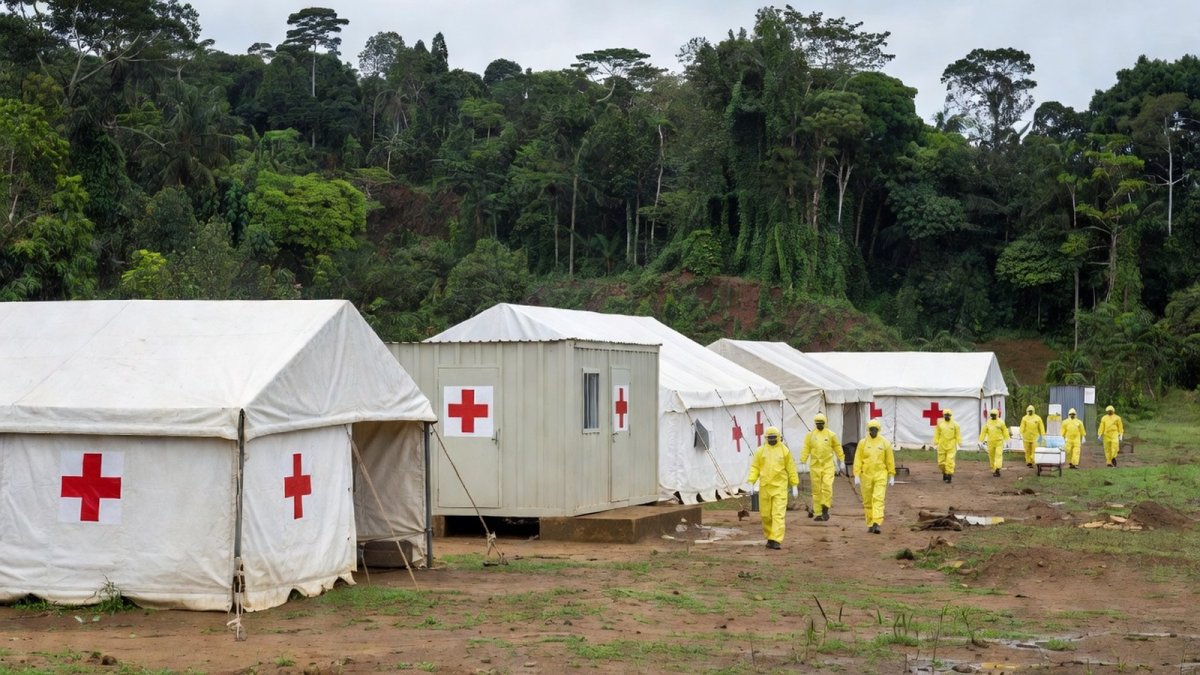
The World Health Organization Director-General Tedros Adhanom Ghebreyesus landed in Kinshasa late Tuesday night, stepping straight into the middle of a crisis that has now become the second-largest Ebola outbreak ever recorded. Cases have surged past the 4,000 mark in the Democratic Republic of the Congo, outpacing every previous response effort except the catastrophic 2014-16 West Africa epidemic. Folks, this is the 17th time the DRC has faced Ebola since 1976, and the numbers tell a story of a virus moving faster than the world can contain it.
DRC Ebola Outbreak Now Second-Largest on Record as Cases Pass 4,000
Kinshasa, DR Congo — The outbreak declared by the DRC Ministry of Public Health, Hygiene and Social Welfare on 15 May 2026 has already claimed 1,801 lives and left health systems across five provinces straining under the weight of 3,973 confirmed cases as of 4 August. WHO and Africa CDC declared it a Public Health Emergency of International Concern just days later on 17-18 May. What began in Haut-Uele, Ituri, Nord-Kivu, Sud-Kivu and Tshopo has now spread across 51 health zones, with 99 new confirmed cases and 52 deaths reported in the single 24-hour period from 3-4 August alone.
The Numbers: An Outbreak Outpacing the Response
Folks, look at these figures and tell me the response is keeping up. On 1 August the count stood at 3,748 cases and 1,657 deaths with 708 recoveries. Just three days later those numbers jumped to 3,973 cases, 1,801 deaths and 776 recoveries. That is eight times more cases and six times more deaths than recorded at the same point in the 2014-16 West Africa outbreak, which ultimately tallied 28,616 cases and at least 11,000 deaths.
MSF has been on the ground warning for weeks that surveillance, diagnosis, contact tracing and community engagement still have dangerous gaps two months in. The latest daily spike of 99 cases shows the virus is not slowing. Xinhua reported on 5 August that the outbreak continues to outpace every scale-up attempt, leaving treatment centers and isolation units playing catch-up in real time.
Health workers are treating patients while simultaneously building new facilities, yet the gap between new infections and response capacity keeps widening. Communities are already seeing a sharp drop in routine hospital visits because fear of catching Ebola is keeping people away from care. That secondary effect is exactly how outbreaks spiral further out of control.
Why This Strain Is Different: No Vaccine, No Cure
This is not the Zaire strain everyone has heard about. The current outbreak is driven by the Bundibugyo virus, first identified in 2007 in western Uganda. Unlike Zaire, there is no licensed vaccine and no specific treatment for Bundibugyo. That single fact changes everything about how this response must be fought.
Health officials have been clear: every tool used successfully against Zaire is off the table here. The absence of proven countermeasures means contact tracing, isolation and supportive care are the only lines of defense right now. MSF teams are racing to set up those isolation units, but without a vaccine the math favors the virus.
Reuters and other outlets have noted that the lack of a medical countermeasure is forcing every partner to improvise under extreme pressure. The result is a response that feels permanently behind the curve, exactly as Tedros described after his meetings in Kinshasa.
The Bundibugyo virus stands apart as one of four Orthoebolavirus species that trigger human disease, unlike the Zaire strain that powered the 2014-16 West Africa crisis and later gained Ervebo plus monoclonal therapies such as Inmazeb. Without any licensed countermeasure, every confirmed case here forces reliance on supportive measures alone, turning routine fluid replacement and oxygen support into the sole line of defense against rapid deterioration.
Its track record shows why commercial interest stayed low: after the virus was first identified in 2007 in western Uganda, it triggered only small, contained flare-ups in DRC in 2012 and Uganda in 2017. Those small numbers never justified the investment that Zaire received after West Africa, leaving today's response teams without the vaccines or drugs that cut mortality elsewhere.
Supportive care demands immediate intravenous fluids, electrolyte correction, oxygen delivery, and aggressive treatment of secondary infections. When delivered early it saves lives, yet the absence of targeted tools means each delay multiplies fatalities in a way Zaire outbreaks no longer experience.
'Spreading Faster Than Our Scale-Up': WHO Chief on the Ground
Tedros met with DRC President Felix Tshisekedi and key partners immediately after arriving late Tuesday. His message was blunt: the outbreak is spreading faster than our scale-up of the response. That single sentence captures the urgency now gripping Kinshasa and the international community.
The WHO chief did not sugarcoat the logistics. With cases climbing daily across five provinces, the organization is pushing every available resource into the affected zones while simultaneously coordinating with Uganda and other neighbors. The PHEIC declaration from May was meant to trigger exactly this level of global mobilization, yet the daily case counts show the gap remains real.
Local health officials echo the same concern. They are seeing transmission chains lengthen even as new treatment centers open. Tedros’s presence on the ground signals that Geneva understands the window for containment is narrowing fast.
Tedros's two-day visit to Kinshasa and direct meeting with President Tshisekedi signal the highest level of WHO engagement, underscoring that this outbreak now requires presidential-level coordination across five provinces. The Director-General's presence in the capital itself marks a deliberate escalation meant to close the distance between international commitments and field operations.
Scale-up means building treatment centers, boosting laboratory throughput, deploying safe burial teams, and embedding community health workers who can restore trust. MSF assessments after two months show those elements remain understaffed, allowing the daily addition of ninety-nine cases to outstrip every incremental gain in capacity.
US CDC and State Department coordination with DRC and Ugandan authorities keeps the immediate risk to the United States very low, yet the 2014 precedent shows how quickly a distant outbreak can generate global consequences when exponential growth continues unchecked. The current trajectory demands that every pledged resource reach the ground before the next doubling of cases occurs.
Mutation Fears Add Urgency to Global Response
Health officials are now openly discussing the possibility that the virus may be mutating, according to reporting in The Guardian on 6 August. Any genetic shift could alter transmission patterns or severity, making an already difficult outbreak even harder to predict.
That fear is driving the accelerated push for species-specific tools, including the first-ever candidate vaccine trials now underway in the UK and Canada. Results are still months away, but every day of delay raises the stakes.
Without those tools, the only option is to double down on classic public-health measures while the world waits. Mutation talk has already changed the tone of briefings from cautious optimism to outright alarm.
Regional Fallout: Uganda Closes Borders, Fear Grips Communities
Uganda closed its border with the DRC on 27 May for at least four weeks and imposed 21-day isolation requirements on all entrants. An imported case reached Kampala when a Congolese man died in the capital, proving the virus does not respect lines on a map.
Across the affected provinces, fear is reshaping daily life. Africanews reported on 7 August that hospital utilization has dropped sharply as people avoid facilities they associate with Ebola risk. That avoidance creates new blind spots for surveillance teams already stretched thin.
The US CDC has stated that no cases linked to this outbreak have appeared in the United States and the risk remains very low. The US State Department confirmed on 5 August it is coordinating with CDC and the governments of DRC and Uganda on a rapid response, but the regional pressure on Uganda’s health system continues to mount.
Uganda's decision to seal its DRC border on 27 May for four weeks and impose twenty-one-day isolation on arrivals directly followed the death of a Congolese man in Kampala, proving the virus had already crossed into the capital. That single imported case exposed how trade routes and population movement turn eastern DRC's remote zones into launch pads for wider regional spread.
Communities already strained by armed groups and dense settlement now face an added layer of dread that keeps sick people away from clinics. MSF reports show hospital avoidance has widened gaps in surveillance and contact tracing, allowing chains of transmission to grow inside households before cases reach any isolation unit.
WHO data on high cross-border traffic in the five affected provinces underscores why fear-driven behavior change poses an immediate threat: people who stay home until they are critically ill increase the chance of community burials that bypass safe protocols, accelerating the daily toll of fifty-two new deaths recorded in the latest twenty-four hours.
What Happens Next: Vaccine Trials and the Race Against Time
The next several weeks will be defined by whether the candidate vaccines can move from early trials to usable products before the outbreak grows further. Every new case adds pressure on those timelines.
MSF continues to expand treatment centers and isolation units while pushing for faster community engagement. Without stronger surveillance and trust on the ground, even the best vaccines will arrive too late for many.
Folks, this is the moment to act. Stay informed through verified sources like WHO and Africa CDC. Demand that governments and funders accelerate support for Bundibugyo-specific vaccine trials and surge resources into contact tracing and community outreach. The virus is moving; our response must move faster.
By Jessica Ali, Staff Writer
The first Bundibugyo-specific vaccine candidate entered human trials in the UK on 24 July, with a second study launching in Canada this week, yet results remain months away. That timeline collides with an outbreak already eight times larger at eleven weeks than the West Africa epidemic was at the same point, leaving containment dependent on non-vaccine measures that must scale immediately.
Global partners including WHO, Africa CDC, US CDC, and MSF are coordinating laboratory expansion, contact tracing, and safe burial teams while the trials run. The effort aims at the world's first Bundibugyo vaccine, but the current pace of ninety-nine new cases per day means surveillance and community engagement cannot wait for trial data that may arrive too late to bend the curve.
Tedros's warning that the virus is outrunning response capacity highlights the gap: even with pledges from multiple governments, the lack of an existing tool forces every additional week of delay to translate into hundreds more infections across the fifty-one health zones now reporting cases.
This article was produced with AI-assisted research and editorial support. Reporting is based on sources cited in the article.
What's Your Reaction?
 Like
0
Like
0
 Dislike
0
Dislike
0
 Love
0
Love
0
 Funny
0
Funny
0
 Wow
0
Wow
0
 Sad
0
Sad
0
 Angry
0
Angry
0

Editor-in-Chief at Global1.News. Atlanta-based journalist who cuts through the BS and tells it like it is. Lead anchor, host, and the voice you hear when the spin stops and the truth starts.










Comments (0)