
Will Islamic Finance Expand Financial Inclusion in Uzbekistan?
Uzbekistan’s recent issuance of its first Islamic banking license marks a decisive step in a broader strategy to deepen financial inclusion. Subsequent milestones reinforced this trajectory.
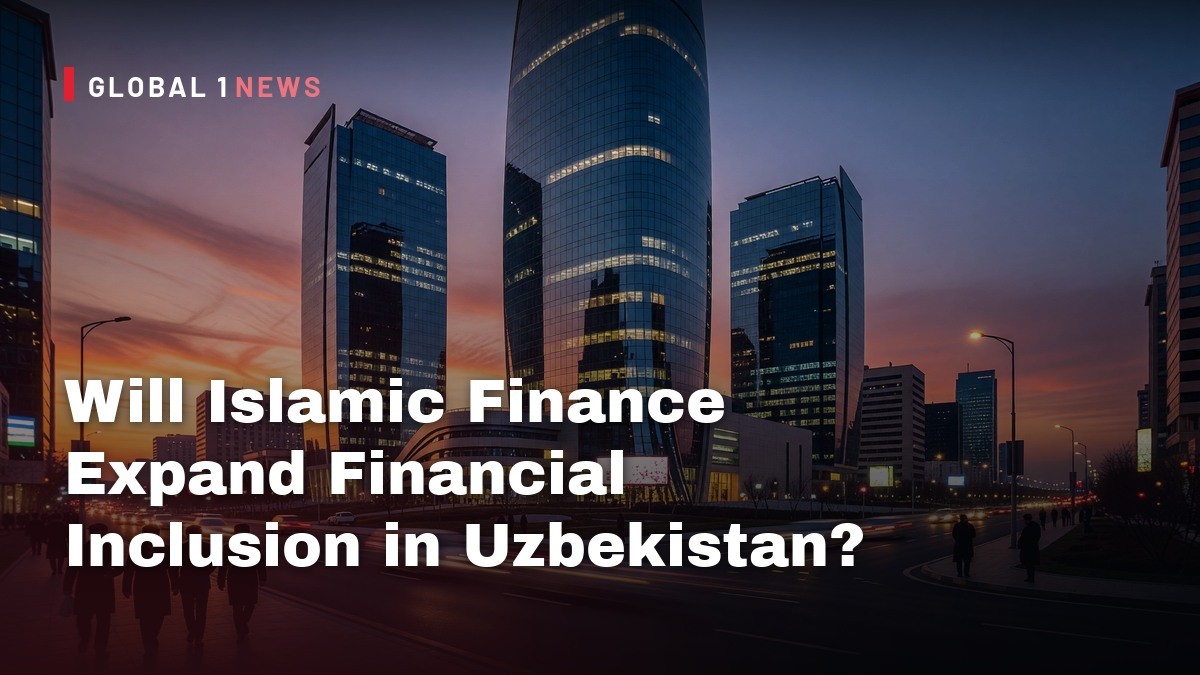
Uzbekistan’s recent issuance of its first Islamic banking license marks a decisive step in a broader strategy to deepen financial inclusion. On 23 October, the Central Bank of Uzbekistan (CBU) granted Open Bank Joint‑Stock Company official permission to provide Islamic banking services, the first such license in the country’s history. This development follows years of policy framing, international engagement and legislative action aimed at integrating Sharia‑compliant finance into the national banking system.
Policy Foundations and International Alignment
The push for Islamic finance in Uzbekistan is rooted in a series of strategic moves that began in 2019, when the country joined the International Islamic Trade and Finance Corporation and the Investment and Export Credit Insurance Islamic Corporation. President Shavkat Mirziyoyev underscored the importance of a legal framework for Islamic services in his 2020 parliamentary address, pledging involvement from the Islamic Development Bank and other global financial bodies.
Subsequent milestones reinforced this trajectory. In 2022, micro‑finance institutions were allowed to offer Islamic financing, yet comprehensive regulations only arrived in 2024, the same year the CBU became a member of the Islamic Financial Services Board (IFSB). The legislative chamber adopted a draft law on Islamic banking that year, and in 2025 Tashkent hosted the 20th International Shariah Scholars Forum in Islamic Finance, the first edition held outside Malaysia, signalling Uzbekistan’s ambition on the international stage.
Legal Infrastructure and Institutional Support
Legislation accelerated in 2026 when President Mirziyoyev signed a law in March establishing a formal legal framework for Islamic banking. The law delineates licensing procedures, regulatory oversight and tax obligations, providing the structural backbone needed for banks to launch Sharia‑compliant products. By mid‑July, the CBU formed an Islamic Finance Council comprising five members, including representatives from the Muslim Board of Uzbekistan, to guide implementation and ensure alignment with religious standards.
This institutional architecture is designed to address two core expectations: that consumers will adopt Islamic financing for borrowing, and that savers will allocate deposits to Islamic investment accounts. Both expectations hinge on public confidence in the regulatory regime and the perceived authenticity of the products offered.
Market Potential and Religious Demographics
Uzbekistan’s demographic profile suggests a sizable addressable market. With a total population exceeding 39 million and estimates that over 80 percent—according to U.S. Department of State and Human Rights Watch—identify as Muslim, the potential pool of customers for Islamic finance is substantial. The Committee on Religious Affairs reported a 94 percent Muslim share in 2015, though precise figures on preference for Islamic products remain unavailable.
Industry insiders have highlighted a latent demand linked to religious concerns. In 2023, Bakhrom Nomonov, then chairman of Apex Bank, noted that 20 percent of citizens avoid conventional loans on religious grounds, suggesting that Islamic financing could attract significant new capital. A 2020 UNDP‑sponsored survey also identified religious belief as a primary barrier to traditional borrowing, reinforcing the notion that a Sharia‑compliant alternative could unlock dormant demand.
Consumer Behaviour Beyond Faith
While religious objections shape part of the market gap, broader consumer behaviour also influences uptake. The Central Bank’s 2025 data show that 20 percent of adults maintain an active bank credit account, with an average of 1.7 loans per borrower. This indicates that a considerable segment already engages with conventional credit, suggesting that Islamic products must compete on cost and convenience, not solely on religious acceptability.
Cost differentials pose a critical test. If Islamic financing carries higher fees than conventional loans, price‑sensitive borrowers may reject the halal option despite religious alignment. Moreover, the secular nature of Uzbekistan means that religious edicts—fatwas—are not legally binding, and many citizens treat Islam as a cultural identity rather than a strict regulatory framework. Consequently, the decision to adopt Islamic banking will likely reflect a blend of faith, financial calculus and product attractiveness.
Trust and Reputation Challenges
Public confidence is essential for any nascent financial sector, and the involvement of the Muslim Board in the CBU’s Islamic Finance Council aims to bolster credibility. However, recent scandals illustrate the fragility of trust. IMAN Invest, a provider of Islamic investment products, faced allegations of fund misuse and a reported $20 million deficit, leading the Islamic Finance Consulting Board to terminate its cooperation. Although the firm disputes the claims, the episode underscores how a single high‑profile dispute can erode confidence in the broader ecosystem.
Such reputational risks highlight the importance of rigorous compliance monitoring and transparent auditing. The perception that Islamic finance is subject to stringent oversight by respected scholars can mitigate concerns, but any perceived lapse—real or alleged—may deter even devout consumers from engaging with newly licensed Islamic banks.
Industry Readiness and Future Outlook
Beyond Open Bank, more than ten commercial banks are reportedly preparing to launch Islamic finance products. Their success will depend on the ability to tailor offerings to underserved populations while maintaining competitive pricing and robust compliance frameworks. The issuance of the first license serves as an initial indicator of sector interest, yet it does not guarantee market penetration.
In the coming years, the interplay between regulatory support, consumer trust, and product competitiveness will determine whether Islamic finance can meaningfully expand financial inclusion in Uzbekistan. If the sector can attract the estimated 20 percent of borrowers who currently avoid conventional credit and persuade a comparable share of savers to shift deposits, the impact could be significant. However, the path forward remains contingent on delivering affordable, trustworthy services that resonate with both the devout and the broader public.
Conclusion: A Measured Path Forward
Uzbekistan’s foray into Islamic banking reflects a calculated effort to integrate religiously compliant finance into a largely secular, market‑oriented economy. The legal framework, institutional backing and international partnerships provide a solid foundation, yet the ultimate test lies in consumer adoption. Balancing cost competitiveness, rigorous compliance and effective communication will be crucial to converting latent religious demand into tangible financial inclusion.
As the sector unfolds, policymakers and banks must monitor both the quantitative uptake of Islamic products and the qualitative perception of trust among Uzbek citizens. Only by aligning religious sensibilities with practical financial incentives can Uzbekistan achieve the inclusive growth it envisions through Islamic finance.
This article was produced with AI-assisted research and editorial support. Reporting is based on the source material cited below. Sources: The Diplomat; thediplomat.com; Global1.News (31 October 2026).
By Kenji Tanaka, Staff Writer
What's Your Reaction?
 Like
0
 Dislike
0
 Love
0
 Funny
0
 Wow
0
 Sad
0
 Angry
0

Japan Correspondent at Global1.News. Tokyo-based voice covering Japanese politics, technology, economy, and culture. Tracks the intersection of tradition and innovation in one of the world's most dynamic societies.














Comments (0)