
What happens when neutrinos swap identities inside a supernova?
Core‑collapse supernovae have been a cornerstone of astrophysics for decades, yet the numbers don’t quite add up. Massive stars burn through their core fuel, forge heavier elements, and then collapse under gravity, producing a neutron star or black hole.
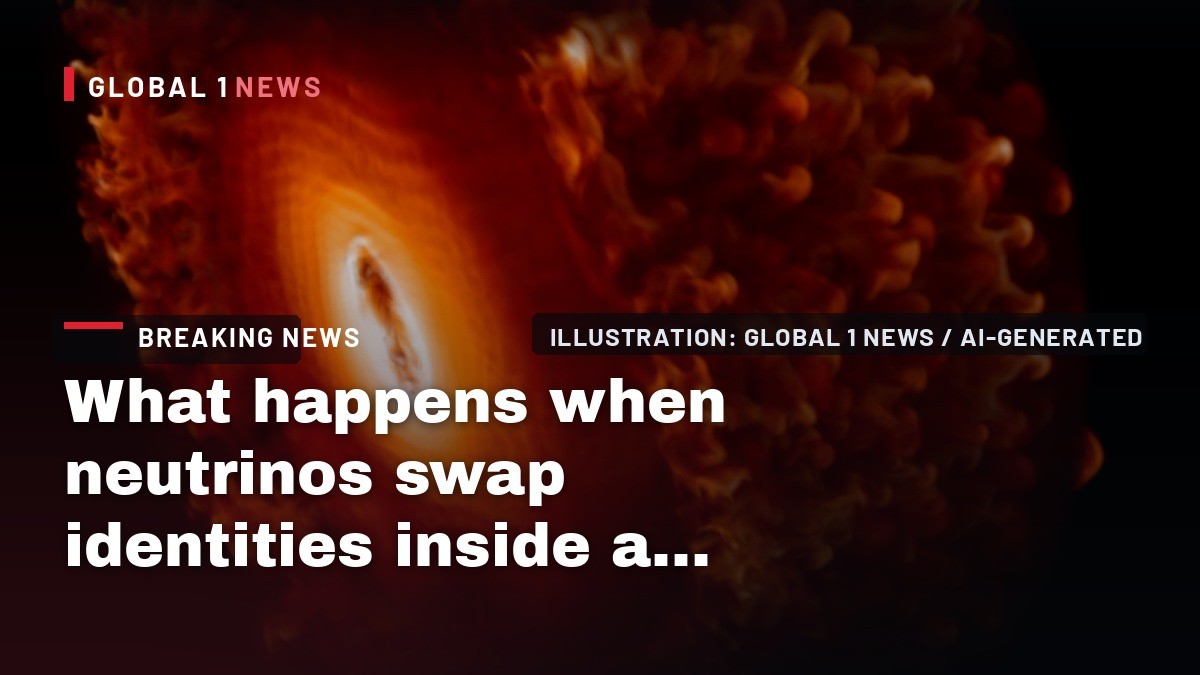
Core‑collapse supernovae have been a cornerstone of astrophysics for decades, yet the numbers don’t quite add up. Massive stars burn through their core fuel, forge heavier elements, and then collapse under gravity, producing a neutron star or black hole. The energy released in that implosion drives a shock wave that tears the star apart. That textbook picture is solid, but a growing body of observations suggests the model is missing a critical piece of physics – the way neutrinos change flavor inside the dying star.
The Missing Explosions: Observational Gaps in Supernova Rates
When we compare the universe’s star‑formation rate to the observed frequency of supernovae, a discrepancy emerges. We form enough massive stars to fuel a far higher rate of core‑collapse events than we actually see. Moreover, in the handful of cases where astronomers can pinpoint the progenitor, there are too few red supergiants. Those are the very stars that should dominate the 15‑ to 30‑solar‑mass range, yet they appear under‑represented in the explosion census.
Gravitational‑wave detections add another wrinkle. Mergers of black holes left behind after core collapses reveal a “mass gap” – a range of masses where black holes are scarcer than a smooth distribution would predict. The gap hints that something in the collapse process determines whether a neutron star tips over into a black hole, but the theoretical criteria remain fuzzy.
Neutrinos: The Unsung Engines of Explosion
Neutrinos are produced in staggering numbers during both the fusion chaos of a supernova and the formation of the neutron‑star core. Their sheer abundance means that, despite their weak interaction with matter, they deliver a decisive energy dump to the material behind the stalled shock wave. That heating can revive the shock, allowing it to blast outward and destroy the star. If the neutrino heating fails, gravity wins and the core collapses straight into a black hole, smothering any explosion.
Current simulations treat neutrinos as a single, monolithic component. In reality, there are three flavors – electron, muon, and tau – and each neutrino exists in a quantum superposition of all three, oscillating among them as it streams outward. Those flavor changes matter because each flavor couples to matter differently, altering how much energy is deposited behind the shock.
Flavor Oscillations: A Potential Game‑Changer
The new paper in Physical Review D, authored by Mariam Gogilashvili and Irene Tamborra of the University of Copenhagen, tackles this omission head‑on. Their central claim is that flavor oscillations shift the energy budget among the six neutrino types (the three flavors and their antiparticles), reducing the amount of heating delivered to the shock front.
In their simplified framework, flavor conversion happens almost instantly, and the total neutrino energy is split evenly among the six species as they travel from the core‑coupled region to the higher‑density shock layer. By testing three density cutoffs that define the shock’s location, they explore a range of plausible outcomes.
Simulation Results: When Flavor Swaps Stall the Blast
Gogilashvili and Tamborra ran their model on nearly two hundred progenitor stars spanning nine to 120 solar masses. Across the board, flavor oscillations pushed more energy into the heavier‑lepton neutrinos (muon and tau types) at the expense of the electron neutrinos that are most efficient at heating the shock.
The consequence is clear: in many cases the shock stalls, and the star fails to explode. This effect is strongest for progenitors in the 15‑ to 30‑solar‑mass bracket – precisely the mass range of red supergiants that have been under‑detected in supernova surveys. The researchers suggest that flavor‑induced energy loss could be why many of those stars collapse quietly into black holes rather than lighting up the sky.
Implications for the Supernova Rate Discrepancy
If flavor oscillations routinely sap shock heating in the 15‑30 M⊙ regime, the observed shortfall in supernova events relative to star‑formation rates gains a plausible physical explanation. Fewer explosions mean fewer observable supernovae, aligning the theoretical star‑formation budget with the actual detection tally.
Furthermore, the mass‑gap puzzle in black‑hole merger data may be partially resolved. Stars that would have produced intermediate‑mass black holes via a modest explosion could instead collapse directly into heavier black holes when flavor‑driven heating fails, carving out the observed scarcity in the gap.
Model Limitations and the Path Forward
The Copenhagen team’s approach deliberately sacrifices exactness for tractability. Real neutrino flavor evolution depends on momentum, production radius, and the evolving density profile of the star – factors that can cause multiple oscillations before neutrinos escape. Their instantaneous, equal‑division assumption is a first‑order approximation, not a definitive forecast.
Nevertheless, the study shines a spotlight on a missing ingredient in supernova theory. Future simulations will need to embed full quantum kinetic treatments of neutrino flavor, tracking how oscillations evolve in tandem with the shock’s motion. Only then can we gauge the true magnitude of the effect and refine predictions for explosion outcomes.
Why This Matters: From Cosmic Alchemy to Gravitational‑Wave Astronomy
Supernovae are the universe’s element factories. The balance between exploding and collapsing determines how much iron, nickel, and other heavy elements are scattered into the interstellar medium, shaping subsequent generations of stars and planets. If flavor oscillations systematically suppress explosions in a swath of massive stars, the chemical enrichment of galaxies could be slower than current models assume.
On the observational front, the link between neutrino flavor physics and black‑hole mass distributions offers a new diagnostic tool. As gravitational‑wave detectors catalog more mergers, the statistical imprint of flavor‑driven collapse pathways may become evident, providing an indirect probe of neutrino behavior deep inside dying stars – a realm otherwise inaccessible.
This article was produced with AI-assisted research and editorial support. Reporting is based on the source material cited below. Sources: Ars Technica; arstechnica.com; Global1.News (17 September 2026).
By Jessica Ali, Staff Writer
What's Your Reaction?
 Like
0
Like
0
 Dislike
0
Dislike
0
 Love
0
Love
0
 Funny
0
Funny
0
 Wow
0
Wow
0
 Sad
0
Sad
0
 Angry
0
Angry
0

Editor-in-Chief at Global1.News. Atlanta-based journalist who cuts through the BS and tells it like it is. Lead anchor, host, and the voice you hear when the spin stops and the truth starts.















Comments (0)