
Washington's FIFA Fan Zone United a City of Immigrants During the 2026 World Cup
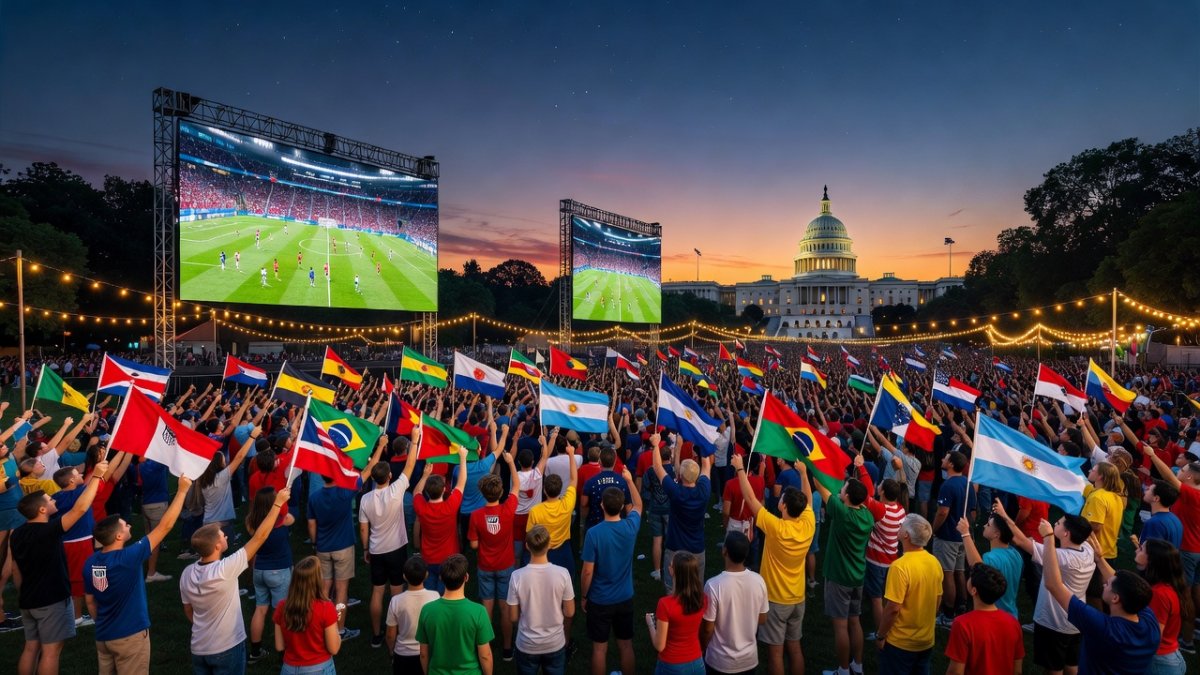
The heart of the beautiful game has never been confined to the 90 minutes on the pitch, and this World Cup proved it once again. While the eyes of the globe were fixed on the 16 host cities across the United States, Mexico and Canada, a different kind of magic was unfolding in Washington DC — a city that didn't host a single match but became a vibrant crossroads of cultures thanks to its FIFA Fan Zone near the US Capitol.
The heart of the beautiful game has never been confined to the 90 minutes on the pitch, and this World Cup proved it once again. While the eyes of the globe were fixed on the 16 host cities across the United States, Mexico and Canada, a different kind of magic was unfolding in Washington DC — a city that didn't host a single match but became a vibrant crossroads of cultures thanks to its FIFA Fan Zone near the US Capitol. Al Jazeera English's Matthew Torres captured this phenomenon, showing how a city of over 170 nationalities and 1.6 million immigrants found common ground in the world's most universal language: football.
Beyond the Stadium: How Washington's FIFA Fan Zone United a City of Immigrants During the 2026 World Cup
Washington, DC – July 2026 — The US Capitol building, a symbol of political division in recent years, found itself surrounded by something far more unifying this summer: the sound of vuvuzelas, the rhythm of drums, and the collective roar of thousands of fans watching the 2026 FIFA World Cup. Washington may have missed out on hosting tournament matches, but the FIFA Fan Zone on the National Mall area became a living, breathing testament to the power of sport to transcend borders, politics, and allegiances. As Matthew Torres reported for Al Jazeera English, this was not just about watching football — it was about a community of immigrants and locals discovering that their shared passion for the game outweighs any flag they might wave.
The Fan Zone Phenomenon: A Global Village on the National Mall
The numbers alone tell a story of staggering diversity. The Washington metropolitan region is home to more than 170 nationalities and over 1.6 million immigrants, making it one of the most culturally rich areas in the United States. When FIFA announced that the nation's capital would not host matches — with the tournament spread across 16 cities including New York New Jersey, Los Angeles, Mexico City and Toronto — local football fans could have been forgiven for feeling like second-class citizens. Instead, the FIFA Fan Zone transformed the city into a celebration hub that rivaled any host city in atmosphere.
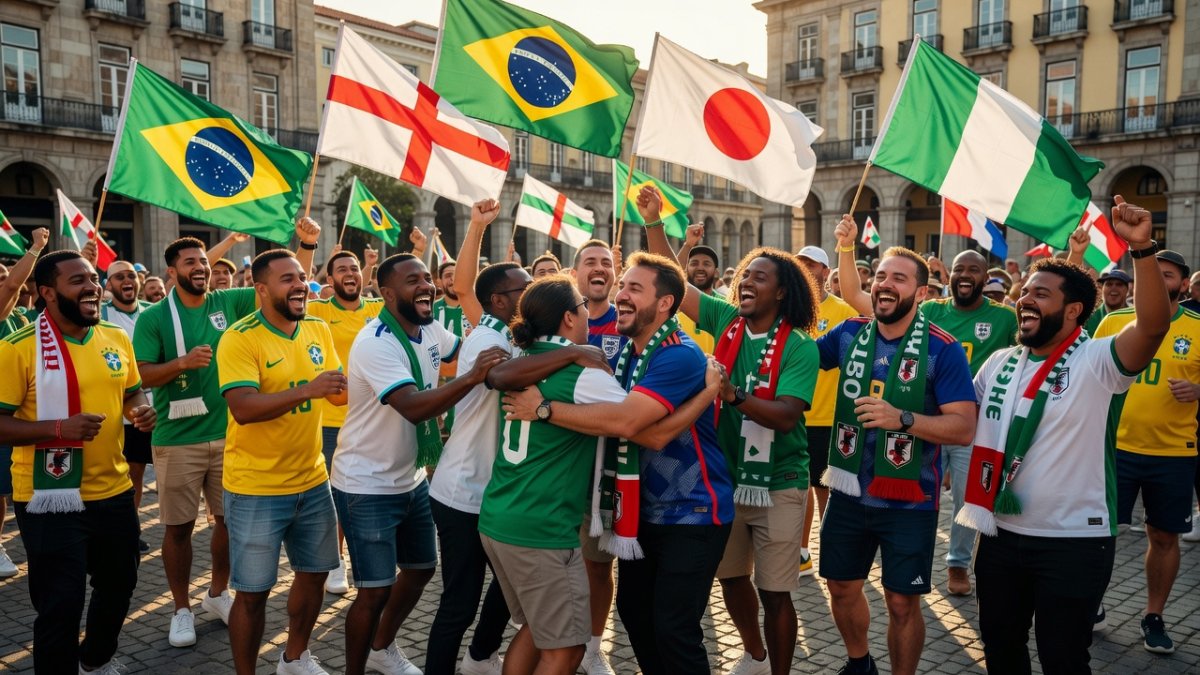
Torres' report highlighted how the fan zone, situated in the shadow of the Capitol dome, became a daily pilgrimage site for supporters from every corner of the globe. Ethiopian-Americans watched alongside Salvadorans, Vietnamese fans chanted next to Nigerians, and Ghanaian supporters exchanged tips on the Diski dance with curious Americans. The fan zones across all host cities offered free public viewing spaces with massive screens, food vendors serving cuisine from every continent, live music performances, and interactive attractions that brought the World Cup experience to those without match tickets. In Washington, this meant a daily festival that reflected the city's immigrant soul.
What made the Washington fan zone particularly special was its location. The National Mall, stretching from the Lincoln Memorial to the Capitol, is America's front yard — a space traditionally reserved for political rallies, protests, and national celebrations. For five weeks, it was reclaimed by football. Fans draped in the colours of Senegal, Japan, Brazil and South Africa walked the same paths where Martin Luther King Jr. delivered his "I Have a Dream" speech, creating a new layer of meaning in a space already heavy with history. The irony was not lost on observers: a city often paralysed by partisan gridlock was witnessing its most diverse communities unite over a game played with a round ball.
Football Beyond the Stadium: The People's World Cup
The 2026 World Cup was historic before a single ball was kicked. It was the first 48-team edition in the tournament's history, expanding from the 32-team format that had been in place since 1998. This expansion, combined with the unprecedented tri-continental hosting arrangement, meant that demand for tickets far outstripped supply. Enter the fan zones — the great equalisers that ensured the World Cup remained accessible to the masses, not just the privileged few with deep pockets and fast internet connections.
The Final That United the World: Spain's Extra-Time Glory
The tournament itself delivered drama that will be discussed for generations. Spain were crowned world champions on July 19 at MetLife Stadium in East Rutherford, New Jersey, defeating Argentina 1-0 after extra time in a final that pitted the tournament's two most impressive sides against each other. The decisive moment came in the 106th minute when substitute Ferran Torres — no relation to the reporter who covered the Washington fan zone, but a fitting coincidence — found the back of the net to spark wild celebrations across the globe. For neutrals, it was a final that showcased tactical mastery, with Spain's possession-based approach eventually wearing down the South American champions.
But the real story of 2026 was the democratisation of the World Cup experience. A record 10 African nations competed at the tournament, a testament to the continent's growing footballing power. Senegal, Morocco, Ghana, Cameroon, Nigeria, Tunisia, Egypt, Algeria, Ivory Coast and South Africa all took their place on the world stage, and their supporters brought an energy that transformed host cities into African cultural outposts. In Washington, the fan zone became a gathering point for the city's substantial African diaspora, with fans from different nations watching together, celebrating each other's successes, and mourning each other's defeats as one extended family.
South African Perspective: From 2010 to 2026, The Legacy Continues
For South Africans, the 2026 World Cup carried particular resonance. Bafana Bafana, under the steady leadership of coach Hugo Broos, reached the round of 32 — a respectable showing that demonstrated the progress of South African football on the international stage. Their tournament ended with a narrow 1-0 defeat to Canada, a result that could have gone either way and left fans dreaming of what might have been. But the journey itself was the victory: qualifying for a 48-team World Cup and competing with confidence against established nations showed that South African football is on an upward trajectory.
The Washington fan zone experience would have felt familiar to any South African who lived through the 2010 World Cup. That tournament, the first on African soil, introduced the world to the fan park concept on a massive scale and made the vuvuzela a global phenomenon. The iconic plastic trumpet, once derided by international broadcasters, became a symbol of South African joy and unity. The fan parks of 2010 — in Johannesburg, Cape Town, Durban and beyond — were where the nation truly celebrated, with millions of South Africans who couldn't afford match tickets gathering to watch the games together in an atmosphere of pure, unadulterated joy.
South African fan culture has always been about community. The Diski dance, born in the townships and popularised during 2010, remains a signature expression of football joy. Township viewing traditions — where neighbours gather around a single television, where shebeens become impromptu stadiums, and where the entire community feels the highs and lows of every match — are the original fan zones. What Washington experienced this summer, South Africans have known for generations: football is not a spectator sport but a participatory ritual that binds communities together.
Implications for Fans and the Sport: What This Means for South Africa
The success of fan zones in Washington and across the 2026 host cities carries profound implications for South African sport. First, it validates the model that South Africa pioneered in 2010. The fan park concept, which FIFA initially viewed with scepticism, has become a cornerstone of the World Cup experience. South African innovation in this space — from the vuvuzela to the Diski dance to the township viewing culture — has been adopted and adapted globally. This is a source of national pride that extends far beyond results on the pitch.
Second, the record participation of 10 African nations at the 2026 World Cup signals a shifting balance in global football. South Africa's own qualification, and their competitive showing, demonstrates that the gap between African and European/South American football is narrowing. For SAFA and the country's development structures, this is both an opportunity and a challenge. The opportunity lies in the increased visibility and commercial interest in African football. The challenge lies in ensuring that grassroots development keeps pace — that the next generation of Bafana Bafana stars is being nurtured in townships and rural areas, not just in elite academies.
Third, the community-building aspect of fan zones speaks directly to South Africa's sporting philosophy of unity through sport. In a nation still grappling with the legacy of apartheid, sport has consistently served as a unifying force. The 1995 Rugby World Cup, the 2010 Football World Cup, and the countless moments of shared sporting joy since have demonstrated that sport can bridge divides that politics cannot. The Washington fan zone, bringing together immigrants from 170 nationalities, is a global echo of what South Africa has known for decades: when people come together to celebrate sport, they discover their common humanity.
What to Watch For: The Road to 2030 and Beyond
As the confetti settles on the 2026 World Cup, attention turns to the future. The 2030 World Cup will be hosted by Morocco, Spain and Portugal — a tri-continental bid that will bring the tournament to African soil for only the second time, and to North Africa for the first time. Morocco's remarkable run to the semi-finals in 2022, and the strong performances of African teams in 2026, suggest that the continent is ready to host the world's biggest sporting event. For South Africa, this represents both a source of pride and a challenge: how to build on the 2010 legacy and ensure that the benefits of African football's rise are shared across the continent.
For South African fans, the immediate focus will be on the development pathways that lead to the next World Cup. Hugo Broos has built a young, hungry squad that showed promise in 2026. The question now is whether SAFA and the PSL can create the structures to sustain this progress. Investment in youth development, coaching education, and grassroots infrastructure will determine whether Bafana Bafana's round-of-32 appearance was a one-off or the beginning of something bigger. The success of the MultiChoice Diski Challenge and other development initiatives will be crucial in this regard.
The Washington fan zone offered a glimpse of football's future: a sport that belongs to everyone, regardless of nationality, background, or ticket-holding status. It reminded us that the beautiful game is not just about the 22 players on the pitch but about the millions who watch, cheer, and dream together. For South Africans, who have always understood this truth, the 2026 World Cup was a validation of our football culture and a reminder of the power of sport to unite. As we look toward 2030 and beyond, the challenge is to carry that spirit forward — in our stadiums, our fan parks, our townships, and our hearts.
The vuvuzela may have been born in South Africa, but its echo now resonates from the National Mall to the streets of Tokyo, from the fan zones of Mexico City to the viewing parties in Lagos. The 2026 World Cup was the people's tournament, and Washington showed the world that you don't need a stadium to experience the magic of football. You just need a screen, a space, and a community willing to come together. That is the lesson South Africa taught the world in 2010, and it is a lesson the world has finally learned.
By Dante Williams, Staff Writer
This article was produced with AI-assisted research and editorial support. Reporting is based on sources cited in the article.
What's Your Reaction?
 Like
0
Like
0
 Dislike
0
Dislike
0
 Love
0
Love
0
 Funny
0
Funny
0
 Wow
0
Wow
0
 Sad
0
Sad
0
 Angry
0
Angry
0

Breaking News and Investigations Correspondent at Global1.News. Based in London, covering global breaking news, security, and investigative stories. Known for digging deeper and connecting the dots across continents.












Comments (0)