
Dupont: Beating Boks a mental boost
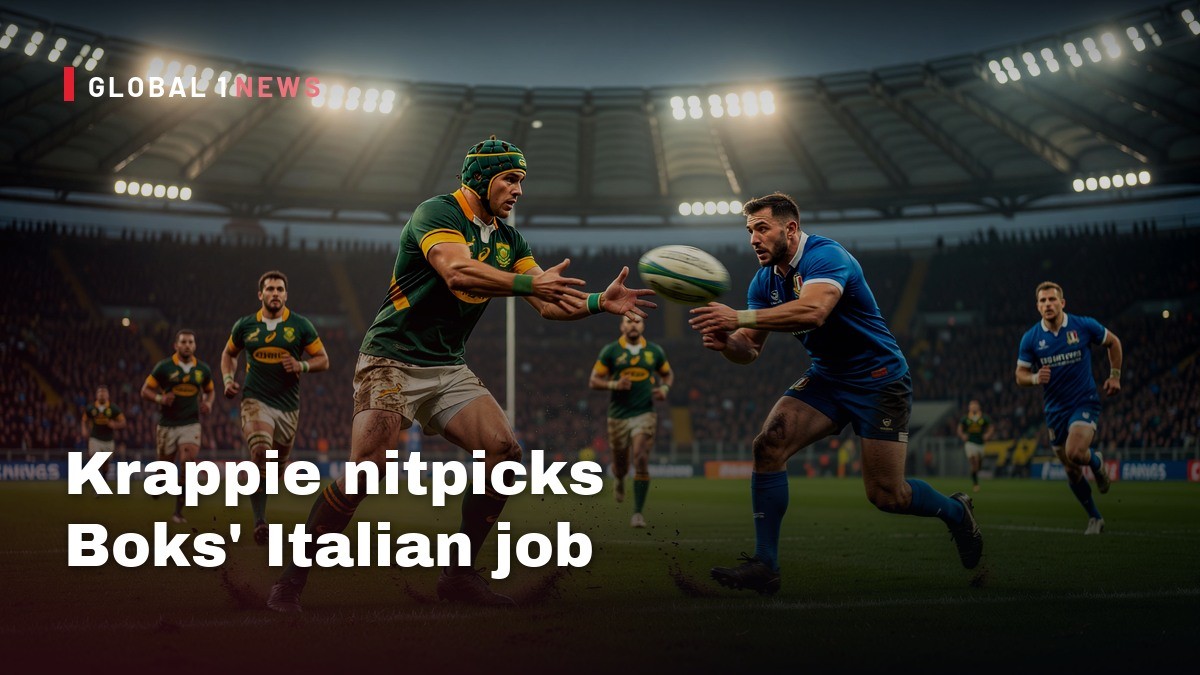
France’s captain Antoine Dupont walked off the pitch in Paris with a grin that said more than any post‑match interview could capture – his side had just edged the Springboks 21‑19 in a nail‑biting Nations Championship clash that will be dissected in rugby circles for weeks.

France’s captain Antoine Dupont walked off the pitch in Paris with a grin that said more than any post‑match interview could capture – his side had just edged the Springboks 21‑19 in a nail‑biting Nations Championship clash that will be dissected in rugby circles for weeks. For South African fans, the loss was a bitter pill, but the way the Boks fell short offers a window into the mental and tactical battles that define modern test rugby. As we break down the match, the implications for the Springboks’ upcoming campaigns, and what Dupont’s performance tells us about the evolving role of the scrum‑half, the story becomes as much about South Africa’s rugby psyche as it is about a French victory.
From underdogs to table‑toppers: France’s rise in the northern hemisphere
The 21‑19 win in Paris was not just another result; it cemented Les Bleus at the summit of the northern hemisphere table in the Nations Championship. Arriving in the fixture as underdogs, the French side demonstrated a capacity to grind out victories when the stakes are highest – a quality Dupont himself highlighted when he told TF1 that “in the head it’s important to win matches that count, that are tough, that go down to the last minute.” This mental edge, according to the captain, is what separates a team that merely competes from one that consistently challenges for honours.
For South African supporters, the shift in the northern hierarchy matters. A French top‑place finish means a tougher test for the Springboks when the two sides meet again later in the year, and it also reshapes the narrative of who is the benchmark for the Six Nations and the southern hemisphere’s Rugby Championship. The psychological boost France gained will reverberate through their training camps, and the Springboks must now reckon with a French side that believes it can win under pressure.
Dupont’s dual role: Scrum‑half, fly‑half and everything in between
One of the most striking storylines from the match was Dupont’s unexpected start at fly‑half – his first time wearing the No 10 jersey in a test. Injuries had forced France down to their fifth‑choice playmaker after Romain Ntamack’s knock in the previous week’s win over Fiji. Yet, despite the jersey change, Dupont spent the majority of the game in his natural nine shirt, with Maxime Lucu deputising for Ntamack. The French coach Fabien Galthié praised the captain’s versatility, joking that he had been “all over the pitch playing in several positions.”
Galthié’s comments underline a broader trend in modern rugby: the need for players who can fluidly shift roles. Dupont’s ability to slot into the fly‑half position, while still executing the duties of a scrum‑half, showcases a new breed of “complete package” back‑rower‑ish playmaker. For South African coaches, this raises questions about how to develop similar adaptability in our own scrum‑halves, who traditionally have been more specialised.
Defensive heroics: Dupont’s last‑gasp effort and the Boks’ missed chances
The match was decided by a series of defensive stands, the climax being Dupont’s last‑gasp tackle that helped France hold off a spirited second‑half Springbok comeback. The Boks surged late, testing the French line with a flurry of attacks that threatened to overturn the scoreline. Yet, the French defence, anchored by Dupont’s grit, held firm, echoing a similar scenario from the 2023 World Cup quarter‑final where France fell short by a single point.
From a South African perspective, the Boks’ inability to convert possession into points in the closing minutes is a familiar frustration. The Springboks have often been praised for their forward dominance, but moments like this expose a need for sharper decision‑making under pressure. The loss also highlights the importance of mental resilience – a theme Dupont stressed when he said the win “shows the mentality of the team that never gave in, even if we had it hard on our line.”
Coach Galthié’s tribute: The back‑rower who didn’t want to be a hooker
Fabien Galthié’s post‑match remarks painted a vivid picture of Dupont’s all‑round contribution. He noted that the captain “helped hold up flank Pieter‑Steph du Toit over the line to deny the Boks a try” and secured a crucial turnover that sealed the victory. Galthié’s tongue‑in‑cheek comment that Dupont “doesn’t want to play at hooker, but if you ask me, he played a bit in every position” underscores the captain’s willingness to sacrifice personal preference for the team’s cause.
This level of selflessness is a hallmark of South African rugby culture, where the collective often trumps the individual. Yet, the French example shows a modern twist: players are now expected to be multi‑dimensional, capable of filling gaps caused by injuries or tactical shifts. For the Springboks, embracing such flexibility could be a pathway to deeper squad depth, especially as the national team navigates a congested calendar that includes the Rugby Championship, the World Cup qualifiers, and domestic Super Rugby Unlocked commitments.
The mental boost: How a narrow win fuels future performances
Dupont described the victory as a “mental boost,” a phrase that resonates deeply with South African fans who have witnessed the Springboks bounce back from setbacks before. The psychological edge gained from grinding out a win in a hostile environment can translate into confidence in subsequent matches, especially when the stakes are high. For France, staying atop the northern hemisphere table after a hard‑fought win reinforces a belief that they can compete with the best, even when labelled underdogs.
For the Springboks, the loss serves as a reminder that mental fortitude must match physical prowess. The Boks have traditionally relied on forward dominance, but the modern game rewards teams that can maintain composure under pressure, adapt tactics mid‑game, and finish matches strongly. The narrow margin of defeat – just two points – suggests that with a few adjustments in decision‑making and defensive organization, the Springboks could reverse the outcome in future encounters.
Implications for South African rugby development
The match offers several lessons for SA’s grassroots and elite pathways. First, the importance of developing versatile playmakers who can operate across the back‑line, as exemplified by Dupont’s seamless shift from nine to ten. Youth programs could incorporate more hybrid skill sessions, encouraging scrum‑halves to practice tactical kicking and play‑making under pressure.
Second, the defensive resilience displayed by France highlights the need for defensive structures that can absorb late‑stage attacks. South African academies may benefit from drills that simulate high‑intensity closing‑phase scenarios, ensuring players can maintain discipline when fatigue sets in.
Finally, the mental aspect – the “never gave in” attitude – underscores the role of sports psychology in elite rugby. The Springboks’ support staff might look to integrate more robust mental conditioning programmes, ensuring players can translate physical dominance into consistent match‑winning performances.
Looking ahead: What the next Springbok‑France clash could hold
With the Springboks still reeling from the Paris defeat, the upcoming fixtures will be crucial. The Boks will need to address the gaps that allowed France to cling to a narrow lead – particularly in the defensive third‑quarter where the French side weathered a surge. If South Africa can tighten those moments, the balance could tip in their favour.
For French fans, the win adds momentum to a campaign that began with underdog status and now sits atop the northern hemisphere leaderboard. Dupont’s Man of the Match performance, his versatility, and his leadership under pressure will be cited as key factors in France’s ascent. As the two rugby powerhouses prepare for their next encounter, the narrative will be one of redemption for the Springboks and consolidation for Les Bleus – a duel that promises to showcase the very essence of test rugby: skill, grit, and the relentless pursuit of mental supremacy.
This article was produced with AI-assisted research and editorial support. Reporting is based on the source material cited below. Sources: SARugbyMag; sarugbymag.co.za; Global1.News (14 November 2026).
By Dante Williams, Staff Writer
What's Your Reaction?
 Like
0
 Dislike
0
 Love
0
 Funny
0
 Wow
0
 Sad
0
 Angry
0

Breaking News and Investigations Correspondent at Global1.News. Based in London, covering global breaking news, security, and investigative stories. Known for digging deeper and connecting the dots across continents.













Comments (0)