
The Wall Street Bridge to Beijing: The End of a Financial Affair
Wall Street's era of privileged access to Beijing is ending. As China pivots to financial self-sufficiency, 'old friends' from Henry Paulson to Stephen Schwarzman see their influence wane. Marcus Chen examines the structural decoupling and what the Trump-Xi summit means for the US-China financial bridge.
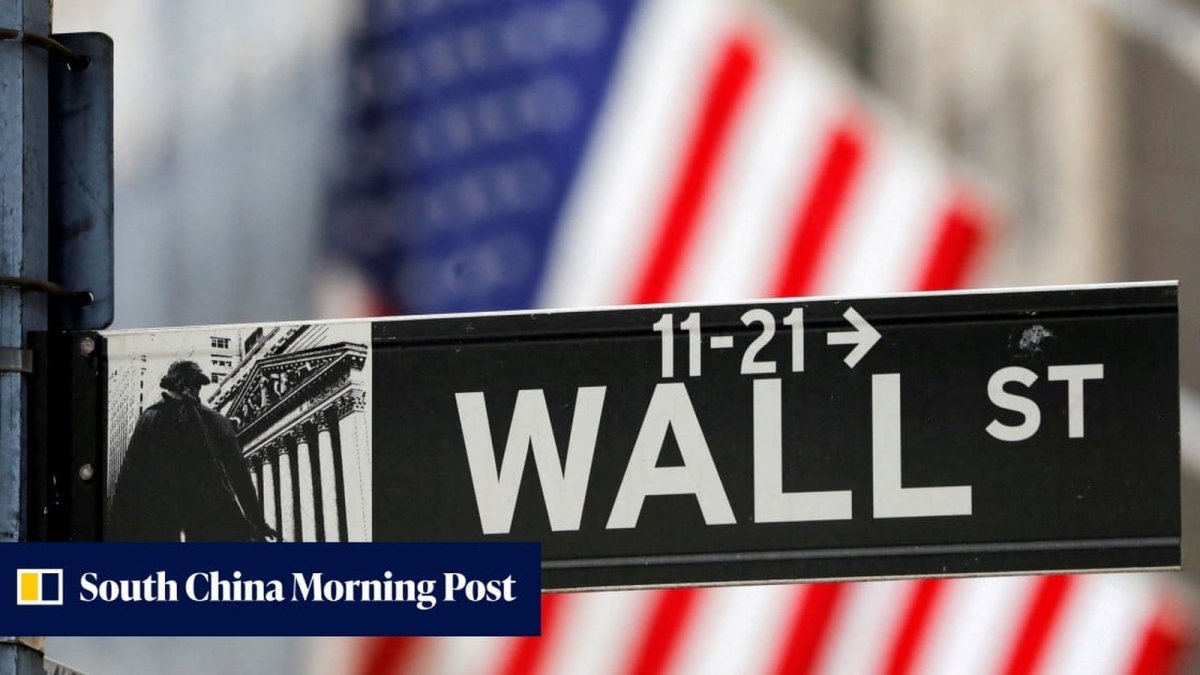
Wall Street's 'Old Friends' Lose Influence as Beijing Pivots to Self-Sufficiency
Beijing, China — Article continues...
The Fading of the 'Old Friends'
The once-celebrated access granted to titans like Henry Paulson, Stephen Schwarzman, and Ray Dalio—men who were feted by senior officials and granted rare audiences with China's top leadership—has diminished to a trickle. These figures, who once served as informal ambassadors between Washington and Beijing, have found their influence evaporating even as China gradually opens its capital markets to foreign investment. The paradox is stark: the doors to capital are opening wider, but the private corridors of power are closing.
According to Christopher Marquis, Sinyi professor of Chinese management at Cambridge Judge Business School, the decline of these roles "suggests they have stopped being useful." He argues that "China's economy no longer needs foreign bankers' capital and expertise the way it did 20-plus years ago." The fundamental bargain has shifted, and Wall Street's traditional currency—advocacy and political access—has been devalued. As Marquis bluntly puts it, "No amount of Goldman or Blackstone advocacy can soften export controls or investment restrictions."
A Honeymoon Built on Mutual Necessity
To understand the magnitude of this shift, one must revisit the halcyon days of the late 1990s and 2000s. China’s reform era was built on the expertise of foreign financial institutions. In 1995, China International Capital Corporation (CICC), the nation's first joint-venture investment bank, was launched with Morgan Stanley to restructure state enterprises and build capital markets from the ground up. This was not merely a business deal; it was a state-building exercise that relied on Western know-how.
The symbiosis deepened in 2006 when Goldman Sachs paid US$2.58 billion for a stake in the Industrial and Commercial Bank of China (ICBC)—then its largest-ever principal investment—and helped underwrite some of the country's largest overseas listings. The following year, China Investment Corporation (CIC), Beijing’s sovereign wealth fund, ploughed a combined US$8 billion into Blackstone and Morgan Stanley. The relationship reached its zenith in 2014 when Alibaba’s US$25 billion debut on the New York Stock Exchange became the largest IPO in history at the time, paving the way for a wave of Chinese tech listings that enriched both Silicon Valley and Wall Street.
The Structural Drivers of Decline
Kevin Chen Kaifeng, chief economist at Horizon Financial in New York, recalls that "the relationship was two-way, mutually beneficial and trusting during those years." However, he concedes that "almost all of those driving factors are now gone." The "two-way streets of deals dried up on both ends." The data supports this grim assessment. An EY report from June 2026 reveals that only two mainland Chinese companies completed US debuts in the first half of 2026, raising a combined US$59.5 million—the weakest half-year showing in five years in both deal count and proceeds.
The decline is not accidental but structural. Chinese company listings on US exchanges have ground to a halt after a two-year boom amid scrutiny of manipulation schemes. Regulatory friction on both sides has compounded the issue: Nasdaq’s tighter rules and strict US audit scrutiny pressure Chinese issuers, while Beijing requires mainland firms to clear rigorous national security and data privacy reviews before listing abroad. The result is a chilling effect that has frozen the IPO pipeline.
The 2018 Trade War: The Point of No Return
The 2018 trade war served as the watershed moment that exposed Wall Street's impotence. Top Wall Street executives—traditionally Beijing's strongest allies in Washington—attempted to leverage their political access to broker a truce, only to find their lobbying powerless against the Trump administration's tariff and export-ban agenda. Marquis notes that Wall Street's traditional role as advocate for market access "lost its currency" as Washington's bipartisan hawkish turn on China took hold.
This was a profound humiliation for the financial elite. They had spent decades cultivating relationships on both sides of the Pacific, believing their influence could transcend geopolitical friction. Instead, they discovered they were spectators in a larger strategic contest. The lobbying machine that had once opened doors in Beijing and Washington alike was rendered irrelevant by the sheer force of geopolitical momentum.
Beijing's Strategic Pivot: Finance as an Instrument of State Power
Beijing's response to this friction has been to accelerate its pursuit of national self-sufficiency, insulating the economy from geopolitical tensions, trade restrictions, and decoupling risk. Technology innovation has become a central priority, and the financial sector is being re-engineered to serve this goal. Leadership has repeatedly stressed that finance should "serve the real economy"—a phrase that signals a departure from the profit-driven, market-first model of Wall Street.
The 15th Five-Year Plan (2026-2030), adopted by the National People's Congress in March 2026, formalised this ambition by building China into a "financial powerhouse." According to OMFIF/ORF analysis from March 2026, this formulation has no precedent in 70 years of national planning. The plan treats finance as a strategic instrument of technological capability, explicitly distanced from the Western model. As Marquis observes, finance is now defined "as an arm of state power rather than a sector to be developed with foreign help." The state media outlet Qiushi underscored this in May 2026, declaring that "a truly great power must be a financial powerhouse."
The New Regulatory Landscape: Capital Controls and Taxation
Beijing has backed its strategic rhetoric with concrete regulatory action. Chinese authorities have tightened cross-border capital controls, cracking down on unauthorised offshore brokerages and expanding outbound investment rules to individual residents. A 20 per cent tax on offshore family trusts and insurance structures has been applied, effectively penalising the wealth-management strategies that many Chinese elites and foreign firms had relied upon.
These measures are designed to keep capital within China's borders, feeding the domestic innovation engine rather than leaking abroad. For Wall Street, this represents a fundamental contraction of opportunity. The days of easily moving capital in and out of China, of structuring complex offshore vehicles for wealthy Chinese clients, are numbered. The regulatory environment is no longer a matter of navigating bureaucratic hurdles; it is a matter of operating within a system that views outbound capital flows with suspicion.
The Diplomatic Paradox: Trump's 2026 Visit and the Limits of Access
Despite this structural decoupling, the political theatre continues. In May 2026, a high-profile business delegation—including Schwarzman, BlackRock's Larry Fink, Goldman's David Solomon, and Citi's Jane Fraser—accompanied US President Donald Trump on his state visit to Beijing from May 13-15. This was Trump's second state visit to China and the first of his second presidency, featuring one of the wealthiest corporate delegations ever to visit the country. At that summit, President Xi Jinping assured executives that China would expand access for foreign capital.
Yet analysts are deeply sceptical that these individual relationships can restore Wall Street's former role. The access granted to these executives is increasingly viewed as "conditional and transactional," as Marquis puts it. The diplomatic choreography—including Trump's formal invitation to Xi to visit the White House on September 24, 2026, with AI and data centres expected to be key topics—suggests a continuing high-level engagement. But the substance of the financial relationship has fundamentally changed. The executives may get the photo opportunities, but they no longer get the deals.
A Narrower, Conditional Future
The market is not entirely shut. At least seven foreign firms, including Goldman Sachs and JPMorgan Chase, now wholly own mainland securities brokerages after Beijing removed foreign-ownership caps in 2020. This suggests a legitimate, albeit narrower, commercial role for foreign banks. However, this role is strictly circumscribed by Beijing's strategic priorities. Foreign firms are welcome to participate in China's financial system, but only on China's terms, and only in ways that serve the "real economy."
Kevin Chen Kaifeng offers a cautiously hopeful note: "The future depends on whether China can open up institutions, and revamp Chinese investments in the US. If this happens, the future of the Wall Street bridge is bright." But this is a conditional hope, dependent on a reversal of the very forces that have driven the two economies apart. For now, the bridge remains intact only in a diminished, transactional form. The era of the "old friend" is over, replaced by a colder, more calculating relationship where access is a privilege granted by the state, not a right earned through advocacy.
This article was produced with AI-assisted research and editorial support. Sources: South China Morning Post, EY, OMFIF.
By Prof. Marcus Chen, Staff Writer
What's Your Reaction?
 Like
0
Like
0
 Dislike
0
Dislike
0
 Love
0
Love
0
 Funny
0
Funny
0
 Wow
0
Wow
0
 Sad
0
Sad
0
 Angry
0
Angry
0

World Politics Analyst at Global1.News. Based in Beijing, covering US-China relations, global trade, and geopolitical strategy. Brings deep analytical perspective to the power dynamics shaping international affairs.














Comments (0)