
Wall Street Says $1.2 Trillion. The Grid Says Slow Down. The Missiles Say Try Me.
BofA and Morgan Stanley project hyperscaler capex above $1.2 trillion while Base Power raises $1B for backyard batteries and Amazon data centers take missile strikes in Bahrain. The AI buildout is bifurcating - here is what hosting providers need to know.
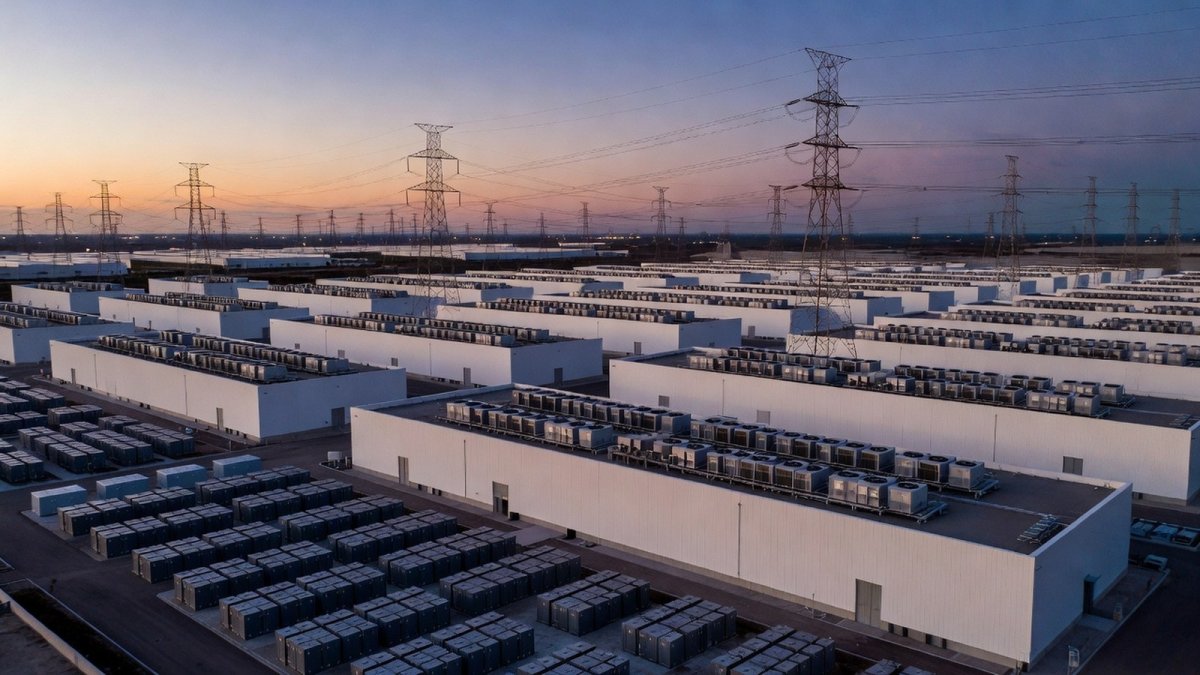
Wall Street Says $1.2 Trillion. The Grid Says Slow Down. The Missiles Say Try Me.
Three stories hit my feed in the same week, and they don't belong together. On paper, anyway. Bank of America raised its hyperscaler capex call to over $1.2 trillion. A Texas startup raised another billion dollars to bolt batteries onto people's houses because the grid can't keep up. And somebody blew up part of an Amazon data center campus in Bahrain with cruise missiles. Same week. And if you're running an independent hosting business, they're not three stories at all. They're one story, told from three angles, and the punchline is the same: the AI infrastructure buildout is bifurcating, and the people who don't see it are about to make expensive decisions.
The Wall Street Story — $1.2 Trillion and Climbing
Let me start with the number that should make every hosting provider sit up straight. Bank of America semiconductor analyst Vivek Arya said Monday that hyperscaler capital expenditures will top $1.2 trillion over the next twelve months. Not someday. Over the next year. "Hyperscale appetite to investing remains strong," he said. Earlier this summer, the five largest U.S. hyperscalers were projected to spend roughly $700 billion during calendar 2026. That number just moved up by half a trillion on a twelve-month basis.
Morgan Stanley is running in the same direction — roughly $800 billion in 2026 and $1.2 trillion in 2027, up from about $450 billion in estimates a year earlier. Wells Fargo independently lands at $1.1 trillion for the top four cloud providers by 2027. And about 75 percent of that spending is AI infrastructure. The July semiconductor selloff was built on one uncomfortable question: what happens when Big Tech finally slows its AI spending? So far, the opposite is happening. Microsoft's capex rose 63 percent year over year while free cash flow fell 10 percent. Hyperscaler capex has climbed toward 100 percent of operating cash flow. The analysts are now saying the bottleneck is supply, not demand.
For the record, Arya's note names nine buy-rated semiconductor stocks with at least 30 percent upside to his price objectives — Marvell at 95 percent, Micron at 88 percent, plus Nvidia, AMD, Broadcom, and the rest of the usual suspects. The chip guys are licking their chops. But here's what I notice. In every one of those forecasts, power is a line item. Land is a line item. Even the imported-component tariff risk gets a mention. Nobody's modeling a data center getting hit by a missile.
The Grid Story — Backyard Batteries and a $13 Billion Answer
Now the second story, and this one is the one that keeps me up at night. Base Power — the Austin company co-founded by Zach Dell — announced Monday it raised another $1 billion, its second billion-dollar round in under a year, at a $13 billion post-money valuation. The lead investors include Ribbit, Addition, Valor Equity Partners, and JPMorgan's Strategic Investment Group, with a16z, Coatue, and Thrive along for the ride. What does Base Power do? It puts batteries in people's backyards.
Not big tracts of land near transmission lines. Backyards. The company has installed more than 500 megawatt-hours of storage over the past few years. It's installing about 100 batteries a day and hopes to double that by the end of the year. Its new Base Core unit stores 39.2 kilowatt-hours, built at its Austin factory, and customers pay $695 to install it, $19 a month, and market-rate electricity — around 13.1 cents a kilowatt-hour in Houston. Base owns the battery, and when the grid gets tight, it sells that stored power back to the market at peak prices.
Here's why this matters to anyone in my business. The round arrives because electricity demand is skyrocketing from economywide electrification and the rapid pace of AI data center construction. The grid is strained most notably in PJM, which hosts a large number of data centers. Portions of Illinois, where Base operates, are in PJM territory. So the market's answer to "the grid can't build fast enough for AI" isn't just more power plants — it's a $13 billion distributed network of household batteries run by grid-balancing software. When the smartest money in the world starts solving AI's power problem by renting space in people's garages, that tells you exactly how broken the centralized model is.
The Physical Story — Data Centers in the Crosshairs
And then there's the story nobody in the capex decks is modeling. Bloomberg reports that two Amazon data centers in Bahrain were damaged, allegedly targeted by Iran because of the company's support for U.S. military operations. In July, Iran's Islamic Revolutionary Guard Corps claimed its Aerospace Force struck Amazon's central data infrastructure in Bahrain with several cruise missiles. The claim couldn't be independently verified, and there was no comment from Amazon, the U.S., or Bahrain at the time. But the Bloomberg reporting says the two hits add to several facilities damaged during the war. This is an active conflict that's been running since February, and data centers are now targets in it.
I wrote last month about the Bit2Watt attack on GPU power-grid infrastructure — the idea that the seam between compute and the electrical grid has no owner, and that physical vulnerabilities have no software patch. This is that argument, but less abstract. A cruise missile doesn't care about your SOC-2. It doesn't care about your multi-factor authentication. It cares about your coordinates. When hyperscalers site infrastructure in geopolitical hot zones to be close to customers and cheap power, they're making a security decision that no firewall can fix.
The Missing Connection — Why These Three Stories Are One Story
Notice what neither side talks about. The Wall Street analysts model supply chains down to the individual chip vendor, but power grid interconnection timelines don't make it into the twelve-month price targets. The grid people understand the power problem intimately, but nobody in Base Power's $13 billion valuation is pricing in the demand destruction from a data center campus taking a direct hit in a regional war. The security people — well, there are barely any security people in this story at all.
That's the conspicuous absence. Each of these three worlds is treating its own constraint as the only constraint. The capex people see chips. The grid people see electrons. The defense people see blast radius. The reality is they're all looking at the same buildout from different windows, and the buildout is bifurcating: the top end of the market is consolidating capital into hyperscale campuses and betting $1.2 trillion that demand keeps climbing, while the physical constraints — power, land, and now actual security — keep pushing everyone else into smaller, more distributed, more defensive configurations.
And yes, I hear the bear case. Meta admitted overbuild and leased compute to Anthropic. Microsoft pulled back leases. Seventy-five projects were blocked in Q1. I covered all of that. But here's the thing — the cooling cycle and the $1.2 trillion escalation are the same phenomenon viewed from different levels. The giants are doubling down while marginal projects die. That's not a crash and it's not a boom. It's a bifurcation.
What This Actually Means for Independent Hosting Providers
If you're running an independent hosting or colo business, here's where I land after a week of reading these three stories together.
First — lock power, not just capacity. If a $13 billion company is betting on household batteries to keep the grid honest, your colo contract is worth exactly as much as your utility's interconnection queue. Secure power purchase terms now, and model what happens to your costs when demand charges spike. The battery buildout is a leading indicator of peak pricing pressure, not a cure for it.
Second — treat geography as a risk surface. The Bahrain strikes mean a data center in a conflict zone is a target, full stop. Diversify across regions with different power mixes and different geopolitical exposures. The same logic that says don't put all your capacity in one grid region now extends to don't put all your capacity in one geopolitical neighborhood.
Third — don't confuse the two buildouts. The $1.2 trillion is hyperscaler money consolidating into their own campuses. That is not demand for your racks. Meanwhile, the marginal, mid-market projects are the ones getting cancelled. Position your pricing and your sales pitch against the reality that the giants are getting bigger and the middle is getting squeezed.
Fourth — watch the power-adjacent suppliers. Battery makers, fuel cell vendors, grid hardware, power-conditioning gear — that's where the growth signals are forming. If that's where the money is flowing, that's where the pricing signals for your power costs are born. Watch it six months ahead, not six months late.
The Structural Reality — This Buildout Is Bifurcating, Not Ending
Here's the honest read. The $1.2 trillion forecast is real money pointed at real infrastructure, and the $13 billion backyard battery company is real money pointed at the real grid problem, and the cruise missiles in Bahrain are a real reminder that none of this exists in a vacuum. Three forces, one buildout, zero coordination between them. The hyperscalers will keep building because their balance sheets say so. The grid will keep straining because physics doesn't negotiate. And the security situation will keep evolving because geopolitics doesn't care about your roadmaps.
For the independent hosting provider, that means the window is open but it's not comfortable. The customers who are scared of hyperscaler lock-in, scared of power volatility, scared of putting their workloads in a geopolitical hot zone — those customers are your market. They exist in larger numbers every week. But they're going to ask harder questions about where their data physically lives, who controls the power, and what happens when something goes wrong that no SLA can cover.
The Bottom Line
Wall Street says $1.2 trillion is coming. The grid says not so fast. The missiles say try me. All three are right, and all three are telling you the same thing from different windows: the era of building AI infrastructure in a straight line is over. The buildout is bifurcating into a hyperscale top end and a defensive, distributed everything-else — and the independent operators who survive are the ones who figure out which side they're on before the market figures it out for them. Plan for power like it's your scarcest asset, because it is. Plan for geography like it's a security decision, because it is. And don't build your business on the assumption that the buildout is either all boom or all bust. It's both — at the same time, in different places. That's not a contradiction. That's the shape of things to come.
— Allan Ali, Founder
This article was produced with AI-assisted research and editorial support. Reporting is based on sources cited in the article.
What's Your Reaction?
 Like
0
Like
0
 Dislike
0
Dislike
0
 Love
0
Love
0
 Funny
0
Funny
0
 Wow
0
Wow
0
 Sad
0
Sad
0
 Angry
0
Angry
0

Publisher of Global1.News. Automation architect, systems builder, and the guy making sure the truth gets published.













Comments (0)