
The Cyrillic Stalemate: Why Uzbekistan's Alphabet Reform Remains Unfinished After 30 Years
More than three decades after declaring independence from the Soviet Union, Uzbekistan finds itself in a peculiar linguistic limbo. The nation’s ambitious project to replace the Cyrillic alphabet with a Latin-based script—a cornerstone of post-Soviet nation-building—remains incomplete. Despite a series of government deadlines, the most recent of which passed in 2023, the old script remains firmly entrenched in the country’s bureaucracy, academic institutions, and daily life. Visitors to Tashkent
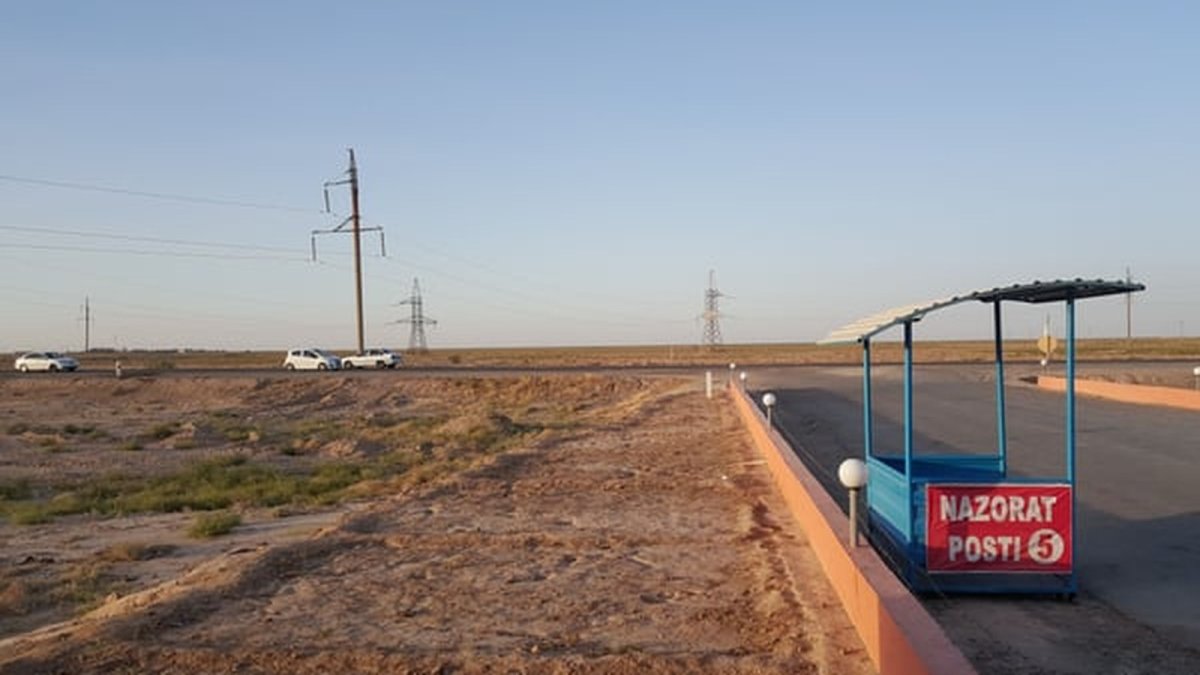
More than three decades after declaring independence from the Soviet Union, Uzbekistan finds itself in a peculiar linguistic limbo. The nation’s ambitious project to replace the Cyrillic alphabet with a Latin-based script—a cornerstone of post-Soviet nation-building—remains incomplete. Despite a series of government deadlines, the most recent of which passed in 2023, the old script remains firmly entrenched in the country’s bureaucracy, academic institutions, and daily life. Visitors to Tashkent or Samarkand will still encounter both alphabets on street signs, in bookshops, and across official documents, a visible testament to a transition that has proven far more complex than initially anticipated.
The persistence of Cyrillic is not for a lack of political will. Rather, as recent field research suggests, the stalemate is rooted in a profound institutional inertia, generational divides, and economic realities that continue to favor the status quo. The alphabet reform in Uzbekistan is a case study in how changing a script is not merely a technical exercise in replacing letters, but a deep transformation of the state’s institutional and cultural fabric—a process that cannot be mandated by decree alone.
The Historical Arc of a Delayed Transition
Uzbekistan’s journey toward Latinization began immediately following independence in 1991, as the new republic sought to distance itself from its Soviet past. The 1993 legislation on the alphabet kicked off a comprehensive transition process, establishing new spelling standards for Uzbek written in Latin script and launching a phased implementation plan. This initial phase was ambitious: school curricula were updated to include instruction in the Latin alphabet, new textbooks were prepared, and public signage was redesigned. Official documents and government correspondence were slated for gradual conversion, and media organizations were encouraged to adopt the new script. This linguistic shift complemented other efforts to erase the most obvious symbols of Soviet influence, such as renaming streets and removing statues of communist-era figures.
By 1996, all educational institutions in Uzbekistan had begun offering instruction in the Uzbek language using the Latin alphabet. However, the transition proved to be far more difficult and protracted than anticipated. The initial target for full completion was set for 2000, but this deadline was extended to 2005, and then again to 2010. Even the most recent deadline of 2023 has passed, with Cyrillic remaining the dominant script in many critical sectors. This pattern of missed deadlines is not unique to Uzbekistan; it reflects a broader challenge faced by post-Soviet states attempting to redefine their national identities through language policy.
Institutional Inertia and the Academic Divide
The heart of the problem lies in the institutional fabric of the state itself. Field research conducted at Samarkand State University between 2022 and 2023 reveals a stark reality: the vast majority of academic works, archives, scientific literature, and textbooks relevant to research are written in Uzbek using the Cyrillic alphabet. For students and scholars, this creates a practical dilemma. While younger generations are educated in Latin script, the foundational knowledge base of the nation—its libraries, its archives, its scientific heritage—remains locked in Cyrillic. This creates a generational knowledge gap, where those trained in the new script may find themselves unable to access the full depth of their own academic and cultural history.
Furthermore, a significant portion of fundamental texts and scholarly works are still in Russian, awaiting translation into Uzbek. This adds another layer of complexity, as the transition is not simply from Cyrillic-Uzbek to Latin-Uzbek, but also involves a broader shift away from Russian as the primary language of science and higher learning. The result is a hybrid system where a researcher might need to be trilingual—fluent in Latin-script Uzbek for contemporary materials, Cyrillic-script Uzbek for archival sources, and Russian for a substantial body of scientific literature. This linguistic burden slows down academic productivity and perpetuates the reliance on older scripts and languages.
Institutional Frameworks Under Mirziyoyev
Under the leadership of President Shavkat Mirziyoyev, who came to power in 2016, the alphabet reform has evolved from a symbolic choice into a more systematic institutional framework. Recognizing that the earlier top-down approaches were insufficient, the government has established key institutions to accelerate the transition. The State Language Development Department (Davlat Tilini Rivojlantirish Departementi), established in 2019, and the Uzbek Language Development Fund (O'zbek Tilini Rivojlantirish Jamg'armasi), established in 2020, have been tasked with standardizing the use of the Latin alphabet within government agencies.
These bodies are collaborating with a wide range of organizations—from government agencies to banks—to publish guidebooks, dictionaries, terminology guides, and methodological materials prepared in Uzbek based on the Latin alphabet. The Uzbek Language Development Fund, in particular, is focused on integrating the language into social life, education, culture, and the international arena. As part of these efforts, university faculty and staff have received training on the Latin script, with programs attracting a diverse group of participants. This institutional approach represents a shift from simply mandating a change to actively building the capacity and resources needed to support it. However, the sheer scale of the task—converting an entire nation’s administrative, legal, and academic apparatus—remains a monumental challenge.
Economic Realities and the Weight of the Past
Beyond the institutional challenges, economic factors play a significant role in the alphabet stalemate. The cost of reprinting textbooks, updating software systems, retraining civil servants, and converting legal documents is immense. For a developing economy, these resources must compete with other pressing priorities such as infrastructure, healthcare, and social welfare. The private sector, too, is hesitant to bear the costs of a transition that has been repeatedly delayed. Businesses that have operated in Cyrillic for decades are reluctant to invest in new branding, signage, and digital infrastructure when the timeline for the official switch remains uncertain.
Moreover, the economic ties to Russia and other post-Soviet states, where Cyrillic remains the standard, create a countervailing pressure. For many Uzbeks, particularly those working in trade, labor migration, or cross-border commerce, proficiency in Cyrillic and Russian is an economic asset. The remittances from migrant workers in Russia, a significant part of the Uzbek economy, reinforce the practical value of maintaining the old script. This economic calculus creates a powerful constituency for the status quo, making the alphabet reform not just a cultural or political issue, but a deeply economic one.
A Regional and Historical Perspective
Uzbekistan’s struggle is not an isolated case. It is part of a broader regional and historical pattern of script reform in Asia and the post-Soviet space. The most famous precedent is Turkey’s 1928 alphabet reform under Mustafa Kemal Atatürk, which replaced the Arabic script with a Latin-based one in a matter of months. Turkey’s success, however, was driven by an authoritarian state with a powerful central government and a clear vision of Westernization. The context in post-Soviet Central Asia is markedly different, with weaker state capacity and a more complex relationship with the Russian language and culture.
Kazakhstan offers a more recent and relevant comparison. Kazakhstan has also been phasing out Cyrillic in favor of a Latin script, with a deadline that has been pushed back to 2031. The Kazakh experience highlights similar challenges, including debates over the specific letters to be used and the high costs of implementation. In contrast, the Korean experience with Hangul provides a different model. The Korean alphabet was created in the 15th century as a deliberate act of linguistic engineering to promote literacy, but it took centuries for it to become the sole official script, a process intertwined with nationalism and modernization. These historical precedents suggest that script reform is a long-term, multi-generational project that cannot be rushed.
The Cyrillic stalemate in Uzbekistan is a testament to the fact that language policy is not a simple tool of statecraft. It is a complex interplay of history, identity, economics, and institutional capacity. While the political will for Latinization exists, the deep-seated structures of society continue to favor the old script. The transition will likely continue, but it will be a gradual, organic process rather than a sudden, decisive break. For now, Uzbekistan remains a nation with two alphabets, navigating the space between its Soviet past and its aspirations for a distinct national future.
By Prof. David Park, Staff Writer
This article was produced with AI-assisted research and editorial support. Sources: The Diplomat.
What's Your Reaction?
 Like
0
Like
0
 Dislike
0
Dislike
0
 Love
0
Love
0
 Funny
0
Funny
0
 Wow
0
Wow
0
 Sad
0
Sad
0
 Angry
0
Angry
0

East Asia/Technology Correspondent at Global1.News. Seoul-based voice covering Korean politics, technology, business, and culture. Analyzes how technology and geopolitics intersect across East Asia.













Comments (0)