
Broken Plates, Living Heritage: Hatay Chef's Cookbook Keeps Earthquake Recipes Alive
In the ancient city of Antakya, where the Orontes River still winds through streets that have witnessed empires rise and fall, a chef from İskenderun has turned the shards of a shattered kitchen into a testament of survival.
In the ancient city of Antakya, where the Orontes River still winds through streets that have witnessed empires rise and fall, a chef from İskenderun has turned the shards of a shattered kitchen into a testament of survival. Şemse Gökalp, a cooking instructor whose world collapsed with her home on February 6, 2023, has gathered the fragments of Hatay's culinary soul into a cookbook called "Kırık Tabaklar" — Broken Plates. It is a story about how food carries memory when everything else has been reduced to dust, and how a communal table can hold a community together long after the ground stops shaking.
Broken Plates, Living Heritage: A Hatay Chef's Cookbook Keeps Earthquake Recipes Alive
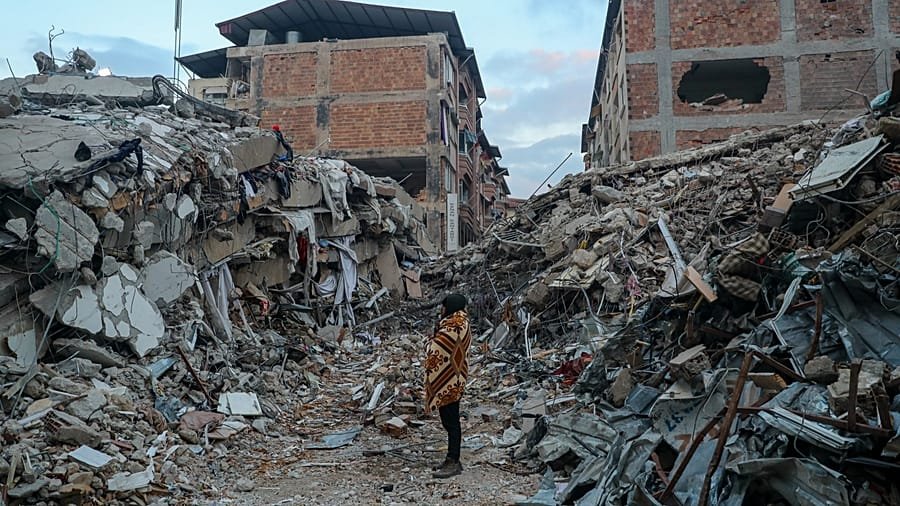
Antakya, Türkiye — More than three years after the 7.8-magnitude earthquake that devastated southeastern Türkiye and northern Syria, Hatay province is still rebuilding — its skyline a forest of construction cranes, its empty plots silent memorials to the tens of thousands who perished. Yet amid the concrete and grief, Şemse Gökalp has done something remarkable: she has collected the recipes and stories of earthquake survivors into a book that insists Hatay's cuisine will not be buried with its masters. "Kırık Tabaklar" is not merely a cookbook; it is an act of resistance against forgetting.
The book, published by Komorebi Yayınları, arrives at a moment when the world is watching whether Hatay can reclaim its title as a UNESCO Creative City of Gastronomy. For Gökalp, the project began not in a publishing house but in the rubble-strewn streets where she volunteered in the immediate aftermath of the disaster, using her profession and her social media presence to feed and organize. What emerged is a work that editor-in-chief Öznur İzgi describes as presenting every recipe "from the window of a family" — a collection where stories come before ingredients.
A Table That Refused to Break
The earthquake that struck at 4:17 AM on February 6, 2023, was one of the deadliest disasters in modern Turkish history. With its epicenter near Kahramanmaraş, the quake flattened entire neighborhoods across 11 provinces, but Hatay was among the hardest hit — its historic center of Antakya reduced to a maze of collapsed buildings and twisted metal. Tens of thousands of lives were lost across the region, and those who survived found themselves sleeping in tents, cars, and makeshift shelters, their daily rhythms shattered along with their homes.
Şemse Gökalp was in her kitchen when the quake hit. Her home in İskenderun, a coastal district of Hatay, was damaged, and her plates lay shattered on the floor — a scene that would later give her book its name. In the chaotic weeks that followed, she did what she knew best: she cooked. "The sixth of February was a turning point for all of us," she recalled. "I tried to do whatever I could through my own profession." That meant organizing field kitchens, coordinating food distribution, and using her YouTube channel under the name Chef Şemse to reach people with practical guidance.
What struck Gökalp during those dark days was not just the scale of the destruction but the resilience of the communal table. "We fell into despair," she admitted, "but afterward, during the recovery process, I saw that once again the table brought us together." In tent cities and container homes, families who had lost everything would still gather to share whatever meager provisions they had. The act of eating together, she realized, was not a luxury — it was a lifeline.
Her sister-in-law, Zübeyde Gökalp Kanat, remembers the period with painful clarity. "After the earthquake, her uncle passed away," Kanat said. "Some time later Şemse said: let this book be called 'Broken Plates,' because during the earthquake we set our tables with whatever we had in our hands. We ate off those broken plates." The image is both literal and profound — a family refusing to let a disaster define how they nourished one another.
As weeks turned into months, Gökalp began to see her work differently. She was not just feeding people; she was witnessing the fragility of an entire culinary heritage. Hatay's cuisine, with its roughly 600 recorded dishes and centuries-old recipes, had been passed down orally from generation to generation. If the masters who held those recipes in their memories were gone, what would remain?
'Kırık Tabaklar': A Cookbook Born From Rubble
The full title of Gökalp's work — "Chef Şemse'den Hatay Mutfağı: Kırık Tabaklar" (Hatay Cuisine from Chef Şemse: Broken Plates) — signals its dual nature. It is at once a personal memoir and a communal archive, a collection of recipes and a record of survival. Each dish is accompanied by the story of the person who shared it, many of them earthquake survivors Gökalp met while volunteering in the field kitchens and relief centers.
The book's origin story is deeply personal. When the earthquake struck, Gökalp's kitchen — the heart of her home and her profession — was destroyed. Her plates lay in pieces on the floor, and in the days that followed, she and her family ate from whatever vessels they could salvage. "We ate off those broken plates," her sister-in-law recalled, explaining how the title emerged from that shared experience of making do with fragments.
Öznur İzgi, the editor-in-chief at Komorebi Yayınları, says the book's structure reflects Gökalp's approach. "The book focuses on the stories before the recipes," İzgi explained, "presenting each one from the window of a family." This means readers encounter not just instructions for preparing a dish but the context in which it was cooked — a wedding feast, a Ramadan iftar, a mourning gathering — and the person who carried that knowledge.
Gökalp herself describes "Kırık Tabaklar" as not only her book but "the book of everyone who lived through the process together." It is a collective testimony, a way of ensuring that the voices of survivors are heard not just as victims but as bearers of culture. The recipes are presented with the warmth of a family kitchen, not the clinical precision of a professional cookbook.
For a long-time cooking instructor (usta öğretici) who has taught culinary and pastry courses for years, the book represents a new chapter in her career. She has moved from teaching techniques to preserving heritage, from demonstrating skills to documenting stories. The shift reflects a deeper understanding that in Hatay, food has never been just about sustenance — it is identity, memory, and community.
Hatay: A UNESCO City of Gastronomy in Recovery
Hatay's reputation as a culinary destination is not accidental. The province, which sits at the gateway to Mesopotamia, has been a crossroads of civilizations for millennia — Hittites, Greeks, Romans, Byzantines, Arabs, and Ottomans have all left their mark on its kitchens. This history has produced a cuisine that blends Mediterranean, Middle Eastern, and Anatolian flavors into something uniquely its own, earning Hatay recognition as a UNESCO Creative City of Gastronomy.
The numbers are staggering: roughly 600 recorded dishes, with some recipes tracing back hundreds or even thousands of years. The region is famous for künefe, the sweet cheese pastry soaked in syrup; for hummus, which Hatay claims as its own; and for a vast array of olive-oil dishes that reflect the province's Mediterranean climate. Each district, each village, each family has its own variations, its own secrets, its own way of doing things.
The 2023 earthquake threatened all of this. When buildings collapsed, so did the kitchens where recipes were passed down. When master chefs died, they took their knowledge with them. Gökalp observed that the same dishes are made differently across Hatay's many districts — a diversity that is both a strength and a vulnerability. If one district's version is lost, it is gone forever.
Today, the recovery is visible but incomplete. In Antakya, Hatay's historic center, new apartment blocks rise beside empty plots where buildings once stood. Construction cranes dominate the skyline, a constant reminder of both destruction and renewal. The rhythm of life is slowly returning, but the scars remain — in the empty spaces, in the memorials, in the faces of those who lost everything.
For Gökalp, the rebuilding of Hatay's physical infrastructure must be matched by the rebuilding of its cultural infrastructure. A city cannot be a UNESCO City of Gastronomy if its recipes have vanished. A cuisine cannot survive if its practitioners are gone. "Kırık Tabaklar" is her contribution to that rebuilding — a way of ensuring that when the cranes finally leave, the kitchens will still be cooking.
Recipes as Memory: What Nearly Stayed Buried
Gökalp's greatest fear in the aftermath of the earthquake was not just the loss of buildings but the loss of knowledge. "I feared Hatay's renowned cuisine might disappear," she said, "because many renowned chefs were lost in the disaster." The scale of the loss was difficult to quantify — how many grandmothers, how many home cooks, how many professional chefs had perished with their recipes intact in their memories?
Her warning was stark: with the passing of master chefs, many recipes risked staying buried under the rubble. In a tradition where cooking knowledge is passed down orally, where measurements are given in handfuls and pinches, where the secret to a perfect dish lies in the hands of a single person, the death of that person is the death of that dish. The earthquake had not just destroyed buildings; it had threatened to erase an entire culinary heritage.
What Gökalp discovered as she began collecting recipes was the remarkable diversity within Hatay's cuisine. The same dish, she found, is made differently across the province's many districts — different spices, different techniques, different proportions. This is not a flaw but a feature, a reflection of the region's complex history and its many cultural influences. Each variation is a story, a lineage, a claim to identity.
Her stated main goal is clear: to pass the recipes and their stories to young people so the memory stays alive. This is not just about preserving the past but about building the future. If young people in Hatay learn to cook their grandmothers' dishes, if they understand the stories behind the food, then the cuisine will survive — not as a museum piece but as a living tradition.
The lesson extends far beyond Hatay. Across the world, oral food traditions are vanishing as elders pass and younger generations move away from traditional cooking. The earthquake was a dramatic, sudden example of a slow process that is happening everywhere. Gökalp's work is a reminder that recipes are not just instructions — they are memory, identity, and culture, and they must be actively preserved before they are lost.
Africa's Own Keepers of the Culinary Flame
Gökalp's story resonates deeply for African audiences, who know all too well the fragility of oral food traditions. In Senegal, the national dish thiéboudienne — a fragrant rice and fish dish that is a source of national pride — is passed down through grandmothers' memories, each family claiming its own version as the authentic one. The same is true across the continent, from West African jollof rivalries to the countless regional dishes that have never been written down.
The threat is not an earthquake but time itself. As elders pass away, as urbanization pulls young people away from rural kitchens, as imported foods reshape palates, the knowledge of traditional cooking is fading. In many African communities, there is no written record of these recipes — they exist only in the memories of those who cook them. When those memories are gone, the dishes are gone.
But there is hope. Across Africa, a new generation of chefs and food writers is documenting heritage cuisine before it fades. In Dakar, Lagos, Nairobi, Accra, and Johannesburg, culinary professionals are collecting recipes, recording oral histories, and building archives of traditional cooking. They are recognizing that food is not just sustenance but cultural heritage, worthy of the same preservation efforts as music, art, and language.
The growth of food culture coverage across African media is a positive sign. From food festivals to cooking shows to dedicated food sections in newspapers, the continent is beginning to celebrate its culinary diversity. The Dakar Biennale, the Saint-Louis Jazz Festival, and other cultural events increasingly feature food as an integral part of the experience, recognizing that cuisine is a form of artistic expression.
What African audiences can learn from Hatay's example is the importance of treating recipes as cultural memory worth saving. The earthquake was a catastrophe, but it also served as a wake-up call — a reminder that heritage cannot be taken for granted. If African communities can document their culinary traditions now, before they are lost, they will be building a legacy for future generations.
What to Watch For
The recovery in Hatay is far from complete, but there are signs of hope. The publication of "Kırık Tabaklar" is one of them — a tangible proof that the region's culinary heritage is not only surviving but being actively preserved. Gökalp's appearance at Türkiye E-Commerce Week in Istanbul in November 2025, where she spoke about the book's origin story, signals that her work is gaining national attention.
The book's role in Turkey's culinary conversation is significant. It arrives at a time when there is a growing appetite for heritage cookbooks and food storytelling — not just in Türkiye but globally. Readers are increasingly interested in the stories behind their food, in the cultural context of recipes, in the human faces of the people who cook. "Kırık Tabaklar" delivers all of this, wrapped in the warmth of Hatay's kitchens.
Culinary tourism and UNESCO gastronomy recognition can play a crucial role in supporting rebuilding efforts. As Hatay rebuilds, its restaurants and food markets can become destinations for travelers seeking authentic experiences. The province's UNESCO status is not just a badge of honor; it is an economic asset that can help revive local businesses and create jobs. The challenge is to ensure that this tourism benefits the community and supports the preservation of culinary heritage.
For communities worldwide that use food to hold onto identity in hard times, Hatay's example offers both inspiration and a warning. Inspiration, because it shows that even in the face of catastrophic loss, culinary traditions can be preserved and passed on. A warning, because it demonstrates how quickly heritage can disappear if it is not actively maintained. The broken plates of Hatay have been gathered and mended, not with glue but with stories.
As the construction cranes continue to dominate Antakya's skyline, as new apartment blocks rise beside empty plots, the real rebuilding is happening in kitchens — in the hands of cooks who refuse to let their heritage die. Şemse Gökalp has given them a book, but more importantly, she has given them a reminder: that food is memory, that memory is identity, and that identity is worth fighting for. The table that brought Hatay together after the earthquake is still standing, and it will not break.
By Amara Diop, Staff Writer
This article was produced with AI-assisted research and editorial support. Reporting is based on sources cited in the article.
What's Your Reaction?
 Like
0
Like
0
 Dislike
0
Dislike
0
 Love
0
Love
0
 Funny
0
Funny
0
 Wow
0
Wow
0
 Sad
0
Sad
0
 Angry
0
Angry
0

West Africa/Sahel Correspondent at Global1.News. Dakar-based journalist covering politics, security, climate, and development across Francophone and Anglophone West Africa. Tells the stories of a region undergoing profound transformation.











Comments (0)