
William and Kate meet PM Modi as they wrap up India tour
The Prince and Princess of Wales concluded a three‑day state visit to India on Wednesday with a private audience at the residence of Prime Minister Narendra Modi in New Delhi.
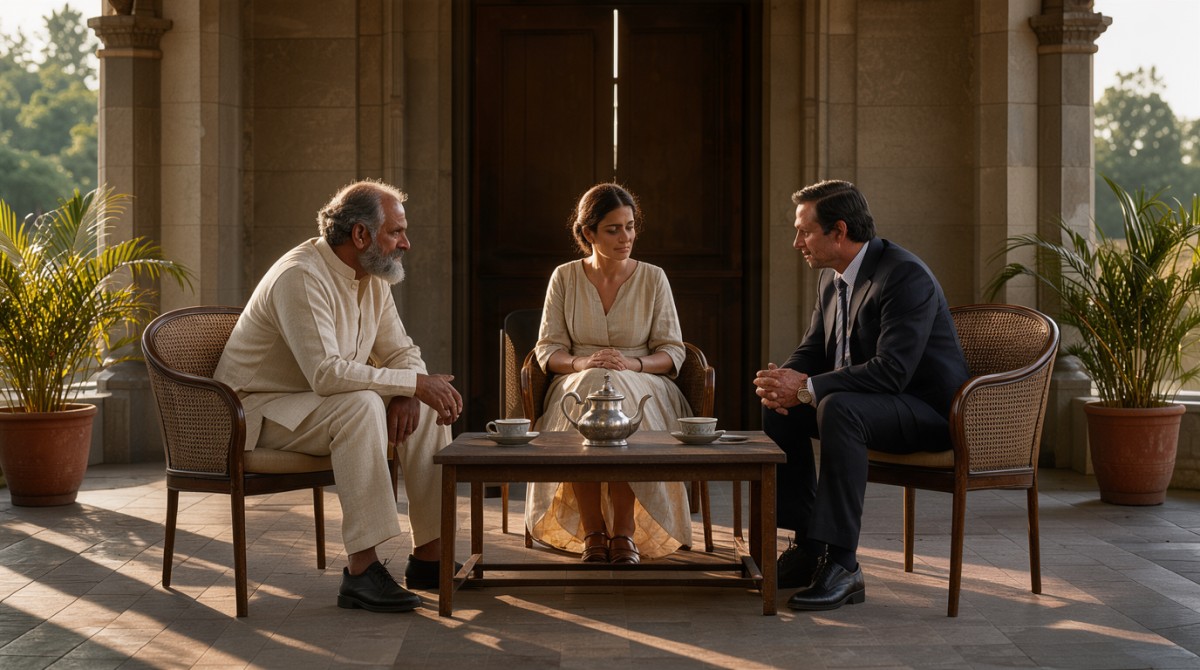
The Prince and Princess of Wales concluded a three‑day state visit to India on Wednesday with a private audience at the residence of Prime Minister Narendra Modi in New Delhi. The meeting, added at short notice, was framed by both sides as an affirmation of the deep, enduring ties that bind the United Kingdom and India, and as an opportunity to chart further cooperation in a range of sectors, from climate innovation to cultural exchange. The visit, the first overseas trip for the future king and queen since the royal couple’s 2022 tour, combined high‑profile diplomatic engagements with personal projects that have come to define their public roles.
Diplomatic symbolism and the UK‑India partnership
During the private audience, a Kensington Palace spokesperson said the royals and Prime Minister Modi discussed “the strength and importance of the UK–India bilateral relationship, reflecting on the deep and enduring ties between the two countries and the opportunities to strengthen their partnership in the years ahead.” The language used by both parties underscored the strategic dimension of the encounter: Modi described the meeting as a “pleasure” and expressed his hope to “further strengthen” the partnership for the “shared prosperity of the people of our nations and the wider world.” Such phrasing aligns with a broader diplomatic narrative that positions the UK‑India relationship as a cornerstone of each nation’s foreign policy, especially as both seek to deepen trade, technology, and security cooperation in the Indo‑Pacific region.
The royal couple’s presence in New Delhi also carried symbolic weight. Their last meeting with Modi occurred during an official visit in 2016, marking a decade‑long interval that coincided with significant shifts in both domestic politics and global geopolitics. By returning to India, the Prince and Princess signaled continuity and renewal, reinforcing the United Kingdom’s commitment to its Commonwealth partners while also acknowledging India’s rising global stature.
Prince William’s Earthshot Prize and climate diplomacy
Central to the itinerary was the Earthshot Prize, Prince William’s flagship environmental initiative launched in 2020. Earlier in the week, the couple attended the prize ceremony in Mumbai, where they presented £1 million in awards to winners. The event, hosted by prominent Indian filmmaker Karan Johar, highlighted India’s leadership in climate innovation, biodiversity, and its massive youth demographic—factors that Prince William cited when announcing India as the first overseas venue for the prize ceremony.
In the New Delhi meeting, the royals reportedly discussed the “success of the ceremony in Mumbai” and India’s “growing leadership in environmental innovation.” While the source material does not detail specific policy outcomes, the emphasis on environmental collaboration suggests that the Earthshot Prize is being leveraged as a diplomatic conduit, linking the United Kingdom’s climate agenda with India’s burgeoning green technology sector. This aligns with a broader trend of using high‑profile cultural and philanthropic events to deepen bilateral ties, especially in areas where both nations seek to lead globally.
Cultural engagements: film, sport, and personal outreach
Beyond formal diplomacy, the visit incorporated a series of culturally resonant activities designed to showcase the soft power dimensions of the UK‑India relationship. On Wednesday, Prince William met with Indian film stars at a production company, an encounter that underscores the importance of the entertainment industry as a bridge between the two societies. The involvement of Karan Johar, a leading figure in Bollywood, further cemented the link between the royal patronage of the Earthshot Prize and India’s vibrant cultural sector.
Earlier in the trip, the couple engaged in street cricket alongside a local legend, a gesture that resonated with Indian audiences and highlighted the shared love of sport. Such informal interactions serve to humanise diplomatic figures, fostering goodwill that can translate into more substantive cooperation across sectors.
Catherine’s humanitarian focus and health outreach
Princess Catherine’s itinerary included a visit to the Nowrosjee Wadia Maternity Hospital in Mumbai, where she met a grieving mother, Jyoti Karande, who had lost a baby after giving birth to premature twins. The princess offered words of encouragement, telling the 29‑year‑old, “Stay strong. Well done. You’ve clearly been very, very brave.” This personal outreach reflects Catherine’s ongoing commitment to health and maternal care initiatives, a focus that has become a hallmark of her public work since her own health challenges.
The visit to the maternity ward also illustrated the royal couple’s strategy of coupling high‑profile diplomatic duties with grassroots humanitarian engagements. By highlighting the plight of mothers and children, Catherine reinforces the United Kingdom’s broader development agenda, which includes support for maternal health programmes in low‑ and middle‑income countries. While the source material does not specify any policy commitments arising from the hospital visit, the symbolic value of such gestures is significant in building people‑to‑people connections.
Strategic implications for UK foreign policy
The inclusion of the Prince and Princess in high‑level diplomatic outreach reflects the United Kingdom’s reliance on soft‑power assets to complement traditional statecraft. As the future king and queen, William and Catherine are viewed by the UK government as “valuable diplomatic assets,” a description that underscores their role in advancing British interests abroad without the overt political baggage that can accompany elected officials.
In the context of the Indo‑Pacific, where great‑power competition intensifies, the UK seeks to position itself as a reliable partner to India, a nation that is increasingly central to regional stability and economic growth. By aligning the royal visit with themes of climate innovation, cultural exchange, and humanitarian outreach, the United Kingdom signals a multifaceted partnership that goes beyond trade, encompassing shared values and collaborative problem‑solving.
Future prospects and the royal itinerary
With Catherine’s recovery from cancer treatment progressing well, the royal couple is expected to maintain a busy schedule of international engagements. The source material notes that “visits of a similar kind can be expected to fill their calendar,” suggesting that the India trip may serve as a template for future tours that blend personal projects—such as the Earthshot Prize—with diplomatic objectives.
Given the positive reception in India and the emphasis placed on environmental leadership, it is plausible that future royal visits will continue to spotlight sustainability initiatives, aligning with global priorities and reinforcing the United Kingdom’s reputation as a leader in climate action. Moreover, the emphasis on cultural and humanitarian outreach indicates that the royal itinerary will likely continue to incorporate grassroots engagements that complement formal diplomatic meetings.
Analysis of the visit’s broader impact
From an analytical perspective, the India tour illustrates how contemporary monarchy can function as a conduit for soft diplomacy, especially in a world where traditional diplomatic channels are crowded and often constrained by political considerations. By leveraging Prince William’s Earthshot Prize—a project that commands global attention—the royal couple amplified the visibility of UK‑India cooperation on climate innovation, a sector where both nations have strategic interests.
Furthermore, the blend of high‑profile cultural events, such as the cricket match and film industry meetings, with personal humanitarian gestures, like Catherine’s hospital visit, creates a narrative of comprehensive partnership. This narrative can be instrumental in shaping public opinion in both countries, fostering a sense of shared destiny that underpins deeper economic and security ties.
In sum, the meeting with Prime Minister Modi, set against the backdrop of the Earthshot Prize ceremony and a series of culturally resonant activities, reinforced the United Kingdom’s commitment to a robust, multidimensional relationship with India. As the Indo‑Pacific region continues to evolve, such engagements—anchored in both symbolic and substantive elements—will likely play an increasingly pivotal role in the United Kingdom’s foreign policy architecture.
This article was produced with AI-assisted research and editorial support. Reporting is based on the source material cited below. Sources: BBC News Asia; bbc.co.uk; Global1.News (22 November 2026).
By Kenji Tanaka, Staff Writer
What's Your Reaction?
 Like
0
 Dislike
0
 Love
0
 Funny
0
 Wow
0
 Sad
0
 Angry
0

Japan Correspondent at Global1.News. Tokyo-based voice covering Japanese politics, technology, economy, and culture. Tracks the intersection of tradition and innovation in one of the world's most dynamic societies.














Comments (0)