
USS Benfold's Four Days Without Power in South China Sea Raises New Questions About Navy Readiness
A US Navy destroyer lost power for four days in the South China Sea after a July 24 engineering casualty, leaving its crew without toilets, AC or hot meals in extreme heat. The Navy praises crew resilience; a sailor's family alleges worse conditions, fueling readiness concerns.
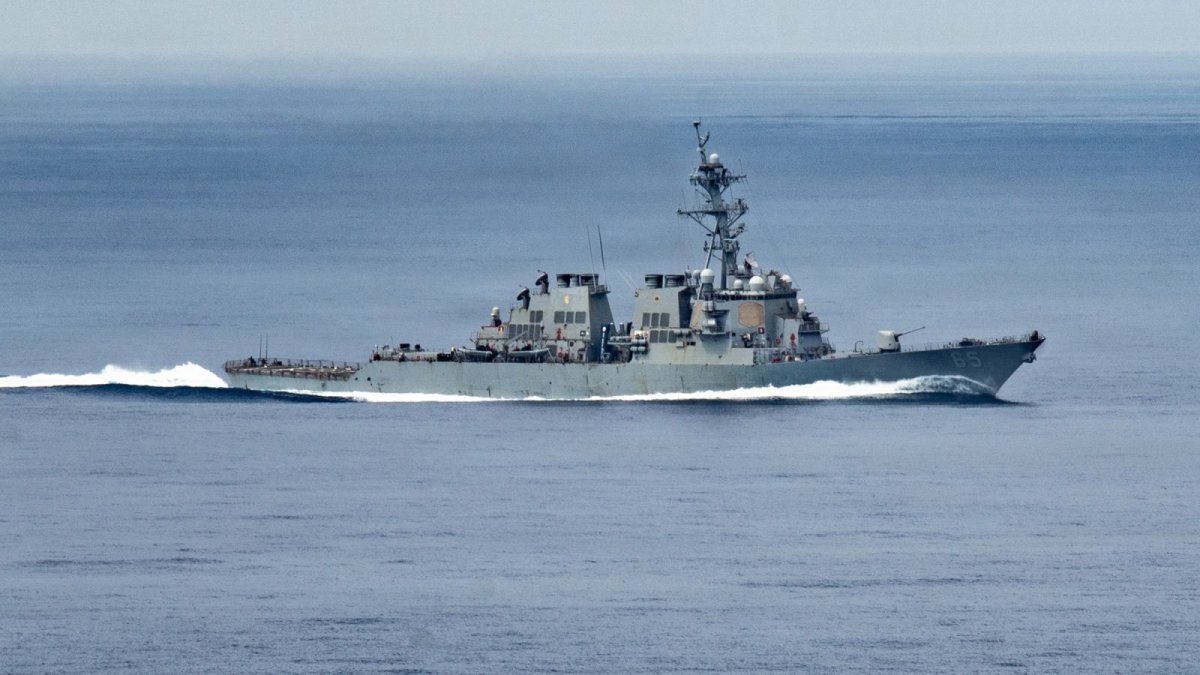
The guided-missile destroyer USS Benfold spent four days adrift in the South China Sea last month without working toilets, air conditioning, or a functioning galley after an engineering failure knocked out the warship's power - a breakdown that has become the latest flashpoint in a growing debate over whether the US Navy is being stretched beyond its limits.
The Arleigh Burke-class destroyer, designated DDG-65, was conducting routine operations in the Indo-Pacific on July 24 when it suffered what the US 7th Fleet described as an "engineering casualty involving its generators." The almost 10,000-ton warship lost the ability to maneuver on its own, and the outage cascaded through the ship's systems, disabling potable water, sanitation, climate control, and food preparation in late-July heat where daytime temperatures averaged between 89 and 98 degrees Fahrenheit (32 to 37 degrees Celsius).
Benfold power loss: Navy faces readiness questions
Washington, DC - The guided-missile destroyer USS Benfold (DDG-65) spent four days without power in the South China Sea after an engineering casualty on July 24, the US 7th Fleet confirmed Monday, as the Navy faces mounting scrutiny over the strain of the Iran war and global commitments. The warship was towed to Subic Bay in the Philippines for repairs, which were completed by August 8, according to fleet spokesman Cmdr. Matthew Comer.
Official Navy Account: Resilience Amid an Engineering Casualty
The Navy's official account, provided by Cmdr. Matthew Comer, spokesperson for the 7th Fleet, describes the incident as a serious but contained engineering failure. "There were no injuries to the crew, who demonstrated resilience, grit, professionalism, and unwavering steadiness in their response," Comer said in a statement to CNN. The cause of the power outage, first reported by USNI News, remains under investigation.
According to the timeline Comer provided to Stars and Stripes, contracted tugboats towed the Benfold to Subic Bay, Philippines, where personnel from the Ship Repair Facility - Japan Regional Maintenance Center, headquartered at Yokosuka Naval Base, Japan, met the ship on July 28. The crew was provided food and contracted lodging off the ship beginning July 29. Power was restored July 30, repairs were completed before the ship shifted berth for fuel on August 7, and the Benfold departed Subic Bay on August 8. It is now at Yokosuka.
The Navy emphasized that the crew was never left without support: the guided-missile cruiser USS Robert Smalls provided cooked meals, and other ships in the Japan-based USS George Washington Carrier Strike Group also provided aid during the four days the destroyer was powerless.
The Family's Account: Allegations of an 'Oven' and Buckets for Waste
While the Navy's account focuses on the operational response, a very different picture has emerged from the family of a sailor aboard the Benfold. In an exclusive interview published August 13 by KrassenCast, a partisan political commentary outlet, the sailor's mother - identified only as "Rebecca," anonymous for fear of retaliation - described conditions she says her son endured. The family has nearly 40 years of combined active-duty service, and the father still works for the Department of Defense, according to the outlet.
"They had no power. All engines were broken. Four days adrift at extreme heat conditions," the mother told KrassenCast. She said the crew had bottled water, but the inside of the ship became unbearable - "an oven." Plumbing failed, toilets stopped working, and normal meals could not be cooked. She says sailors were forced to use buckets for human waste and dump it overboard. She also alleged that the crew was told there would be 900 meals on the pier at Subic Bay, but "the meals weren't there."
These are allegations from an anonymous family member published through a partisan outlet; the Navy said it had no comment to KrassenCast at the time. The two narratives are not necessarily contradictory - the Navy has confirmed the loss of toilets, galley services, and air conditioning even as it praised the crew's response.
A Former Captain's Assessment: Four Days in the South China Sea
Carl Schuster, a former US Navy captain who once endured about four hours aboard a destroyer without power near Puerto Rico, offered a stark assessment of what the Benfold's crew likely faced. "It would have been quite stressful. Operations officers were worried about crew morale and operational concerns, the engineers were focused on how to solve it and the navigator was worried about the direction they were drifting and what weather was coming. The crew was worried about weather, food and what was next. The (commanding officer) and (executive officer) were worried about all of that and when help would arrive," Schuster told CNN.
His comparison was blunt: "I can assure you four hours in the waters southeast of Puerto Rico is not nearly as stressful as four days in the South China Sea." A warship without power in a contested maritime environment is not only unable to maneuver but vulnerable to drifting into shipping lanes or adverse weather.
The Benfold's crew of 329 to 359 sailors faced the added challenge of maintaining morale and discipline aboard a ship without climate control in temperatures that regularly exceeded 90 degrees Fahrenheit. The Navy has not disclosed whether any crew members required medical attention for heat-related illness, and Comer's statement did not address the question.
A Troubling Pattern: The USS Higgins Precedent
On April 28, 2026, the USS Higgins (DDG-76), also an Arleigh Burke-class guided-missile destroyer, suffered an "engineering casualty" that knocked out electricity and propulsion for several hours in the Indo-Pacific after an onboard electrical fire, according to Navy officials and CNN. Power was restored, the vessel resumed normal operations, and no injuries were reported.
The Benfold incident is the second loss of power to hit a US Navy destroyer in Pacific Command's area of responsibility within roughly three months, CNN reported, raising questions about whether the failures share a common root cause. Arleigh Burke-class destroyers are the workhorses of the US Navy's surface fleet, with more than 70 in service. The 500-foot-long ships, almost 10,000 tons, carry crews of 329 to 359 and are designed for everything from anti-submarine warfare to ballistic missile defense.
The Navy has not said whether the Benfold and Higgins failures share a common root cause, and the investigation into the Benfold's generator casualty is ongoing. But two such incidents in roughly three months have drawn attention from analysts and lawmakers who argue the fleet is being pushed too hard.
The Lincoln Parallel: A Carrier Under Strain
The Benfold's ordeal comes as the Navy faces intense scrutiny over the USS Abraham Lincoln, the aircraft carrier the Benfold's strike group is heading to relieve. The Lincoln, deployed since November, was sent to the Middle East in January, in time to take part in air operations the following month against Iran in Operation Epic Fury. The carrier has now been deployed for more than 200 days, and media reports have surfaced of sailors struggling with the strain, including reported attempts by some crew members to jump overboard.
Families of sailors on board the carrier have complained of worsening conditions - poor food, inadequate air conditioning, and other quality of life issues. The Navy secretary has called reports of Lincoln crew struggles "dishonest," but the complaints have persisted, and the Benfold incident adds another data point to the narrative of a fleet under strain.
The USS George Washington Carrier Strike Group, of which the Benfold is a part, started its transit to the Middle East on Thursday, August 13, according to the Navy, and will relieve the Lincoln. Ship spotters in Japan reported the Benfold has arrived at Yokosuka, according to USNI News, while the George Washington prepares for the long transit.
Readiness Under Strain: The Iran War and Global Commitments
Analysts and Democratic lawmakers have said the Navy is being stretched thin by the demands of the Iran war and its global commitments. The Benfold incident, coming on the heels of the Higgins failure and the Lincoln's extended deployment, has become a symbol of that strain. The Navy is simultaneously maintaining combat operations in the Middle East, a forward-deployed presence in the Indo-Pacific, and a global rotation of carrier strike groups.
The Benfold itself has a history that may be relevant to its current condition. According to the family's account published by KrassenCast, the ship spent roughly a decade forward deployed in Japan before relocating to Everett, Washington. The Navy publicly said the ship would undergo maintenance before returning to operations, but the crew was told one week before they were supposed to enter repairs that the plan had changed - possibly going to the 5th Fleet or back to the 7th. The sailor's mother said her son was surprised the ship made it up the California coast: "They only had one engine out of three working!"
Those allegations, if true, would suggest the Benfold was sent back to sea without completing scheduled maintenance, potentially contributing to the July 24 casualty. The Navy has not responded to the specific claims, and they remain unverified. But they align with broader concerns about maintenance backlogs and the pressure to keep ships at sea to meet operational demands.
What Happens Next: Investigation and Accountability
The Navy's investigation into the Benfold's generator casualty is ongoing, and the service has not announced a timeline for its completion. The 7th Fleet's statement praised the crew's response but did not address questions about maintenance history, the decision to send the ship to sea, or whether any personnel will face disciplinary action. The Navy has also not said whether the Benfold will undergo additional inspections at Yokosuka before returning to operational duties.
For the crew, the immediate crisis is over - the ship is at Yokosuka, power has been restored, and repairs were completed before the ship departed Subic Bay on August 8. But the longer-term questions remain: Why did a nearly 10,000-ton warship lose all power in a contested maritime environment? Was this a preventable maintenance failure? And what does it say about the Navy's ability to sustain its global commitments while keeping its ships and sailors safe?
The official account and the family's allegations differ sharply in tone, but they agree on the fundamental facts: a US Navy destroyer was rendered powerless for four days in extreme heat, its crew endured conditions no sailor should have to face, and the service is now investigating how it happened. The answers will determine whether this was an isolated failure or a warning sign of a fleet pushed too far.
This article was produced with AI-assisted research and editorial support. Sources: CNN, Stars and Stripes, USNI News, KrassenCast.
By Jessica Ali, Staff Writer
What's Your Reaction?
 Like
0
Like
0
 Dislike
0
Dislike
0
 Love
0
Love
0
 Funny
0
Funny
0
 Wow
0
Wow
0
 Sad
0
Sad
0
 Angry
0
Angry
0

Editor-in-Chief at Global1.News. Atlanta-based journalist who cuts through the BS and tells it like it is. Lead anchor, host, and the voice you hear when the spin stops and the truth starts.















Comments (0)