
Kremlin Fires Economist Andrei Klepach Over War Warning
Russia's state development corporation VEB.RF has fired chief economist Andrei Klepach days after his warning that Moscow cannot win the economic war of attrition against Ukraine went public. Sources cited by The Bell say the dismissal was ordered from above, in a sign the Kremlin is silencing ec...
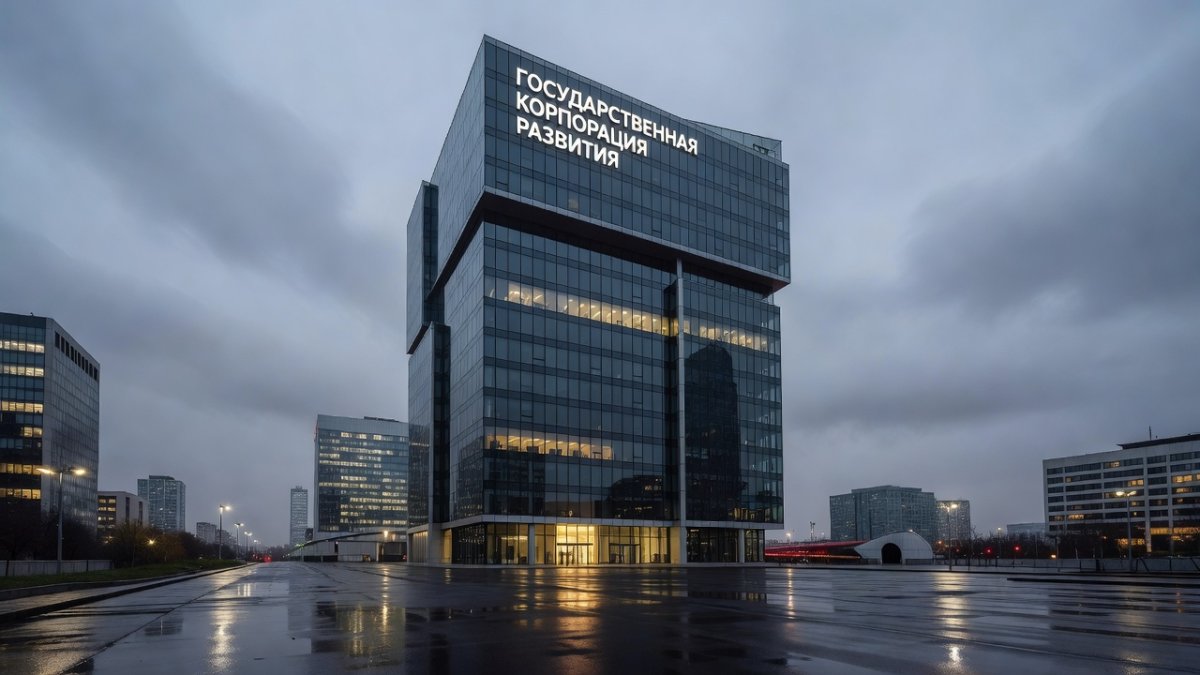
In a move that has sent a chill through Russia's economic establishment, the state development corporation VEB.RF dismissed its chief economist, Andrei Klepach, on Sunday, just days after his blunt assessment that Russia cannot win a prolonged war of attrition against Ukraine gained widespread attention. The firing, reportedly ordered from "above," marks a stark escalation in the Kremlin's tolerance for economic dissent as the costs of the war mount.
Kremlin Fires Economist Andrei Klepach Over War Warning
Moscow – Andrei Klepach, the chief economist at Russia's state development corporation VEB.RF, was dismissed on Sunday, according to a report from The Bell, which cited two people familiar with the matter. The firing comes after a report he delivered in May warned that Russia cannot win a prolonged war of attrition against Ukraine and is falling behind economically and technologically. The dismissal, which VEB.RF has not commented on, signals a hardening line against independent economic analysis that contradicts Kremlin narratives.
The Firing and How It Was Reported
The Bell, a prominent Russian business outlet, reported the dismissal on Sunday, citing two anonymous sources with knowledge of the situation. According to the report, Klepach was removed from his post after VEB.RF leadership received a phone call "from above," a phrase that in Russian bureaucratic parlance implies direct instruction from the Kremlin or its highest echelons of power. A second source told The Bell that the firing was directly linked to Klepach's remarks made in May.
VEB.RF, the state development corporation tasked with financing major infrastructure and industrial projects, has not issued an official statement regarding Klepach's reported departure. The corporation is headed by Igor Shuvalov, a former first deputy prime minister who has served in senior government roles since the early 2000s. The silence from VEB.RF's leadership is itself notable, suggesting the matter is considered too sensitive for public discussion.
Klepach's May Warnings and His Exact Words
Klepach delivered his assessment during a closed-door meeting in May at the Moscow Exchange's Nikitsky Club, a venue known for hosting discussions among Russia's financial and economic elite. His remarks only attracted widespread attention this weekend after the Russian service of The Moscow Times published excerpts from his report, bringing his stark warnings to a broader audience.
In his presentation, Klepach was unequivocal about Russia's trajectory. "We're losing not only to China and the United States, but in some ways, we're losing to Ukraine," he said, according to the published excerpts. He directly addressed the core dynamic of the conflict, stating, "We won't win the competition in this war of attrition. We're under the illusion that everything [in Ukraine] will collapse. It hasn't, and it won't. Meanwhile, the costs we bear are mounting."
Klepach also offered a grim forecast for Russia's domestic stability. "I don't believe Russia will collapse, but I'm almost certain we're coming up against a social crisis," he warned. He elaborated on the economic divergence, saying, "We won't collapse economically, but we are going to lag behind even further, with all of its ensuing consequences."
The Kremlin Connection: A Call "From Above"
The circumstances surrounding Klepach's dismissal point directly to the Kremlin's involvement. The anonymous source who told The Bell about the phone call "from above" indicated that the decision to fire Klepach did not originate within VEB.RF itself but was imposed from the highest levels of power. A second source independently confirmed that the firing was a direct consequence of his May remarks.
This pattern of intervention is consistent with how the Kremlin has handled economic dissent throughout the war. Officials who publicly contradict the official line on the conflict's trajectory have faced removal or marginalization, while those who remain have largely confined their criticism to private channels. The decision to fire a senior economist for a presentation made three months prior suggests that the Kremlin is monitoring and responding to internal economic discourse with heightened vigilance.
Klepach's Career: A Lifetime in Russia's Economic Elite
Klepach's dismissal removes one of the most respected voices in Russian macroeconomics from a position of influence. He served as VEB.RF's chief economist for 12 years, a tenure that spanned the pre-war period and the current conflict. Before joining the state corporation, he spent a decade at Russia's Economic Development Ministry, joining in 2004 as head of its macroeconomic forecasting department and serving as deputy minister from 2008 to 2014.
During his time at the ministry, Klepach worked alongside a constellation of officials who now occupy the highest echelons of Russian power. These include Central Bank Governor Elvira Nabiullina, who has kept interest rates elevated to fight inflation; Defense Minister Andrei Belousov, a former first deputy prime minister and economic policymaker who took over the defense ministry in May 2024; and former Economy Minister Alexei Ulyukayev, who was convicted of bribery in 2017. Some in the financial community have described Klepach as "one of the best" macroeconomics experts in Russia, making his removal a significant loss for the government's analytical capacity.
The State of Russia's Wartime Economy
Klepach's warnings come against a backdrop of mounting economic pressure. Western sanctions have restricted Russia's access to technology and global capital markets, while high domestic interest rates, set by Nabiullina's central bank, are cramping growth and investment. Labor shortages, driven by mobilization and emigration, are further constraining production capacity across key sectors.
Defense and security spending now accounts for roughly 40 percent of Russia's planned federal budget expenditures in recent budget cycles, according to official budget documents cited in reporting. This diversion of resources toward the military has come at the expense of other priorities, and Ukrainian strikes on Russian infrastructure have continued in recent days. A rocket attack on Belgorod killed at least six people overnight, drones struck the Moscow region, and an industrial facility in the Samara region was hit, underscoring the war's reach into Russian territory.
Nabiullina has kept interest rates elevated to combat inflation, a policy that has drawn criticism from business leaders who argue it is stifling the civilian economy. The central bank has insisted the policy is necessary to prevent a wage-price spiral, but the tension between military spending and economic stability remains unresolved.
The War of Attrition: Frontline Reality and Ukraine's Survival
Klepach's analysis of the war's trajectory challenges the Kremlin's official narrative. Russian advances on the frontline have slowed this year, even as Moscow has intensified ballistic strikes on Kyiv and other Ukrainian cities. The Defense Ministry has said a summer campaign captured 19 settlements in southeastern Ukraine, but the pace of territorial gains has not matched the scale of resources committed.
Klepach directly addressed Ukraine's resilience in his May presentation. "Ukraine's economy has, of course, been partly destroyed, and there is a demographic catastrophe. But again, despite everything, the Ukrainian economy is surviving," he said. He noted the role of Western support, adding, "Of course, it receives enormous financial assistance. With that support, their military spending and their own expenditures amount to almost 50% of our budget."
This assessment contradicts the expectation, prevalent in Moscow at the war's outset, that Ukraine would quickly capitulate under pressure. Klepach's warning that "we're under the illusion that everything [in Ukraine] will collapse" reflects a growing recognition among some analysts that the war has entered a protracted phase with no clear end in sight.
Analysis and Implications: The Kremlin's Red Lines
The firing of Klepach sends a clear signal about the Kremlin's tolerance for economic dissent. Analysts suggest this could indicate that the leadership is unwilling to countenance public discussion of the war's costs, even from respected figures within the establishment. The decision to remove a 12-year veteran of VEB.RF for remarks made in a semi-private setting suggests that the boundaries of acceptable discourse have narrowed considerably.
This could also reflect anxiety within the Kremlin about the social consequences of the war. Klepach's warning that Russia is "coming up against a social crisis" touches on a vulnerability that the leadership is keen to downplay. With defense spending consuming an ever-larger share of the budget and inflation eroding living standards, the risk of public discontent is a sensitive topic.
The dismissal may have a chilling effect on other economists and officials who might otherwise offer candid assessments. If a figure of Klepach's stature can be removed for stating what many in the financial community privately believe, the incentive to remain silent grows stronger. This could deprive the government of the analytical rigor needed to navigate the economic challenges ahead.
Looking Ahead: What This Means for Russia
The removal of Andrei Klepach from his post is more than a personnel change; it is a statement about how the Kremlin intends to manage the economic consequences of the war. By silencing a voice that warned of mounting costs and a looming social crisis, the leadership has chosen to prioritize narrative control over analytical honesty.
As the war of attrition continues, the pressures Klepach identified are unlikely to diminish. Sanctions remain in place, interest rates stay high, and the diversion of resources to the military shows no sign of abating. The question now is whether the Kremlin's decision to suppress dissent will strengthen its position or leave it blind to the risks ahead. For ordinary Russians, the stakes are clear: the costs of the war are mounting, and those who point this out are being removed from the conversation.
This article was produced with AI-assisted research and editorial support. Sources: The Bell, The Moscow Times, The Kyiv Independent.
By Irina Volkov, Staff Writer
What's Your Reaction?
 Like
0
Like
0
 Dislike
0
Dislike
0
 Love
0
Love
0
 Funny
0
Funny
0
 Wow
0
Wow
0
 Sad
0
Sad
0
 Angry
0
Angry
0
Russia/Eastern Europe Correspondent at Global1.News. Covering Russian politics, energy, security, and the shifting dynamics of the post-Soviet space. Provides clear-eyed analysis on one of the world's most opaque regions.













Comments (0)