
China, Russia, US Talk UN Reform, Nuclear Risks, and Ukraine at Trilateral Summit
On 19 November 2026, the presidents of the People’s Republic of China, the Russian Federation and the United States convened a trilateral summit in Shenzhen, on the sidelines of the APEC meeting.
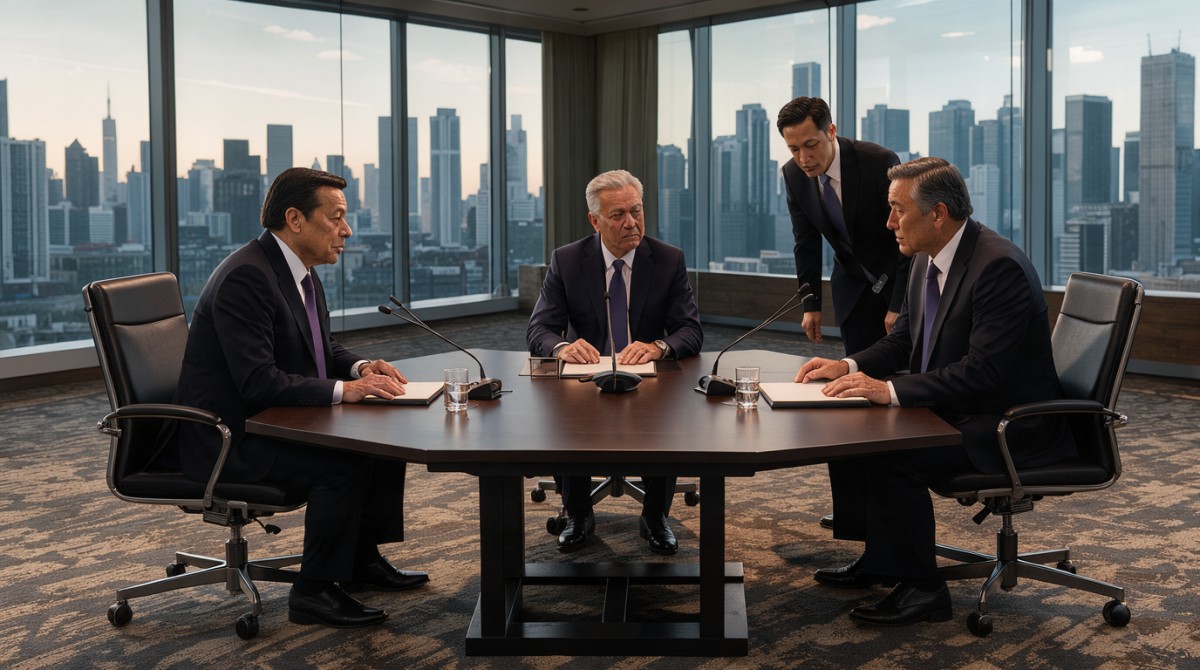
On 19 November 2026, the presidents of the People’s Republic of China, the Russian Federation and the United States convened a trilateral summit in Shenzhen, on the sidelines of the APEC meeting. The gathering, framed by the host as a “historic” step toward “Safeguarding World Peace and Promoting Strategic Stability in Major‑Country Relations,” produced a four‑clause joint declaration that touches on United Nations reform, energy security, nuclear risk mitigation and the principle of state consent in international law. While the language is deliberately vague, the diplomatic choreography of the summit reveals shifting fault lines in Northeast Asian geopolitics and offers a lens through which to assess South Korea’s strategic calculations.
Backdrop of the Shenzhen Summit
The summit was not a spontaneous convergence of the three powers. According to the Chinese Foreign Ministry readout, Russian President Vladimir Putin first proposed the idea of a trilateral meeting, which was subsequently endorsed by U.S. President Donald Trump. Chinese President Xi Jinping, described as a “reluctant host” in the source, seized the occasion to position Beijing as a facilitator of “major‑country dynamics featuring peaceful coexistence, overall stability, and balanced development.” This framing mirrors longstanding Chinese diplomatic formulas that emphasize “mutual respect” and “win‑win cooperation,” concepts that have been repeatedly invoked by the Ministry of Foreign Affairs (MOFA) in multilateral settings.
The timing of the summit, held alongside the APEC leaders’ summit, underscores Beijing’s intent to embed its agenda within broader regional economic forums. By aligning the trilateral dialogue with APEC, China signals to the Asia‑Pacific community—including the Ministry of Economy and Finance (MOEF) and think tanks such as the Asan Institute—that it can convene great powers on its own turf, thereby reinforcing its claim to a leadership role in regional governance.
Energy Security: A Shared, Yet Ambiguous, Priority
The declaration’s first concrete point concerns the “global energy crisis.” The three heads of state agreed to “jointly maintain stable and unimpeded energy industrial and supply chains.” Notably, the Chinese readout refrains from attributing the crisis to the ongoing wars in Ukraine and Iran—conflicts in which both Russia and the United States have been directly involved. This omission reflects a diplomatic balancing act: Beijing seeks to highlight its role as an energy conduit without alienating either partner over the underlying causes.
For South Korea, whose Ministry of Trade, Industry and Energy (MOTIE) relies heavily on imported refined petroleum, the pledge to increase production and supply of refined petroleum products is significant. However, the lack of quantitative targets means that Korean policymakers must treat the promise as a diplomatic signal rather than a binding commitment. The Korea Development Institute (KDI) has previously warned that energy market volatility can quickly erode growth forecasts, suggesting that Seoul will likely continue to diversify its energy sources while monitoring the trilateral outcomes.
Nuclear Risk Management and Arms Control
The second substantive clause addresses nuclear risk. Xi’s stark warning—“A nuclear war cannot be won and must never be fought”—was echoed in the joint declaration, which calls for a dialogue on reducing nuclear risks and preventing proliferation. President Trump had publicly expressed a desire to use the summit to advance trilateral nuclear arms control, yet the Chinese position, as reflected in the readout, remains cautious, citing the asymmetry of its own arsenal relative to the United States.
From a Korean perspective, the Korean Institute for International Economic Policy (KIEP) has long noted that the Korean Peninsula remains the world’s most volatile nuclear flashpoint. The trilateral dialogue’s inclusion of “preventing the proliferation of nuclear weapons” offers a diplomatic opening for Seoul to press both Washington and Beijing to adopt stronger safeguards against accidental escalation. Nevertheless, the declaration’s lack of concrete mechanisms—such as verification protocols or confidence‑building measures—limits its immediate utility for Korean security planners.
United Nations Reform: Symbolic Unity, Divergent Interests
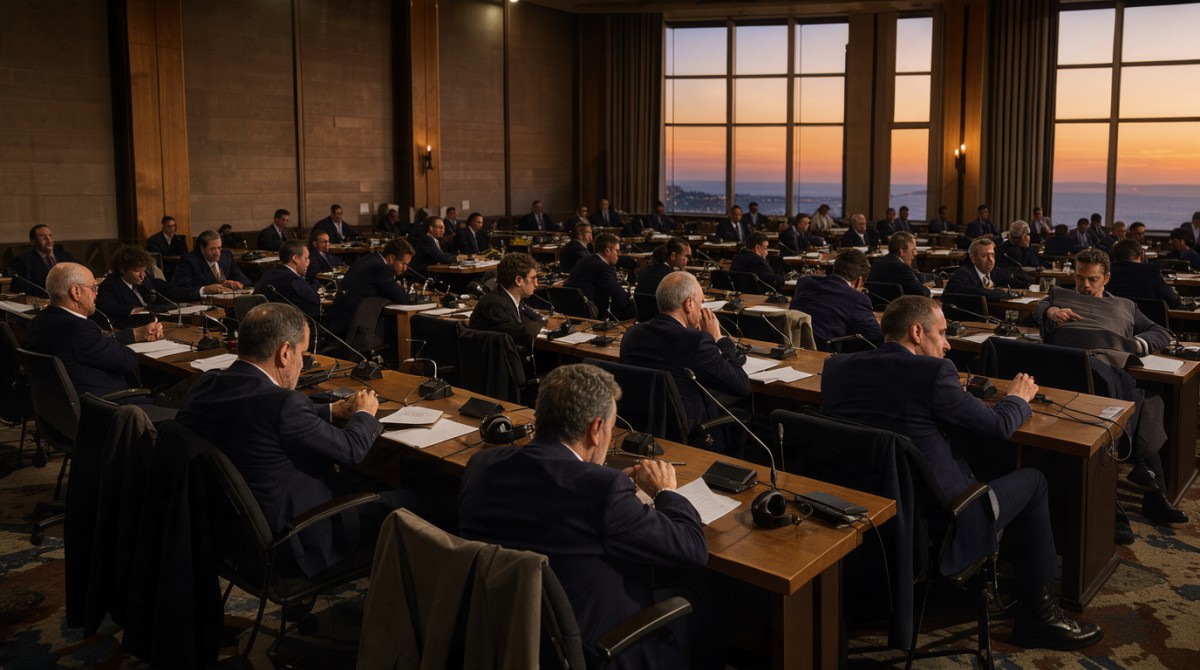
The declaration’s third pillar calls for United Nations reform to enable the body to “respond more effectively to global challenges.” While the notion of UN reform enjoys broad rhetorical support, the source notes that “nearly all the U.N. Security Council members disagree on the specifics.” The trilateral statement does not delineate the reforms envisioned, leaving the language largely symbolic.
South Korea’s Ministry of Foreign Affairs (MOFA) has, in recent years, advocated for a more inclusive Security Council that reflects contemporary geopolitical realities. The Asan Institute’s recent publications argue that expanding permanent membership to include emerging powers could enhance the UN’s legitimacy. The Shenzhen summit’s endorsement of reform, albeit vague, aligns with Seoul’s diplomatic push for a rebalanced multilateral order, yet the absence of substantive proposals suggests that the three powers are not yet prepared to translate rhetoric into actionable change.
State Immunity and International Legal Norms
A more contentious element of the declaration is its affirmation that “international law cannot touch state officials” and must operate on the “principle of state consent.” This clause effectively endorses state immunity from international accountability, a stance that directly benefits Russia, given the International Criminal Court (ICC) arrest warrant for President Putin over alleged war crimes in Ukraine. President Trump’s repeated denunciation of the ICC, as highlighted in the source, aligns with this position.
The implication for South Korea is twofold. First, Seoul must navigate a diplomatic environment where major powers are increasingly resistant to international legal mechanisms that could constrain their actions. Second, the timing of the clause—coinciding with the International Court of Justice’s ruling on Myanmar’s genocide—highlights the tension between legal norms and political realities. Korean scholars at the Korea Institute for National Unification (KINU) have warned that weakening international legal enforcement could embolden states to act with impunity, complicating regional security architectures that rely on rule‑of‑law principles.
Regional Issues: Ukraine, the Middle East, and the Korean Peninsula
The Chinese summary briefly mentions that the three leaders exchanged views on “major regional and international issues, including the Ukraine crisis, preventing the proliferation of nuclear weapons, the Middle East situation, and the Korean Peninsula.” However, the source provides no detail on the substance of those exchanges. President Putin’s assertion that the leaders share “many common interests regarding the resolution of regional conflicts – including, of course, the conflict in Ukraine” is likely to alarm U.S. allies in Europe and East Asia, who remain opposed to Moscow’s actions in Ukraine and its alliance with North Korea.
For Seoul, the reference to the Korean Peninsula is particularly salient. While the declaration does not specify any commitments regarding North Korea’s nuclear program, the very inclusion of the peninsula in the trilateral dialogue indicates that Beijing, Moscow, and Washington recognize the issue’s global significance. Korean policymakers may interpret this as an invitation to engage more actively in multilateral frameworks—such as the Six‑Party Talks—while also preparing for the possibility that the three powers could coordinate positions that diverge from Seoul’s preferred diplomatic pathways.
Implications for South Korea’s Strategic Outlook
In sum, the Shenzhen trilateral summit offers both opportunities and challenges for South Korea. The joint declaration’s emphasis on energy stability and nuclear risk reduction aligns with Seoul’s immediate policy priorities, yet the lack of concrete implementation plans means that Korean ministries—particularly the Ministry of Foreign Affairs and the Ministry of Trade, Industry and Energy—must continue to pursue bilateral and multilateral engagements to secure tangible outcomes.
Moreover, the reaffirmation of state immunity and the vague commitment to UN reform suggest a trajectory in which the great powers may seek to reshape international norms in ways that could limit the efficacy of legal mechanisms that South Korea has traditionally supported. As the Korean Peninsula remains a focal point of great‑power competition, Seoul will need to calibrate its diplomatic posture, leveraging its alliances with the United States while also engaging Beijing’s growing role as a self‑styled global peacemaker.
Looking ahead, Korean scholars anticipate that the next round of high‑level dialogues—whether within the framework of the East Asia Summit, the United Nations General Assembly, or future trilateral meetings—will test the durability of the commitments made in Shenzhen. The extent to which the three major powers translate their broad statements into actionable policies will shape the strategic environment in which South Korea navigates its security, energy, and diplomatic imperatives for the remainder of the decade.
This article was produced with AI-assisted research and editorial support. Reporting is based on the source material cited below. Sources: The Diplomat; thediplomat.com; Global1.News (22 November 2026).
By Prof. David Park, Staff Writer
What's Your Reaction?
 Like
0
 Dislike
0
 Love
0
 Funny
0
 Wow
0
 Sad
0
 Angry
0
East Asia/Technology Correspondent at Global1.News. Seoul-based voice covering Korean politics, technology, business, and culture. Analyzes how technology and geopolitics intersect across East Asia.











Comments (0)