
Tinubu fixing Nigeria, things now better - Jide Kosoko
Veteran Nollywood actor Jide Kosoko stepped onto the “Talk To B” podcast hosted by actress Biola Adebayo on 18 October 2026 to make a case for President Bola Tinubu’s administration.
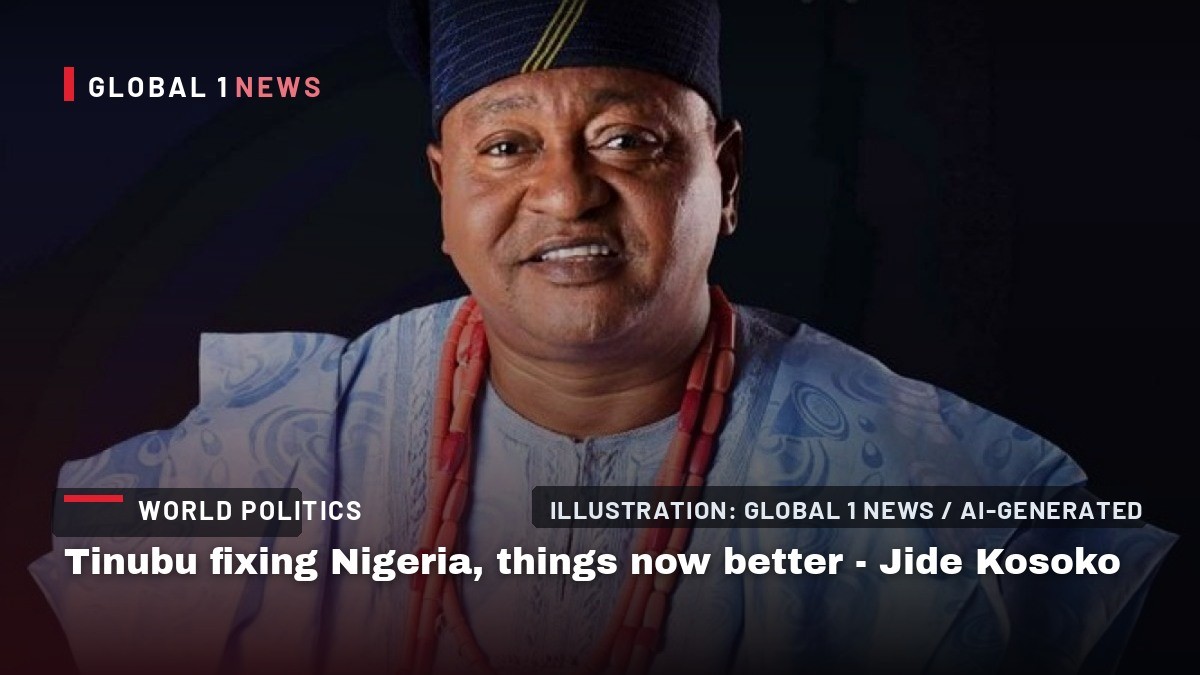
Veteran Nollywood actor Jide Kosoko stepped onto the “Talk To B” podcast hosted by actress Biola Adebayo on 18 October 2026 to make a case for President Bola Tinubu’s administration. In a candid conversation, Kosoko urged Nigerians to look beyond the headlines and consider the state of the nation before Tinubu took office. His remarks, recorded by the Daily Post Nigeria, provide a window into how some public figures are framing the government’s recent reforms as a response to inherited challenges rather than a radical overhaul.
Setting the Stage: A Reflection on Pre‑Tinubu Realities
Kosoko opened the interview by reminding listeners that the country’s hardships pre‑date the current administration. “Things are not as bad as some people have claimed and they need to understand. Go and check the majority of those people. Before Tinubu came, what were they eating?” he asked, invoking a vivid image of everyday survival under previous leadership. By posing that rhetorical question, he sought to anchor the discussion in lived experience, suggesting that the baseline of hardship was already high before Tinubu assumed the presidency.
His appeal to “check the majority of those people” signals a call for on‑the‑ground verification rather than reliance on media narratives. This framing aligns with a broader trend among some Nigerian commentators who stress the need for direct observation of community conditions when evaluating policy impact.
The Call for Evidence: What Does “Fixing” Look Like?
When Biola Adebayo pressed Kosoko for concrete evidence that ordinary Nigerians could point to in support of the claim that Tinubu was fixing the country, the actor pivoted to the administration’s ongoing initiatives. He maintained that President Tinubu was actively addressing problems inherited from his predecessors, emphasizing that the government’s response was not a matter of rhetoric alone.
In particular, Kosoko highlighted the student loan scheme as a tangible example of the government’s effort to mitigate the economic pressures faced by young graduates. By drawing attention to this program, he offered a specific policy touchstone for citizens to assess the administration’s commitment to supporting the next generation.
The Student Loan Scheme: A Flagship Initiative
The student loan scheme, according to Kosoko, is designed to support graduates who have not yet secured employment. He urged beneficiaries of the programme to speak publicly about how it had helped them, effectively turning the scheme into a litmus test for public perception of Tinubu’s governance. The actor’s encouragement for beneficiaries to share their experiences underscores a strategic use of personal testimonies to shape the narrative around policy success.
By emphasizing that the government promised to back graduates unable to find immediate work, Kosoko positioned the loan programme as a safety net for a demographic that has historically faced high unemployment rates. This focus reflects a broader recognition that youth unemployment remains a critical socio‑economic challenge across Nigeria and the continent.
Political Ambition and Perception: The Opposition Factor
Beyond policy specifics, Kosoko ventured into the political dynamics that shape public opinion. He argued that political ambition often blinds Nigerians to the progress he perceives in the current administration. “Those in the opposition know the truth. They know that the man is on the right track, but ambition is affecting their thinking,” he said, suggesting that partisan interests can outweigh objective assessment of governance.
This observation taps into a long‑standing tension in Nigerian politics, where opposition parties frequently challenge the ruling government’s record. Kosoko’s assertion that opposition figures are aware of the administration’s direction yet allow ambition to dominate their discourse reflects a belief that political rivalry can distort the public’s understanding of policy outcomes.
Personal Credibility: Kosoko’s Political Roots
Kosoko underscored his own long‑standing involvement in politics, noting that he has been active since 1978. This claim to decades‑long political engagement serves to bolster his credibility when commenting on the nation’s trajectory. By positioning himself as a veteran observer of Nigeria’s political landscape, he frames his endorsement of Tinubu’s policies as grounded in historical perspective rather than fleeting sentiment.
The actor’s extensive political background also hints at the intersection of entertainment and governance in Nigeria, where public figures often leverage their platforms to influence political discourse. Kosoko’s transition from the screen to the political arena illustrates the porous boundaries between cultural influence and policy advocacy.
Public Engagement: Encouraging Beneficiary Voices
One of the most actionable takeaways from Kosoko’s interview is his call for beneficiaries of the student loan scheme to voice their experiences. By urging graduates to share how the programme has helped them, he is effectively mobilising a grassroots endorsement strategy. Such public testimonies could serve as a counter‑balance to criticism and provide a narrative of tangible benefit emanating from Tinubu’s policies.
This approach aligns with a broader communication tactic where governments and supporters amplify individual success stories to illustrate policy impact. In a media environment where skepticism often dominates, personal anecdotes can become powerful tools for shaping public perception.
Looking Ahead: The Narrative of Progress
As the interview concluded, the central theme remained clear: Kosoko believes that the Tinubu administration is on a corrective path, addressing inherited challenges through targeted programmes like the student loan scheme. He contends that the nation’s problems are not as severe as some portray, urging Nigerians to reassess their views in light of the progress he perceives.
While the actor’s perspective is rooted in personal conviction and political experience, the broader conversation about Nigeria’s direction under Tinubu continues to evolve. The emphasis on tangible initiatives, the call for beneficiary testimonies, and the critique of opposition‑driven narratives together form a multifaceted argument for a more nuanced appraisal of the administration’s performance. As Nigerians weigh these viewpoints, the dialogue sparked by Kosoko’s appearance on “Talk To B” adds another layer to the ongoing discourse on governance, accountability, and hope for a better future.
This article was produced with AI-assisted research and editorial support. Reporting is based on the source material cited below. Sources: Daily Post Nigeria; dailypost.ng; Global1.News (18 October 2026).
By Sarah Okafor, Staff Writer
What's Your Reaction?
 Like
0
Like
0
 Dislike
0
Dislike
0
 Love
0
Love
0
 Funny
0
Funny
0
 Wow
0
Wow
0
 Sad
0
Sad
0
 Angry
0
Angry
0

Africa Correspondent at Global1.News. Based in Lagos, covering politics, business, technology, and culture across the continent. Focused on telling African stories beyond the headlines — the innovation, entrepreneurs, and communities shaping the region's future.











Comments (0)