
What Pakistan Will and Won’t Do in Yemen
On 5 October 2026, Saudi Arabia, the Republic of Türkiye, and the Islamic Republic of Pakistan activated the defence commitments enshrined in the Mecca Defense Alliance, a multilateral pact signed in 2022 to provide mutual security against external aggression.
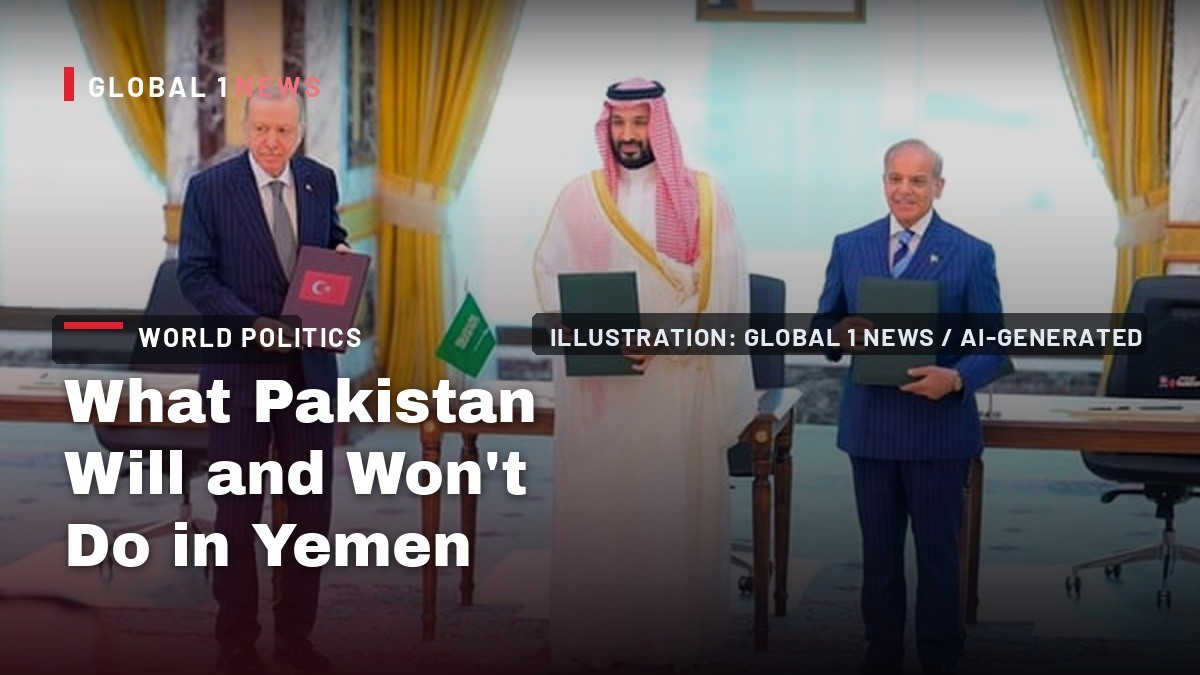
On 5 October 2026, Saudi Arabia, the Republic of Türkiye, and the Islamic Republic of Pakistan activated the defence commitments enshrined in the Mecca Defense Alliance, a multilateral pact signed in 2022 to provide mutual security against external aggression. The activation followed a surge of Houthi drone and missile strikes against Saudi territory and an intensification of Houthi ground operations along the Red Sea coast. This development marks the first substantive test of the Mecca Pact’s operational relevance and raises pressing questions about how Pakistan, a signatory with limited strategic bandwidth, can contribute without over‑extending its military or diplomatic posture.
Strategic Context of the Mecca Pact and Pakistan’s Dilemma
The Mecca Defence Alliance was conceived as a defensive coalition, a point repeatedly affirmed by Pakistan’s strategic community. Yet the alliance’s credibility hinges on the willingness of its members to demonstrate tangible military value when a partner faces a serious security challenge. As the Diplomat notes, “If the alliance cannot show up when one of its members faces a serious security challenge, its deterrent value could quickly erode.” For Pakistan, the calculus is complicated by simultaneous counter‑terrorism operations at home, a protracted rivalry with India, and the need to manage a delicate relationship with Tehran.
Deploying large conventional forces to Yemen would strain an already stretched Pakistani army and risk entangling Islamabad in a protracted conflict far from its borders. Moreover, a direct ground intervention could exacerbate tensions with Iran, which, despite its significant influence over the Houthis, has limited appetite for curbing the group when it serves Tehran’s broader strategic interests against Saudi Arabia. Consequently, Pakistan must balance its defensive obligations under the Mecha Pact with the practical limits of its military and diplomatic capacities.
The Mecha Pact’s Core Objectives in Yemen
According to the source, the alliance’s primary aim in the Yemeni theatre is not the total eradication of the Houthis—a goal deemed unrealistic and prohibitively costly—but rather the containment of Houthi control over the Bab al‑Mandeb strait and the creation of conditions conducive to a political settlement. The diplomatic brief emphasizes that “the more realistic objective… is to constrain the Houthis’ ability to dominate the Bab al‑Mandeb and tip the military balance sufficiently to open up space for a political settlement.” This framing guides the type of support Pakistan can plausibly provide.
Operationally, the decisive battles are occurring in southwestern Yemen, notably around Taiz and Mocha, locations far removed from the Saudi border. The logistical challenges of deploying a sizable Pakistani expeditionary force to these inland areas would be considerable. Hence, the alliance’s strategy, as outlined in the source, favours force augmentation—supplying weapons, expertise, and advisory personnel—to Saudi‑backed forces already engaged on the ground.
Force Augmentation: Weapons, Logistics, and Command‑and‑Control
Pakistan’s contribution is likely to centre on the provision of arms and logistical support that enhance the combat effectiveness of Saudi‑aligned militias. The source underscores that “both countries can supply weapons and other military assistance to Saudi‑backed forces, beefing up their ability to conduct counteroffensives.” In addition to materiel, Pakistan can assist in strengthening command‑and‑control structures, an area where Saudi‑backed forces have historically struggled. By sharing lessons from its experience in Afghanistan, Pakistan can help streamline operational planning and improve coordination among disparate anti‑Houthi units.
The text also highlights Pakistan’s expertise in special operations and counter‑terrorism, cultivated through long‑standing campaigns in Afghanistan. This experience positions Pakistani advisers to train and mentor Yemeni forces in irregular warfare tactics, intelligence gathering, and target acquisition—capabilities that are more immediately applicable than the deployment of large conventional formations.
Intelligence Cooperation and Disruption of Houthi Command Networks
One of the most promising avenues for Pakistani involvement lies in intelligence sharing and the disruption of Houthi command and communications. The source observes that “weakening their command and communications could pay off more than attempting to wear down the organization through conventional territorial warfare alone.” Pakistan’s intelligence apparatus, honed through decades of counter‑insurgency operations, can provide actionable insights into Houthi network structures, facilitating more precise strikes by Saudi air assets.
Türkiye, with its own experience in Syria and Iraq, complements Pakistan’s capabilities. Joint advisory teams could assist Saudi‑backed forces in establishing robust electronic warfare measures, intercepting Houthi communications, and conducting cyber‑enabled operations to degrade the Houthis’ operational tempo. Such cooperation would align with the Mecha Pact’s defensive ethos while avoiding the pitfalls of a full‑scale ground deployment.
Air‑Defense Support and Protection of Saudi Critical Infrastructure
The source notes that Saudi Arabia’s air‑defence stockpiles have been “thinned due to Iranian attacks and continued Houthi onslaughts.” While Saudi Arabia possesses a substantial air force, it requires additional support in battlefield operational planning, target identification, and air‑combat support functions. Pakistani personnel can fill these gaps by providing expertise in air‑tasking order generation, real‑time battle‑damage assessment, and coordination of joint air‑ground operations.
By contributing air‑defence specialists and radar‑operating crews, Pakistan can help shield Saudi energy infrastructure from escalating Houthi missile and drone threats. This role, described in the source as “additional air‑defense capabilities and personnel to shield critical infrastructure,” enhances the alliance’s overall deterrence posture without committing Pakistani pilots or aircraft to combat missions.
Constraints on Pakistan’s Operational Integration
Despite the potential contributions outlined, the source cautions that the joint command mechanisms of the Mecha Pact remain in their infancy. The “operationalization of the Mecca Pact’s joint command remains in its infancy,” and it is unclear how seamlessly Pakistani forces can be integrated into a conflict characterized by distinct geography and political dynamics. Moreover, Pakistan has “considerably less experience in indirectly shaping a battlefield by strengthening another state’s forces,” a limitation that could affect the efficacy of its advisory and logistical support.
These institutional constraints mean that Pakistan’s role will likely be advisory and logistical rather than kinetic. The reference to “as many as 40,000 Pakistani troops should not be read as preparation for a conventional Pakistani ground war in Yemen” underscores that any troop movements would be limited to support elements, not front‑line combat units. The strategic calculus therefore rests on maximizing the impact of a modest Pakistani footprint while avoiding entanglement in a protracted attritional war.
Forward‑Looking Assessment: Pakistan’s Strategic Path in the Mecha Pact
Looking ahead, Pakistan’s contribution to the Mecca Defence Alliance in Yemen will be measured by its ability to deliver high‑value, low‑footprint support that bolsters Saudi‑backed forces without over‑extending its own military. By focusing on weapons transfers, command‑and‑control assistance, intelligence sharing, and air‑defence expertise, Pakistan can uphold its defensive commitments while preserving strategic flexibility vis‑à‑vis India and Iran.
The broader regional implication is that the Mecha Pact’s credibility will hinge on the effectiveness of such indirect support mechanisms. If Pakistan and Türkiye can successfully augment Saudi capabilities and help blunt Houthi advances around Bab al‑Mandeb, the alliance will demonstrate tangible deterrent value, reinforcing its role as a defensive bulwark in the Gulf. Conversely, failure to translate advisory assistance into measurable battlefield gains could erode confidence in the pact and embolden adversaries. As the conflict evolves, scholars and policymakers alike will watch closely how Pakistan navigates the tension between defensive obligation and strategic restraint, a balance that will shape the future of multilateral security architecture in the Middle East.
This article was produced with AI-assisted research and editorial support. Reporting is based on the source material cited below. Sources: The Diplomat; thediplomat.com; Global1.News (13 October 2026).
By Prof. David Park, Staff Writer
What's Your Reaction?
 Like
0
Like
0
 Dislike
0
Dislike
0
 Love
0
Love
0
 Funny
0
Funny
0
 Wow
0
Wow
0
 Sad
0
Sad
0
 Angry
0
Angry
0

East Asia/Technology Correspondent at Global1.News. Seoul-based voice covering Korean politics, technology, business, and culture. Analyzes how technology and geopolitics intersect across East Asia.











Comments (0)